
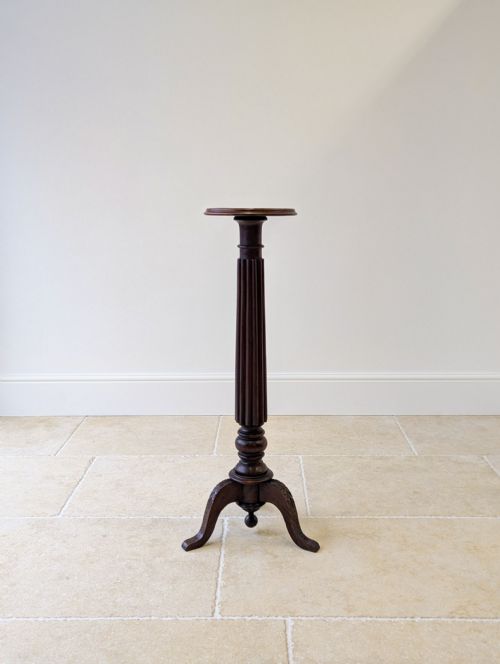
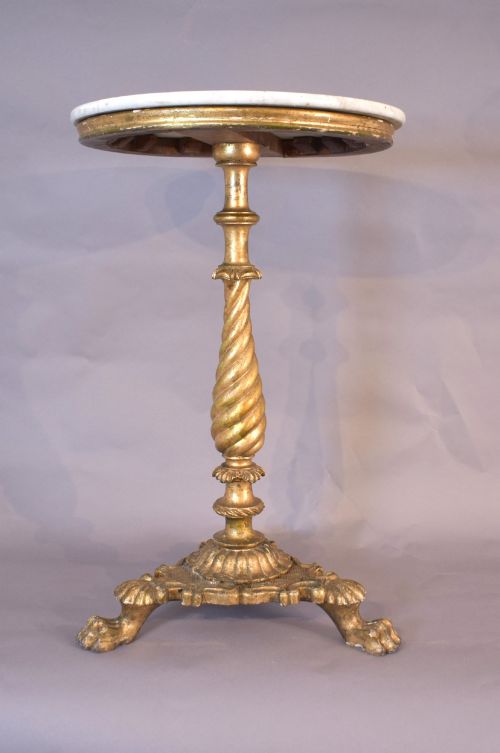
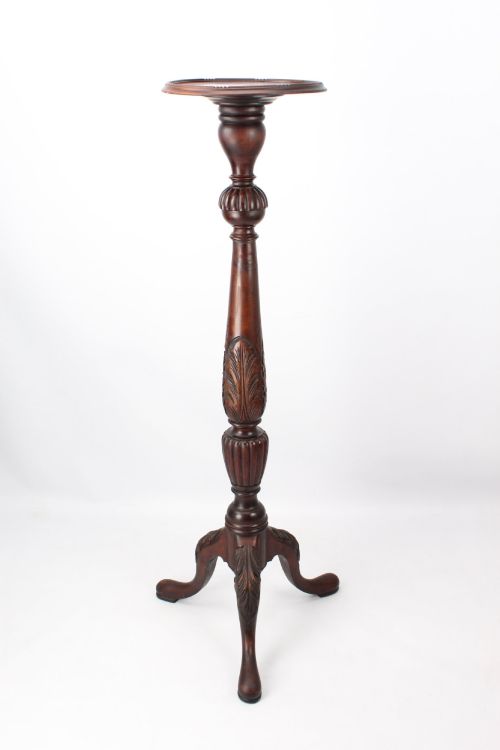
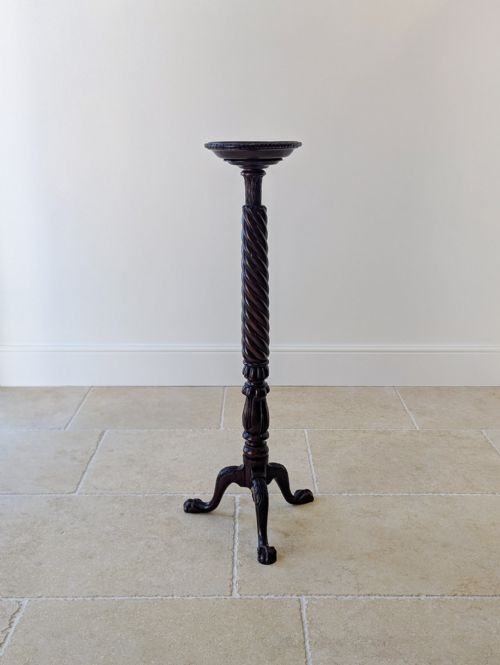

Carved Column Plant Stands
Carved column plant stands elevate botanical displays using timber and stone shaped by Victorian, Edwardian, and earlier makers.
Carved Column Plant Stands
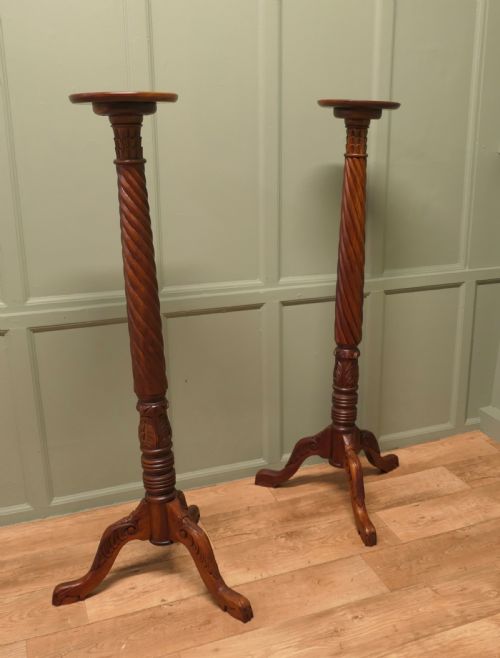
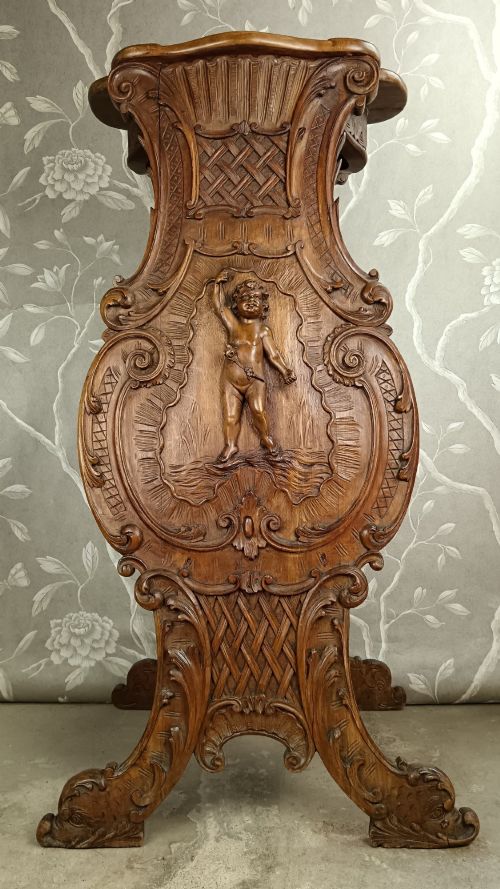
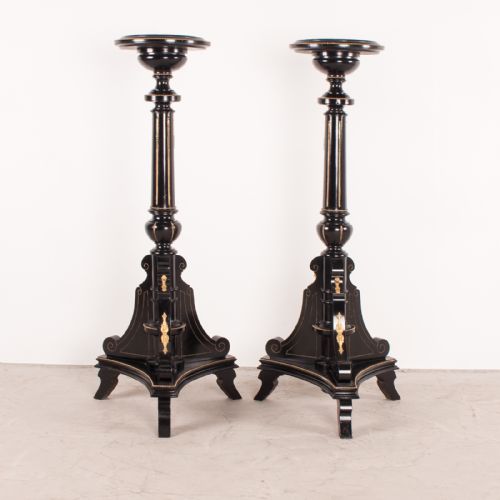
Carved column plant stands serve as raised supports for greenery, jardinieres, and lamps within domestic interiors. These furnishings take the form of tall pedestals, torcheres, and columns designed to lift pots and figures above floor level.
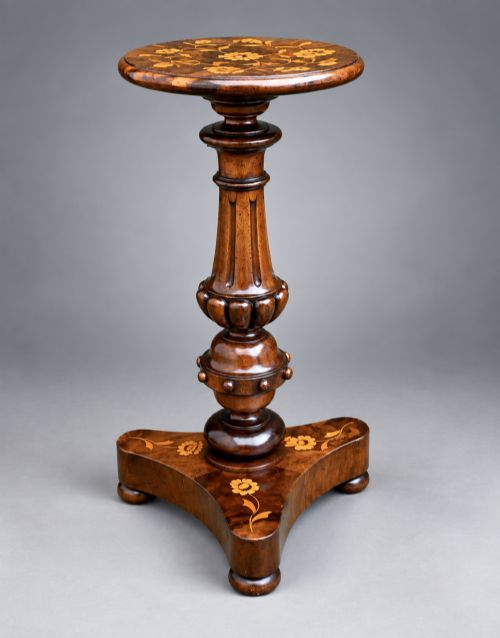
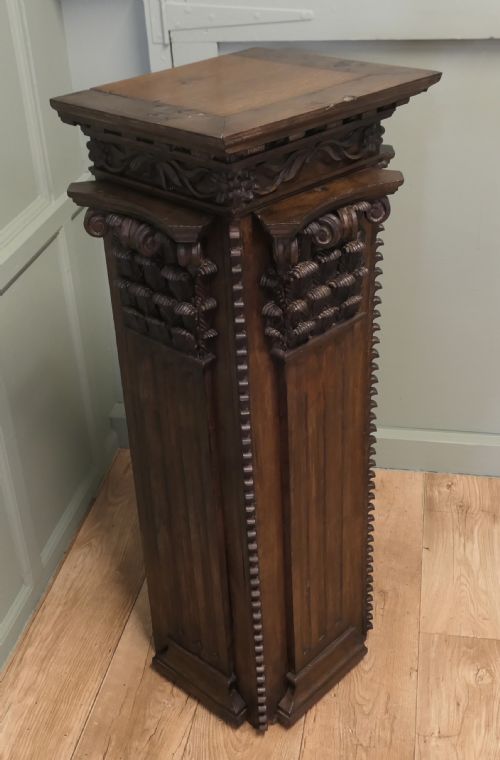
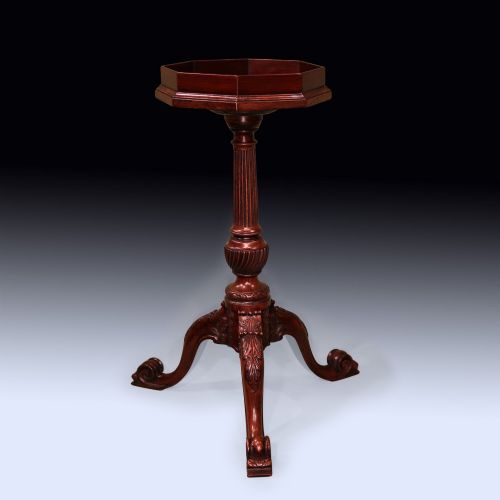
The selection on this page draws primarily from the Victorian and nineteenth-century periods, alongside eighteenth-century examples and later Edwardian pieces. Makers utilise tripod bases, triform layouts, and square plinths to secure stability for heavy marble or timber tops.
Common designations across the listings include torchere, pedestal, and plant stand. These objects function equally as display furniture for sculpture, busts, and decorative urns.
Materials and construction methods
Craftsmen construct these stands using dense timbers such as mahogany, walnut, oak, and kingwood, often paired with inset marble tops or Verde Antico stone slabs. Brass mounts, gilt wood details, and original green paint surfaces appear across various regional workshops.
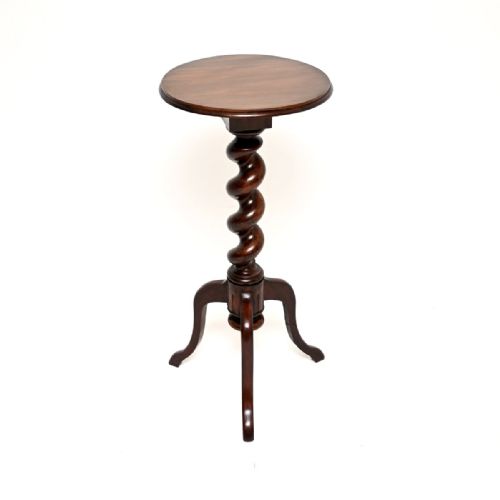
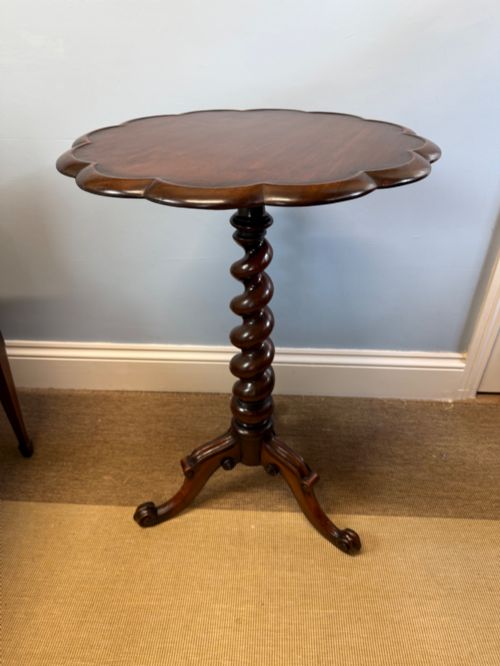
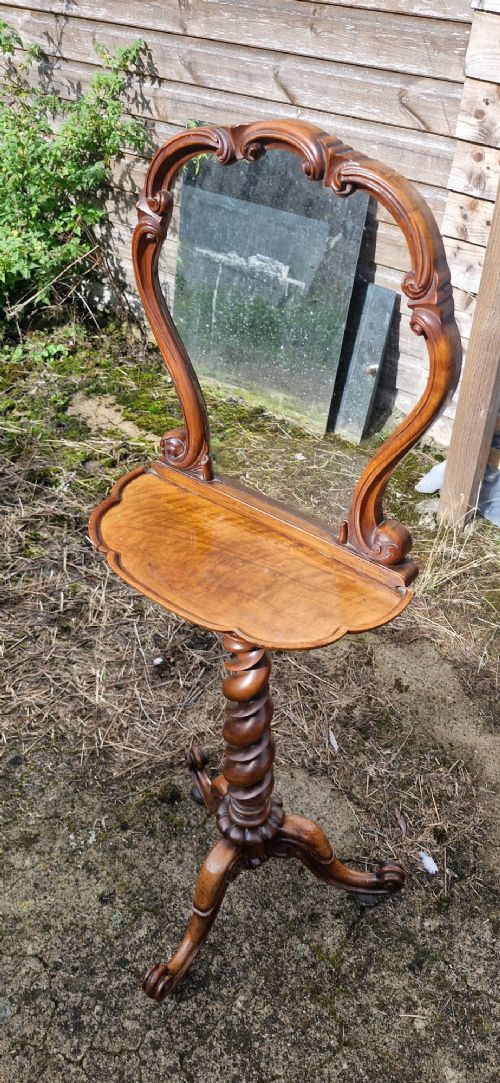
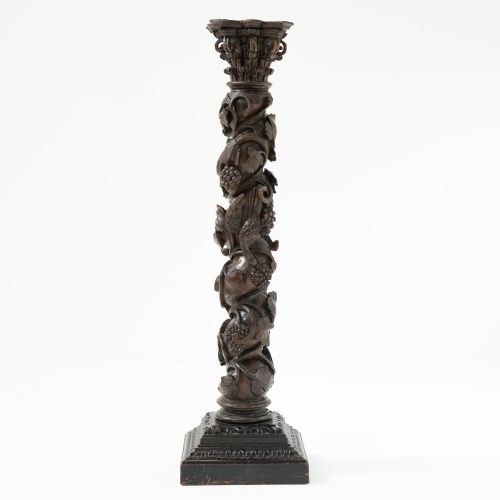
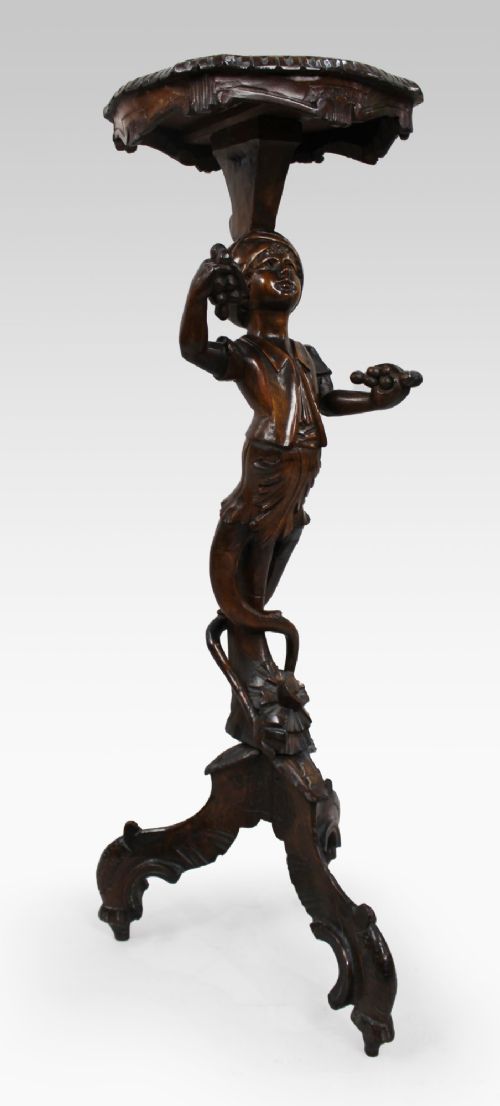
The fabrication relies on turning wood on a lathe for the central column, combined with detailed hand-carving for figural elements, fluting, and solomonic twists. Joinery includes sturdy tripod or triform feet attached to upright shafts to support heavy loads.
Listings feature woods including mahogany, walnut, and oak alongside marble and brass.
Distinctions in craftsmanship
Quality rests in the crispness of the hand-carving upon the timber shaft and the weight and figuring of the marble top. Pieces with integrated figural carvings or detailed Corinthian capitals demonstrate greater artisan labour than plain turned columns.
The integrity of the timber joints and the retention of original finishes, such as early paint or polished walnut, define the standing of individual examples. Structural balance on tripod legs ensures the piece functions safely as a stand.
The Carved Column Plant Stands Glossary
- Torchere
- A tall stand designed to support a light source or plant, originating from candle-stands of earlier centuries.
- Solomonic
- A helical or spiral twist carved into the central column, reminiscent of twisted classical columns.
- Jardiniere
- An ornamental pot or stand for plants and flowers, frequently incorporated into nineteenth-century drawing rooms.
- Verde Antico
- A dark green serpentine breccia marble often utilised for table and column tops.
- Triform
- A base or platform supported by three feet or sides, providing stability for tall vertical columns.
Carved Column Plant Stands: Frequently Asked Questions
What were carved column plant stands used for?
These pieces held potted plants, ferns, and heavy jardinieres to display greenery at eye level within Victorian parlours.
They also supported lamps, bronze busts, and decorative urns to furnish drawing rooms and entrance halls.
How do I identify a Victorian plant stand?
Victorian examples frequently utilise dense mahogany or walnut with turned columns, carved tripod bases, and occasional marble tops.
Makers of this era often drew on Chippendale, Neoclassical, or Gothic Revival styles for decorative ornamentation.
Are these stands suitable for heavy pots?
Solid timber construction and sturdy tripod or triform bases provide the necessary stability to hold substantial planters.
Weight distribution depends on the breadth of the base relative to the height of the central column.
What is the difference between a torchere and a pedestal?
Torcheres traditionally carried lamps or candles on slender shafts, whereas pedestals often featured broader tops for statues or busts.
Over time, makers applied both terms interchangeably to tall column stands used for botanical displays.
How do I care for a marble top plant stand?
Wipe stone surfaces with a damp cloth and avoid harsh chemical cleaners that can etch polished marble.
Protect timber bases from standing water by placing saucers beneath indoor plants to prevent moisture damage.