




Acanthus Leaf Pedestals
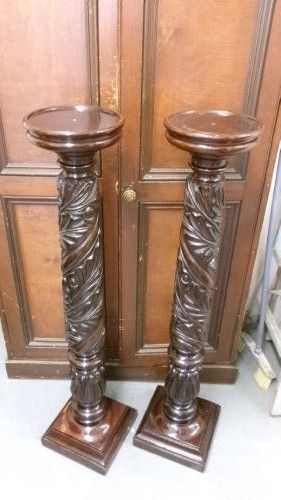
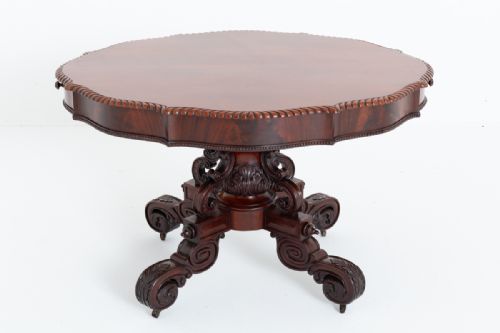
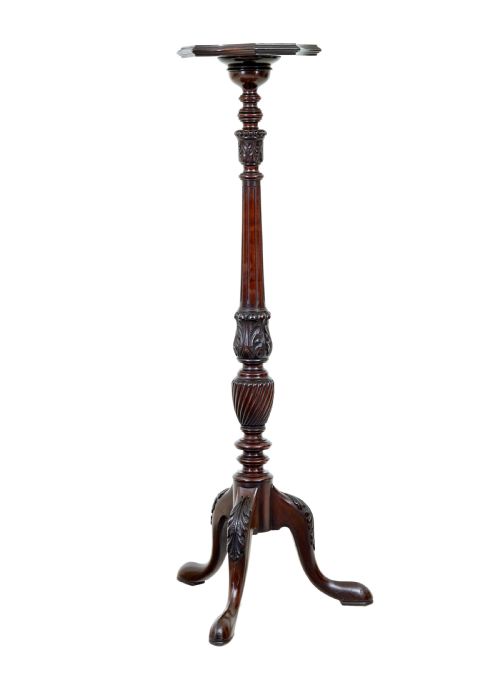
These acanthus leaf pedestals are grand supports and plant stands formed from mahogany, limestone, and marble in neoclassical and baroque styles.
Acanthus Leaf Pedestals
When you search for acanthus leaf pedestals, you find robust stands and display columns designed to elevate plants, lamps, and decorative urns. These pieces serve as focal points in a room, offering height and sculptural weight to an interior layout.
The versions you meet most frequently on this page date from the Victorian period through to the early twentieth century. They draw heavily on neoclassical and baroque vocabularies, bringing classical motifs into domestic reception rooms and gardens.
Makers shaped these supports from heavy timbers like mahogany and limewood, alongside durable carved stone and limestone. The resulting forms range from slender torcheres and plant stands to architectural capitals and classical urn mountings.
How they were made
Cabinet makers and stone masons carved foliage and classical details by hand into dense timbers and natural stone. Mahogany and limewood received deep, sculptural undercut chiselling to define the curling edges of each leaf.
Workers combined carved wood with parcel gilding and painted finishes to highlight the relief work on columns and tables. Stone pieces relied on the natural grain of limestone and marble, polished smooth or left with a weathered exterior for garden use.
Some nineteenth-century travellers carried heavy marble tazzas home in luggage trunks, proving that heavy souvenirs are nothing new.
What varies in quality
The distinction between standard utility stands and finer works lies in the depth and sharpness of the carving. Crisp, deeply undercut foliage demonstrates a higher standard of craftsmanship than shallow, mechanical moulding.
Material selection also dictates the standing of a piece, with dense, figured mahogany and uniform natural marble commanding attention over softer woods and painted substitutes.
Julius Dressler
The Acanthus Leaf Pedestals Glossary
- Torchere
- A tall stand designed to hold a light or a plant. This slender form lifts decorative objects to eye level.
- Corinthian
- A classical architectural order identified by ornate capitals decorated with rows of acanthus leaves. It originates from ancient Greek and Roman architecture.
- Tazza
- A shallow saucer-like dish or ornament mounted on a stem and foot. These pieces were often brought back as souvenirs from the Grand Tour.
- Parcel Gilt
- Partially gilded with gold leaf, leaving areas of the underlying wood or paint exposed. This technique creates a contrast between metallic sheen and dark timber.
- Jardiniere
- An ornamental pot or stand for holding plants or flowers. They appear in ceramic, majolica, and carved wood forms.
Acanthus Leaf Pedestals: Frequently Asked Questions
What were acanthus leaf pedestals used for?
These supports held heavy decorative items, table lamps, and potted plants within grand Victorian and Edwardian interiors. Their sturdy construction allowed them to bear significant weight safely.
In larger spaces, they functioned as architectural statements that drew the eye upward and divided open rooms visually.
How do I style an antique pedestal at home?
Place a heavy marble tazza, a ceramic jardiniere, or a bronze sculpture on top to complete the classical display. Positioning them in corners or empty hallways adds architectural interest to plain walls.
Ensure the base sits level on your flooring, as heavy stone and hardwood stands require a stable foundation.
How do I date a nineteenth century pedestal?
Examine the timber species, tool marks, and overall wear patterns visible beneath the base or on unseen joints. Victorian pieces often use dense mahogany alongside machine-assisted preparation combined with hand carving.
Compare the decorative motifs against known neoclassical and baroque revival pattern books from the same decade.