

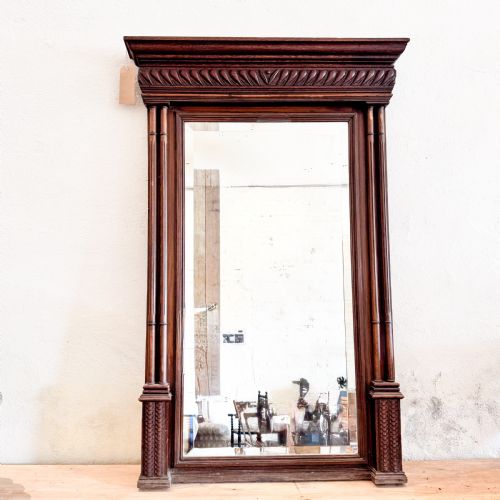

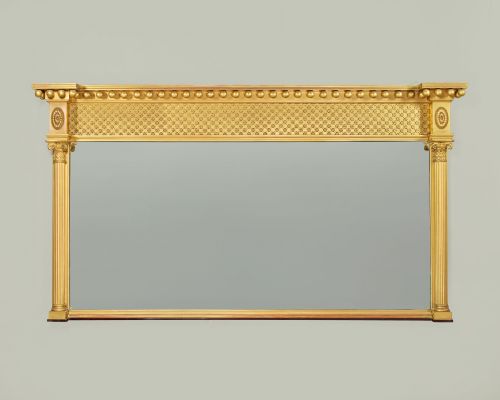


Carved Column Mirror
A carved column mirror brings architectural presence to a room through fluted, twisted or plain uprights flanking the glass.
Carved Column Mirror
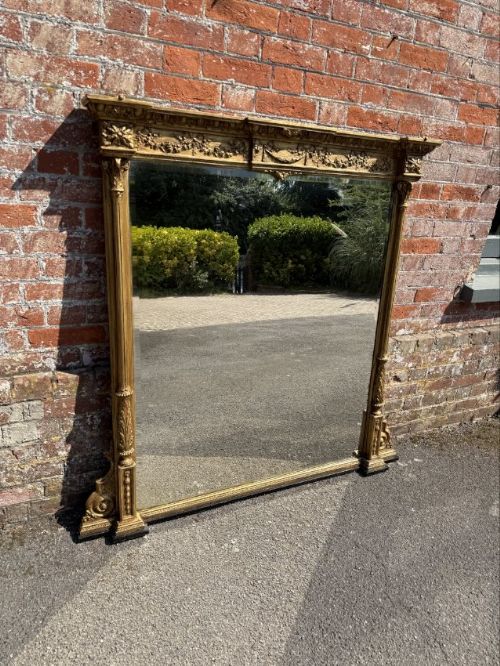
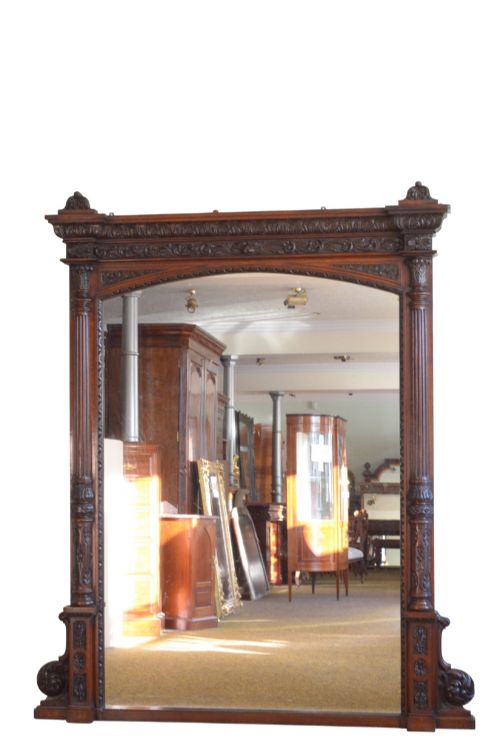
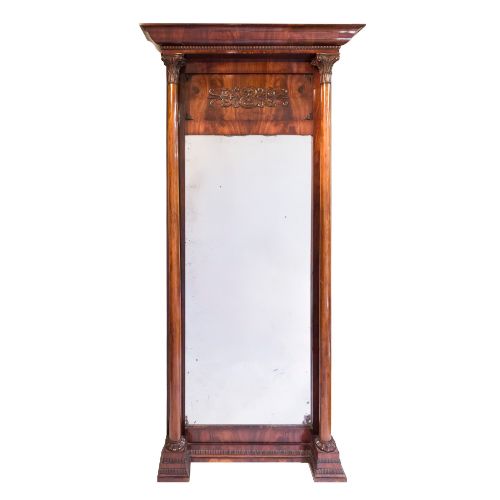
When searching for a carved column mirror, buyers encounter grand architectural overmantels and vertical wall-hanging pieces designed to anchor a room. The items on this page span the 18th, 19th and early 20th centuries, taking shapes such as landscape formats, arched tops and pier mirrors intended for placement between windows.
English and French workshops produced the majority of these examples during the Regency, Victorian and Edwardian eras. Architectural styles range from classical plain orders to Egyptian Revival and French Empire motifs, integrating structural columns directly into the wooden framework.
Materials and construction methods
Carved wood provides the primary structural framework for these mirrors, utilising solid timbers such as mahogany, oak, walnut and deal alongside applied decorative elements. Gesso, a mixture of plaster of Paris and glue, coats the wooden base to form a smooth ground for subsequent gilding or painting.
Gold leaf and metallic paint finish many of the surfaces, while ebonised wood replicates the look of costly ebony. Early examples frequently employ original mercury glass plates set into rebates at the rear of the frame.
Listings feature woods including mahogany, oak, walnut, kingwood, rosewood, birch and ebonised timber.
Distinguishing quality across examples
The refinement of the carving separates standard production pieces from finer items, particularly in the crispness of reeded, twisted or fluted column details. Hand-tooled wooden enrichment demonstrates greater skill than moulded composition ornament applied to lesser frames.
Originality of surface finish and glass plate condition also define the tier of a piece. Retaining the original gilding, paint or mercury plate maintains the integrity and visual depth intended by the maker.
The Carved Column Mirror Glossary
- Gesso
- A prepared mixture of chalk, gypsum and size used as a base for gilding or painting on wood frames.
- Overmantel mirror
- A large horizontal mirror designed to hang specifically above a fireplace mantelpiece.
- Pier mirror
- A tall, narrow mirror made to fit the wall space between two windows.
- Mercury plate
- An early glass manufacturing technique using a tin and mercury amalgam behind the glass, creating a distinctive mottled reflection.
- Giltwood
- Timber that has been coated with a thin layer of gold leaf over a prepared ground.
Carved Column Mirror: Frequently Asked Questions
Where should I hang an overmantel mirror?
These large horizontal mirrors fit naturally above a fireplace mantelpiece, where their proportions reflect light and balance the hearth below.
Position the base just above the mantel shelf so the frame anchors the vertical space of the chimney breast.
How do I identify a pier mirror?
Pier mirrors are tall and narrow, built to occupy the narrow wall space between adjacent windows in a formal room.
Their elongated vertical format often incorporates side columns to match the architectural joinery of the period.
What is gesso and how is it used?
Gesso is a liquid plaster mixture applied to wooden frame foundations to build up smooth surfaces for carving or gilding.
It provides the crisp base layer that allows fine details on column capitals and mouldings to hold their shape under gold leaf.
How do I care for antique glass and gilt?
Keep these pieces away from direct sunlight and damp environments to protect the fragile gold leaf and wooden substrates.
Dust the carved columns gently with a dry, soft brush and clean the glass with a barely damp cloth without touching the edges.