


Carved Camphor Wood Trunk
A carved camphor wood trunk offers practical storage while bringing distinct aromatic timber and intricate relief carving into a room.
Carved Camphor Wood Trunk
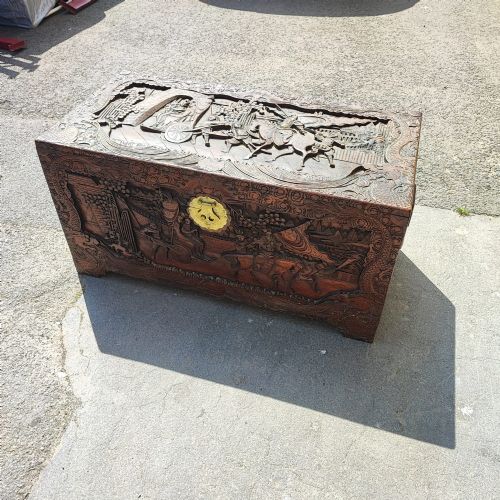
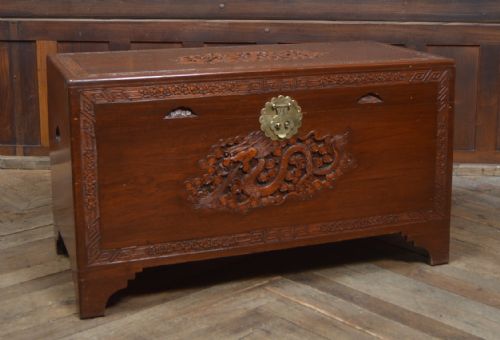
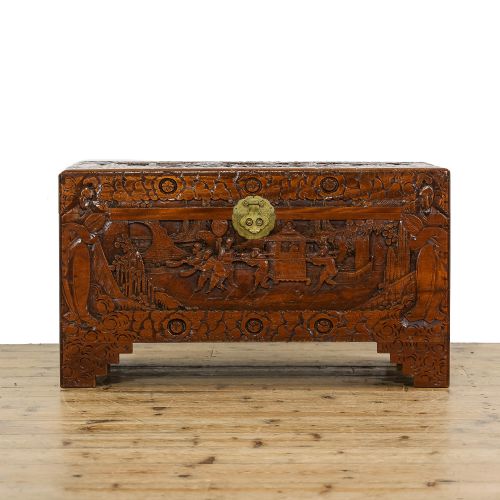
When searching for a carved camphor wood trunk, a buyer meets sturdy storage vessels originating primarily from Chinese Export workshops and Oriental trading centres. These pieces function as blanket boxes, coffer tables, and luggage chests, designed to protect contents from moisture and insects through the natural properties of the timber. Most examples encountered on this page date from the nineteenth century up through the nineteen-thirties, with Chinese Export and traditional Oriental motifs dominating the forms.
The assortment spans straightforward storage boxes to more complex formats like brass-bound campaign pieces and cabinets on chests. While standard blanket boxes remain the most common form, variations include Ceylonese trunks incorporating ebony alongside camphor wood, and occasional Art Deco interpretations combining limed oak. Each piece reflects the utilitarian origins of sea travel adapted for domestic storage.
How they were made
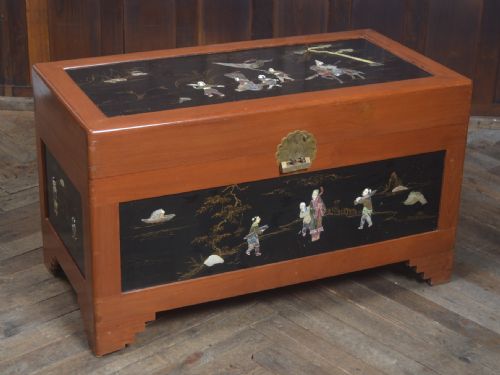
Maker-joiners utilised solid camphor wood for its insect-repellent scent and resilience, frequently pairing the pale timber with contrasting materials such as brass for corner straps, hinges, and carrying handles. Ebony appears alongside camphor wood in specific regional variations, while mother of pearl and lacquer sometimes enhance the decorative scheme. These woods were joined using traditional box construction techniques capable of withstanding long sea journeys.
Surface decoration relies on deep relief carving depicting traditional scenes, foliage, and figures into the thick timber walls. Artisans worked the grain by hand, creating dimensional panels that cover the lids and sides of the chest. Iron or brass hardware was then fitted securely to reinforce the corners and edges against heavy handling.
The enduring medicinal scent trapped inside these trunks has kept woollens moth-free across three different centuries of domestic life.
What varies in quality
The distinction between standard utility boxes and superior examples rests upon the depth and precision of the hand carving. Pieces with crisp, undercut relief work and well-defined figurative scenes demonstrate a higher standard of craftsmanship than those with shallow, mechanical patterns. The selection of the timber grain and the weight of the solid camphor wood further separate robust examples from lighter variants.
Hardware integration and secondary materials also dictate the tier of a piece. Trunks featuring substantial brass bindings, dovetailed joints, and contrasting woods like ebony or mother of pearl represent the upper end of production. The integrity of the interior lining and the preservation of the natural camphor scent complete the assessment of overall standard.
The Carved Camphor Wood Trunk Glossary
- Camphor wood
- A fragrant timber sourced from the Cinnamomum camphora tree, valued for its insect-repellent properties and pale grain. This wood forms the primary structural material for these storage chests.
- Chinese Export
- Objects manufactured in China specifically for Western markets, often blending traditional domestic forms with stylistic preferences popular in Europe and Britain. These pieces frequently display detailed hand-carved motifs.
- Campaign chest
- A portable form of furniture made in sections with recessed brass hardware and carrying handles, originally intended for military officers on the move. Sturdy construction allowed these trunks to endure frequent transport.
- Coffer
- A large box or chest used traditionally for holding valuables, documents, or textiles. Many examples double as low coffee tables in contemporary domestic settings.
- Chinoiserie
- European decorative styles that reflect Chinese artistic influences, occasionally seen in the brass-covered finishes of nineteenth-century trunks. This style mimics traditional motifs through Western interpretation.
Carved Camphor Wood Trunk: Frequently Asked Questions
What caused the strong smell inside these trunks?
The distinct aroma comes from the natural oils present within the camphor wood itself. This scent acts as a natural deterrent against moths and other textile pests.
Over decades, the intensity of the fragrance may soften, but sanding the interior lightly can revive the natural scent. The timber continues to protect stored woollens and linens without chemical additives.
How are these chests dated accurately?
Dating relies on construction methods, brass hardware styles, and the specific depth of the hand carving. Nineteenth-century examples often feature heavier brass bindings and hand-dovetailed joints.
Later pieces from the early twentieth century may incorporate simpler internal fittings or machine-finished elements alongside the carved panels. Comparing the specific motif styles helps narrow the decade of origin.
Can a camphor trunk serve as a coffee table?
These sturdy chests function well as coffee tables due to their flat lids and substantial proportions. Their low profile provides a stable surface while adding texture to a room.
Placing a glass top over the carved lid protects the relief work from accidental spills while keeping the decorative wood visible. The internal storage remains fully accessible for blankets and cushions.
Did these pieces travel on ships?
Many trunks served as personal luggage for merchants, officials, and sailors travelling between Asia and the West. The robust construction and brass corner reinforcements protected personal belongings through rough sea voyages.
Campaign versions specifically included side carrying handles to ease the loading process onto ships and carriages. This maritime history explains the durable nature of the timberwork.