
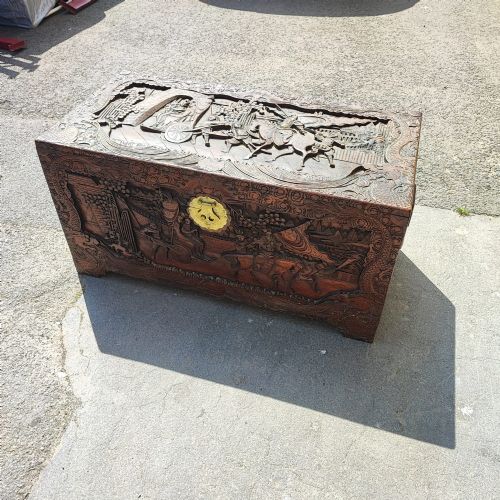


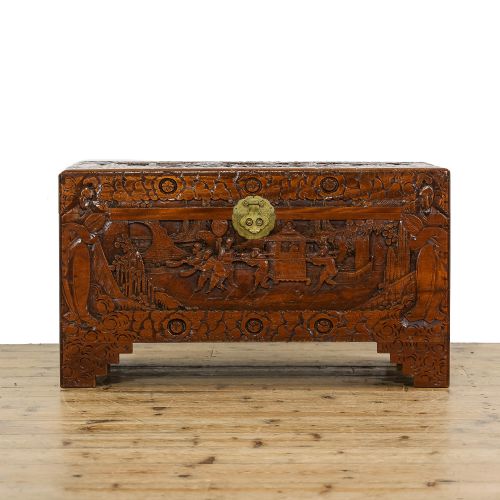


Oriental Relief Carved Coffer
An oriental relief carved coffer brings tactile depth and aromatic storage into a room.
Oriental Relief Carved Coffer
When you search for an oriental relief carved coffer, you are looking at substantial storage boxes and trunks built for travel, utility and household safekeeping. These pieces arrive from various periods including the nineteenth century and the early decades of the twentieth century, reflecting classic export and regional traditions.
You are most likely to meet camphor wood trunks on this page, alongside examples in teak, hardwood, and lacquered timber. The forms range from blanket boxes and luggage chests to large storage chests designed to protect garments and valuables.
The aesthetic bridges Chinese export styles, traditional Chinese work, and Anglo-Indian design. Each piece utilises deep surface carving to depict motifs that catch the light and add architectural weight to an interior.
How they were made
Cabinetmakers utilised durable regional timbers, predominantly selecting camphor wood for its natural insect-repellent properties alongside dense teak and general hardwood. These woods were joined using traditional carpentry methods to ensure the heavy lids and panelled sides remained stable through fluctuating climates.
Carvers worked directly onto the timber using chisels and gouges to create high-relief scenes that stood proud of the background surface. Selected pieces incorporate brass hardware, such as hinges, straps and latch plates, which provided structural reinforcement while complementing the carved woodwork.
Current listings span from the nineteenth century through the 1930s, featuring materials such as brass, lacquer, and camphor wood.
What varies in quality
The standard of carving defines the upper tier of these pieces, separating deep, crisp relief work with expressive detail from flat, hastily executed surface decoration. Crisp undercut elements and balanced composition indicate a workshop with confident draughtsmanship and skilled execution.
Timber selection and structural integrity also dictate worth, as heavier boards with even grain and intact original brass fittings hold greater presence than replacements or warped panels. The condition of the interior camphor wood, retaining its scent and clean timber surface, marks out a well-preserved survivor.
The Oriental Relief Carved Coffer Glossary
- Camphor wood
- A fragrant timber native to Asia, prized for furniture making because its natural scent repels moths and insects. It is soft enough to carve deeply yet stable in various climates.
- Relief carving
- A sculptural technique where figures or patterns are carved into a solid block of wood so that they stand out from the background plane. High relief creates strong shadow lines across the front of a chest.
- Chinese Export
- Furniture and decorative objects manufactured in China specifically for Western markets, often blending traditional domestic forms with European aesthetic preferences.
- Anglo-Indian
- A descriptive term for furniture made in India during the colonial period, frequently combining British structural forms with local materials like teak and intricate native carving styles.
Oriental Relief Carved Coffer: Frequently Asked Questions
What is an oriental relief carved coffer used for?
These chests were originally constructed for storing blankets, garments and personal luggage during transit or at home. Today they function effectively as coffee tables, end-of-bed storage units, or statement storage pieces in living spaces.
The aromatic interior of camphor wood makes them particularly suitable for woollens and linens, keeping fabrics fresh while concealing clutter within a room.
How do I date an antique camphor chest?
Dating relies on examining construction methods, timber patination, and the style of the brass hardware. Nineteenth-century examples often display hand-forged joinery and deeper, more varied tool marks compared to later twentieth-century iterations.
Looking at the wear patterns on the feet and handles also reveals age, as genuine handling builds a distinct polish and softening on the wood edges over generations.
How do I clean and maintain a carved wooden chest?
Maintenance requires minimal intervention, relying primarily on dusting the deep recesses with a soft brush or microfibre cloth to prevent grit accumulation. Avoid harsh chemical polishes that can build up within the carved crevices.
Feeding the dry timber occasionally with a suitable neutral wax preserves the natural lustre of the wood without altering the antique surface patination.