
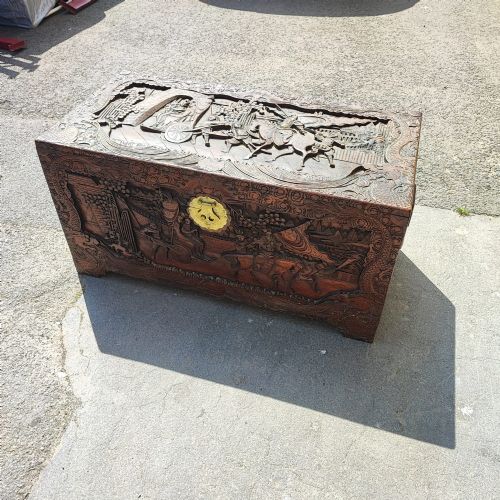


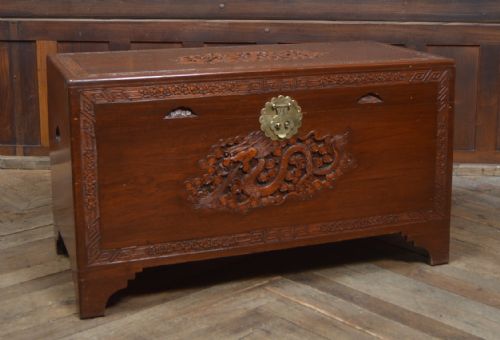
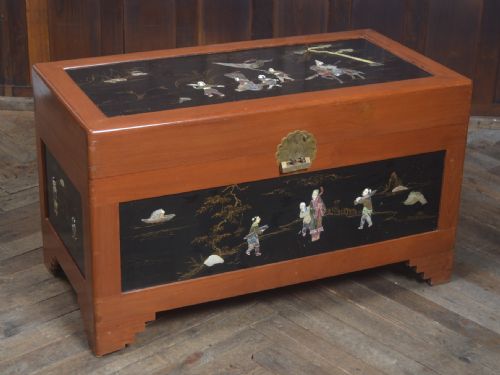
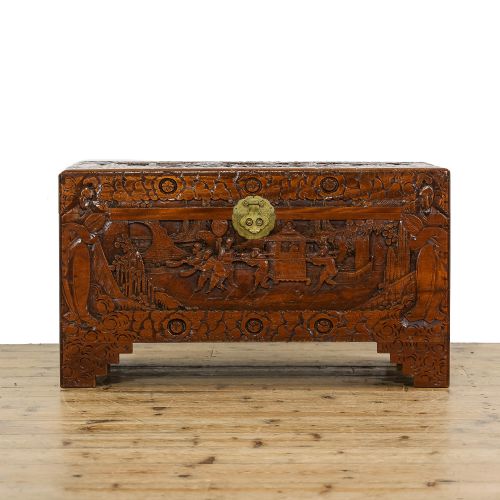


Carved Camphor Box
A carved camphor box is a sturdy storage chest designed for travel and home use, prized for its distinctive aromatic wood and detailed relief work.
Carved Camphor Box
A carved camphor box functions primarily as a storage trunk, blanket box, or coffer designed to protect textiles and valuables. When searching for a carved camphor box, buyers encounter pieces intended for travel and domestic storage originating from Chinese Export workshops and colonial centres.
The most common examples on this page date from the nineteenth century through the early twentieth century, including the 1920s and 1930s. These pieces take the form of substantial chests and blanket boxes finished with dense relief carvings.
Makers produced these trunks in regional variations such as Chinese Export and Anglo-Indian Colonial styles. Buyers find objects ranging from simple storage boxes to brass-bound luggage chests and occasional tables.
How they were made
Craftsmen built these chests using solid camphor wood, valued for its insect-repellent properties and distinct scent. Workshops frequently combined camphor wood with structural timbers like oak or incorporated contrasting details in ebony.
Carvers applied deep relief work directly to the wood surfaces, depicting traditional scenes, foliage, and figures. Makers completed the construction with brass fixtures, including corner brackets, handles, and lock plates, alongside occasional applications of lacquer and mother of pearl.
Opening an antique camphor chest after a century often releases a sudden wave of sharp spice that smells exactly like an apothecary from 1850.
What varies in quality
The depth and precision of the carved surface separate standard production from superior examples. Master carvers achieved high definition and intricate detail in the floral and figural motifs, whereas lesser pieces display shallow or repetitive cutting.
Hardware and secondary materials also indicate grade. Solid brass mounts and secondary hardwoods like ebony denote superior manufacturing compared to plain iron fittings and unfigured secondary timbers.
The Carved Camphor Box Glossary
- Camphor wood
- A fragrant timber native to Asia, utilised for furniture and storage chests due to its natural resistance to insects. The wood retains a characteristic medicinal scent that protects stored textiles.
- Coffer
- A heavy wooden chest traditionally used for storing valuables, documents, or garments. These rectangular boxes often feature hinged lids and reinforced corners.
- Chinese Export
- Goods manufactured in China specifically for western markets from the eighteenth century onwards. These items blended traditional eastern motifs with forms suited to European and American homes.
- Anglo-Indian Colonial
- Furniture produced in the Indian subcontinent under British rule, combining local cabinet-making traditions and exotic timbers with western furniture forms. Pieces often feature dense carving and brass hardware.
- Brass-bound
- Furniture reinforced with brass corners, straps, and banding to protect edges during travel. This technique was common on campaign furniture and luggage chests.
Carved Camphor Box: Frequently Asked Questions
What are carved camphor boxes used for?
These boxes served historically as luggage chests and blanket boxes for transporting and storing garments. The aromatic qualities of the wood helped deter moths and insects from damaging stored textiles.
Today, owners utilise them as coffee tables, blanket chests, and general storage furniture in living spaces and bedrooms.
How do I identify the age of a camphor chest?
Dating relies on stylistic markers, construction methods, and materials recorded in the titles and periods. Nineteenth-century examples often feature traditional Chinese Export designs and hand-forged brass work.
Pieces from the 1920s and 1930s sometimes incorporate Art Deco influences or limed finishes, while earlier nineteenth-century variants include Ceylonese productions with ebony elements.
Why do camphor boxes have a strong scent?
The distinct aroma comes from the natural oils present within the camphor wood timber itself. This scent remains active for decades and acts as a natural deterrent against moths and damp.
Collectors often appreciate this traditional characteristic, which indicates genuine camphor wood construction rather than a secondary timber substitute.
Can I use a camphor chest as a coffee table?
Many owners repurpose these sturdy chests as coffee tables due to their flat lids and substantial proportions. Their rectangular shape and decorative carved surfaces suit placement in front of seating.
Buyers frequently find pieces from the 1930s already noted in listings as coffer coffee tables.