
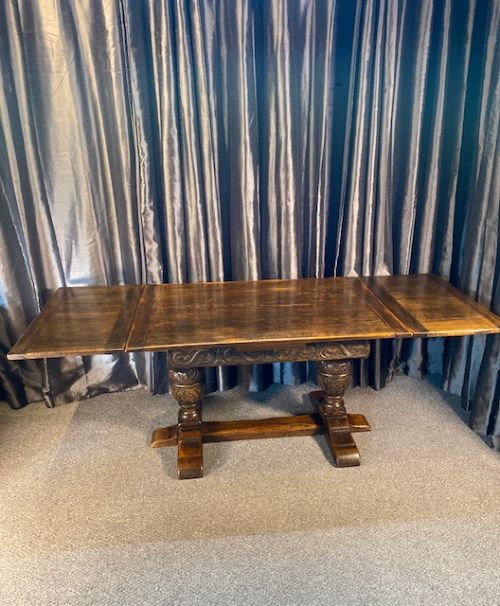
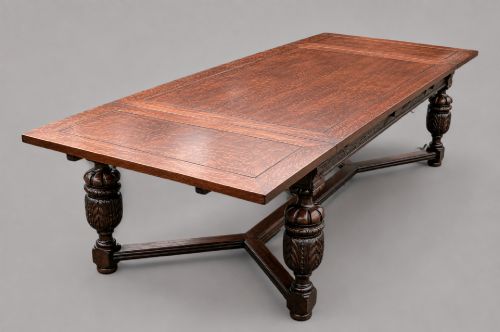
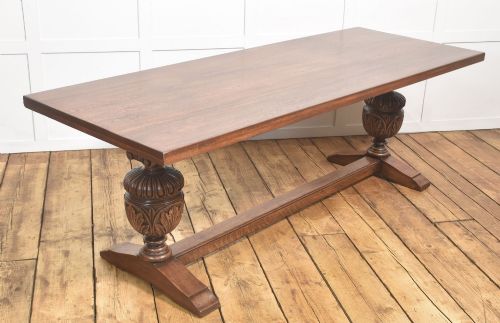
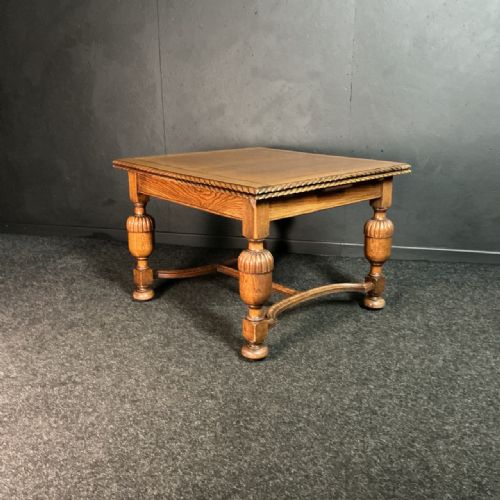
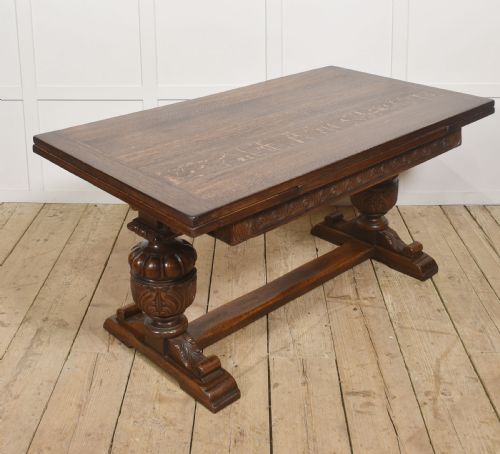


Carved Bulbous Leg Table
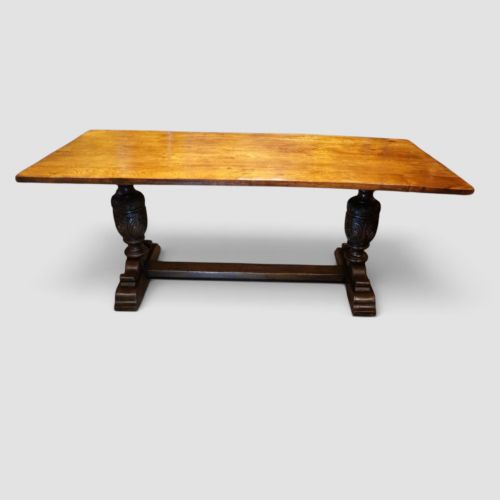
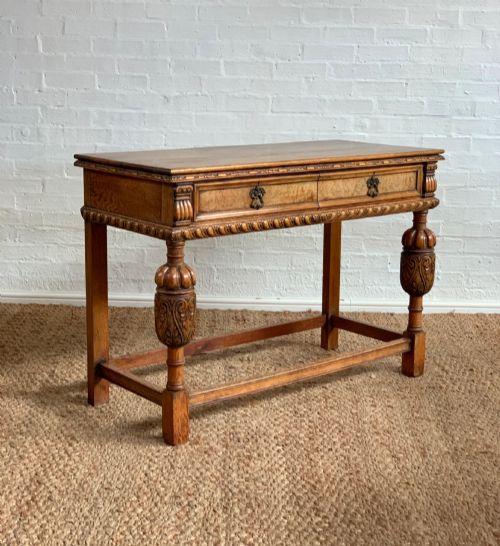
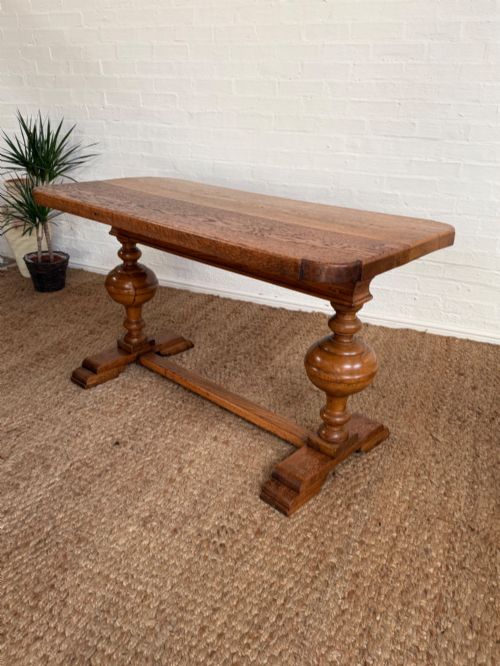
A carved bulbous leg table brings monumental presence to a room, offering sturdy dining or serving surfaces rooted in early vernacular forms.

Carved Bulbous Leg Table
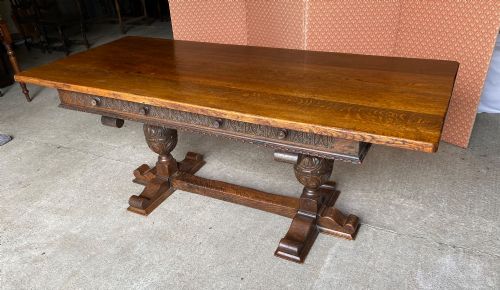
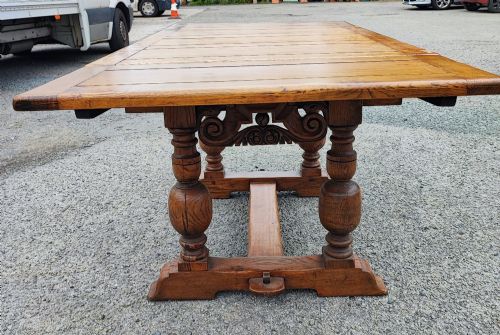
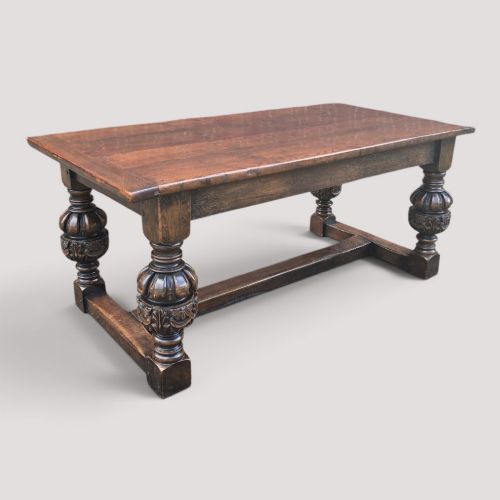
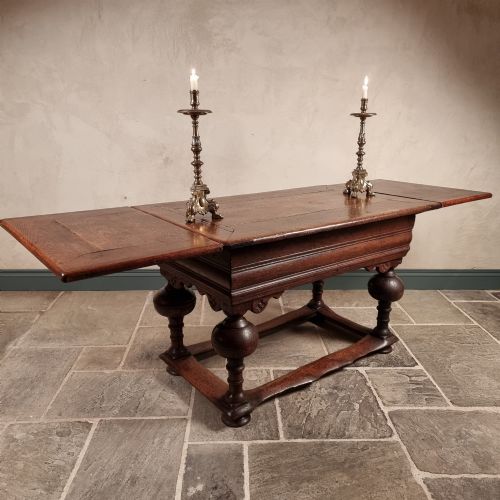
A carved bulbous leg table presents heavy, swelling supports beneath substantial timber tops designed for communal dining or serving. These pieces span centuries of revivalism, connecting authentic seventeenth-century examples with later twentieth-century interpretations.
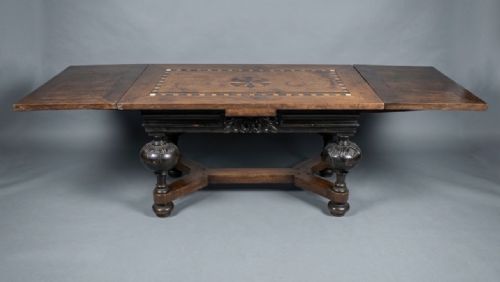
Refectory forms dominate this selection, featuring long rectangular proportions that rely on substantial stretchers and thick tops. Buyers will also encounter smaller occasional formats, serving trolleys, and draw-leaf mechanisms designed to expand surface area.
The aesthetic draws heavily from Jacobean, Elizabethan, and Tudor revivals, alongside Dutch Renaissance influences. Oak remains the predominant timber, occasionally accompanied by walnut or brass fittings.
How they were made
Solid timber construction defines these tables, with oak serving as the primary material complemented by occasional red walnut and wood inlay. Craftsmen utilised traditional joinery methods to support the heavy tops and substantial undercarriages.
Bulbous supports were turned on lathes and subsequently carved by hand with vegetal, strapwork, or melon motifs. Draw-leaf mechanisms and pull-out extensions were engineered beneath the main surface to allow practical expansion without disrupting the stable base.
Some tables come equipped with wheels and lift-off trays, proving that even historic dining traditions appreciated a mobile tea service.
What varies in quality
Quality rests upon the proportion and depth of the carved turnings, where crisp hand-chizzled detail distinguishes superior work from mechanical repetition. The choice of timber grain and the integrity of structural joints determine the long-term stability of the piece.
Authenticity of period versus revivalist craft creates distinct tiers, alongside the sophistication of mechanical extensions such as smooth-running draw leaves. The presence of secondary timbers and refined edge moulding separates utilitarian output from ambitious cabinet work.
Beresford and Hicks London·Maple and Co
The Carved Bulbous Leg Table Glossary
- Refectory table
- A long dining table traditionally used in monasteries and great halls. These surfaces provide generous length supported by strong central stretchers.
- Draw-leaf table
- An extending table equipped with two sliding leaves hidden beneath the main top. Pulling these leaves outward increases the surface area instantly.
- Jacobean Revival
- A nineteenth and twentieth-century design movement replicating seventeenth-century English styles. It relies on dark oak, heavy turning, and geometric panel carving.
- Stretcher
- A horizontal timber connecting the legs of a table to provide structural rigidity. These supports often sit low near the floor for added bracing.
- Occasional table
- A small movable table intended for specific, non-permanent use within a room. Examples include circular Dutch-style tables and serving trolleys.
Carved Bulbous Leg Table: Frequently Asked Questions
How do I care for a heavy oak table?
Maintain timber surfaces by applying natural beeswax periodically to nourish the grain and protect against moisture. Avoid placing solid wood near direct heat sources to prevent splitting.
Clean spills immediately with a dry or lightly damp cloth. Refrain from using harsh chemical sprays that strip the historic finish.
Are draw leaf tables difficult to operate?
Modern draw-leaf mechanisms slide smoothly along internal wooden runners when lifted slightly. Regular use keeps the tracks seasoned and properly aligned.
Ensure both leaves pull out evenly to maintain balance across the central stretcher frame.
How do I date an oak refectory table?
Examine the underside and joints for tool marks, hand-cut peg fastenings, and timber shrinkage patterns. Seventeenth-century originals show deep patina and irregular hand-sawing.
Revival pieces from the nineteenth and twentieth centuries display more uniform machining and standardised hardware.