
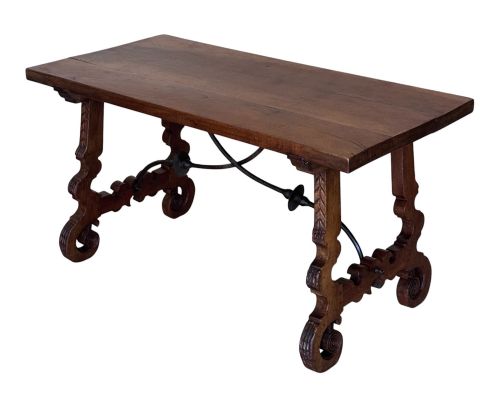
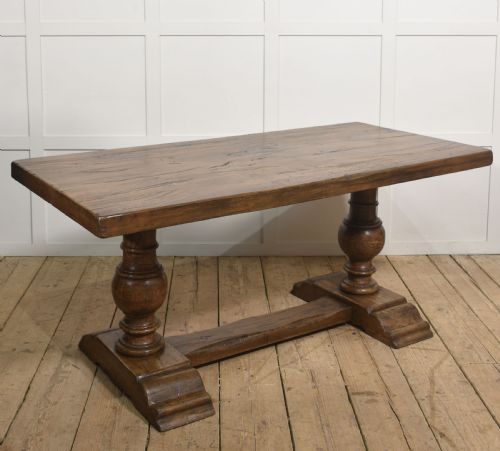


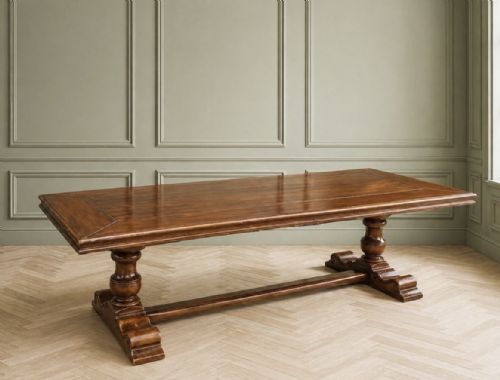
Carved Leg Farm Table
A carved leg farm table brings heavy timber and time-worn presence into a room, offering the robust scale needed for everyday dining.

Carved Leg Farm Table
When you search for a carved leg farm table, you are looking at substantial dining surfaces designed for communal meals and heavy daily use. The examples on this page span several centuries, reaching from the seventeenth century through to the twentieth century.
You are most likely to meet oak and walnut dining tables on this page, often described as refectory or farmhouse tables. These pieces draw on styles such as Spanish Baroque, French Country, and Jacobean, reflecting centuries of domestic utility.
Materials and construction
These tables are constructed primarily from solid oak and walnut, chosen for their density and strength. Wrought iron occasionally appears as a supplementary material.
Joinery relies on traditional carpentry methods suitable for heavy timber, whilst legs feature carved details ranging from simpler regional work to square elaborate carving.
This site's listings span five different centuries, ranging from the seventeenth century up to the 1930s.
Assessing quality and character
Quality rests in the integrity of the timber and the depth of the carving. Tables fashioned from solid oak or walnut with well-executed carving stand apart from plainer interpretations.
Proportion and age also dictate the character of the piece, with seventeenth and eighteenth-century examples offering distinct patination compared to later revivals.
The Carved Leg Farm Table Glossary
- Refectory table
- A long narrow dining table originally built for monastic refectories and later adopted in domestic architecture. These forms make up a significant portion of the heavier timber tables.
- Jacobean
- The style of English architecture and decorative arts prevalent during the early seventeenth century. Pieces from this period often display dark woods and rigid geometric or strapwork carving.
- Patina
- The surface sheen and colour developed by wood over years of handling, polishing, and exposure to light. This quality indicates age and genuine use.
- Solid oak
- Timber taken straight from the log rather than applied as a veneer over a secondary core. This material underpins the most durable examples on this page.
Carved Leg Farm Table: Frequently Asked Questions
What is a farm table?
A farm table is a large, sturdy dining table traditionally used in domestic kitchens or dining spaces for food preparation and communal meals.
These pieces prioritise heavy timber construction and generous proportions to seat large households comfortably.
How do I date an oak table?
Dating relies on observing construction marks, joint types, timber shrinkage, and the style of the carving. Earlier pieces show hand-tool marks and specific regional construction methods.
Comparing the decorative vocabulary, such as seventeenth-century Jacobean motifs versus later revivals, helps narrow down the period.
How do I live with a large wooden table?
Living with a timber table involves accepting the natural movement of wood and the accumulation of marks from daily use. Using coasters and placemats protects the surface from extreme heat and moisture.
Regular application of suitable waxes maintains the moisture balance in the timber and enhances the patina.
Are refectory tables heavy?
Refectory tables are constructed from dense hardwoods like solid oak and walnut, making them exceptionally heavy and sturdy. Their weight prevents shifting during use.
Moving these tables typically requires multiple people and careful handling to protect joints and flooring.