


Carved Brass Bowl
A carved brass bowl brings weight and intricate surface pattern to a room, drawing the eye with warm metallic tones and deep chased detail.
Carved Brass Bowl
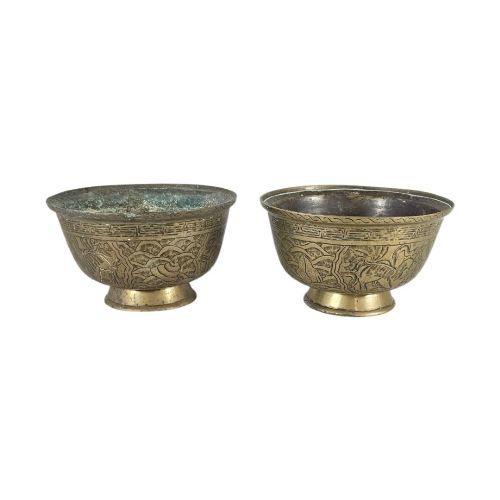
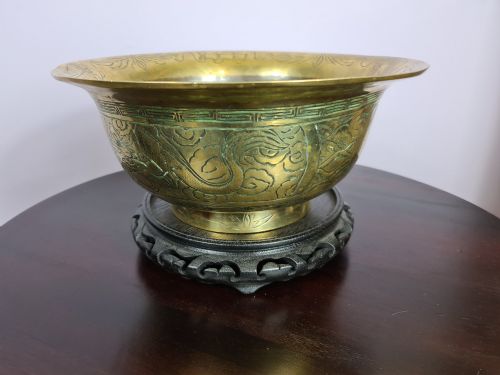
A carved brass bowl is a heavy decorative vessel or jardiniere shaped for display, serving as a striking centrepiece on a table or desk. These pieces arrive from various global traditions, including Chinese, Indian, and European workshops spanning the Georgian, Victorian, and Art Deco periods.
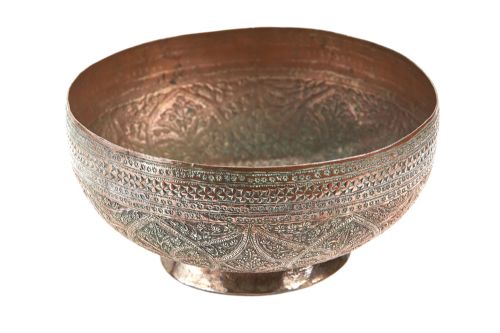
The versions most likely to meet you on this page are substantial Chinese bronze or brass bowls from the nineteenth century, alongside Indian ceremonial vessels and Victorian jardiniere planters. Buyers select these items to introduce historic character and texture into both traditional and modern interiors.
How they were made
Makers shaped these vessels primarily from brass and bronze, often employing casting techniques before finishing the surfaces by hand. Artisans utilised chisels and gravers to carve dense motifs into the metal, creating deep relief patterns of birds, lotus flowers, and oriental ornamentation.
Certain pieces incorporate contrasting materials such as copper, alabaster, hardwood, and enamel to enhance the visual impact of the main metal body. Artisans worked stone bases or wooden stands to support heavier bowls and jardiniere forms.
Listings on this site span the Georgian, Victorian, and Art Deco periods, incorporating materials such as banded agate, alabaster, and copper.
What varies in quality
Quality rests upon the crispness of the hand-carved detail and the thickness of the metal cast. Superior examples display deep, deliberate chiselling that retains sharp definition across the entire surface rather than soft or shallow pressing.
The weight of the vessel and the integrity of its material composition dictate its standing. Heavy bronze and dense brass demonstrate substantial craftsmanship, while well-preserved patination adds depth that inferior or overly polished pieces lack.
The Carved Brass Bowl Glossary
- Jardiniere
- A large ornamental pot or bowl designed to hold plants or flowers. These vessels often sit on heavy tables or directly on the floor during the Victorian period.
- Censer
- A vessel intended for burning incense, frequently taking the form of a bronze or brass bowl with a fitted lid. These items originate predominantly from Chinese workshops.
- Patina
- The surface sheen and colour acquired by metal through age and handling. A genuine patina accumulates natural depth over decades.
- Ormolu
- Gilt bronze mounted onto decorative objects, providing a bright golden contrast against darker metals or stone. This technique appears on European decorative pieces.
- Cloisonne
- An enamelling technique where metal wire forms small compartments on a vessel body before coloured paste is applied and fired. This method decorates various oriental jardinieres.
Carved Brass Bowl: Frequently Asked Questions
What were carved brass bowls used for?
These vessels served practical and decorative functions across different cultures, acting as planters for indoor greenery, censers for burning incense, or ceremonial wash basins.
In domestic settings, smaller versions rested on desks for holding ink or small items, while large jardiniere bowls commanded attention as prominent decorative table centerpieces.
How do I clean a carved brass bowl?
Dust the vessel gently with a soft dry cloth to remove surface particles without disturbing the underlying metal surface.
Avoid abrasive metal polishes that strip away historic patination and soften the fine carved details carved into the brass or bronze.
How can I tell a nineteenth-century bowl from a newer one?
Examine the interior and base of the vessel for tool marks, casting irregularities, and natural wear patterns left by hand tools.
Nineteenth-century examples display consistent weight, hand-chased motifs with irregular depth, and a deep aged tone that modern manufacturing methods struggle to replicate.
Where should I place a heavy bronze bowl?
Position heavy vessels on sturdy furniture such as sideboards, heavy oak tables, or dedicated plant stands that can safely support significant weight.
Ensure the placement protects polished wooden surfaces from dampness or friction by using a suitable felt pad beneath the metal base.