



Engraved Brass Basin
An engraved brass basin brings centuries of intricate metalwork into the home, offering both historic utility and striking decorative presence.
Engraved Brass Basin
An engraved brass basin is a functional vessel transformed into surface art through hand-chased or incised decoration. Buyers searching this phrase encounter forms ranging from deep wash bowls to large jardinieres and decorative basins.
The examples on this page span several centuries and geographic traditions, featuring pieces from the sixteenth century alongside nineteenth-century Victorian interpretations and twentieth-century Asian metalwork. These vessels often serve as centrepieces, plant holders, or display bowls.
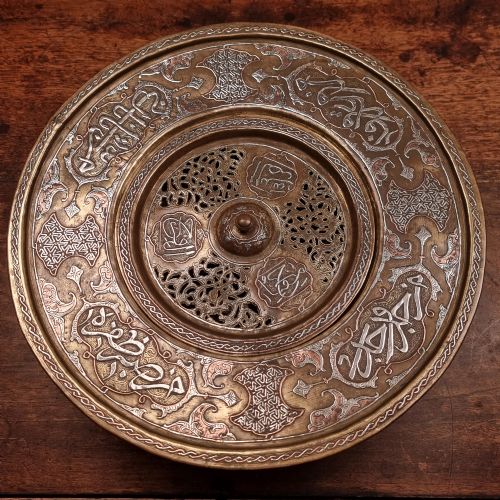
The most frequently seen versions on this page are nineteenth-century creations influenced by global aesthetic movements, alongside older sixteenth-century Mamluk and Safavid examples. Each piece displays the distinct hand of its maker through varying depths of incision and choice of metal alloy.
Materials and construction methods
These vessels are primarily formed from sheet or cast brass, though bronze, copper, and mixed metal combinations also appear across the listings. Artisans shaped the metal by hand, often hammering sheets into deep bowls before applying surface decoration.
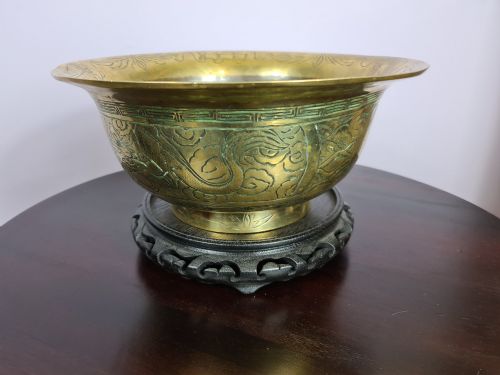
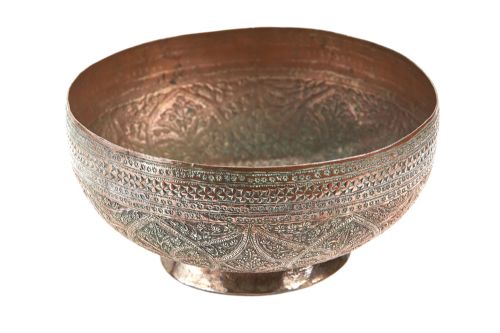
Engraving and chasing form the core decorative techniques, where sharp tools carve lines directly into the metal or push the brass to create relief patterns. Some nineteenth-century and earlier pieces incorporate silver or enamel inlay to create high-contrast geometric and figurative motifs.
Geographic styles represented across the items include Mamluk, Persian Safavid, Chinese Qing, Japanese Meiji, and Anglo-Indian.
Assessing quality in engraved metalwork
Quality in an engraved brass basin rests upon the crispness and depth of the hand-chased ornamentation. Finer pieces demonstrate confident, precise toolwork where lines remain sharp and balanced across the entire curved surface.
The choice of materials and secondary elements further distinguishes the pieces. The presence of dense silver or enamel inlay, heavier metal gauges, and well-integrated mixed metal components elevate a vessel from standard production to exceptional craftsmanship.
The Engraved Brass Basin Glossary
- Cairoware
- Nineteenth-century European term for brass and mixed metal wares produced in Egypt, heavily decorated with silver and copper inlay. These pieces catered to Victorian tastes for Orientalism.
- Mamluk Revival
- A nineteenth-century artistic movement that copied or reinterpreted the elaborate brasswork of the medieval Mamluk Sultanate. Artisans utilised complex geometric patterns and Arabic inscriptions.
- Safavid
- Pertaining to the Safavid dynasty of Persia, known for refined metalwork and distinct decorative motifs. Pieces from this tradition often feature delicate floral scrollwork and fine engraving.
- Jardiniere
- A large decorative pot or basin designed to hold plants or flowers. In metalwork, these items often feature waterproof liners or heavy bases to support soil and moisture.
- Chasing
- A metalworking technique where the artisan pushes the metal from the front using hammers and punches rather than removing material. This creates raised relief patterns without cutting the surface.
Engraved Brass Basin: Frequently Asked Questions
What is an engraved brass basin used for?
Historically, these vessels served practical roles in washing, ritual ablutions, or domestic storage. Today, buyers primarily utilise them as decorative bowls, table centrepieces, or planters for indoor greenery.
Their robust metal construction allows them to hold heavy items while adding a textured metallic accent to a room. Many collectors simply display them on stands or tables to appreciate the intricate surface patterns.
How do I clean an antique brass basin?
Cleaning requires a careful approach to preserve the original patina and any delicate inlay work. Gentle dusting with a dry microfibre cloth is usually sufficient for routine maintenance.
Avoid harsh chemical polishes or abrasive pads, as these can strip away aged surfaces and damage shallow engravings. If washing is necessary, use mild soap and warm water, drying the metal immediately afterwards.
How can I tell the age of a brass bowl?
Dating relies on examining the manufacturing marks, tool traces, stylistic influences, and the composition of the metal alloy. Sixteenth-century pieces often display hand-beaten irregularities and specific regional epigraphy.
Victorian and later nineteenth-century pieces frequently show machine-assisted consistency or distinct revivalist motifs such as Cairoware inlay. Comparing the wear patterns against known historical styles helps narrow down the period.
Are these basins safe for holding plants?
Many of these vessels function well as jardinieres or planters, provided you take precautions with moisture. Placing a plastic or ceramic saucer inside the bowl prevents direct contact between wet soil and the antique brass.
Standing water left inside unlined metal can accelerate corrosion and damage the historic interior finish. With a protective inner liner, a brass basin safely houses potted plants.