
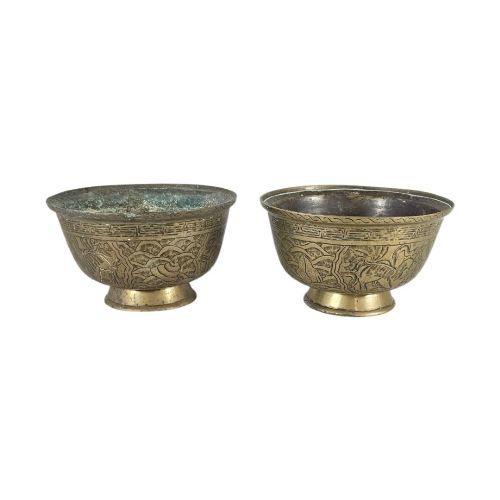
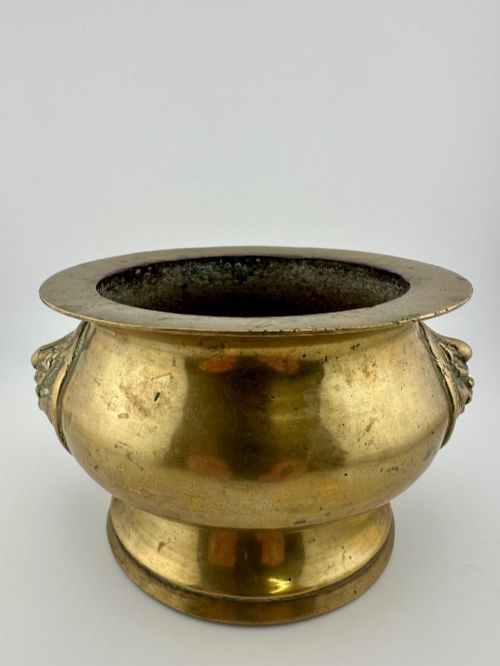
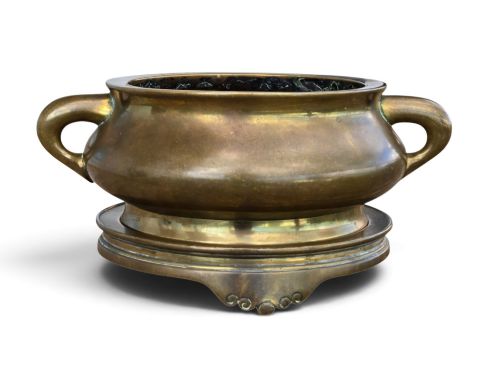
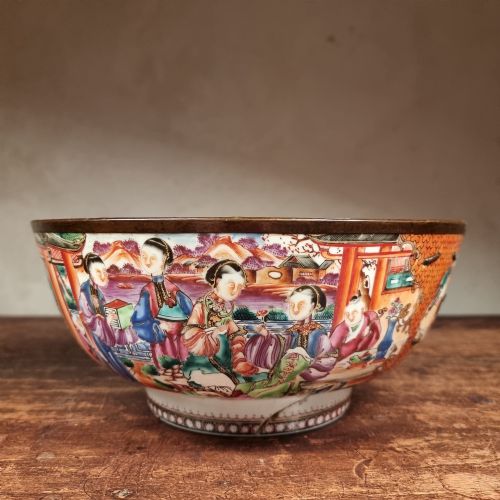


Chinese Brass Bowl
A Chinese brass bowl brings weight and distinct metallurgy into a room, spanning centuries of decorative metalwork.
Chinese Brass Bowl
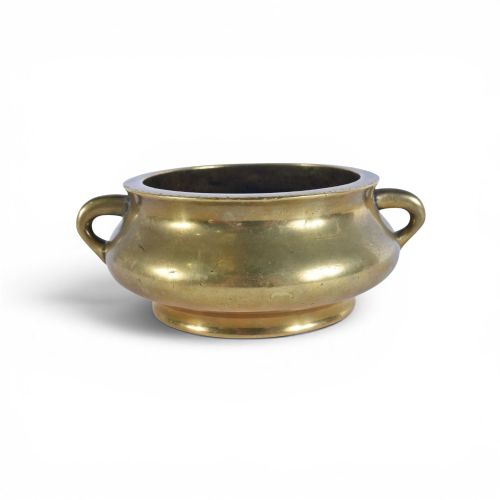
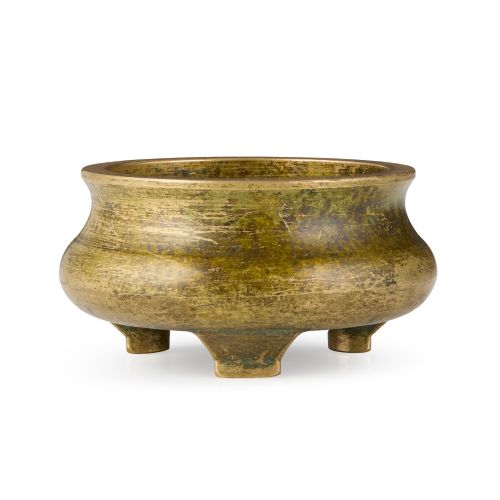
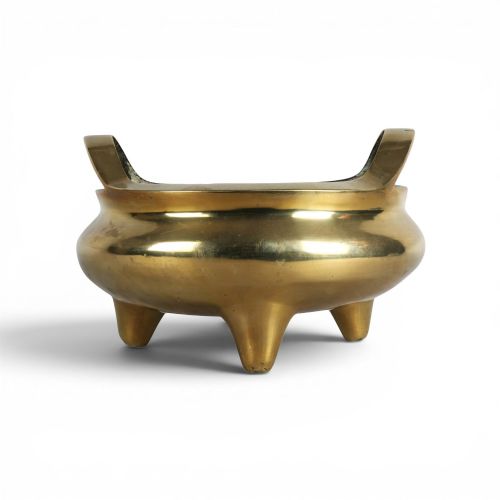
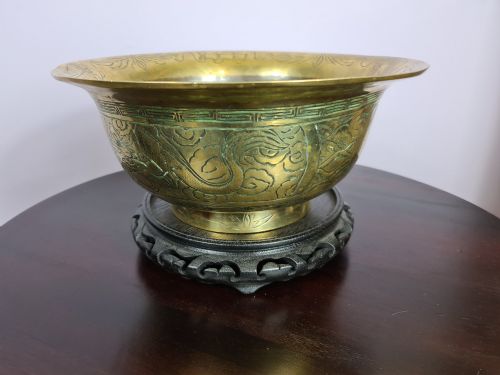
When you search for a Chinese brass bowl, you encounter vessels that bridge utilitarian containers and ritual objects, with forms ranging from heavy decorative bowls to tripod censers and large jardinieres. The pieces appearing here cross multiple periods, including the Georgian, Victorian, and Qing Dynasty eras, showing how domestic vessels and temple pieces overlap.
The most common formats on this page are substantial bronze or brass bowls, incense burners, and planters, often marked by traditional handles such as lion masks or simple ritual tripod feet. These items display a direct lineage from earlier ritual bronzes adapted into decorative objects for Western and Eastern markets alike.
Many examples date from the nineteenth and early twentieth centuries, capturing the shift from archaic ritual forms toward domestic display pieces like desk pots and large plant holders. This selection includes pieces associated with specific periods and marks, offering a tangible connection to historical workshops.
Materials and Construction
These vessels rely primarily on brass and bronze casting, frequently augmented with copper, enamel, and cloisonné work to create layered surfaces. The weight of these objects indicates thick-walled metal casting, often finished with applied handles or fitted wooden stands.
Techniques range from plain cast metal to intricate surface decoration involving inlaid cloisonné and semi-precious stone embellishments. Makers utilised traditional foundry methods, resulting in durable vessels with substantial heft, sometimes exceeding several kilograms.
Some pieces incorporate mixed media, pairing metal bowls with carved hardwood stands or integrating porcelain elements within the design. The physical evidence shows consistent reliance on durable metal alloys designed to endure centuries of use.
Several heavy censers arrive with ferocious lion mask handles, standing ready to guard your mantelpiece from mischievous spirits.
Assessing Quality and Manufacture
Quality in these metal vessels rests upon the precision of the casting and the crispness of applied details such as lion mask handles or relief ornamentation. Superior examples display balanced proportions and substantial weight relative to their size, reflecting the density of the bronze or brass used.
The presence of studio or reign marks, such as Xuande or Wu Bangzuo marks, alters the character of a piece, distinguishing standard utility items from scholarly or imperial commissions. Furthermore, the integration of supplementary materials like cloisonné enamel or carved stands indicates a higher tier of workshop production.
Surface finish and patination also dictate quality, with older pieces showing a deep, stable coloration developed over generations. The transition from crude casting to finely chased surfaces marks the boundary between everyday vessels and masterworks.
The Chinese Brass Bowl Glossary
- Censer
- A vessel used for burning incense during rituals or in scholarly settings. These often feature tripod feet and perforated covers.
- Jardiniere
- A large ornamental pot or bowl designed to hold plants or flowers. They frequently appear in heavy brass or cloisonne.
- Cloisonne
- An enamelling technique where metal wire forms compartments on the surface to hold coloured glass paste. This method creates vibrant patterns across the body of the vessel.
- Archaistic
- A style that deliberately imitates ancient forms and motifs from earlier dynasties. This approach connects later pieces to historical ritual vessels.
- Tripod
- A vessel supported by three feet. This configuration is common in traditional bronze censers and incense burners.
Chinese Brass Bowl: Frequently Asked Questions
What is a Chinese brass bowl used for?
These bowls functioned historically as ritual incense burners, scholarly desk items, or decorative planters for large plants and floral arrangements.
Today, they serve primarily as decorative objects, centrepieces, or functional containers within contemporary interiors.
How do I date a brass bowl?
Dating relies on stylistic markers, casting techniques, weight, and any inscribed reign or studio marks found on the base or body.
Comparing the alloy and decorative motifs against documented periods helps narrow down the decade or dynasty of manufacture.
Are these bowls made of brass or bronze?
The listings include both brass and bronze vessels, which often share similar casting methods and patination over time.
Bronze generally contains copper and tin, while brass uses copper and zinc, though older terminology often groups these copper-alloy pieces together.
How should I clean a antique bowl?
Antique metal vessels benefit from minimal intervention to preserve the historical surface patination and stability of the alloy.
Dusting with a soft cloth is usually sufficient, avoiding harsh chemical polishes that strip away the aged finish.