

Carved Book Stand
A carved book stand organises volumes with decorative woodwork from the Victorian, Edwardian, and nineteenth-century periods.
Carved Book Stand
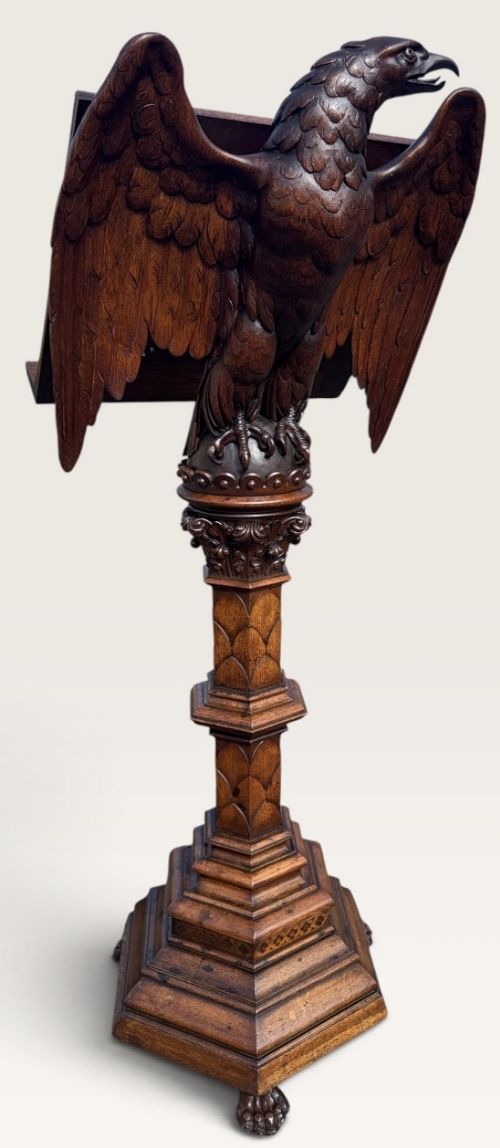
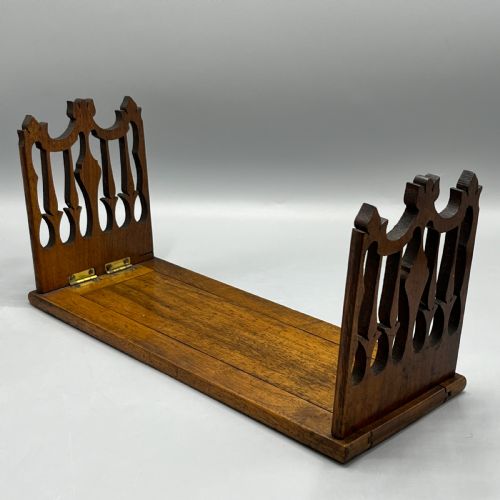
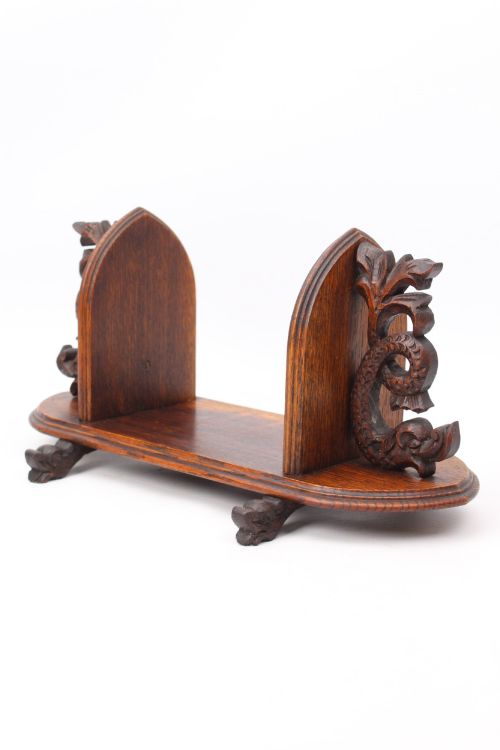
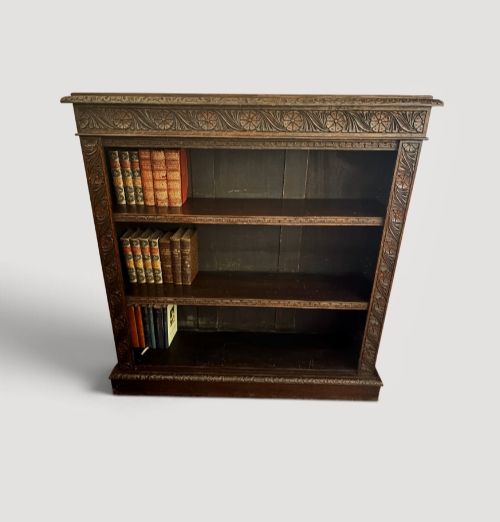
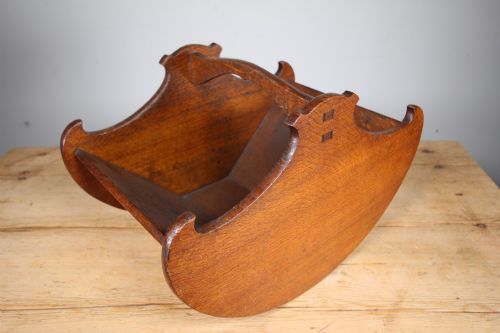
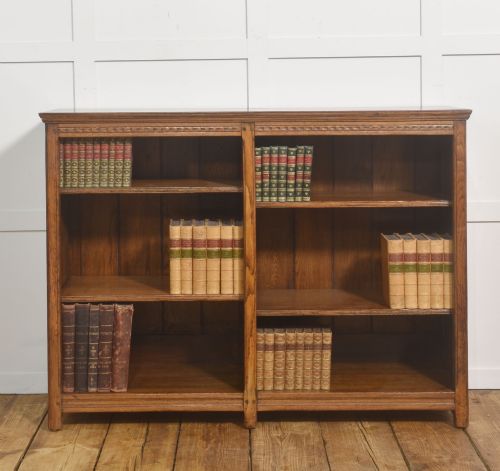
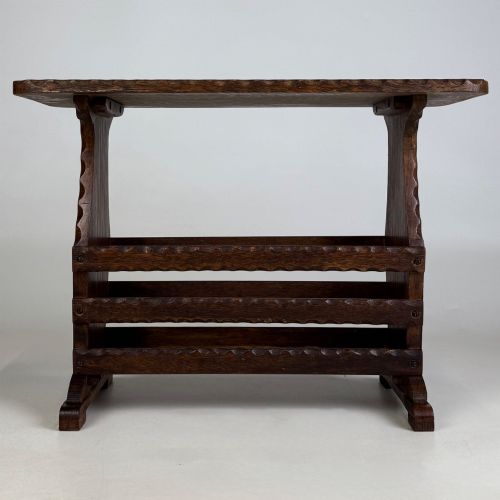
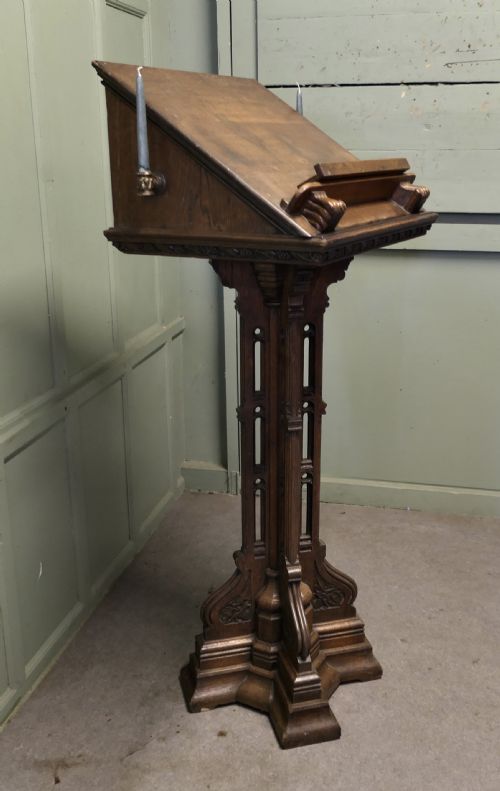
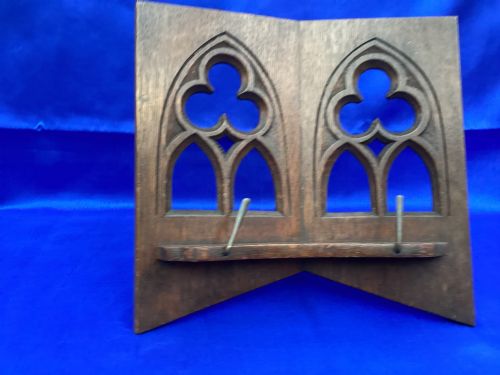
A carved book stand serves to display or hold volumes securely using wooden architecture from the nineteenth and early twentieth centuries. These objects appear in various forms on this page, including table rests, reading podiums, church lecterns, and folding Bible supports.
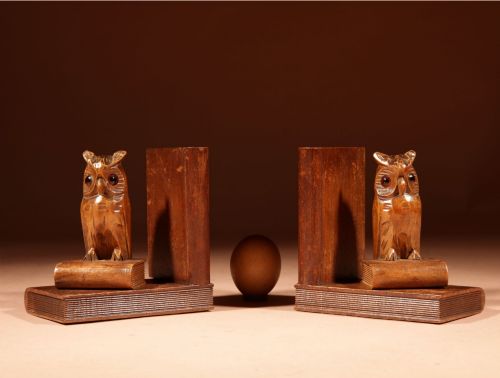
Most examples found here date from the Victorian and Edwardian eras, alongside pieces from the Regency and nineteenth century. They bridge utilitarian function and sculptural woodwork, often employing styles like Gothic Revival, Arts and Crafts, and Black Forest animal carving.
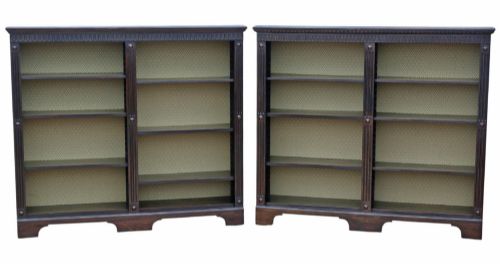
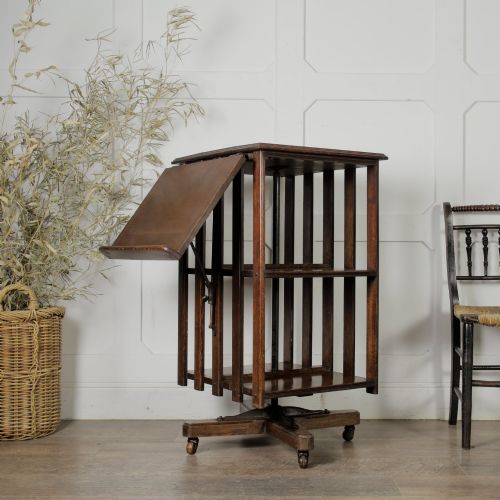
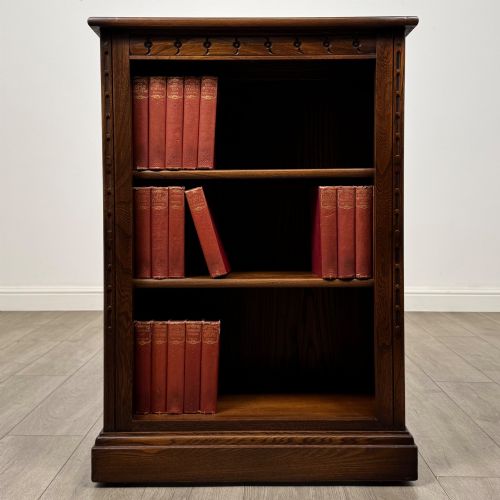
Buyers meet everything from small olive wood extending slides to substantial oak reading stands and revolving cases. The selection reflects domestic, ecclesiastical, and institutional origins spanning English, French, Italian, and regional European workshops.
How they were made
Makers utilised solid timbers such as oak, mahogany, walnut, rosewood, teak, pine, and olive wood to construct these stands. Wood selection dictated the depth of relief possible in the carved panels, animal figures, and architectural motifs.
Joinery techniques combined traditional framing with applied surface carving, pierced fretwork, and turning. Artisans employed hand tools to execute geometric tracery, foliate scrolls, and figural sculptures like eagles or owls.
Decorative enhancements included mother-of-pearl inlay, ebonising, and gold gilding on items like Italian book troughs. Folding mechanisms on slides and missal stands relied on brass hinges and extendable wooden channels.
Object forms span revolving bookcases, church lecterns, table rests, and extending book slides.
What varies in quality
The crispness and depth of the hand carving separate simpler production items from superior sculptural pieces. Fine examples display undercut details in foliage and realistic anatomical forms in animal carvings without mechanical smoothing.
Timber selection and grain matching influence the visual authority of a stand, particularly in plain oak or figured mahogany surfaces. Superior pieces employ quarter-sawn oak exhibiting strong medullary rays or rich, dense rosewood.
Structural integrity depends on the precision of extending mechanisms, tight joinery in revolving bases, and the stability of folding lectern supports. Original labels and maker signatures add documented provenance to the construction.
Arthur Simpson
The Carved Book Stand Glossary
- Lectern
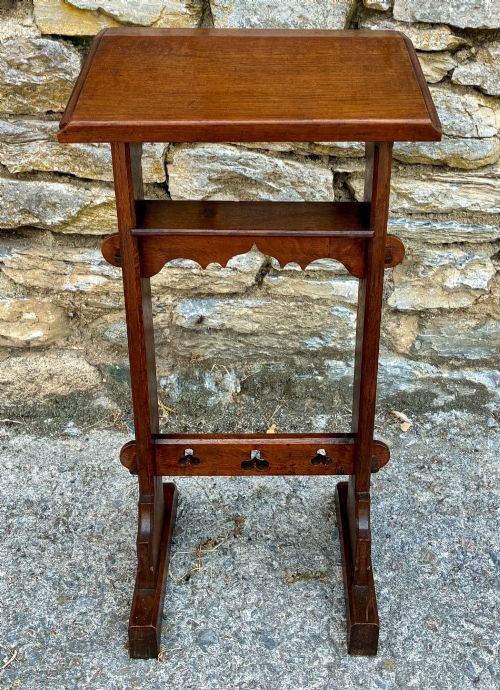
- A slanted reading desk designed to hold books at a comfortable angle for standing speakers or readers. These often feature carved eagles or architectural tracery.
- Book slide
- An extending rack with adjustable ends to keep volumes upright on a desk or table. They frequently incorporate inlaid materials or folding actions.
- Black Forest
- A nineteenth-century style of wood carving originating in Switzerland and Germany known for realistic animal figures. Owls and bears dominate these functional carved items.
- Gothic Revival
- An architectural and decorative style mimicking medieval pointed arches, trefoils, and heavy tracery. This aesthetic appears frequently on nineteenth-century oak stands.
- Étagère
- A set of open shelves for displaying small objects or books. These occasional pieces utilise fine hardwoods like rosewood or walnut.
Carved Book Stand: Frequently Asked Questions
What is the difference between a book stand and a lectern?
A book stand generally sits on a table or desktop to support smaller volumes or display a single open book for quick reference. Examples include folding missal rests and decorative desktop troughs.
By contrast, a lectern is typically a larger, freestanding structure designed for a speaker or reader to address a room. These ecclesiastical or library pieces often feature a steep sloping reading ledge supported by a column or carved pedestal.
How do I care for antique carved wood?
Antique wooden stands require stable indoor humidity away from direct heat sources and sunlight to prevent timber shrinkage and splitting. Dusting with a soft, dry cloth preserves the finish without abrasive buildup.
Applying microcrystalline wax periodically protects the carved surfaces and maintains the historic sheen of the wood. Avoid silicone sprays or modern liquid polishes that penetrate the grain.
Where were these pieces used historically?
These stands served diverse environments ranging from private Victorian libraries and drawing rooms to churches and institutional study spaces. Smaller slides and rests sat on library tables or bureau desks for daily reading.
Larger oak lecterns and podiums occupied ecclesiastical settings or grand hall spaces for reading texts aloud. Folding stands accommodated travel or specific religious rituals in domestic and chapel settings.
How do I identify the period of a carved stand?
Period identification relies on stylistic cues, timber choices, and construction methods visible in the frame. Gothic Revival and heavy oak construction typically point toward Victorian or Edwardian ecclesiastical tastes.
Lighter rosewood or mahogany stands with refined inlay often reflect Regency or Victorian parlour aesthetics. Black Forest animal carvings and extending mechanisms generally date from the late nineteenth or early twentieth centuries.