


Carved Bone Box
A carved bone box is a tactile piece of history, prized for intricate scrimshaw work and clever construction.
Carved Bone Box
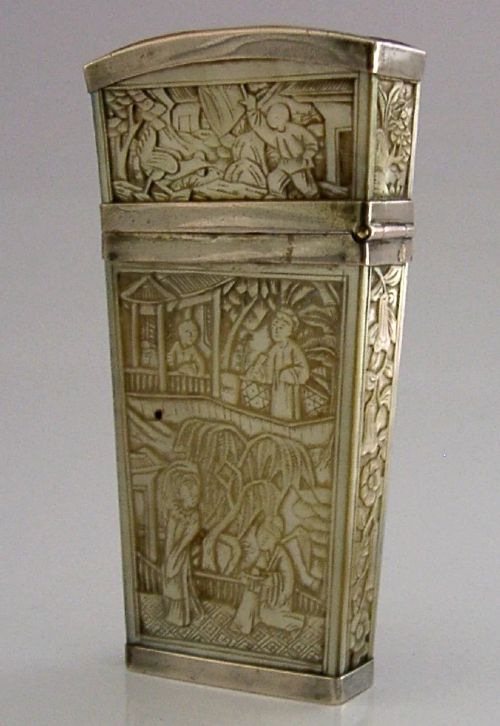
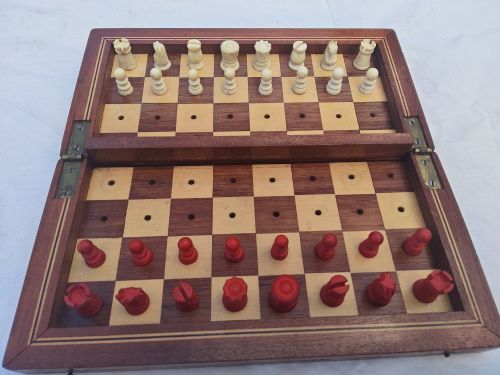
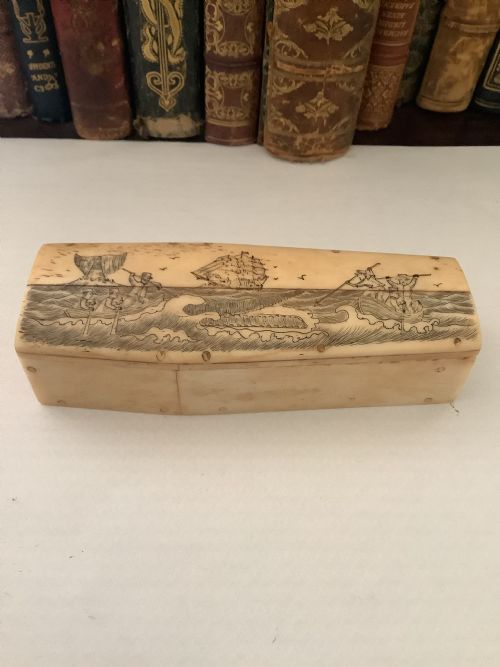
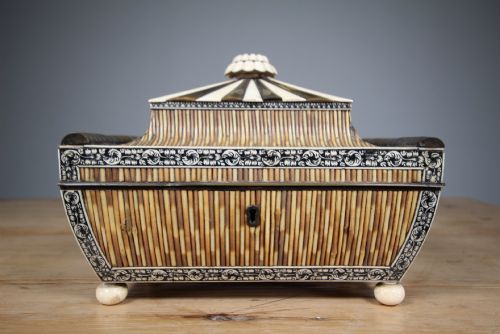
A carved bone box brings together utilitarian storage and delicate surface decoration, often taking the form of small receptacles intended for games, sewing kits, or personal keepsakes. When searching for a carved bone box, buyers encounter items ranging from nineteenth-century prisoner of war pieces to Anglo-Indian productions and Victorian folk art examples.
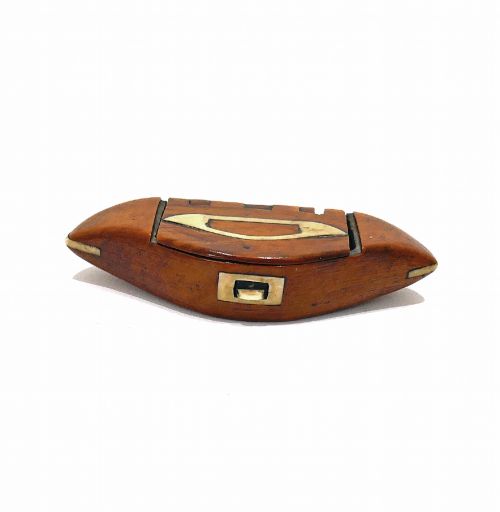
The objects span multiple periods, with nineteenth-century examples appearing frequently alongside pieces dated to the early twentieth century, eighteen hundred, and the Regency era. Formats include domed boxes, money boxes, and small caskets constructed from bone plates assembled with metal pins or brass ends.
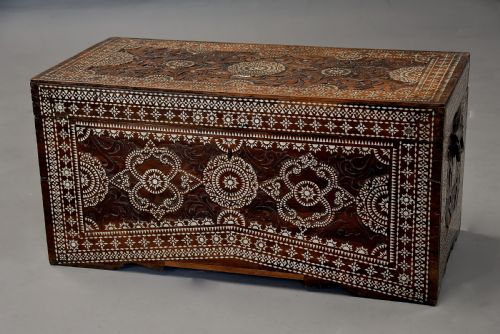
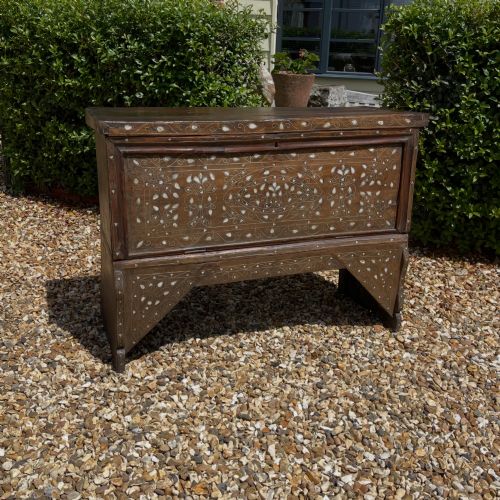
Many survivors of this category relate to maritime history or prisoner of war craftsmanship, utilising ox bone and bovine material shaped with primitive tools into intricate geometries and figural motifs. Others emerge from nineteenth-century workshops in Vizagapatam or Ottoman regions, pairing bone inlay with exotic hardwoods.
Materials and construction methods
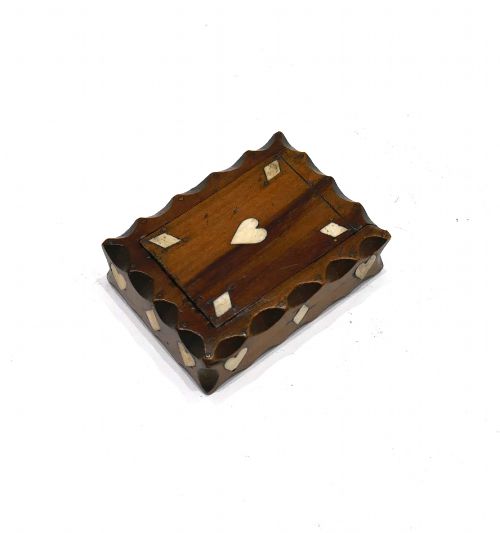
Makers utilised available organic materials, primarily bone and antler, often salvaged from rations or sourced locally, combining them with secondary supports of hardwood, sandalwood, rosewood, ebony, and brass. Surfaces received intricate incised decoration filled with dark pigment to emphasise scrimshaw designs, while internal compartments relied on simple wooden framing.
Construction techniques involved shaping flat bone sections through sawing and filing, then securing them to wooden carcasses or joining them directly with tiny pins and hinges. Inlaid variants integrated geometric bone and horn plaques into sandalwood or fruitwood grounds using Sadeli work and micro-mosaic principles.
Some makers carved bone into the uncanny form of ladies' feet wearing open-toed shoes, creating whimsical snuff boxes that defy solemn utility.
Quality factors in carved bone
Differentiation across the range rests on the complexity and depth of the carving rather than mere age, distinguishing simple geometric dot-and-circle patterns from deeply relief-carved figural scenes. The fineness of the scrimshaw work and the tightness of the joinery between bone plates and wooden carcasses dictate the tier of the piece.
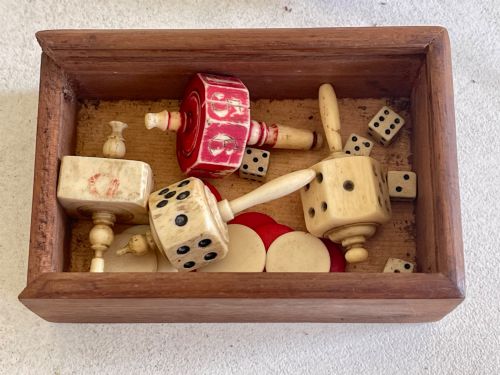
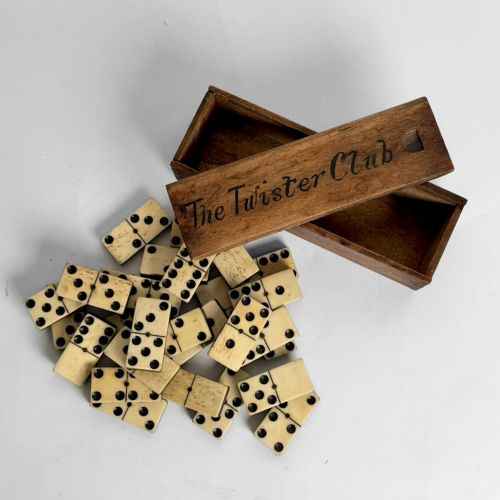
Material selection also governs quality, with dense, even-grained ox bone yielding superior crispness in decoration compared to porous or heavily fragmented pieces. Additionally, the survival of original brass fittings, intact interior trays, and matching contents such as dice or dominoes elevates the standing of an example.
The Carved Bone Box Glossary
- Scrimshaw
- The technique of carving or engraving bone, ivory, or whalebone, often filled with dark pigment to make the design legible. Sailors and prisoners of war commonly practiced this art during long confinements.
- Vizagapatam
- A coastal town in India known for luxury boxes and writing slopes decorated with intricate bone, horn, and ivory inlay set into sandalwood or rosewood. European traders commissioned these high-status goods throughout the nineteenth century.
- Sadeli work
- A form of micro-mosaic craft originating in India, utilising geometric segments of bone, horn, and metal arranged in repeating patterns on wooden boxes. Artisans sliced these multi-coloured rods to create complex borders.
- Treen
- Small handmade wooden household objects and utilitarian wares, sometimes accented with bone inlay. The category encompasses snuff boxes, shuttle boxes, and small receptacles from the Georgian and Victorian eras.
Carved Bone Box: Frequently Asked Questions
What were carved bone boxes used for?
Historic boxes served secure functions for personal valuables, playing cards, gaming counters, sewing implements, and snuff. Their compact dimensions suited domestic tabletops or personal travel.
Prisoner of war examples often doubled as amusement, housing dominoes, dice, or teetotums created within the same camp. Others functioned as money boxes or presentation pieces marked with specific dates and initials.
How do you date a carved bone box?
Dating relies on stylistic markers, construction methods, and materials associated with specific eras such as the Regency period, Victorian folk art, or early twentieth-century production. Inscribed dates, specific brass hardware types, and accompanying contents like original bone dominoes provide firm chronological anchors.
Comparative analysis with documented prisoner of war pieces or Anglo-Indian Vizagapatam export goods helps narrow the window of manufacture. Subtle shifts in carving tools and timber preparation distinguish eighteenth-century work from later Victorian revivals.
Are these boxes made of bone or ivory?
Most pieces in this category utilise bovine bone, frequently ox bone, identifiable by Haversian systems or microscopic structural pores visible under magnification. Ivory displays distinct cross-hatching known as Schreger lines, which are absent in bone.
Anglo-Indian and prisoner of war workshops frequently turned to bone due to availability and cost, though some luxury export items incorporated ivory alongside bone and horn inlay.
How should I care for an antique bone box?
Bone reacts to drastic changes in humidity and temperature, making stable indoor environments essential to prevent warping or cracking of the organic material and its wooden carcass. Avoid direct sunlight and moisture, dusting gently with a dry, soft cloth.
Conditioning agents are generally unnecessary unless advised by a professional conservator, as natural oils within the bone require no supplementary treatment. Handling with clean hands preserves the dark pigment embedded within the scrimshaw incisions.