


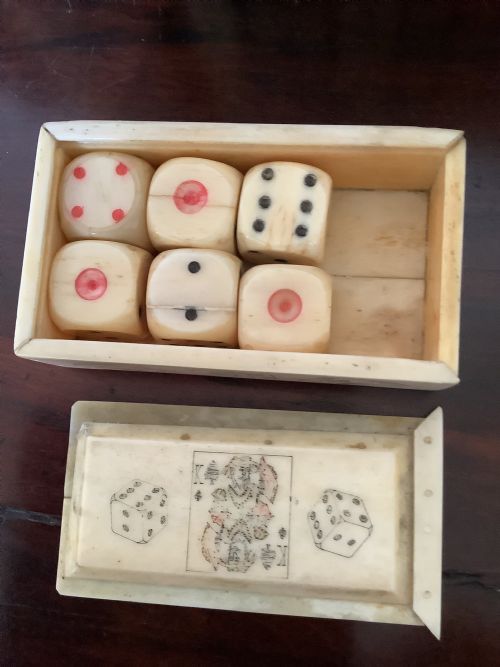


Bone Gaming Set
A bone gaming set brings centuries of tactile parlour entertainment to your table, offering miniature chess sets, dominoes, and carved counters that collectors prize.
Bone Gaming Set
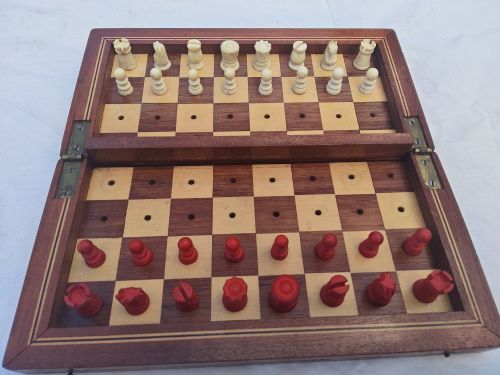
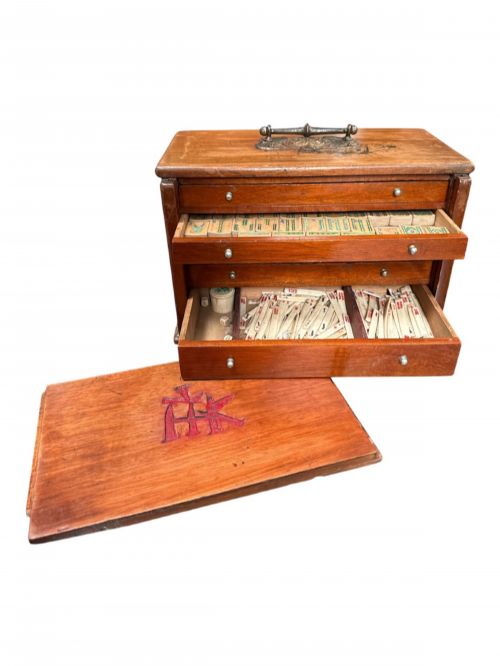
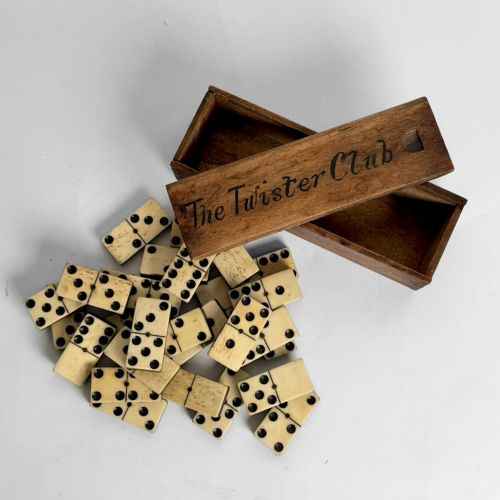
A bone gaming set comprises historical tabletop amusements, most frequently appearing on this page as nineteenth-century domino sets, miniature travelling chess sets, and Chinese mahjong collections housed in fitted wooden cabinets. You encounter diverse formats ranging from prisoner-of-war carved dominoes to boxed parlour games featuring dice and counters.
The objects span multiple eras, stretching from nineteenth-century pieces and Georgian examples through Edwardian miniatures up to the nineteen-twenties and thirties. These items reflect domestic leisure and maritime craft, uniting traditional pastimes with organic materials.
How they were made
Makers utilised bone alongside ebony, boxwood, and mahogany to construct both the playing pieces and their protective cases, often incorporating brass hinges and leather. Pigment and ink provided the dark contrasts needed for pips, numbers, and board markings.
Carving and turning techniques shaped the raw bone into smooth counters, intricate chess pieces, and tactile domino blocks. Fitted wooden cabinets and specialised boxes kept the components organised for domestic use and travel.
Listings feature materials including bone, mahogany, boxwood, ebony, and brass, spanning the nineteenth century through the nineteen-thirties.
What varies in quality
The refinement of the carving dictates the distinction between standard sets and finer examples, particularly evident in the detail of miniature chess pieces and prisoner-of-war work. Superior sets demonstrate crisp turning, balanced proportions, and careful polishing of the bone surface.
The integrity of the original housing influences the desirability of the set, with fitted wooden cabinets and leather cases preserving the completeness of the contents. Sets that retain all their original counters, dice, or teetotums present a more cohesive historical record.
The Bone Gaming Set Glossary
- Teetotum
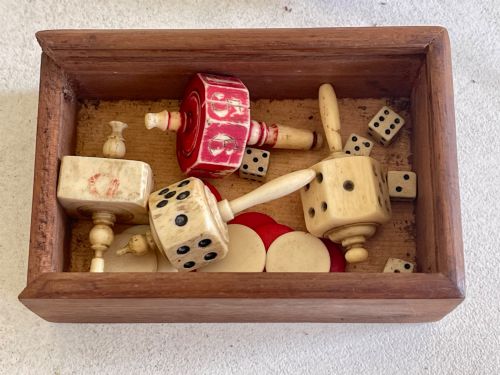
- A spinning top used for gambling or parlour games. These small marked objects appear in nineteenth-century collections.
- Prisoner of War
- Descriptive of items carved by detained combatants, frequently during the Napoleonic era. Such pieces show remarkable ingenuity using limited organic materials.
- Mahjong
- A tile-based game originating in China and appearing in twentieth-century regional sets. These collections usually feature fitted wooden storage cabinets.
- Whittington Pattern
- A specific design style associated with nineteenth-century chess sets. It governs the distinctive turning and proportions of the pieces.
Bone Gaming Set: Frequently Asked Questions
What is included in a bone gaming set?
A bone gaming set can comprise various tabletop amusements, including dominoes, chess pieces, dice, backgammon counters, and mahjong tiles.
Many of these collections arrive in specialised wooden boxes, leather travel cases, or fitted cabinets designed to store the pieces securely.
How old are these gaming sets?
The sets represented here primarily date from the nineteenth century, extending into the Edwardian era and the nineteen-twenties and thirties.
Prisoner-of-war items often trace back to the Napoleonic period, whilst other examples reflect Victorian and early twentieth-century parlour culture.
How were prisoner-of-war sets made?
Detained soldiers and sailors carved these sets by hand using available bone, scrap materials, and rudimentary tools during long periods of confinement.
Their work produced intricate dominoes, teetotums, and small boxes that survived as personal mementoes of maritime history.
How do I care for antique bone?
Antique bone benefits from stable indoor environments away from direct sunlight, extreme heat, and sudden humidity fluctuations.
Handling the pieces with clean hands preserves the natural patina and protects the inked or pigmented details on the surface.