
Carved Back Occasional Chair
A carved back occasional chair brings nineteenth-century woodwork and compact seating into a modern room.
Carved Back Occasional Chair
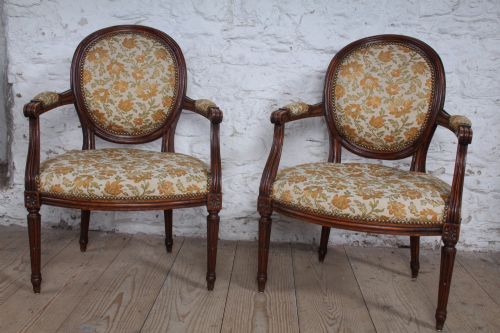
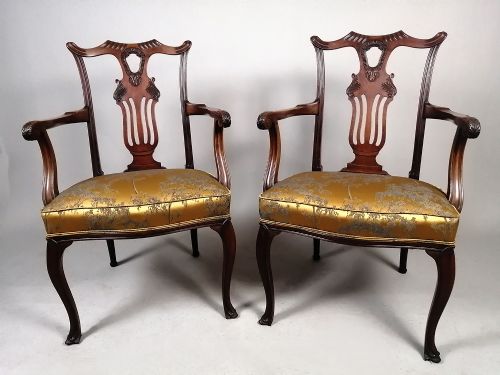
A carved back occasional chair is a movable seat designed for parlours, bedrooms, and reception rooms, distinct from heavy dining furniture by its lighter frame and decorative carved woodwork. When you search for this phrase, you find examples spanning the Victorian, Edwardian, and Regency periods.
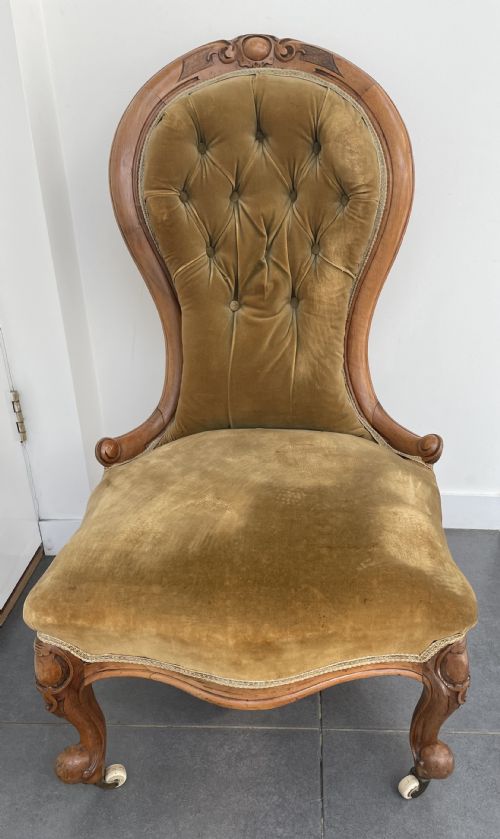
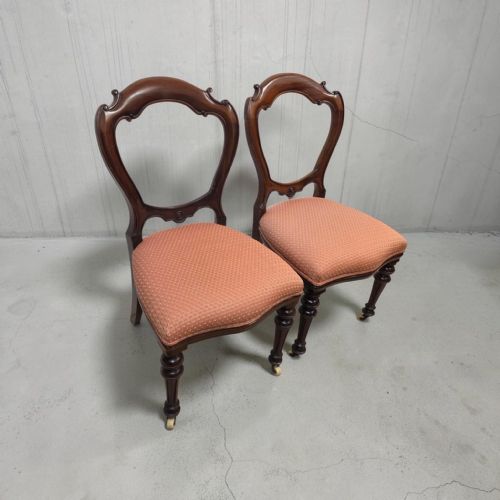
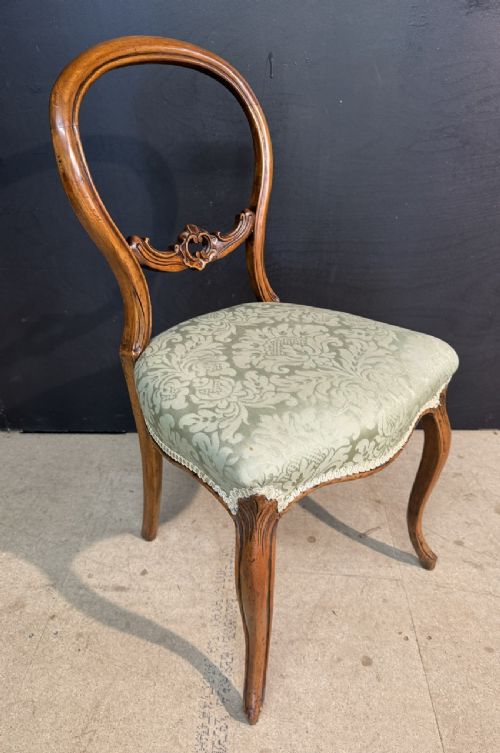
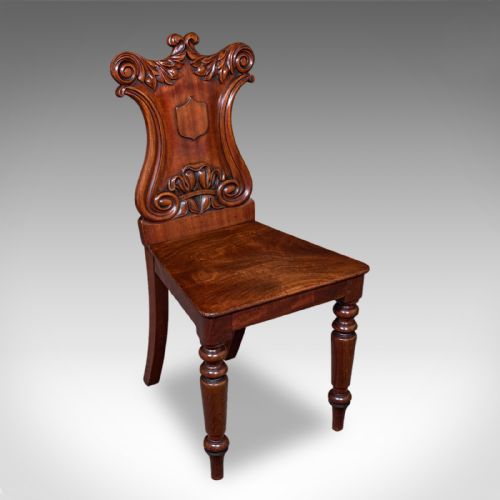
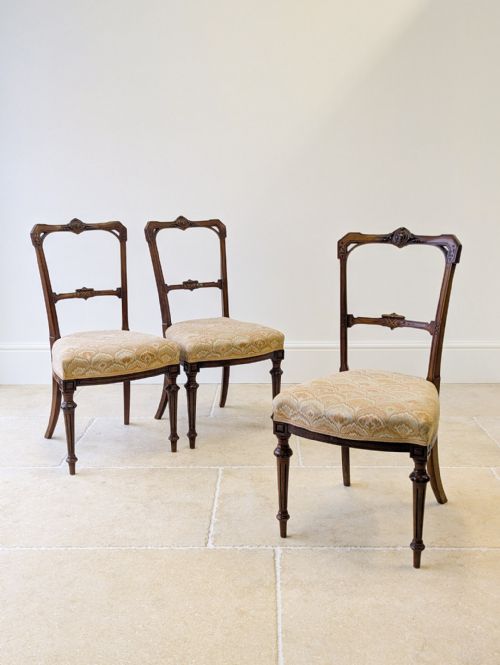
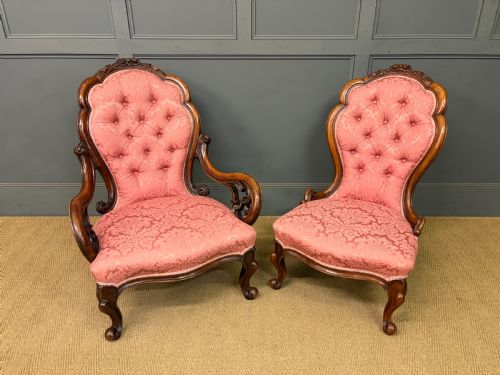
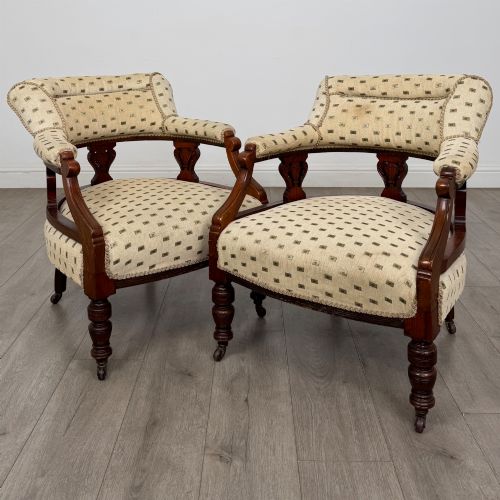
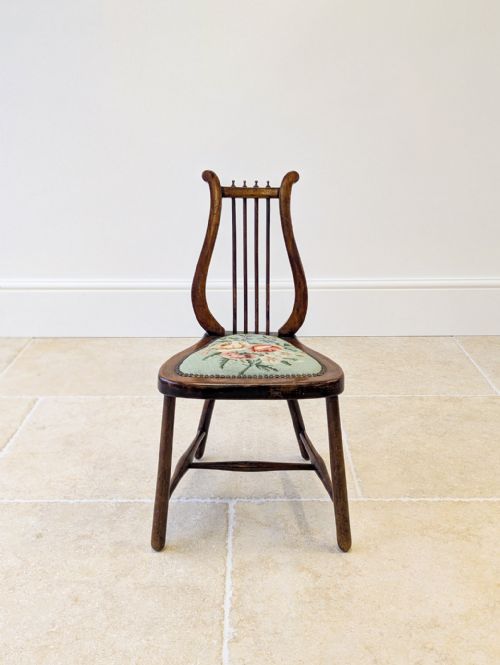
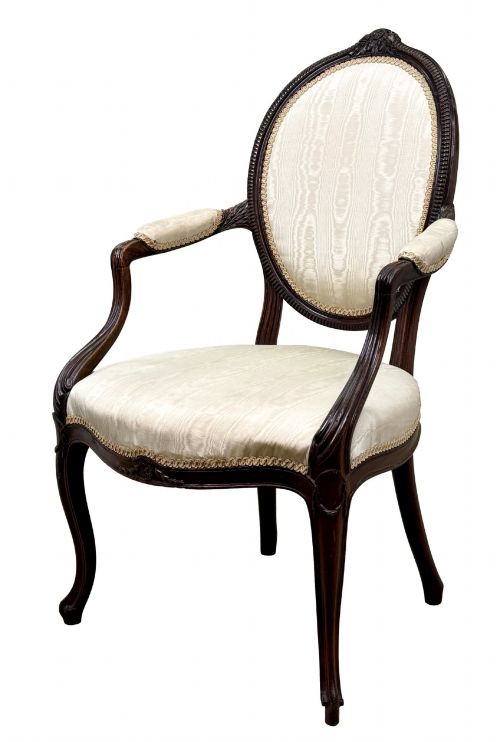
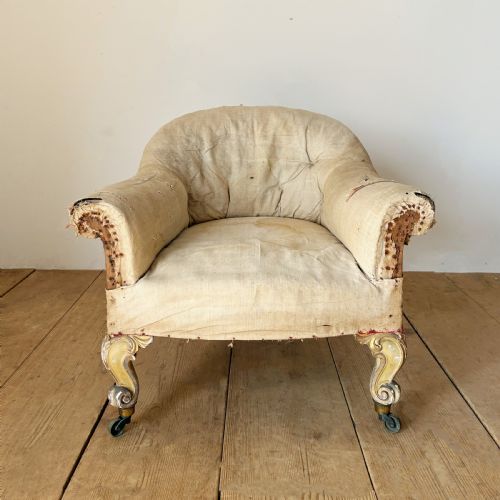
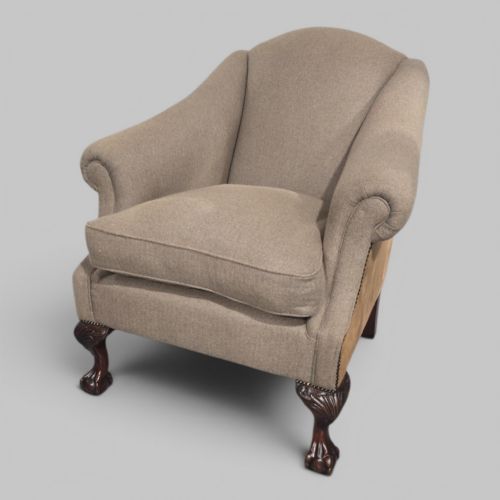
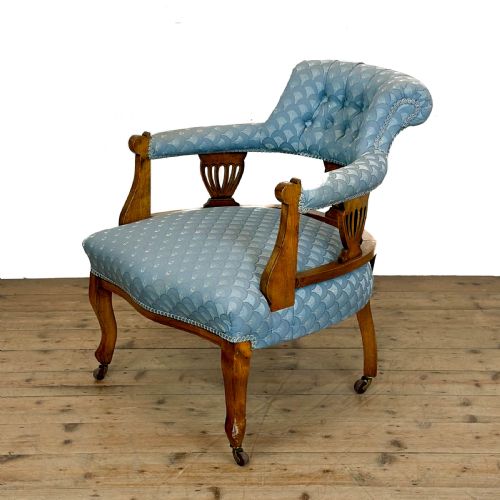
The pieces appearing here are predominantly Victorian walnut and mahogany chairs, alongside Edwardian beech and occasional Georgian or Regency items. These range from balloon-back and pierced splat designs to low nursing chairs and tub seats.
How they were made
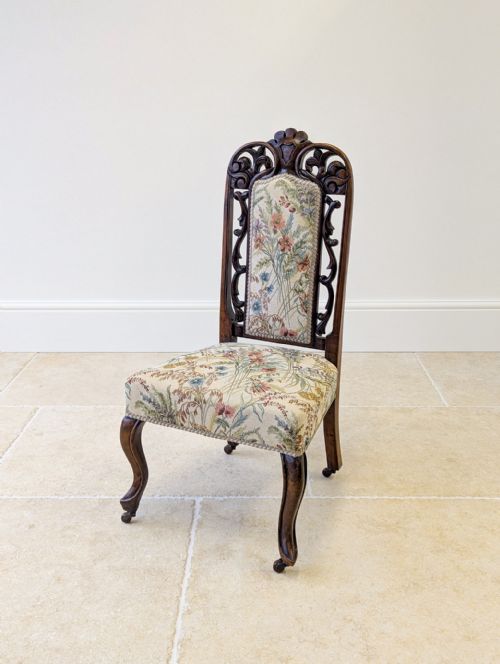
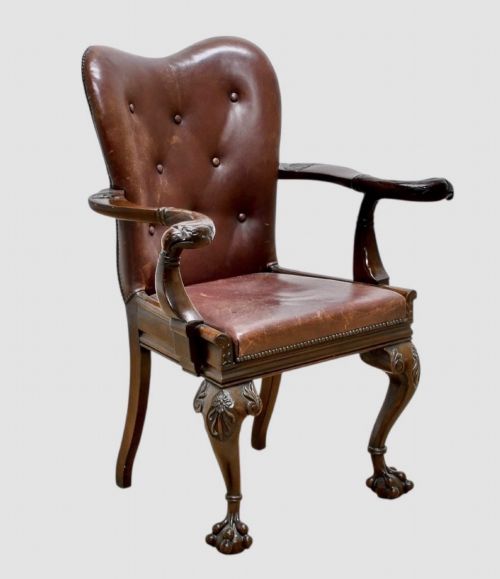
Cabinetmakers worked primarily in solid mahogany, walnut, oak, and beech, turning and shaping timber to form cabriole legs and curved backs. Wood carving was executed by hand, creating pierced splats, floral motifs, and scroll details.
Seats were upholstered over webbing and springs using traditional textiles such as velvet, tapestry, and fabric, or fitted with woven cane panels.
Gossip chairs whisper secrets of the early twentieth century from compact, low seats designed for telephone chatter.
What varies in quality
Quality rests upon the crispness of the hand-carving and the density of the timber selected, such as Cuban mahogany or figured walnut. Crisp, deep relief work on the splat and rails separates standard production from finer pieces.
The integrity of the frame construction and the survival of original upholstery materials or period cane seating also distinguish superior examples.
The Carved Back Occasional Chair Glossary
- Cabriole leg
- A furniture leg that curves outward at the knee and tapers inward to an ankle, found on many mid-nineteenth-century chairs. This shape derives from classical animal leg forms.
- Pierced splat
- The vertical central strip of wood within a chair back that has been pierced or cut through to create an openwork decorative pattern. It lightens the visual weight of the timber.
- Gossip chair
- A low, sometimes asymmetrical seat designed for conversation or telephone use in Edwardian interiors. These often feature compact wooden frames.
Carved Back Occasional Chair: Frequently Asked Questions
Where did people use these chairs?
These chairs served as movable seating in nineteenth-century parlours, bedrooms, and halls where heavy furniture was impractical. They filled corners or provided extra seats for guests.
Their compact proportions allowed them to be relocated easily between rooms as household needs shifted.
How do I date a Victorian piece?
Dating relies on timber choices, leg shapes, and back profiles recorded in the listings. Walnut and balloon backs often point toward the mid to late nineteenth century.
Later Victorian and Edwardian examples introduce lighter beech frames, subtle inlay, and different revival styles.
Can I use them daily?
These historical chairs are sturdy enough for regular seating if the wooden frames remain tight and stable. Many have been re-webbed or re-upholstered to support everyday use.
Care should be taken with antique cane panels and delicate hand-carved joints.
What is a nursing chair?
A nursing chair is a low-seated armchair designed in the Victorian era to allow comfortable feeding or sewing. The lowered seat height is their defining characteristic.
They frequently feature upholstered backs and padded seats supported by turned or cabriole legs.