
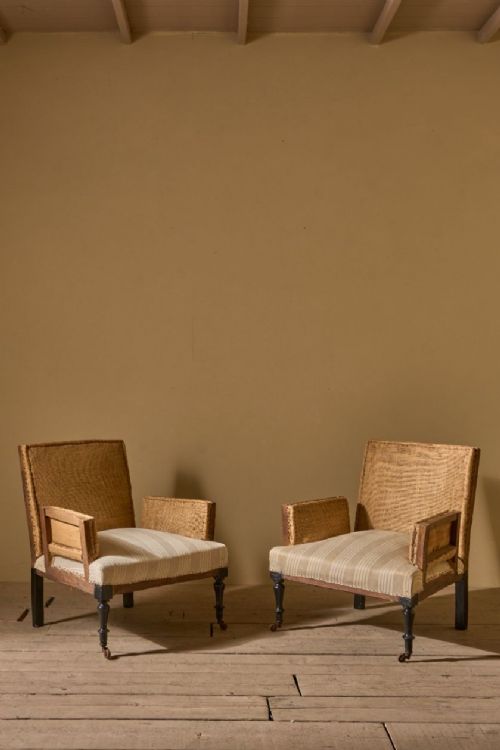
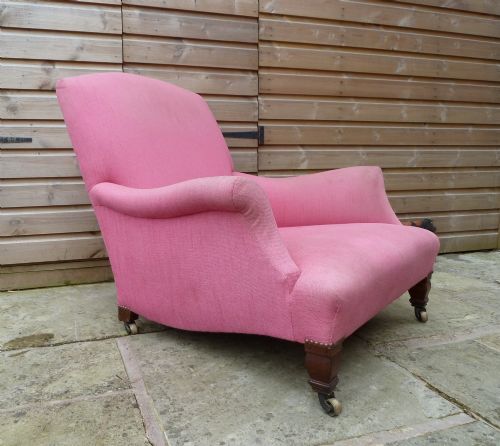

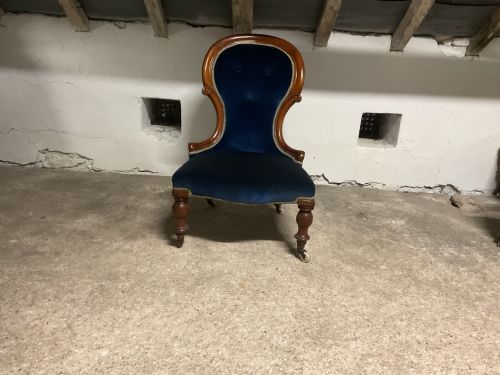
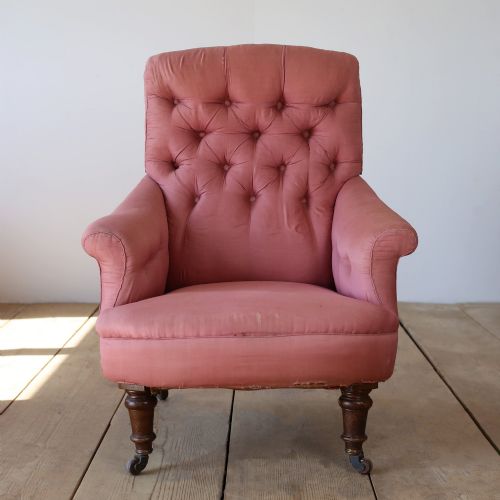
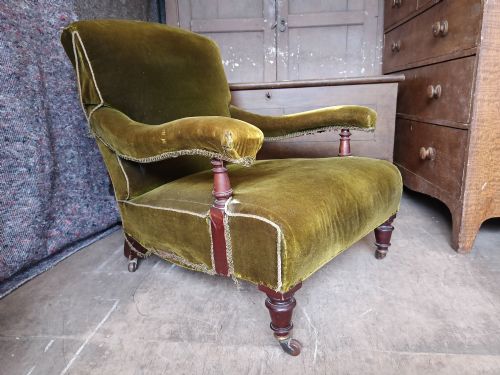
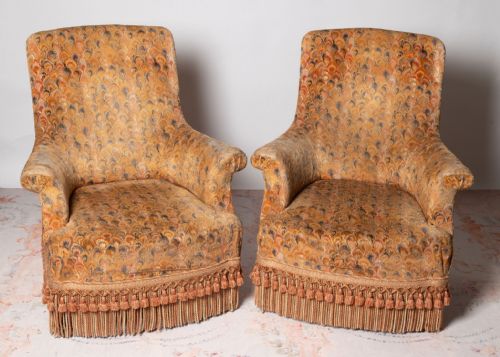
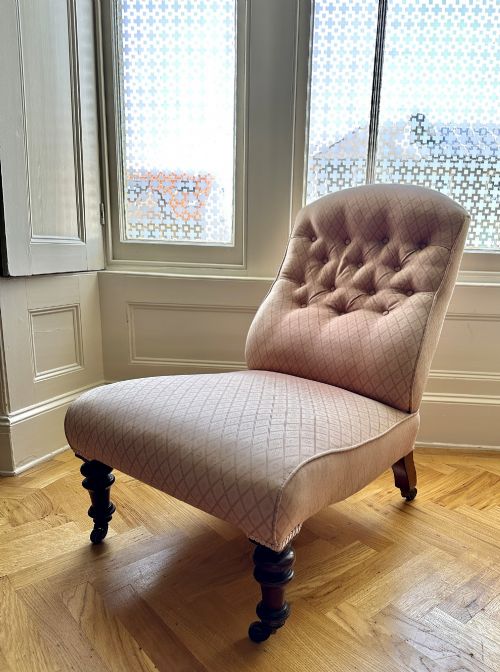


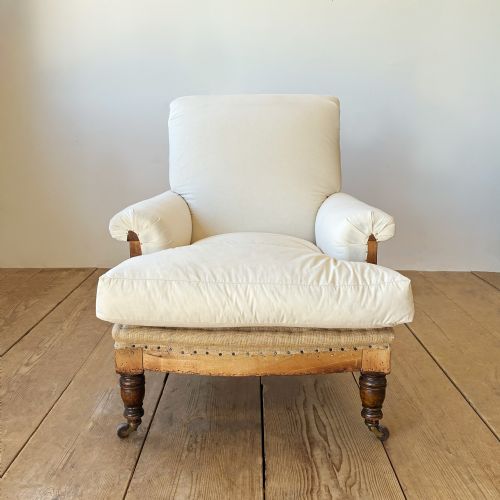

Low Seat Fireside Chair
A low seat fireside chair brings comfortable, shortened proportions to the hearth, offering a supportive seat designed for warmth and rest.
Materials and construction methods
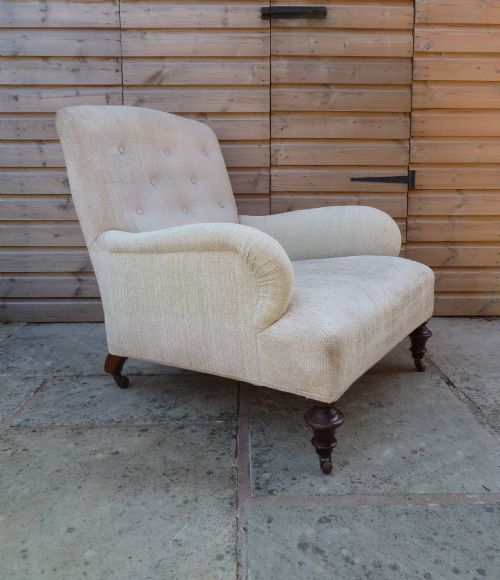
Frames rely on timbers recorded across the listings, principally mahogany, walnut, beech, ash, elm, and rosewood, offering sturdy structural foundations for upholstered forms. Joinery and turning produce specific structural details, such as bobbin legs and open armchairs with ebonised supports.
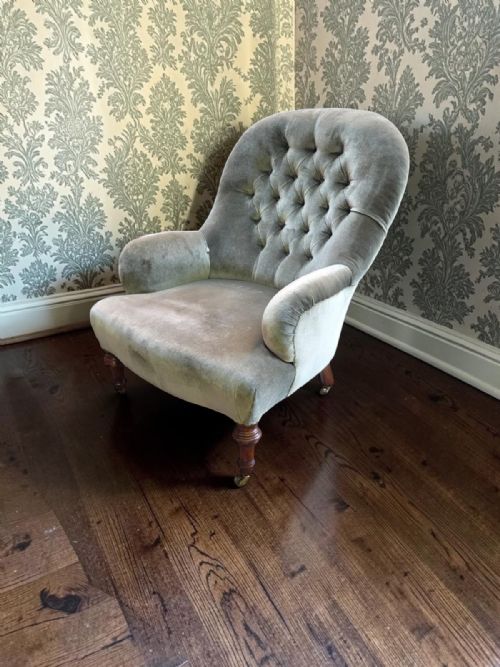
Upholstery incorporates fabric, velvet, textile, and red leather, frequently styled with button backs and deep springing. Metal elements appear in brass details, while secondary materials include wool and horsehair padding hidden beneath the top covers.
Distinctions in craftsmanship and condition
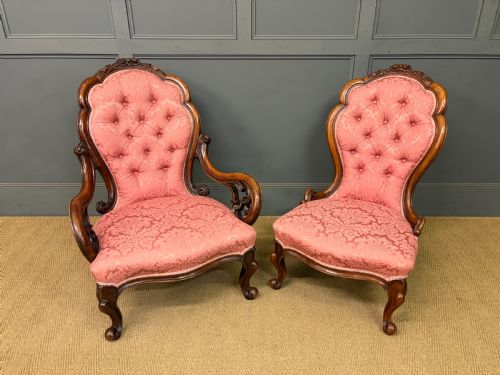
The distinction between ordinary and superior pieces rests in the integrity of the timber frame, the crispness of any hand-carved ornamentation on walnut or mahogany, and the fidelity of stylistic details. Finer examples display harmonious proportions, substantial frames, and disciplined joinery that survive decades of use.
Upholstery quality separates pieces of higher standing, particularly where buttoning is deeply set, springs retain their proper resistance, and the underlying webbing and stuffing have been executed with durable traditional materials.
Several chairs include designated gossip seats, constructed specially for close-range household conversations by the fire.
Howard and Sons·Hampton and Sons·Wheeler of Arncroach
The Low Seat Fireside Chair Glossary
- Nursing chair
- A low-seated Victorian chair originally designed with a shortened height to allow women to nurse infants comfortably while sitting near a fire. These pieces typically feature button backs and walnut or mahogany frames.
- Slipper chair
- An upholstered chair with short legs designed to sit low to the ground, traditionally used in bedrooms for putting on shoes or stockings. They are typically armless to allow full freedom of movement.
- Bobbin leg
- A turned furniture leg shaped to resemble a string of rounded bobbins or spools, popular in nineteenth-century seating. This decorative turning technique adds tactile rhythm to wooden frames.
- Spoon back
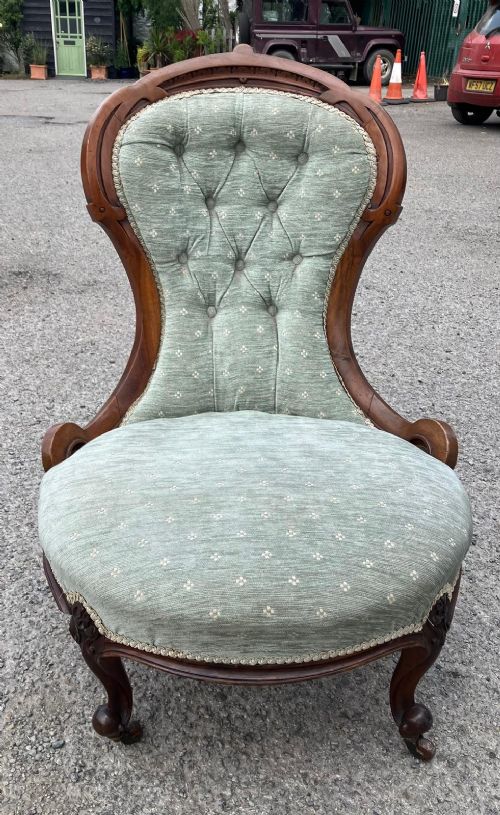
- An upholstered chair back shaped with a concave oval contour resembling the bowl of a spoon, common in Victorian walnut seating. This ergonomic curve provides lumbar support for the sitter.
- Club armchair
- A deep, heavily upholstered low chair built for sustained comfort, often associated with English country houses. These pieces emphasise padded armrests and generous proportions.
Low Seat Fireside Chair: Frequently Asked Questions
What defines a low seat fireside chair?
A low seat fireside chair is a compact, shortened armchair or nursing chair designed to sit close to the hearth for warmth. These pieces span the nineteenth and early twentieth centuries in various vernacular and formal styles.
They combine wooden frames of walnut, mahogany, elm, or beech with deep upholstery, button backs, and low-slung profiles suited to relaxed sitting.
Where were nursing chairs used originally?
Nursing chairs were placed primarily in Victorian bedrooms and nurseries. Their low seat height allowed women to hold and nurse infants comfortably.
Over time, their convenient proportions made them popular fireside seats in sitting rooms and parlours across English homes.
How do I care for antique upholstery?
Care for antique upholstery involves gentle vacuuming with a soft brush attachment to remove dust from fabrics and velvets. Keep upholstered chairs away from direct sunlight to prevent fading of textiles and leather.
For button-backed or sprung pieces, avoid excessive weight on the arms and consult a specialist restorer if internal webbing requires attention.
How can I tell Victorian from Edwardian chairs?
Victorian chairs, often dating from the mid to late nineteenth century, frequently feature rich walnut or mahogany frames, carved spoon backs, and deep button upholstery. Their silhouettes are often ornate and formal.
Edwardian pieces from the early twentieth century tend to lighten in form, sometimes utilising simpler turned legs and updated fabric choices while retaining comfortable low proportions.