

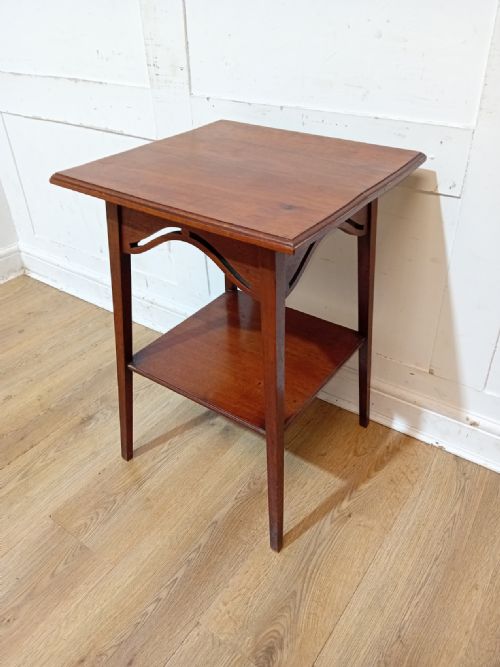
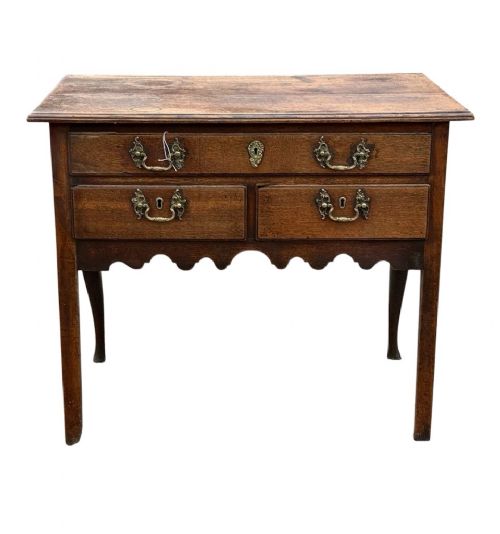

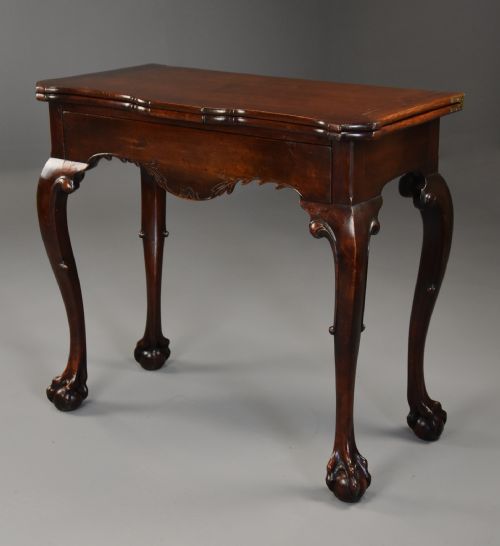
Carved Apron Side Table
A carved apron side table brings solid timber and carved detail to a room, offering practical surface space with distinct period character.
Carved Apron Side Table
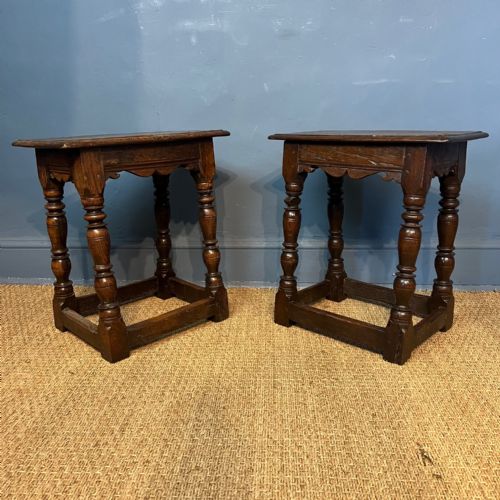
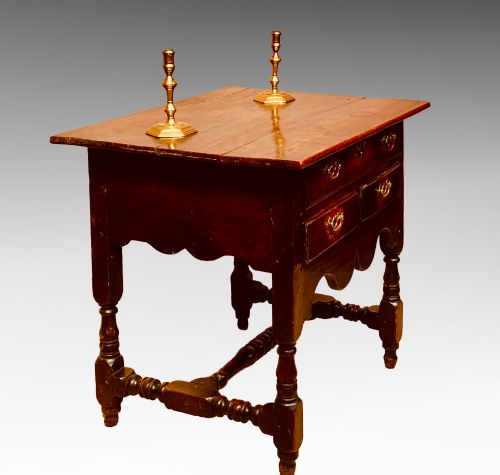
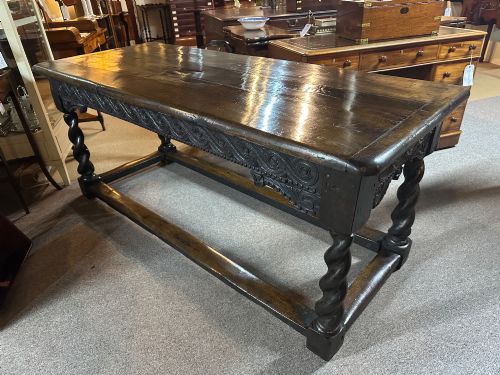
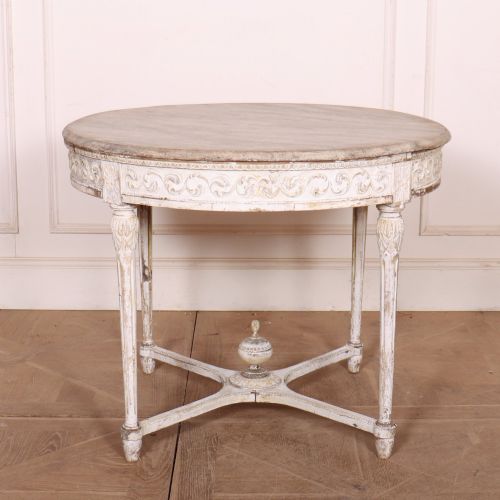
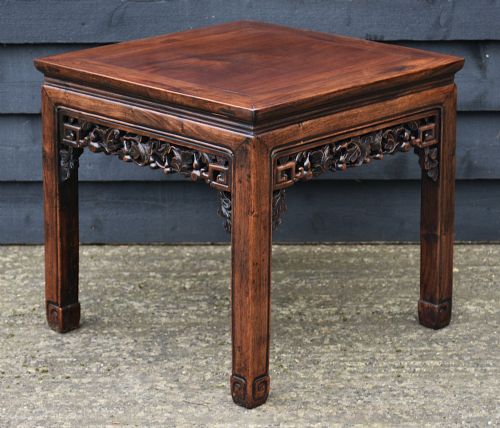
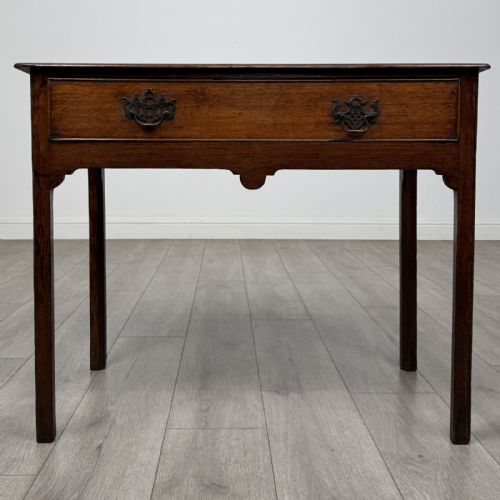
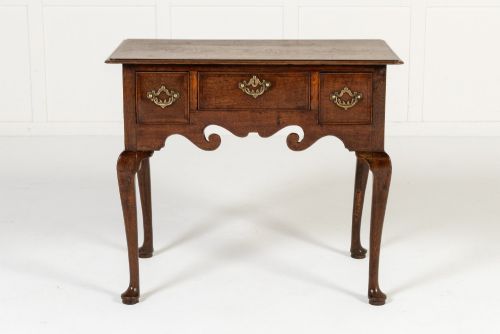
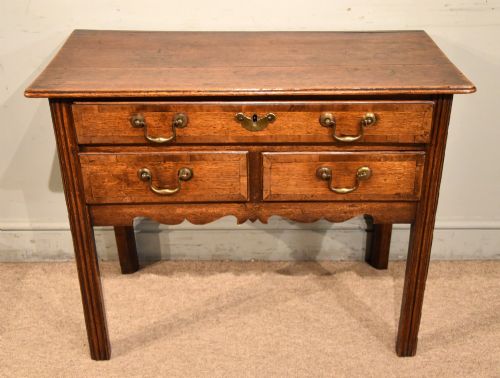
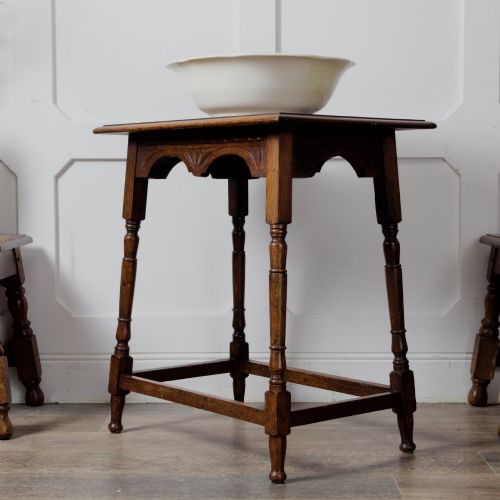
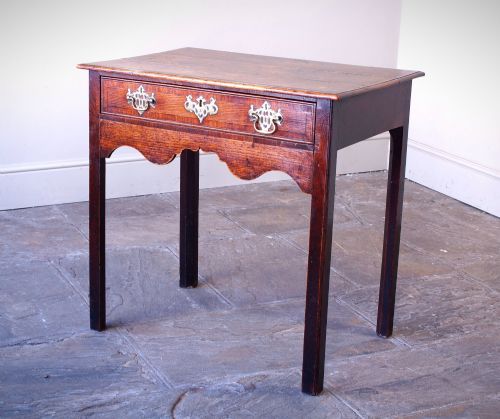
A carved apron side table is a compact surface defined by ornamental carving along the wooden rail beneath the top, connecting the legs. When searching for a carved apron side table, buyers encounter forms ranging from English oak lowboys and Georgian mahogany designs to Chinese hardwood low tables and Edwardian walnut pieces.
The selections span the eighteenth, nineteenth and early twentieth centuries, drawing on styles such as Georgian, Chinese Traditional, Edwardian and Arts and Crafts. Oak and mahogany appear alongside rosewood, walnut and padouk, reflecting both British country workshops and international cabinet-making traditions.
Materials and construction methods
Cabinet-makers relied on native and imported timbers, utilising oak, mahogany, walnut and dense Chinese hardwoods like rosewood for structural stability and fine surface finish. Tables frequently employ traditional pegged joinery or dovetailed drawer construction, depending on the regional workshop and period.
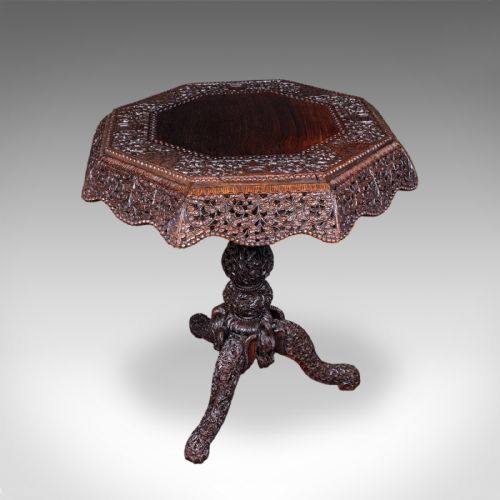
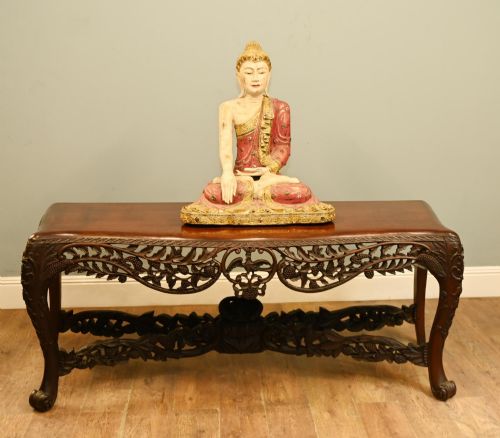
Carving was executed directly into the solid timber of the frieze or apron, ranging from simple geometric motifs to elaborate floral or scrollwork. Supplementary materials such as brass handles, marble inserts and lacquer finishes appear on specific regional variants from the eighteenth and nineteenth centuries.
Carved Apron Side Table Retail Price Guide 2026
Typical asking prices for carved apron side table among the pieces listed under this phrase on Sellingantiques today, from the lower quarter to the upper quarter. They describe what is for sale here now, not the wider market.
One unexpected workshop offering includes a five-plank pegged oak stool alongside the grand console tables.
Assessment of quality and execution
The standard of a carved apron side table depends on the crispness of the hand-carving along the frieze and the selection of timber grain. Superior examples display depth and precision in the carved ornament without mechanical smoothing, paired with well-proportioned legs and stable joinery.
Consideration is given to surface preservation, where original patination, depth of polish and minimal timber replacement elevate an example above later alterations. The integration of the apron with the leg framework dictates the overall structural integrity.
Liberty of London
The Carved Apron Side Table Glossary
- Apron
- The horizontal timber member beneath the tabletop that connects the legs, frequently decorated with carving. Also known as the frieze.
- Lowboy
- A small eighteenth-century dressing or side table featuring one or more rows of drawers beneath the working surface. These typically stand on slender cabriole or straight legs.
- Padouk
- A heavy, durable tropical hardwood with a reddish hue used in Anglo-Indian and colonial cabinet-making. It takes a sharp carved edge and high polish.
- Gusset
- A triangular wooden bracket inserted into the corner angle beneath the tabletop to reinforce the joint between leg and apron. This structural element provides stability in heavy timber tables.
Carved Apron Side Table: Frequently Asked Questions
How do I date an antique side table?
Dating relies on examining the timber species, construction marks, and tool methods visible on the underside and drawer linings. Hand-cut dovetails and pegged joints generally point to eighteenth or nineteenth-century manufacture.
Stylistic cues such as Georgian cabriole legs, Edwardian satinwood inlay, or Victorian heavy oak turnings help narrow the decade. Comparing the wear patterns to the expected period finish confirms authenticity.
Where should I place a side table?
These tables suit narrow hallways, living room corners, or spaces beside armchairs where a firm surface is useful. Their compact proportions prevent them from dominating a room.
Freestanding models with finished backs can sit away from walls behind sofas, while lowboys fit neatly beneath windows or mirrors.
How do I care for antique wood?
Maintain the timber by keeping it away from direct heat sources and strong sunlight, which can dry out and split the grain. Regular dusting with a soft, dry cloth prevents particulate accumulation.
Apply high-quality beeswax sparingly when the surface appears dry, buffing gently to preserve the historic patina without sealing moisture into the wood.