

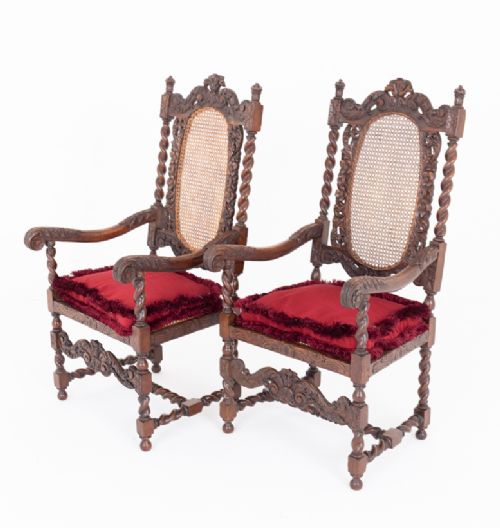


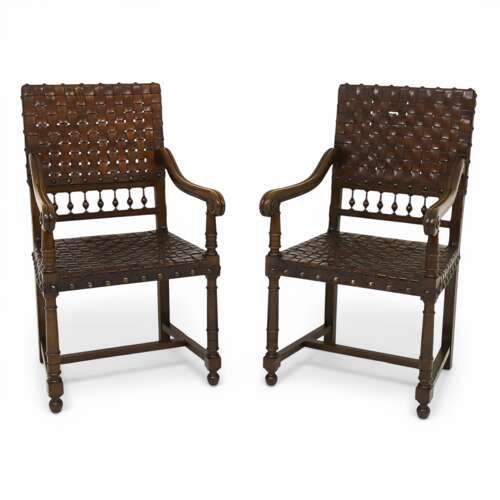


Carolean Style Oak Chairs
Carolean style oak chairs bring robust historic character into a room through carved woodwork and tall proportions.

Carolean Style Oak Chairs
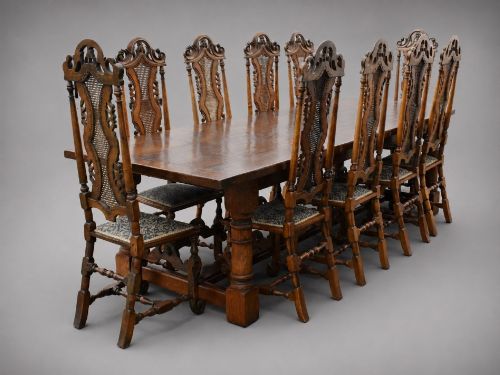
Carolean style oak chairs draw on seventeenth-century aesthetics, though the examples found here largely date from the nineteenth and early twentieth centuries during various revival periods. Buyers typically encounter sets of dining chairs, high-back side chairs, and occasional armchairs or throne chairs shaped by this historical inspiration.
The selections span single items, pairs, and larger suites suited for formal dining spaces or focal seating. These seating options reflect decades of revival craftsmanship, from Victorian interpretations up to pieces dated around nineteen-twenty.
Makers working within revival styles reproduced the commanding stance and decorative motifs associated with earlier centuries using the materials available in their own era. Each piece connects modern interiors to traditional forms through substantial timber frames and upright profiles.
How they were made
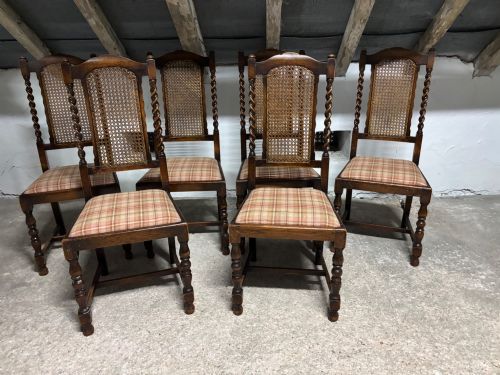
Construction relies heavily on oak frames shaped with turned legs and substantial stretchers for structural stability. Carving forms a central part of the manufacturing process, appearing on crest rails, splats, and uprights.
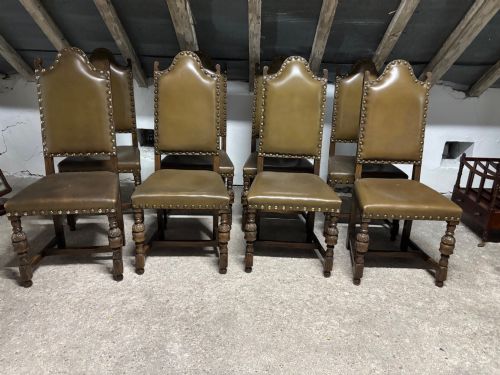
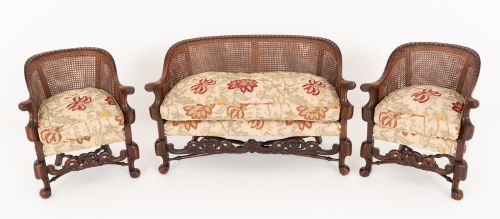
Interiors utilise supportive elements such as woven cane, leather, fabric, or velvet across backs and seats. Brass hardware and structural joints secure the timber components together to withstand regular use.
Listings feature oak as the primary timber, complemented by cane, leather, and various textiles across periods spanning the nineteenth and early twentieth centuries.
What varies in quality
The depth and crispness of the carved ornamentation define the visual standard across these chairs. Relief work executed with sharp detail and careful proportion distinguishes finer examples from simpler production pieces.
The selection of timber grain and the integrity of applied upholstery materials, whether cane, leather, or woven fabric, establish the overall standard of the finished seating.
The Carolean Style Oak Chairs Glossary
- Carolean style
- A design aesthetic originating from the reign of Charles the Second, marked by rich carving, tall backs, and scrolled details. Revival versions reproduce these elements in later nineteenth- and twentieth-century furniture.
- Jacobean revival
- A nineteenth-century movement that reinterprets early seventeenth-century English furniture forms. Pieces in this style often feature dark oak, geometric paneling, and heavy turned supports.
- Bergere
- An enclosed upholstered armchair with wooden frames, frequently featuring cane work panels on the back and sides. This French-derived form appears in various revival seating suites.
- Throne chair
- A large, high-backed armchair designed with imposing proportions and decorative carving. These pieces often serve as statement furniture in halls or studies.
Carolean Style Oak Chairs: Frequently Asked Questions
Are these chairs from the seventeenth century?
Most examples found on the market date from the nineteenth and early twentieth centuries rather than the original seventeenth-century period. Makers of the Victorian and Edwardian eras produced these revival pieces to emulate earlier historic aesthetics.
Craftsmen utilised traditional timber and carving methods during these later revival periods to replicate the bold proportions of seventeenth-century furniture for contemporary homes.
What materials are used in these chairs?
Oak forms the primary structural material for the frames, legs, and carved backs of these chairs. Secondary materials include cane, leather, velvet, and woven fabric used for seating and back panels.
Hardware components such as brass studs or fixings also appear on upholstered examples to secure the fabric and trim to the wooden framework.
How do I care for antique oak chairs?
Maintain the timber by keeping the oak away from direct heat sources and sudden humidity changes to prevent wood splitting. Regular dusting with a soft cloth preserves the surface finish without building up heavy residues.
Upholstered elements or cane panels require gentle cleaning appropriate to their specific material, avoiding harsh chemical treatments that could degrade historical fabrics.
Can I use these chairs for daily dining?
Many sets of these chairs suit regular use around a dining table, provided the wooden joints and supportive elements remain stable. Buyers often acquire sets ranging from four up to ten chairs for functional seating.
Evaluating the structural sturdiness of the turned legs and stretchers ensures the seating can safely accommodate everyday dining activities.