

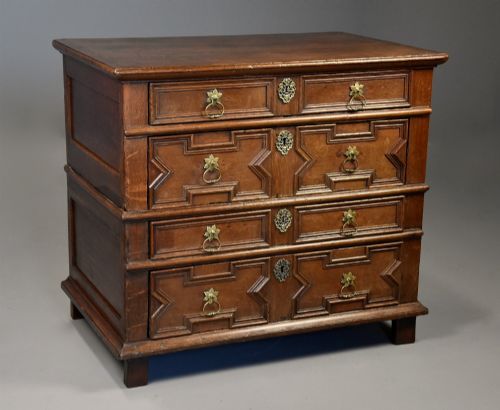
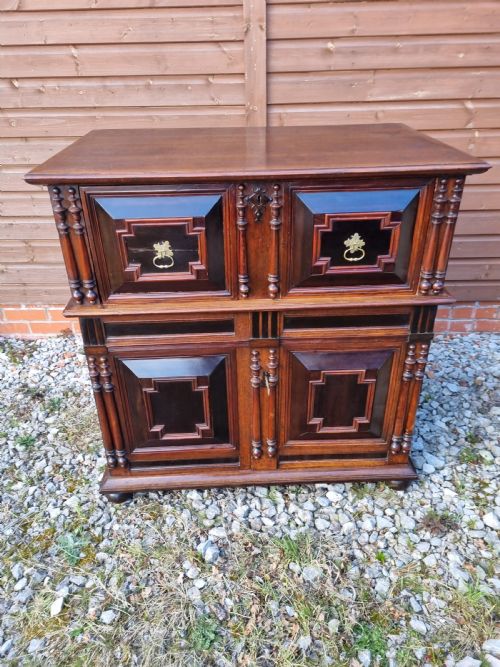
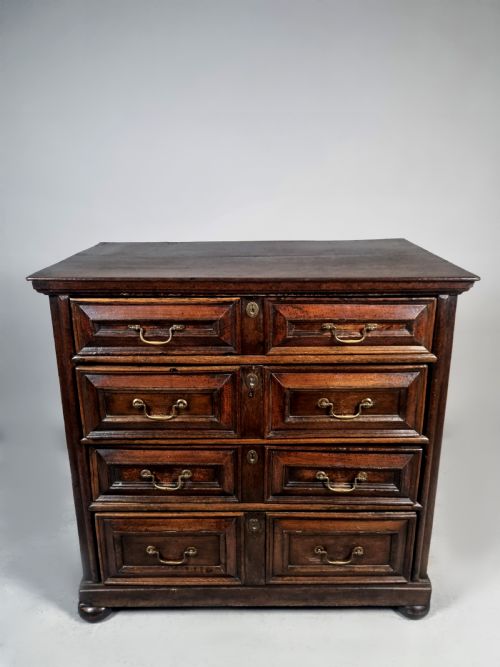
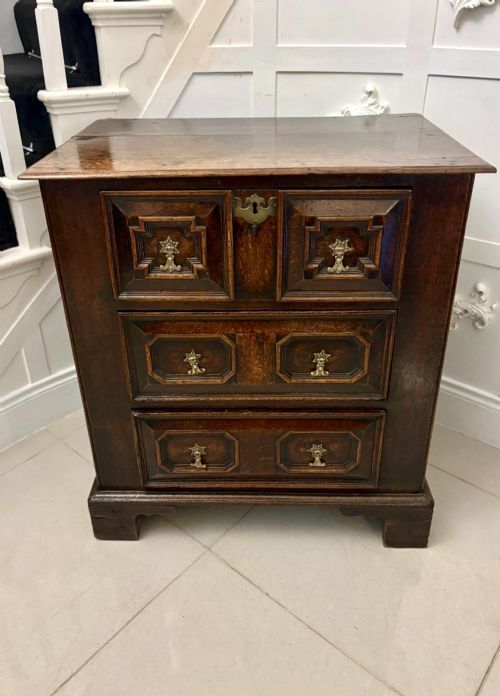




Carolean Geometric Chest
A carolean geometric chest brings seventeenth-century joinery into a modern interior, offering deep drawers and bold moulded fronts.
Carolean Geometric Chest
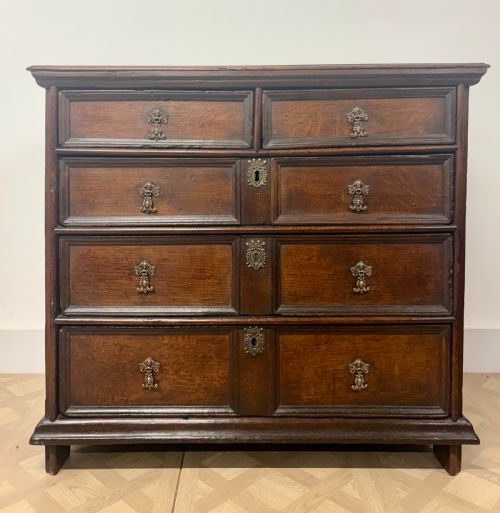
When you search for a carolean geometric chest, you find seventeenth-century and early eighteenth-century pieces built as chests of drawers or two-part cabinets. These items originate from the Jacobean, Charles II, Carolean, and William & Mary periods, reflecting a distinct era of English cabinet-making.
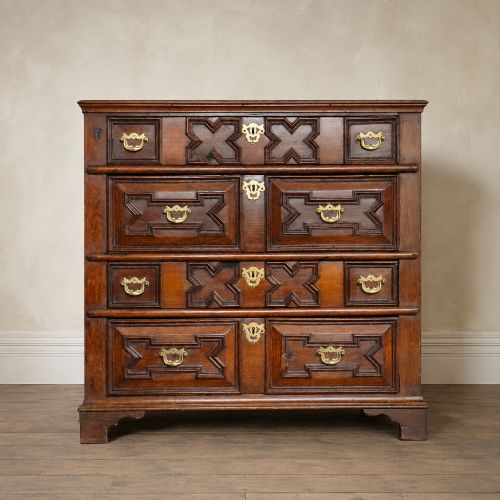
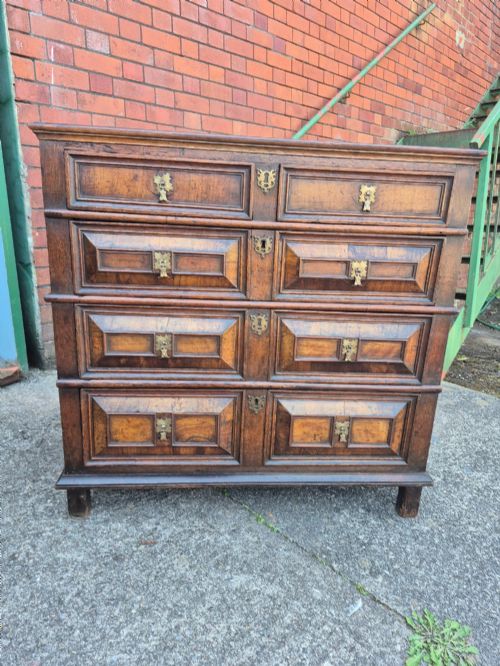
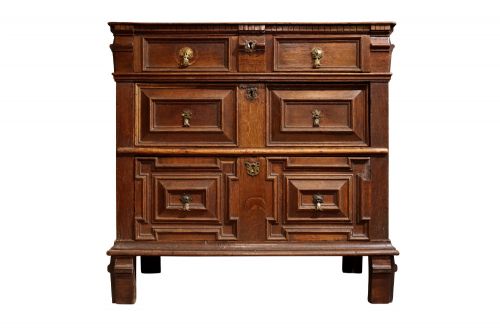
The version most commonly met on this page is constructed from oak, often featuring geometric moulded drawer fronts and timber decoration. They appear in various forms, including smaller early English examples and two-part chests designed for easier transport.
How they were made
Cabinet-makers built these chests primarily using solid oak for the structural carcase and drawer carcases. Joiners then applied contrasting timbers such as ebony, sycamore, walnut, snakewood, fruitwood, and oyster veneer to create the striking geometric patterns on the drawer fronts.
Moulded fronts were achieved through meticulous hand-carving and applied geometric mouldings fixed to the drawer faces. Brass hardware, including drop handles and escutcheons, completed the construction of these seventeenth-century pieces.
Carolean Geometric Chest Retail Price Guide 2026
Typical asking prices for carolean geometric chest among the pieces listed under this phrase on Sellingantiques today, from the lower quarter to the upper quarter. They describe what is for sale here now, not the wider market.
Listings span the seventeenth and eighteenth centuries, incorporating periods from Jacobean through to William and Mary.
What varies in quality
The distinction between tiers of quality rests upon the complexity of the geometric decoration and the variety of timbers utilised on the facade. Pieces incorporating fine oyster veneers and diverse exotic woods alongside oak display greater ambition in the workshop.
Proportion and surface preservation also define the upper tier, particularly where patination has developed evenly over centuries. The crispness of the moulded front and the integration of secondary woods show the skill of the original joiner.
The Carolean Geometric Chest Glossary
- Carolean
- Pertaining to the reign of King Charles II, covering the mid to late seventeenth century. This style is known for rich wood decoration and structured furniture forms.
- Oyster Veneer
- Thin slices of wood cut transversely from small branches or roots to reveal circular grain patterns. Cabinet-makers arranged these slices closely together to form decorative geometric surfaces on drawer fronts.
- Geometric Moulding
- Raised wooden profiles applied to drawer fronts in repeating symmetrical patterns. This technique created depth and visual complexity during the seventeenth century.
- Two-Part Chest
- A form of chest built in an upper and lower section designed to stack together. This construction helped transport heavy timber furniture in earlier centuries.
- Jacobean
- Relating to the period of King James I and the early seventeenth century, preceding the Carolean era. Furniture from this time often employs robust oak construction.
Carolean Geometric Chest: Frequently Asked Questions
What is a carolean geometric chest?
A carolean geometric chest is a seventeenth-century storage piece featuring repeating raised mouldings across the drawer fronts. These items are typically constructed from oak and accented with decorative veneers.
Cabinet-makers of the period used these geometric patterns to add texture and visual depth to plain wooden surfaces. They served as primary storage furniture in substantial homes.
How were these chests used?
These pieces functioned primarily for storing clothing, textiles, and household valuables in domestic chambers. The division into multiple drawers allowed for organised storage.
In modern interiors, they serve the same practical storage function while operating as focal points in hallways or bedrooms. Their sturdy construction suits daily use.
How do I live with one?
Living with a seventeenth-century timber chest involves placing it away from direct heat sources and strong sunlight to protect the polish and wood. Maintaining stable room humidity prevents the timber and veneers from drying out.
Their dark oak tones and geometric details pair well with neutral walls and minimalist furnishings. They anchor a room with historical weight and surface texture.
How do I tell periods apart?
Distinguishing between seventeenth-century periods involves examining the joinery methods, hardware, and secondary woods employed in the construction. Charles II and Carolean pieces frequently exhibit more complex geometric mouldings and exotic veneers than earlier Jacobean items.
Changes in handle styles, lock plates, and framing techniques also help narrow down the decade of production between sixteen-eighty and the early eighteenth century.