

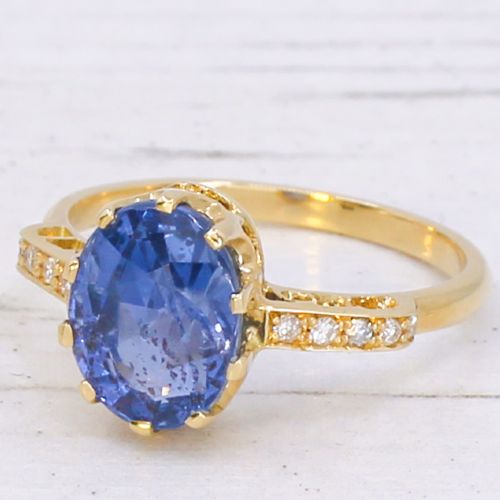
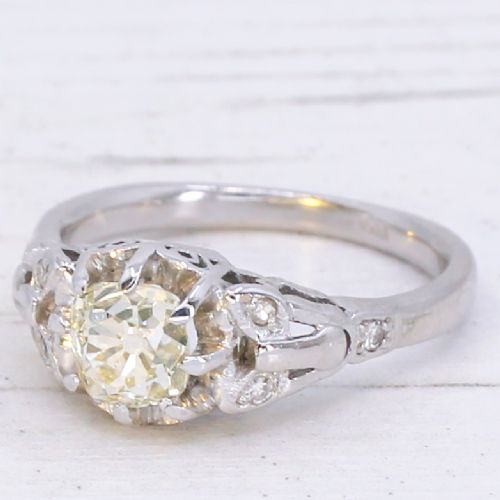

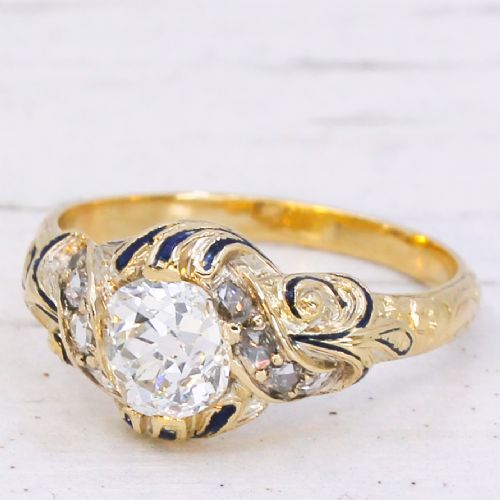
Carat Solitaire Ring
A carat solitaire ring centres a single stone on the hand, carrying the weight of a century of design through diamond, sapphire, and gold.
Carat Solitaire Ring
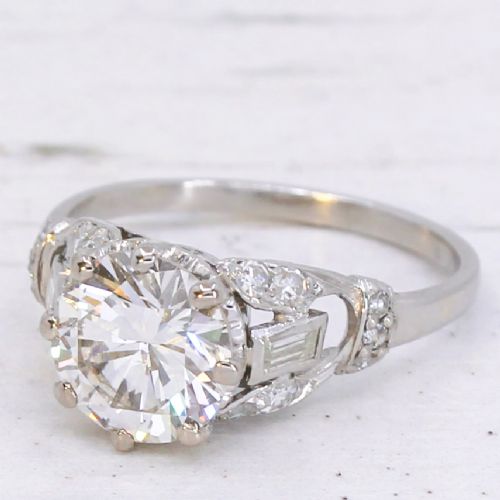
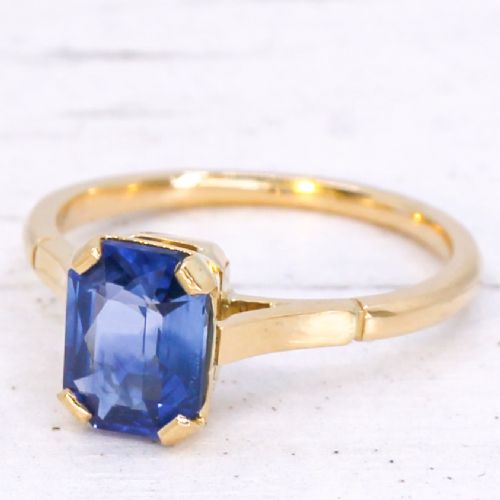
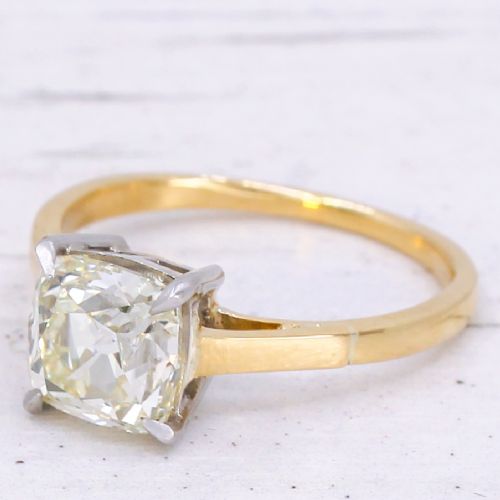
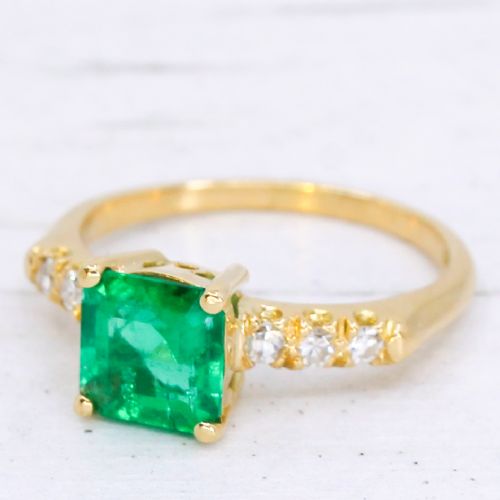
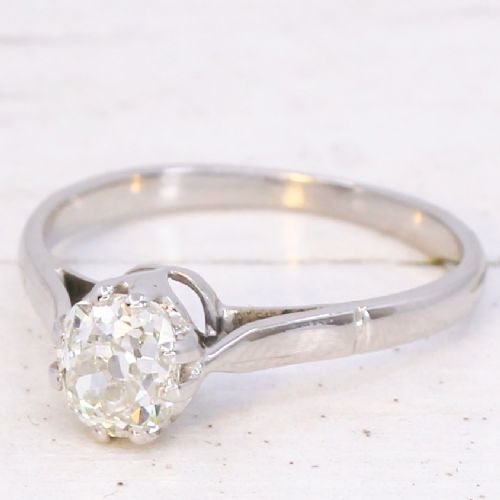
A carat solitaire ring focuses attention entirely on one principal gem mounted upon a precious metal band. When searching this phrase, a buyer meets pieces spanning from the Victorian era through the Edwardian period, Art Deco, and mid-century designs. The form appears most frequently as an engagement ring or a classic dress ring.
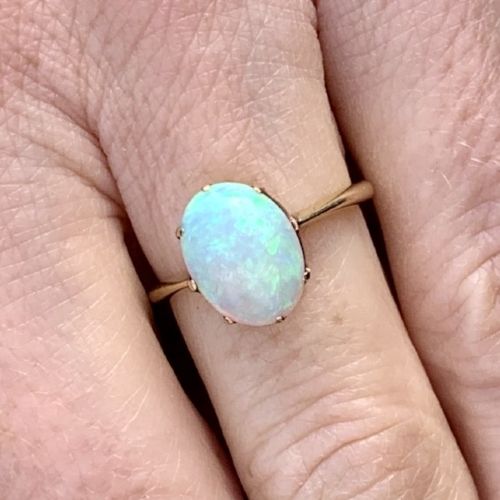
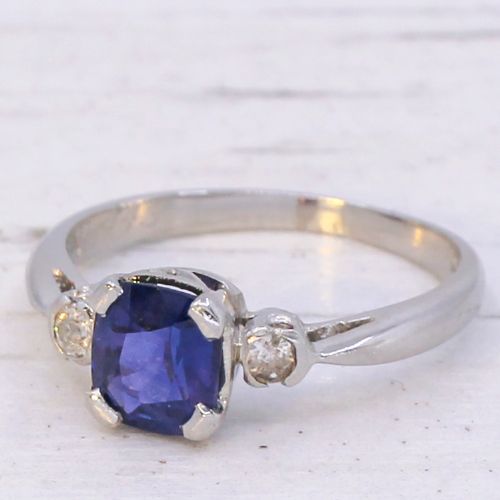
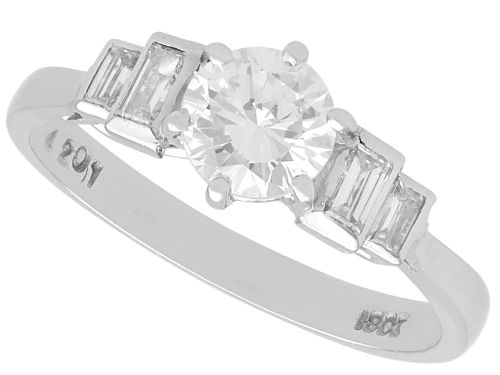
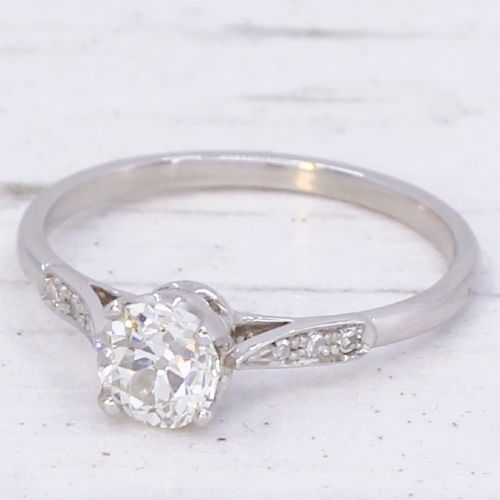
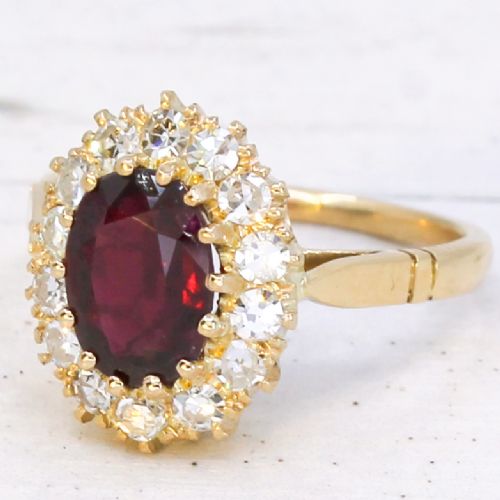
The selection here draws heavily from the early and mid-twentieth century, featuring old cut diamonds alongside unheated rubies, emeralds, and sapphires. Styles range from restrained Edwardian mountings to geometric Art Deco platinum settings and robust 1940s retro work. Each piece demonstrates how jewellers proportioned substantial carat weights to balance the hand.
Metals and Mounting Techniques
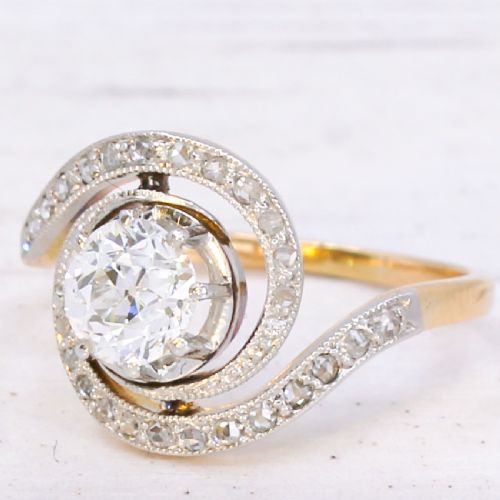
Platinum and yellow gold form the structural backbone of these rings, often paired together in Art Deco pieces where white platinum highlights the stones while yellow gold warms the band. White gold and 18ct gold specifications appear frequently in later mid-century pieces, offering durability alongside distinct colour tones. Jewellers utilised heavy metalwork to secure large stones safely.
Gemstones such as diamonds are predominantly fashioned in old cuts, including old European and transitional cuts that exhibit smaller tables and broader facets than modern brilliant cuts. Coloured stones like sapphires, emeralds, and tsavorites are shaped in oval or traditional faceted profiles. Hand-beveled claws and millegrain edges finish the metalwork around the central gem.
Carat Solitaire Ring Retail Price Guide 2026
Typical asking prices for carat solitaire ring among the pieces listed under this phrase on Sellingantiques today, from the lower quarter to the upper quarter. They describe what is for sale here now, not the wider market.
Listings span periods from Victorian and Edwardian to Art Deco and mid-century, utilising platinum, yellow gold, white gold, diamond, sapphire, emerald, ruby, and tsavorite.
Distinctions in Execution and Stone
The distinction between tiers rests in the optical life of the central stone and the crispness of the metalwork. Superior examples display high clarity, natural unheated origins in coloured stones, and old cut diamonds with lively scintillation rather than flat brilliance. Masterful hand-workmanship in the setting preserves the integrity of the prongs and the delicate millegrain decoration.
Proportion and wear dictate the standing of individual rings over time. Top-tier pieces maintain their original heavy gauge metal without thinning along the shank, ensuring the structural security of the central carat weight. The harmony between the scale of the stone and the architectural design of the mounting separates ordinary production from exceptional work.
The Carat Solitaire Ring Glossary
- Solitaire
- A ring featuring a single set gemstone, typically a diamond, designed to draw the eye to the central stone without distraction. This setting style has remained a cornerstone of engagement ring design for generations.
- Old Cut
- A historic diamond cutting style popular before the mid-twentieth century, characterised by a smaller table, higher crown, and open culet. These cuts catch candle or ambient light with a softer, broader glow than modern stones.
- Millegrain
- A decorative technique involving a row of tiny metal beads along the edges of a setting, common in Edwardian and Art Deco jewellery. It adds a refined texture that softens the transition from metal to stone.
- Transition Cut
- A diamond cutting style used roughly between the old mine cut and the modern brilliant cut, bridging antique and modern optical properties. It retains the deeper pavilion of older stones while moving toward standard brilliant faceting.
- Tourbillon
- A complex mounting style or secondary flourish in antique rings, derived from the French term for whirlwind. In jewellery, it denotes dynamic, swirling metalwork that frames the central stone.
Carat Solitaire Ring: Frequently Asked Questions
How do I care for an antique solitaire ring?
Clean these pieces gently using warm water and a soft brush, avoiding harsh ultrasonic cleaners that can loosen old settings or stress untreated coloured stones. Regular inspection by a jeweller ensures that claws holding heavier carat weights remain secure.
Store each ring separately in a lined box to prevent the central diamond or softer gems from scratching neighbouring pieces. Mindful daily wear preserves the delicate millegrain and historic metalwork.
What is the difference between old cut and modern cut diamonds?
Old cut diamonds feature hand-cut facets tailored under historic lighting conditions, resulting in deeper proportions and a distinctive patterned sparkle. Modern brilliant cuts are optimised mathematically for maximum direct light return.
Many buyers prefer old cut stones in antique rings for their unique character and warm presence under low light. Each historic stone possesses subtle asymmetries that reveal its handmade origin.
Can I resize an antique platinum or gold ring?
Most rings in these materials can be adjusted by a skilled jeweller experienced in antique pieces. The process involves adding or removing a small section of metal from the lower band.
Care must be taken to preserve any historic hallmarks stamped on the interior of the shank. Intricate shoulder details or channel-set side stones require specialist attention during sizing.
How can I tell an Edwardian ring from an Art Deco one?
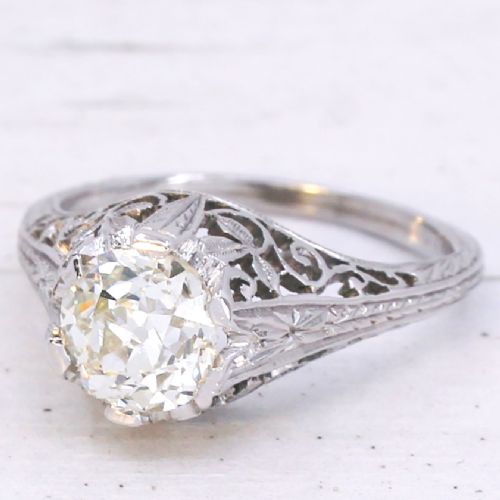
Edwardian rings typically employ platinum and delicate lace-like filigree, focusing on light, airy motifs inspired by garlands and ribbons. Art Deco pieces introduce bold geometric lines, stark symmetry, and high-contrast metal pairings like platinum and yellow gold.
Examining the overall architecture of the mounting reveals the stylistic shift from flowing floral grace to machine-age abstraction. Both periods, however, frequently showcase substantial central carat weights.