


Canvas Racehorse Art
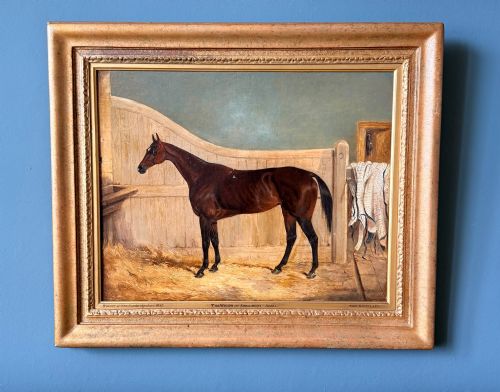
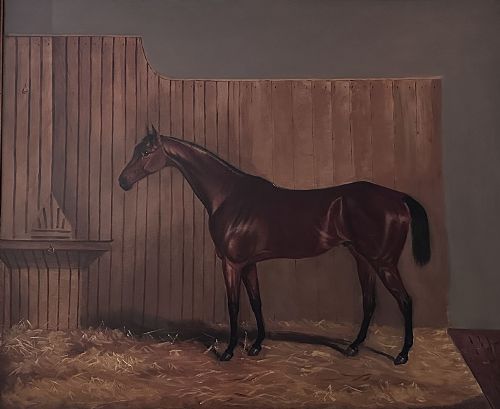
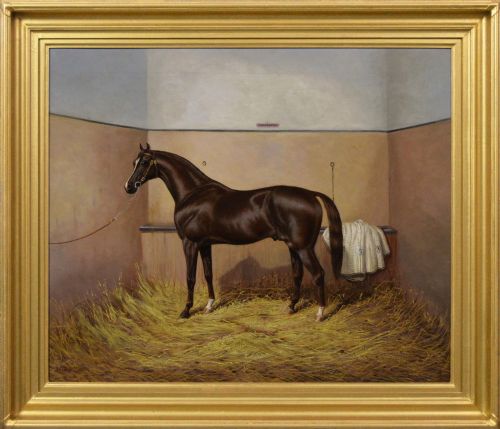
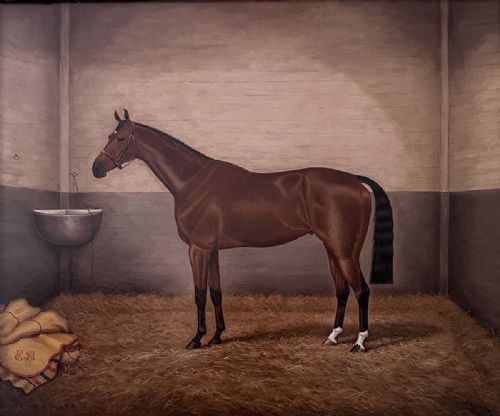
Canvas racehorse art brings the trackside atmosphere and famous winners of the turf directly into your room through period oil painting.
Canvas Racehorse Art
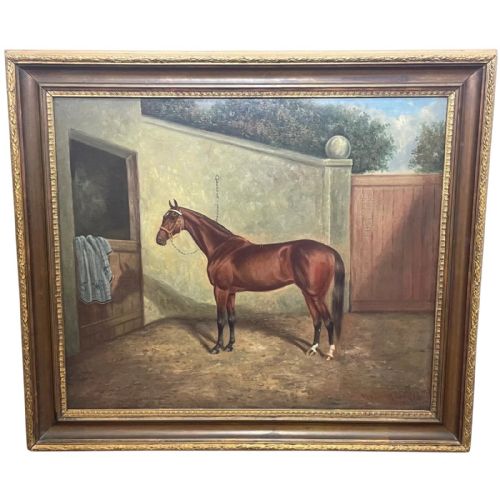
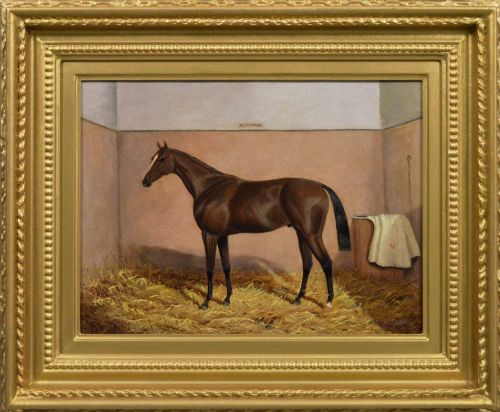
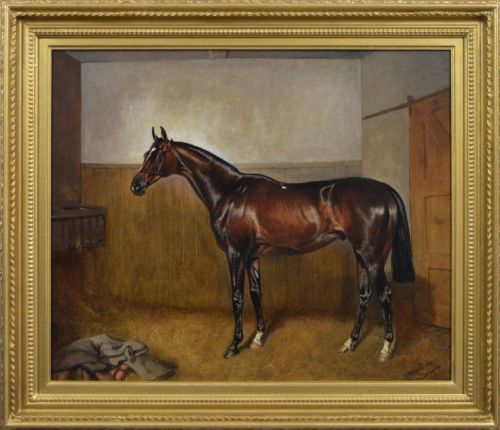
Canvas racehorse art captures thoroughbreds and notable turf events primarily through Victorian and Edwardian oil paintings on canvas. You will frequently encounter horse portraits and racing studies depicting celebrated winners, jockeys, and starting scenes from the nineteenth and early twentieth centuries.
These works range from detailed depictions of specific Epsom and Colombo race winners to atmospheric studies of horses before the off. The pieces often record named animals alongside their jockeys, trainers, or historical owners, preserving specific moments in sporting history.
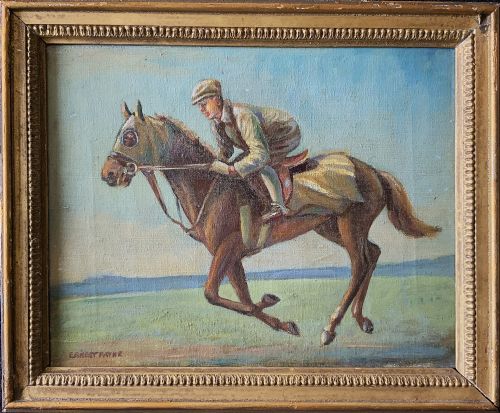
The selection on this page centres firmly on British realism and equestrian art executed in oil paint. Works span from mid-nineteenth century canvases by artists like Thomas Walker Bretland through to later twentieth-century studies by painters such as Ernest Payne.
Materials and technique
These works are painted in oil paint directly onto woven canvas supports, which are typically stretched over wooden frames. Many of these paintings retain their original or period giltwood and gold leaf frames, which complement the rich pigments of the equestrian scenes.
Artists built up the compositions using layered oil paints to render the musculature of the horses, the sheen of their coats, and the specific colours of the racing silks. The application varies from the tight, detailed realism of nineteenth-century portraiture to looser, more immediate brushwork in twentieth-century studies.
Listings feature works spanning from the nineteenth century through the 1930s, executed primarily in oil paint on canvas.
What varies in quality
Quality in these works lies in the anatomical accuracy of the horse and the skill with which the artist captures movement and character. Superior paintings display a deep understanding of equine form, convincing perspective, and careful attention to the jockey and historical setting.
The distinction also rests on provenance and documentation, particularly when the horse, jockey, or owner is identified by inscription or historical record. Paintings that preserve clear attribution to listed painters and retain appropriate period framing command greater attention.
Albert Clark·Ernest Payne·John Alfred Wheeler·Thomas Walker Bretland·Samuel Spode·Alfred Wheeler·Walter Herbert Wheeler·John Parker Davis·Frank Giggs
The Canvas Racehorse Art Glossary
- Oil on canvas
- A painting technique where oil-based pigments are applied to a stretched woven fabric support. This combination allows for rich colour depth and smooth blending.
- Giltwood
- Wood that has been coated with gold leaf or gold paint. This material is standard for framing period sporting art.
- Equestrian realism
- An artistic style focused on depicting horses with anatomical precision and lifelike detail. This approach defines the majority of nineteenth-century turf paintings.
- Jockey up
- A term used in racing art when the rider is mounted on the horse. Paintings often specify this detail in the title.
- Before the off
- The crucial moments immediately preceding the start of a horse race. It is a favoured subject for capturing tension on the track.
Canvas Racehorse Art: Frequently Asked Questions
How do I date a canvas racehorse painting?
Dating relies on stylistic clues, clothing of the jockeys, canvas construction, and any accompanying inscriptions or historical records regarding the named horse.
Period framing and stretcher construction also offer reliable physical evidence to help narrow down the decade of creation.
Were these paintings made to commission?
Many nineteenth and early twentieth-century equestrian works were commissioned by owners, trainers, or race track patrons to record specific victories.
Other canvases were painted as independent sporting studies for exhibition or sale through galleries.
How should I hang and light oil paintings on canvas?
Position paintings away from direct sunlight and steady moisture sources to protect the oil paint and canvas support from degradation.
Use picture lights with low heat emission or indirect ambient room lighting to illuminate the surface without causing thermal stress.
What is the difference between a portrait and a racing scene?
A horse portrait focuses primarily on the individual animal, often standing or posed, sometimes with its trainer or owner by its side.
A racing scene depicts active competition, such as rounding a bend, heading down the straight, or gathering before the start.