



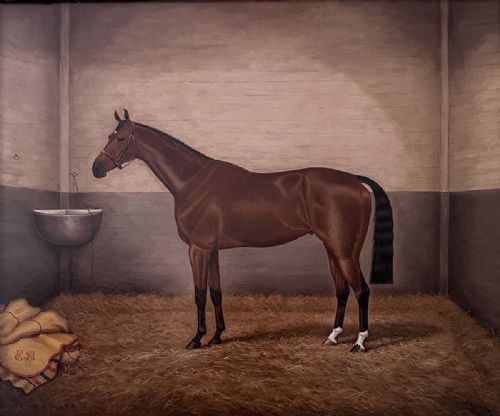


Country House Equine Portrait
These country house equine portraits capture the noble stature of prized horses in oil and watercolour.
Country House Equine Portrait
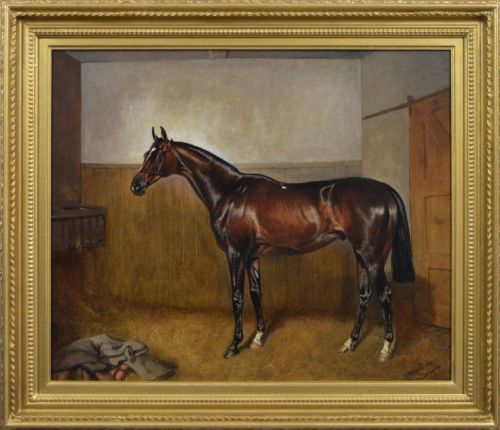
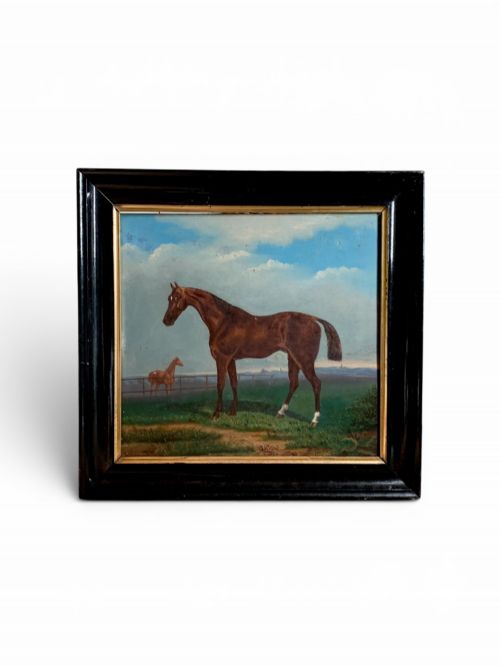
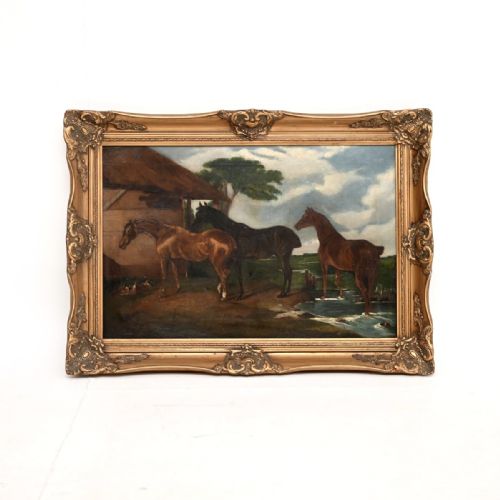
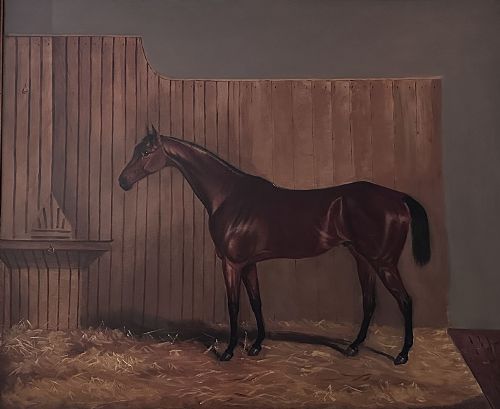
A country house equine portrait depicts horses either alone or within stables and rural landscapes, captured by artists working across the nineteenth and twentieth centuries. These paintings record specific animals, from noted racehorses to hunters and bay horses, often bearing the distinct markers of Victorian and Georgian tastes.
The pieces appearing on this page span several decades, including works dated from eighteen hundred through to nineteen forty. Buyers encounter oils on canvas, oils on panel, and watercolours framed in giltwood or gilt wood, reflecting the diverse domestic settings where such sporting art traditionally hung.
Makers and painters represented in these selections include named artists such as John Alfred Wheeler, George E Sharpe, Benjamin Cam Norton, Clifton Tomson, Alfred Moginie Bryant, and James Barenger. Alongside these signed works, anonymous pieces from the French school and British traditions complete the range available to collectors.
Materials and methods
Artists relied primarily on oil paint applied to stretched canvas or wooden panels, building up layers to render the musculature and coat texture of each animal. Watercolour on paper forms the medium for lighter, more portable works that capture the subject with swift precision.
Frames fashioned from giltwood or gilt wood surround many of these oil paintings, providing a decorative border that complements the warm tones of the equestrian subjects. The preparation of the canvas and the application of pigment followed established academic techniques of the period.
Materials recorded across the inventory include oil paint, watercolour, and giltwood framing.
Judging quality in equine art
Anatomical accuracy and the deft handling of light across a horse's coat set finer works apart from simpler decorative pieces. Skilled painters capture the individual temperament and precise conformation of the animal rather than relying on generic formulas.
The condition of the original paint layer and the presence of a period giltwood frame contribute significantly to the integrity of the piece. Works by documented artists carry distinct weight compared to anonymous school paintings.
John Alfred Wheeler·George E Sharpe·Benjamin Cam Norton·Clifton Tomson·Alfred Moginie Bryant·James Barenger
The Country House Equine Portrait Glossary
- Giltwood
- Wood carved and covered with a thin layer of gold leaf. This material is commonly found framing nineteenth-century oil paintings.
- Bay
- A horse coat colour characterised by a reddish-brown body with black points on the mane, tail, and lower legs. This description appears frequently in nineteenth-century sporting art titles.
- Oil on canvas
- Pigment mixed with drying oil applied to a woven fabric support stretched over a wooden frame. This method represents the primary medium seen across these listings.
- Sporting art
- Depictions of rural sports, animals, and hunting scenes that gained popularity in British country houses. These works document the history of equine breeding and equestrian pursuits.
Country House Equine Portrait: Frequently Asked Questions
What subjects do these portraits show?
These works depict specific horses, including named racehorses, hunters, and bay horses, often shown within stable interiors or open rural landscapes. Some compositions also include figures such as grooms alongside the animal.
Artists focused heavily on the distinct physical traits and conformation of each individual horse, recording the prized possessions of country house owners.
How are these paintings framed?
Many of the oil paintings retain their original or period giltwood frames, which provide a decorative metallic border suited to nineteenth-century interiors. These frames enhance the visual depth of the canvas.
Buyers should examine both the artwork and its surrounding frame to understand the complete presentation of the piece.
Which periods do the pieces span?
The selections encompass works from the Georgian era through the Victorian and Edwardian periods, extending into the mid-twentieth century. Dates range from eighteen hundred up to nineteen forty.
Stylistic shifts across these decades are visible in the handling of background landscapes and the framing materials utilised by artists.
Where were these portraits hung originally?
Equestrian portraits were traditionally displayed in the principal rooms, hallways, and stables of British and European country houses. They served as testaments to the owner's sporting interests and breeding successes.
Today, collectors place them in similar domestic settings, pairing them with traditional or eclectic interior schemes.