


Victorian Racehorse Art
Victorian racehorse art captures the power and prestige of the nineteenth-century turf through detailed equine portraits and racing scenes.
Victorian Racehorse Art
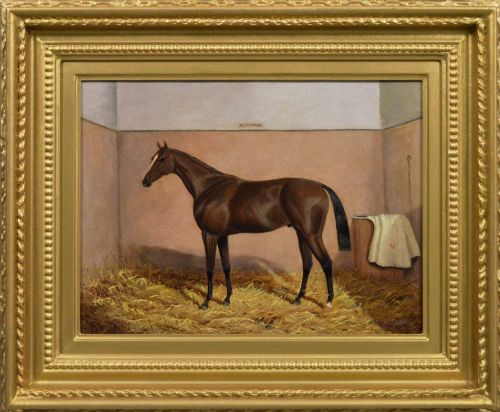
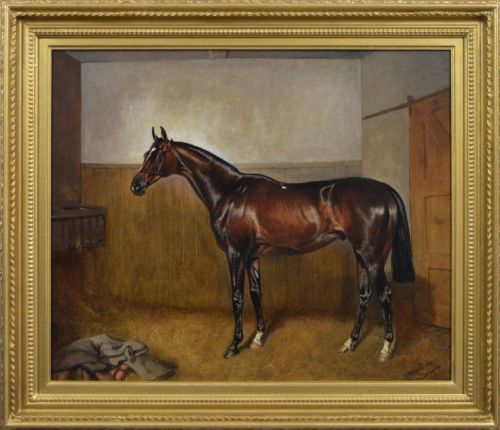
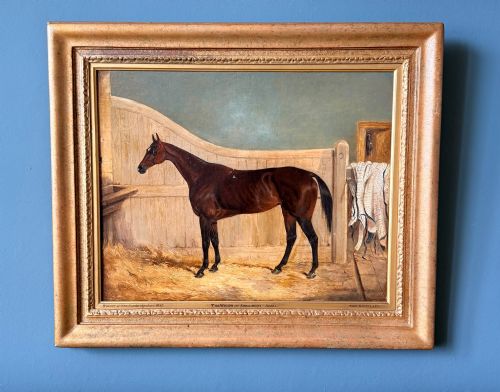
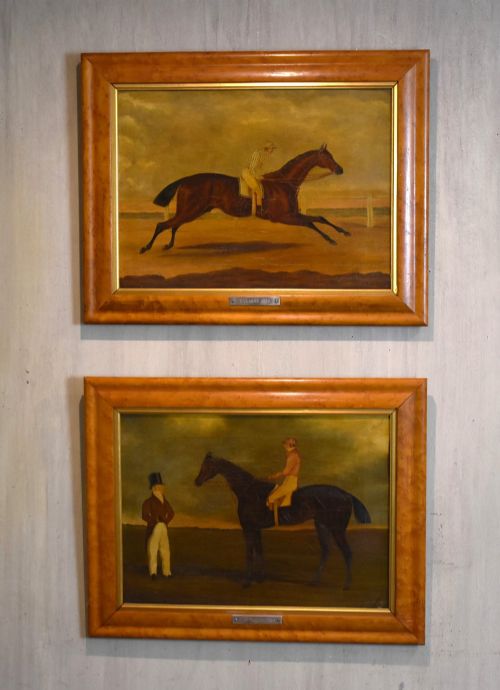
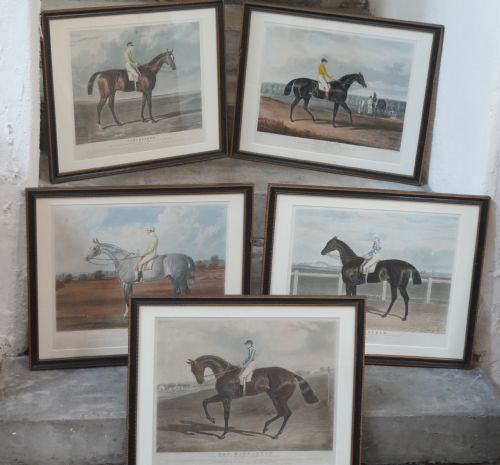
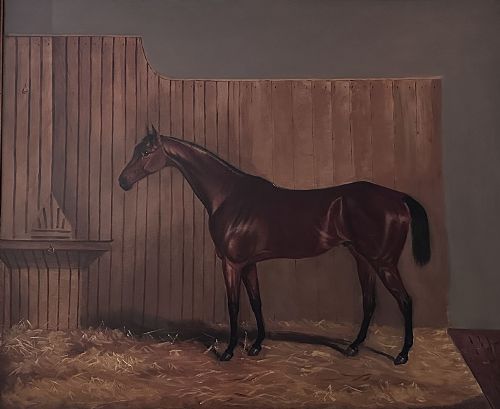
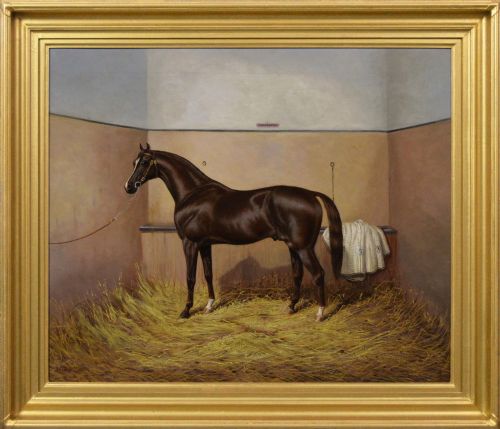
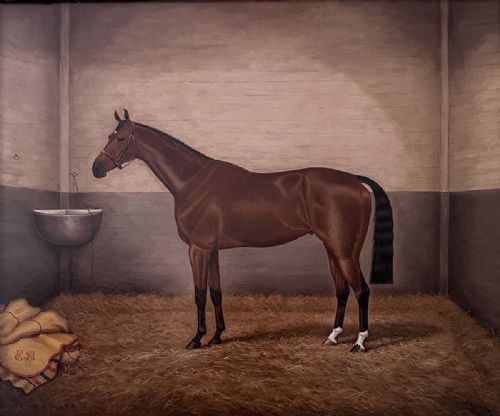
Victorian racehorse art brings together nineteenth-century paintings, prints and engravings that record famous thoroughbreds, winning jockeys and historic race meetings. These works celebrate individual champions such as Flying Fox, Persimmon and General Peace alongside atmospheric depictions of the sport.
Buyers encounter both oil paintings on canvas and framed works on paper, ranging from intimate single portraits to sets of engravings. The pieces frequently document specific owners, jockeys like Fred Archer and Jack Watts, and notable race victories across the period.
How They Were Made
The physical works rely on oil paint applied to canvas, capturing the sheen of horse coats and the intensity of the track, often housed in original giltwood frames. Paper works utilise printing, engraving and aquatint techniques to reproduce detailed compositions of equine subjects.
Craftsmanship in these pieces extends to the framing and mounting, where period wood and glass preserve delicate works on paper and engravings from environmental damage.
Listings feature works spanning the nineteenth century, utilising oil paint, canvas, paper and giltwood frames.
What Varies in Quality
Quality rests on the precision of the equine anatomy and the skill of the artist in conveying the individuality of the racehorse and its handler. Works by documented painters command attention for their detailed brushwork and accurate proportions.
The survival of original framing materials and the clarity of printed lines or painted surfaces determine the overall presence and historical integrity of each piece.
Albert Clark·John Alfred Wheeler·Thomas Walker Bretland·John Frederick Herring Snr·Samuel Spode·Alfred Wheeler·John Parker Davis
The Victorian Racehorse Art Glossary
- Aquatint
- A printmaking technique that produces tonal areas resembling watercolour washes. It was frequently used in nineteenth-century sporting prints to create subtle gradients of shade.
- Giltwood
- Wood that has been treated with a thin layer of gold leaf. This finish is common on nineteenth-century picture frames.
- Thoroughbred
- A breed of horse developed for racing. These animals form the primary subject matter of Victorian equestrian art.
- Sporting art
- A genre of painting and printmaking dedicated to fields sports, horse racing and equestrian subjects. It flourished during the nineteenth century.
Victorian Racehorse Art: Frequently Asked Questions
How do I date these works?
Dating relies on recorded artist signatures, exhibition dates, clothing styles of jockeys and documented racing history. Many pieces carry specific years or period attributions within their titles.
Examining the canvas preparation, framing materials and paper types provides further confirmation of nineteenth-century production.
What subjects appear most often?
Portraits of named racehorses dominate the selection, often featuring the animal alongside its jockey, trainer or owner. Race day scenes and starting moments also appear in prints and paintings.
These subjects reflect the Victorian obsession with thoroughbred bloodlines and major racing fixtures.
How were these pieces displayed?
Original owners typically hung these framed oil paintings and engravings in country houses, estate libraries and sporting clubs. They served as visual records of breeding success and turf achievements.
Today, they suit studies, hallways and living spaces with traditional equestrian decor.
What is the difference between an oil painting and an engraving?
Oil paintings are unique works created by hand with pigment on canvas, offering rich textures and deep colour variation. Engravings are printed multiples pulled from etched metal plates, valued for their fine lines and graphic detail.
Both formats played a significant role in nineteenth-century sporting culture.