
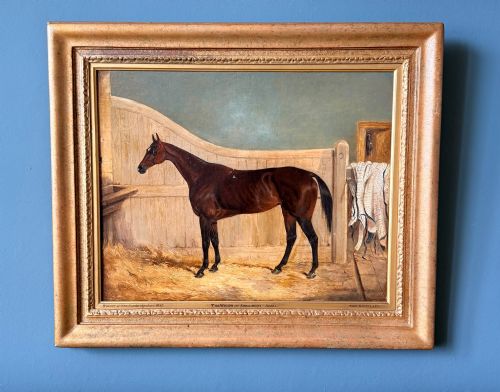
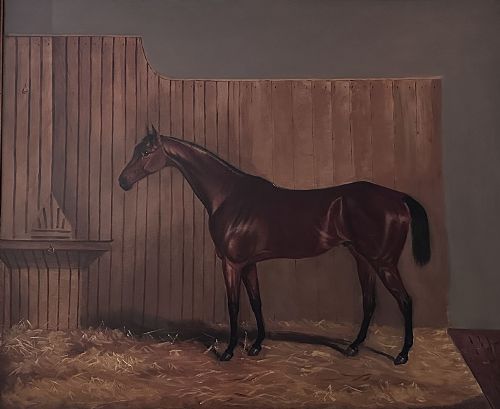
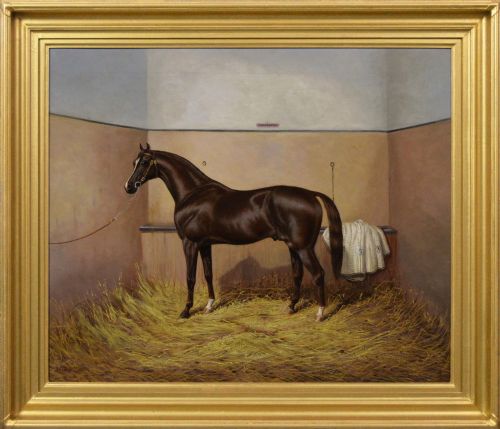
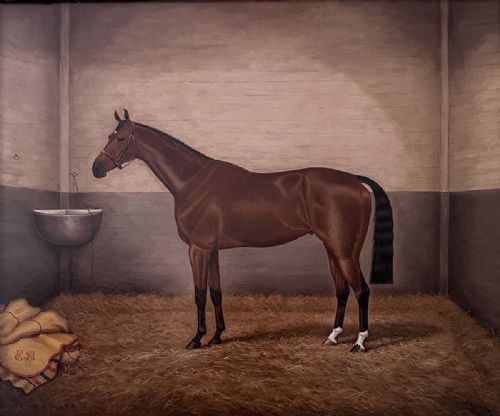


Thoroughbred Oil Painting
A thoroughbred oil painting captures the enduring power and lineage of celebrated racehorses through the hands of period equestrian artists.
Thoroughbred Oil Painting
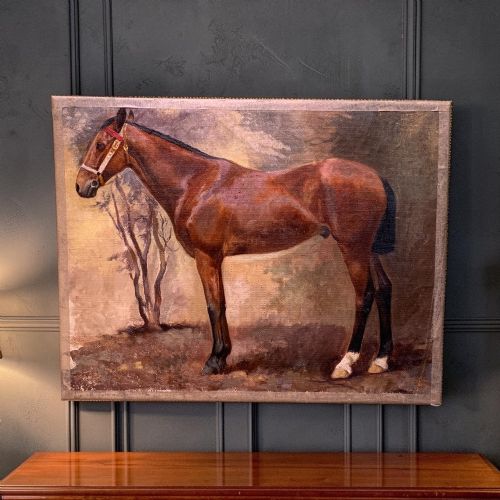
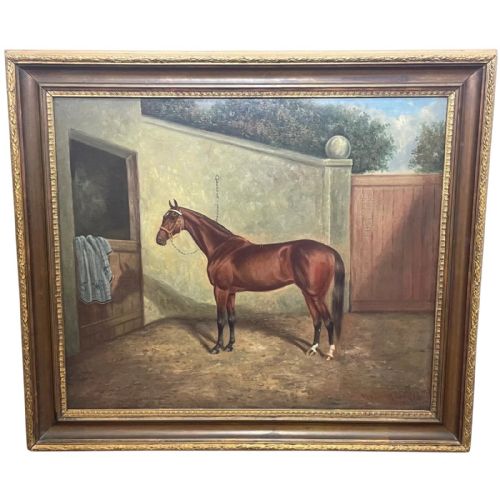
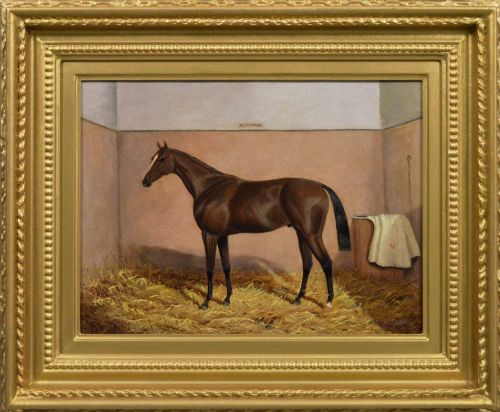
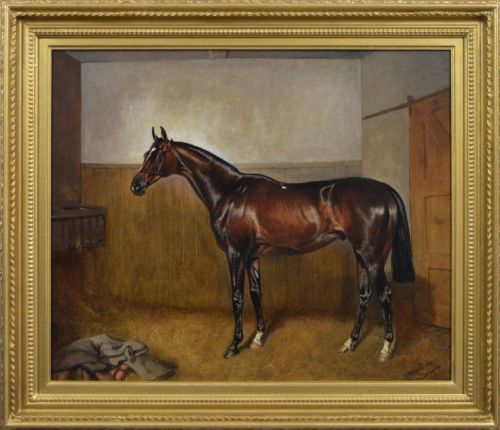
A thoroughbred oil painting depicts individual equine champions, often named in the title or inscribed on the canvas alongside their famous jockeys and notable victories. These works emerge predominantly from the nineteenth and early twentieth centuries, spanning the Victorian and Edwardian periods.
The subjects range from solitary stable portraits of bay and chestnut racers to dramatic depictions on the turf at Epsom or Kempton Park. Buyers searching this phrase encounter both grand compositions of historical race winners and intimate studies of prized hunters in landscape settings.
Materials and technique
Artists painted primarily in oil on canvas, utilising the rich medium to render the sheen of a horse coat and the detailed silks of jockeys. Canvases are frequently housed in period wooden and giltwood frames accented with gold leaf.
The technique relies on careful observation of equine anatomy and movement, combined with precise portraiture of famous animals like Flying Fox, Persimmon and Spion Kop. Painters built up layers of pigment to create depth in both the animal musculature and the surrounding stable or course background.
Listings span the nineteenth century into the 1930s, featuring oil on canvas supported by wood and giltwood framing.
Distinctions in quality
Quality rests upon the demonstrable skill of the artist in capturing correct equine conformation and the specific likeness of a named racehorse. Works by accomplished painters command attention through superior handling of light on muscle and coat.
Provenance and documentation elevate certain pieces above anonymous studies, particularly when inscriptions record the specific owner, trainer or historic racing victory. The integration of original period frames also contributes significantly to the integrity of the piece.
Frederick Albert Clark·Albert Clark·John Alfred Wheeler·Thomas Walker Bretland·Edward Lloyd of Ellesmere·Samuel Spode·Alfred Wheeler·Walter Herbert Wheeler·Frank Giggs·H C Evans
The Thoroughbred Oil Painting Glossary
- Canvas
- A heavy woven fabric stretched across a wooden frame to serve as the foundation for the oil paint. This support defines the primary structure of these historical artworks.
- Giltwood
- Wood carved and coated with gold leaf or metallic paint to form ornate picture frames. These frames frequently accompany nineteenth-century sporting art.
- Sporting Art
- A genre of painting dedicated to equestrian subjects, racing, hunting and the wider rural sporting life. It forms the primary category for these horse portraits.
- Bay
- A coat colour of horses characterised by a reddish-brown body with black points on the mane, tail and lower legs. This shade appears frequently across the horse portraits.
- Jockey Up
- A descriptive phrase in racing art indicating that the rider is mounted upon the horse in racing colours. It often denotes a specific historic race day.
Thoroughbred Oil Painting: Frequently Asked Questions
What is a thoroughbred oil painting?
A thoroughbred oil painting is a historical artwork depicting a specific racehorse, hunter or champion, often created during the nineteenth or early twentieth century. These works serve as visual records of famous equine lineage and notable racing triumphs.
Many pieces document legendary winners by name, recording the animal alongside its jockey, trainer or owner. They provide a direct window into the Victorian and Edwardian sporting worlds.
How were these horse paintings used?
Owners, breeders and patrons commissioned these portraits to celebrate successful racehorses and preserve the likeness of prized bloodlines. The works hung in country houses, estate offices and training establishments as testaments to turf success.
Today, they function as both decorative statements and historical documents for equestrian enthusiasts. They continue to be displayed in traditional studies, living rooms and galleries.
How do I live with an oil painting?
Living with a period oil painting involves placing the artwork away from direct sunlight and excessive moisture to protect the canvas and pigments. Stable room temperatures help prevent the canvas and wooden frame from warping over time.
Regular dusting with a soft, dry brush keeps the surface clean without risking damage to the aged oil paint. Pairing the piece with traditional lighting enhances the giltwood frame and the rich tones of the canvas.
How do I tell periods apart?
Identifying the period of a painting relies on examining the clothing of the jockeys, the style of the lettering on inscriptions, and the construction of the canvas and frame. Victorian works often feature formal compositions with detailed landscape backgrounds.
Edwardian and early twentieth-century pieces frequently display looser brushwork and different styles of racing silks. Comparing the recorded date of the racehorse or the artist working dates provides the most reliable timeline.