
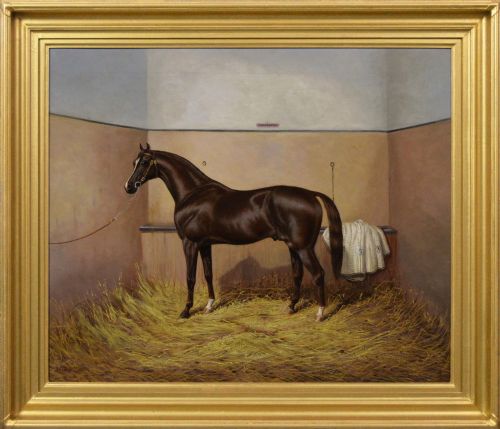
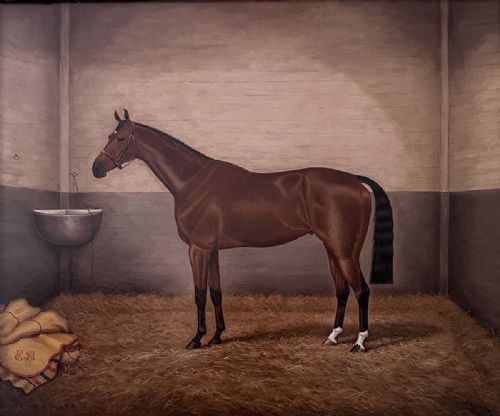


Victorian Racehorse Portrait Canvas
These Victorian racehorse portrait canvas works capture celebrated thoroughbreds and historic turf victories with remarkable equine presence.
Victorian Racehorse Portrait Canvas
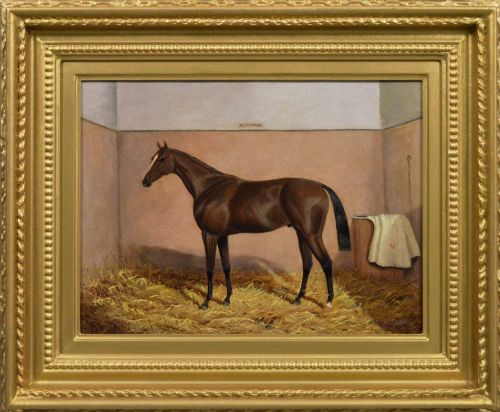
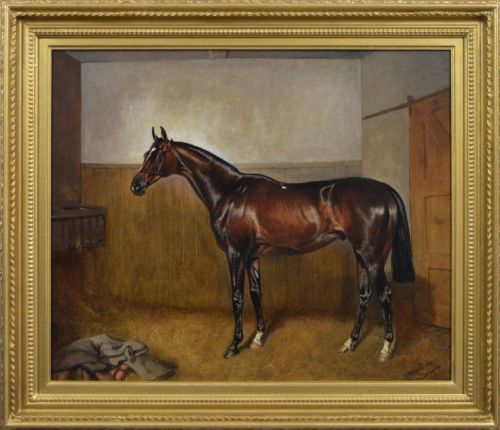
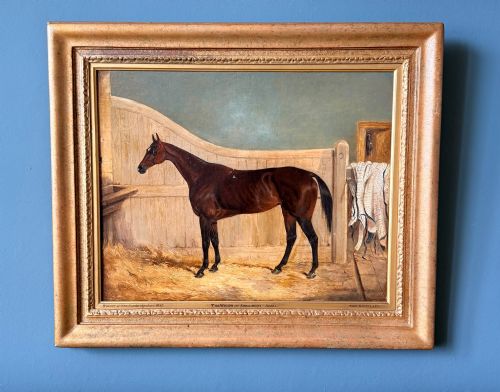
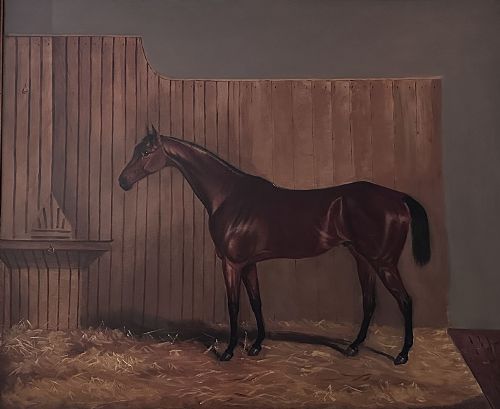
A victorian racehorse portrait canvas depicts thoroughbred horses, often named and recorded alongside their jockeys or historic racing events from the nineteenth century. These works belong to Victorian sporting art and equestrian traditions, capturing celebrated animals such as Flying Fox, General Peace, and Persimmon.
The pieces on this page take the form of oil paintings on canvas, frequently housed within giltwood or gold leaf wooden frames. They emerge from the nineteenth century, including specific dates from the 1840s up to 1900, reflecting the Victorian passion for turf history.
Materials and Technique
These works are painted using oil paint on a woven canvas substrate, mounted within wooden frames finished in gold leaf or giltwood. The medium allows for detailed rendering of equine musculature, coats, and racing silks.
Makers utilised traditional oil painting techniques common to nineteenth-century sporting art, building up rich pigment layers to define the form and character of each recorded racehorse.
Listings feature oil paint on canvas works from the 19th century, including specific dates in the 1840s, 1890s, and 1900.
Assessing Quality in Equestrian Art
Quality rests in the anatomical accuracy of the horse and the precise rendering of the jockey, harness, and racing background. Works by documented painters command attention through superior brushwork and lifelike posture.
The condition of the oil paint surface and the originality of the accompanying giltwood or gold leaf frame contribute significantly to the overall standing of each canvas.
Albert Clark·John Alfred Wheeler·Thomas Walker Bretland·Samuel Spode·Alfred Wheeler
The Victorian Racehorse Portrait Canvas Glossary
- Canvas
- A heavy woven fabric used as a surface for oil painting. It provides the foundational support for the pigment layers in these portraits.
- Giltwood
- Wood carved and covered with a thin layer of gold leaf or gold paint. Frames of this material surround many nineteenth-century sporting paintings.
- Sporting Art
- A genre of painting dedicated to equestrian subjects, racing, and field sports. These works document specific horses, owners, and famous turf victories.
- Oil Paint
- A slow-drying paint made with pigments suspended in a drying oil. This medium defines the Victorian equestrian paintings listed here.
Victorian Racehorse Portrait Canvas: Frequently Asked Questions
What is a victorian racehorse portrait canvas?
These works are nineteenth-century oil paintings on canvas depicting named thoroughbred horses, frequently associated with specific jockeys and historic race meetings.
They serve as visual records of Victorian sporting culture and equestrian achievement, often framed in giltwood.
How should I display these paintings?
These canvases require stable interior wall environments away from direct sunlight and excessive humidity to protect the oil paint and canvas support.
Proper placement ensures the giltwood frame and painted surface remain preserved for the future.
How do I identify the period of a piece?
Dating relies on recorded artist signatures, documented race histories, and stylistic elements typical of nineteenth-century equestrian art.
Many pieces carry specific dates or reference nineteenth-century events and named horses.
What subjects appear in these works?
The subjects include champion racehorses, noted jockeys with their mounts, and horses connected to royal owners or colonial race meetings.
Each portrait records specific animals and turf events from the Victorian era.