


Stable Horse Painting
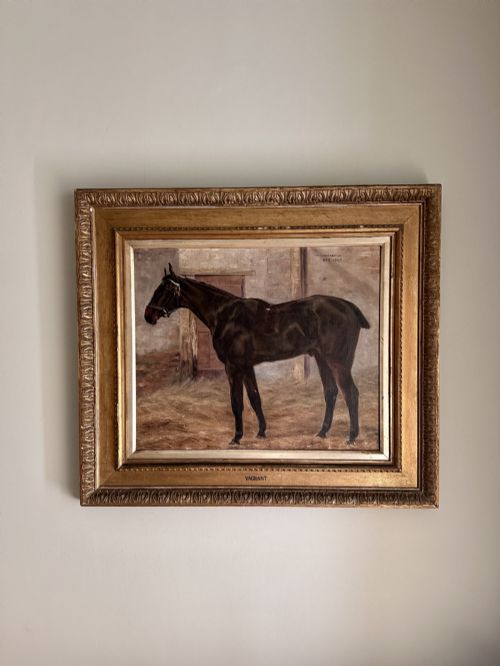
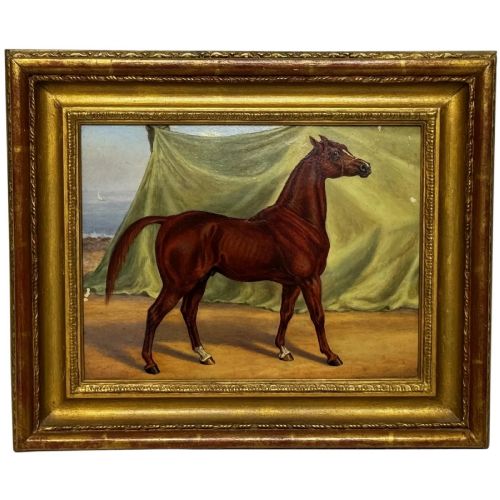
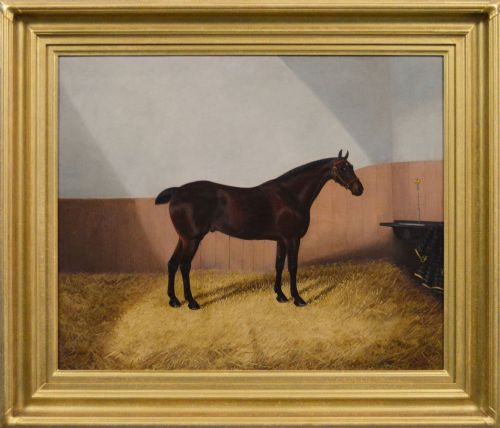
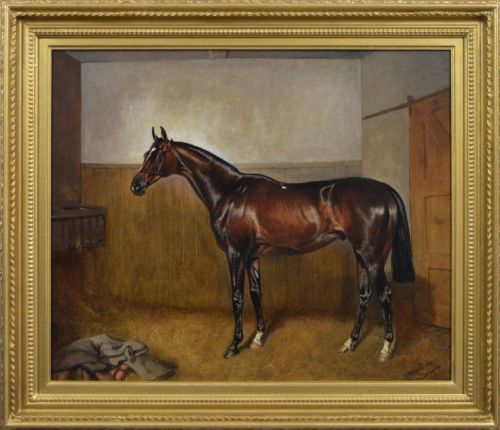
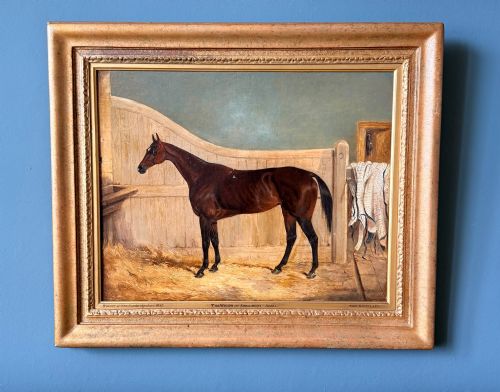
When you seek a stable horse painting, you are looking at nineteenth-century and early twentieth-century equine portraits executed in oil on canvas or panel.
Stable Horse Painting
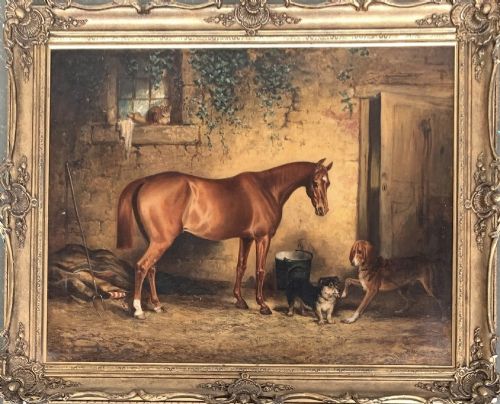
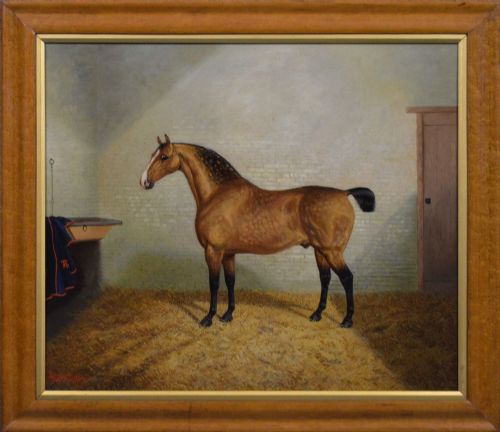
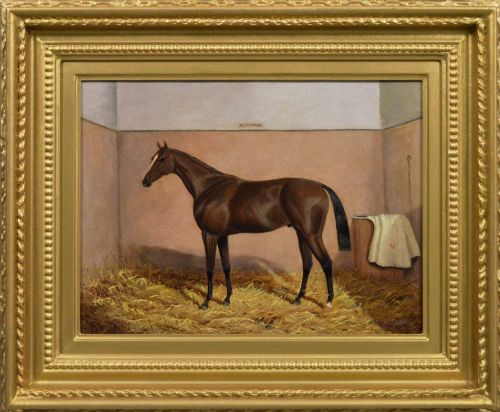
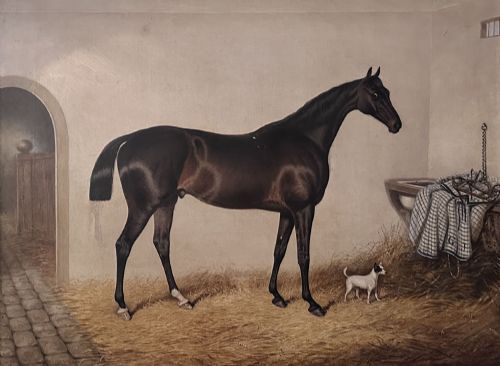
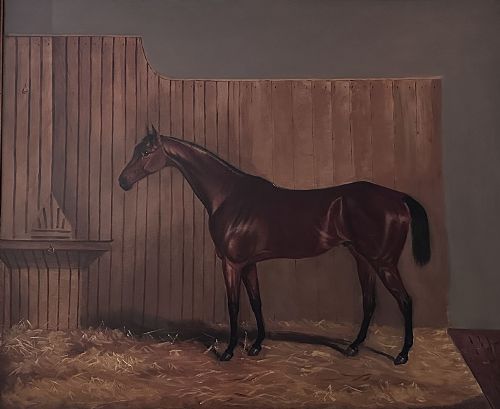
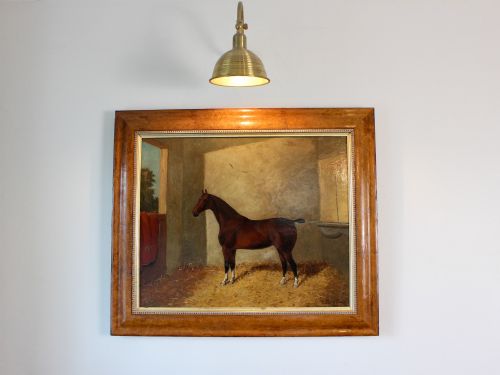
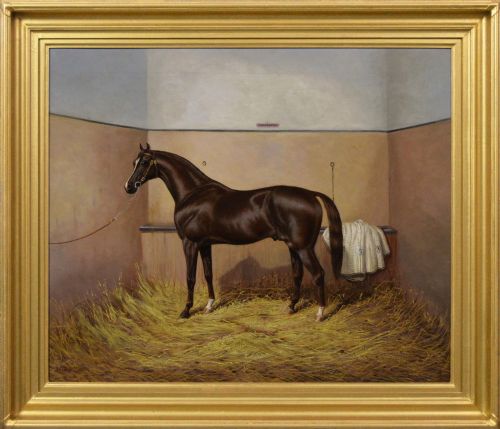
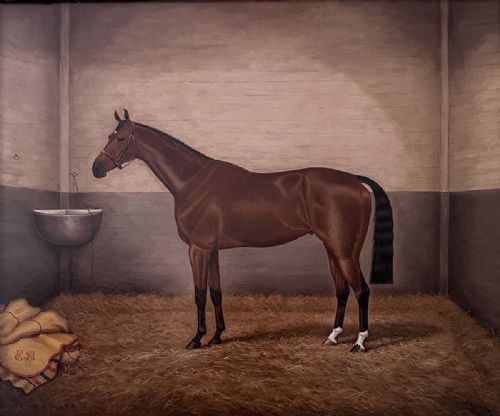
A stable horse painting typically depicts a named hunter, racehorse, or carriage animal housed within its quarters, frequently accompanied by architectural details of the yard. The most common iteration on this page is the nineteenth-century oil portrait on canvas, often set in a giltwood frame.
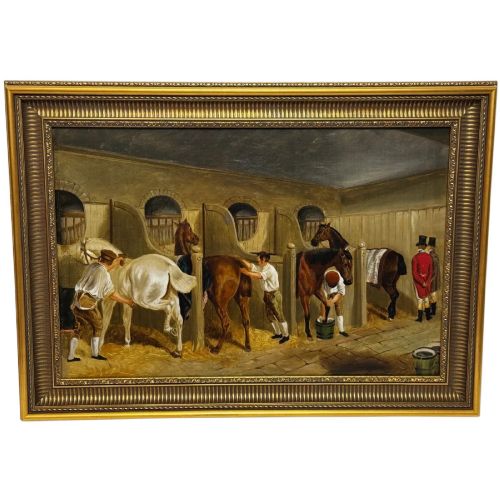
The compositions range from intimate studies of individual bays and chestnuts to broader scenes including grooms, terriers, and stable interiors. Victorian sporting art dominates the selection, spanning works from the early nineteenth century through to the Edwardian era.
Materials and Technique
The works rely primarily on oil paint applied to canvas, wood panels, or copper plates, secured within heavy gilt frames decorated with gold leaf. Watercolour and gouache examples also appear, demonstrating the varied paper and board supports utilised by Victorian artists.
Pigments were layered to render the sheen of horse coats, from dappled buckskins to strawberry grey roans, while the surrounding stable timber and straw bedding received careful tonal depth through traditional brushwork.
Listings feature oil paintings on canvas and wood panels alongside watercolours, spanning the Victorian and Edwardian periods.
Assessing Quality
Quality rests in the anatomical accuracy of the horse, the correct rendering of light falling into the stable interior, and the individual character captured in the animal's eye. Lesser examples rely on rigid templates, whereas superior works show precise bone structure and musculature.
The distinction also lies in the provenance and the artist's ability to document specific bloodlines, race winners, or named hunts, transforming a generic animal study into a recorded historical record of Victorian sporting life.
Henry Barraud·Albert Clark·John Alfred Wheeler·Thomas Walker Bretland·Samuel Spode·John Ferneley Jnr·Edwin Frederic Holt
The Stable Horse Painting Glossary
- Bay
- A horse coat colour characterised by a reddish-brown body with black mane, tail, and lower legs. This shade appears frequently in nineteenth-century portraits.
- Giltwood
- Wood that has been covered with a thin layer of gold leaf or gold paint. Frames of this material are standard for period oil paintings.
- Hunter
- A type of horse bred to carry a rider across country during fox hunting. They form the central subject of many Victorian sporting canvases.
- Panel
- A rigid support for painting, constructed from wood such as oak or copper sheets. These were utilised before canvas became universally dominant.
Stable Horse Painting: Frequently Asked Questions
Who painted Victorian horse portraits?
Nineteenth-century equine art was produced by specialist animal painters who often worked closely with stables, studs, and owners. Many exhibited at major galleries and held direct commissions from the landed gentry.
Well-documented names include Albert Clark, Henry Barraud, and John Ferneley Jnr. Their works frequently recorded notable race winners and champion hunters of the era.
How do you date an antique horse painting?
Dating relies on stylistic clues, framing materials, artist signatures, and inscriptions on the canvas or stretcher bars. Victorian and Edwardian works often carry titles or provenance notes on the reverse.
Clothing styles of any grooms depicted, alongside the construction of the canvas and the composition of the oil pigments, also provide clear markers for the period of execution.
Why did owners commission stable paintings?
Owners commissioned these portraits to celebrate successful racehorses, valuable breeding stallions, and trusted hunters. They served as permanent records of prized livestock before the widespread use of photography.
Such paintings hung in country houses and estate offices as symbols of wealth, sporting prowess, and involvement in regional hunts.