
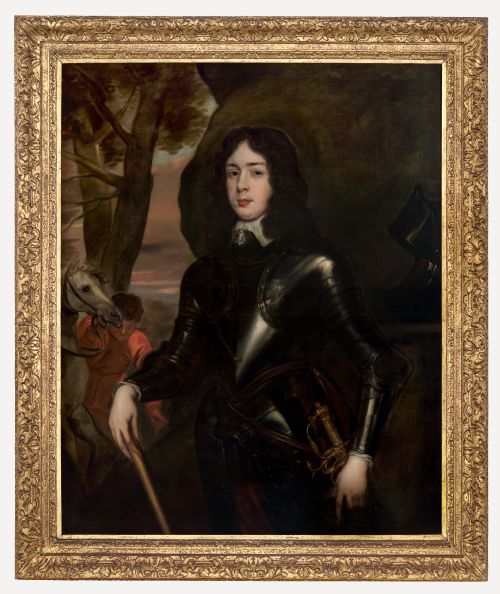
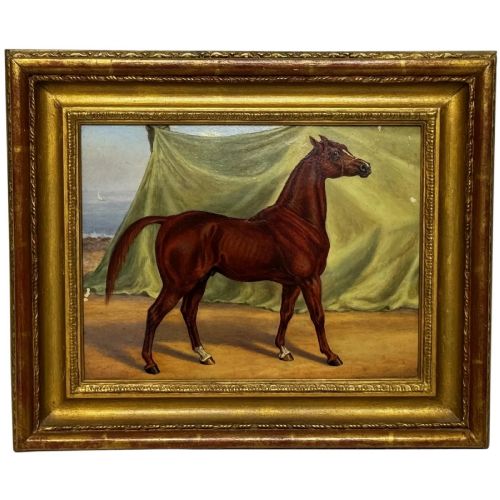

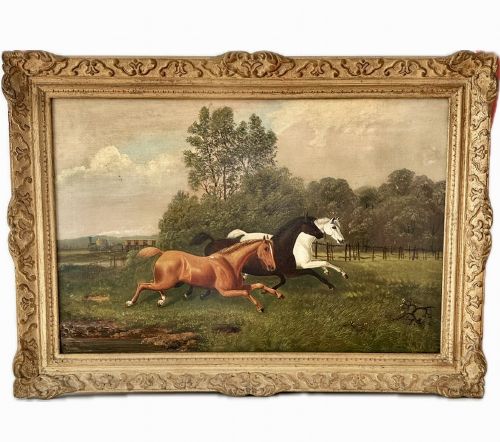
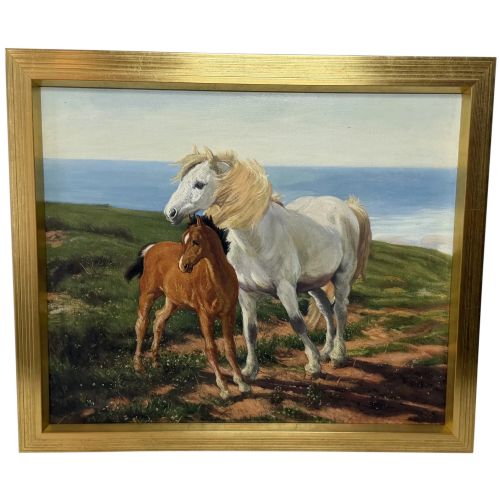
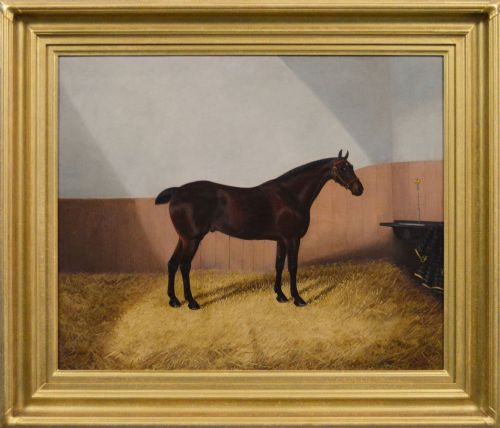

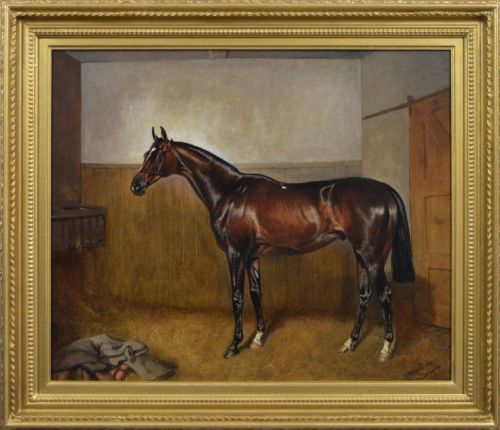
Gold Framed Horse Portrait
A gold framed horse portrait brings the presence of nineteenth-century equestrian life directly onto a wall.
Gold Framed Horse Portrait
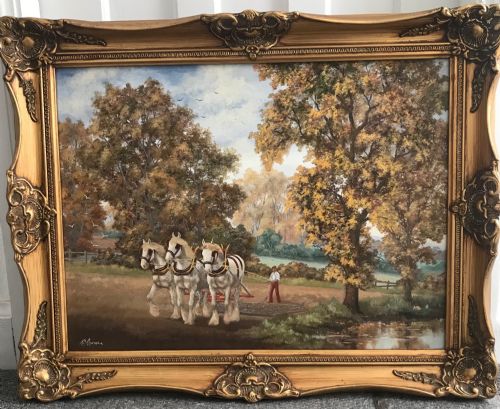
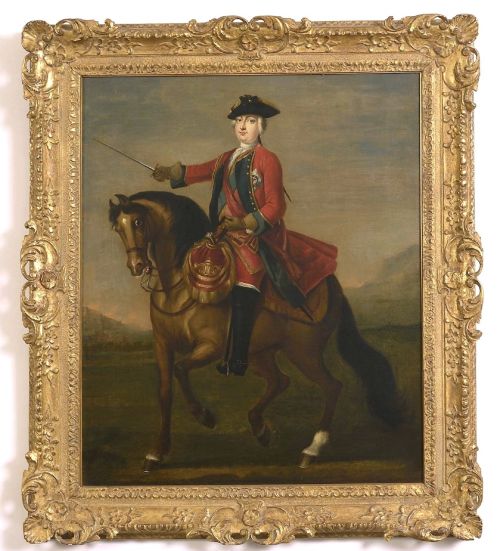
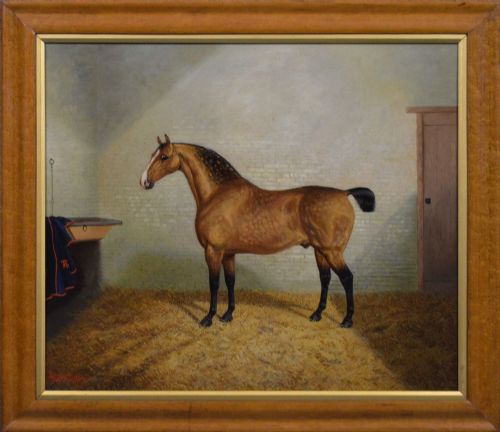
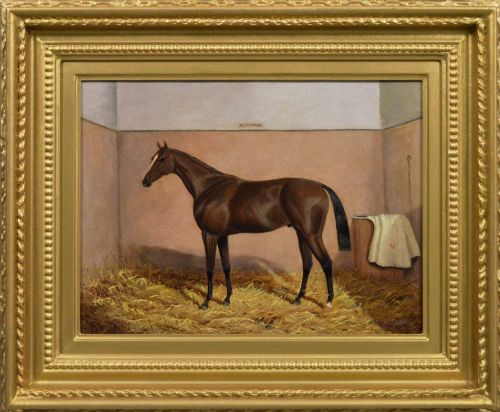
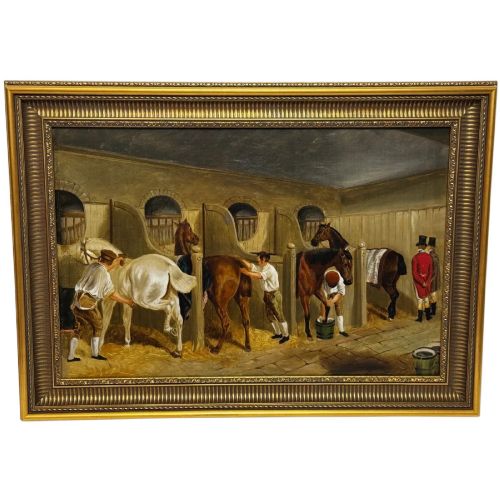
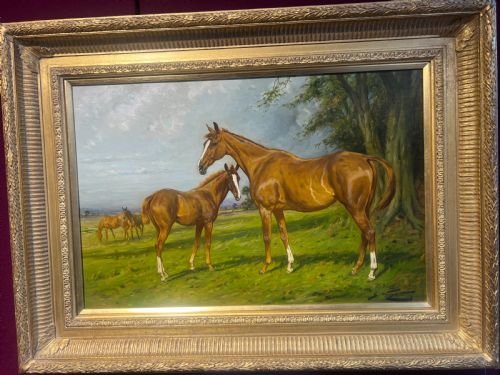
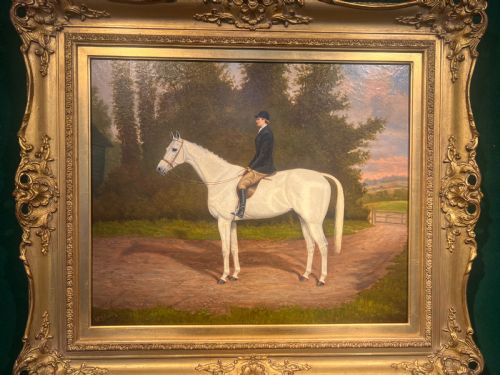
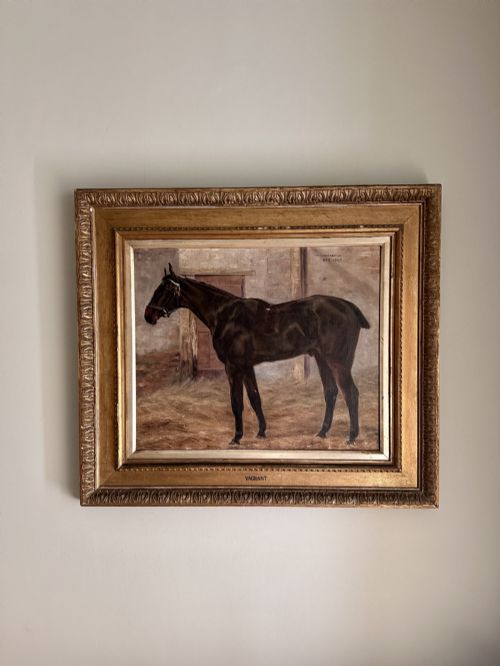
A gold framed horse portrait is an oil painting on canvas capturing equine subjects, hunters, and racehorses within period wooden or gilt frames. These works span centuries, appearing most frequently in Victorian and nineteenth-century forms alongside Georgian and mid-century examples.
The subjects range from named thoroughbred racehorses and royal mounts to working farm horses and stable interiors. Painters record specific animals with detailed attention to conformation, coat colour, and individual character, often placing them within rural landscapes or architectural stalls.
How they were made
Artists apply oil paint to stretched canvas, building depth in the horse's musculature and coat through layered glazes and opaque highlights. Wood and giltwood frames enclose these works, providing structural support and a reflective border that complements the warm tones of the pigment.
Makers construct the timber frames using traditional joinery, applying gesso and gold leaf or gilt finishes to the moulded profiles. The canvas remains secured to wooden stretchers behind the frame, preserving the tension of the painted surface over decades of display.
Listings feature oil on canvas mediums set within giltwood and wood frames, spanning periods from the eighteenth century to the mid-twentieth century.
What varies in quality
Anatomical accuracy and structural understanding distinguish the finest works from ordinary decorative pieces. Accomplished painters capture the exact musculature, movement, and alert expression of an animal, whereas lesser hands produce stiff or disproportionate renderings.
The handling of the background environment and the quality of the surrounding gilt frame contribute significantly to a piece's standing. Finer examples integrate the horse seamlessly into a convincing landscape or stable setting, housed within an original period frame of appropriate weight and detail.
Albert Clark·John Alfred Wheeler·Abraham Cooper RA·Alfred Grenfell Haigh·Samuel Spode
The Gold Framed Horse Portrait Glossary
- Giltwood
- Wood carved and coated with gold leaf or a gold-coloured finish. This material provides the bright, reflective border characteristic of traditional picture frames.
- Equestrian
- Pertaining to horses and horse riding. In art, this category covers portraits of animals, jockeys, and hunting scenes.
- Oil on canvas
- Pigment suspended in a drying oil medium applied to a woven fabric support. This technique allows for rich colour blending and textured brushwork.
- Provenance
- The documented history of ownership of an antique. A traceable background connects a painting to specific estates or galleries.
Gold Framed Horse Portrait: Frequently Asked Questions
What periods do these horse paintings come from?
The works span from the eighteenth century through the Victorian era into the mid-twentieth century. Most examples date from the nineteenth century when equine portraiture flourished.
Creators utilised oil on canvas across all these periods, though framing styles and specific subjects shifted from formal hunting scenes to named racehorses.
How were these portraits used originally?
Owners commissioned or purchased these paintings to celebrate prize-winning racehorses, favoured hunters, or notable military mounts. They hung in country houses, estate offices, and stable blocks to record lineage and sporting achievements.
Displaying a prized animal reflected the owner's status and dedication to equestrian pursuits within British society.
How do I hang a gilt framed painting?
Support the weight of the piece securely using appropriate wall fixings matched to the wall type. Position the painting at eye level where natural or directed light illuminates the canvas without creating glare on the gilt surface.
Keep the work away from direct heat sources and rapid temperature fluctuations to protect both the wooden frame and the oil paint.
How can I tell a Victorian horse portrait apart?
Victorian works often feature specific named thoroughbreds, jockeys in racing silks, or hunters in detailed stable settings. The painting technique relies on layered oil paint on canvas, housed within ornate gilt wood frames characteristic of the nineteenth century.
Signatures, dates, and recorded provenance in the title help confirm the exact period and artist behind the work.