



Original Horse Oil Artwork
When you search for original horse oil artwork, you are looking at painted depictions of equines rendered in oil.
Original Horse Oil Artwork
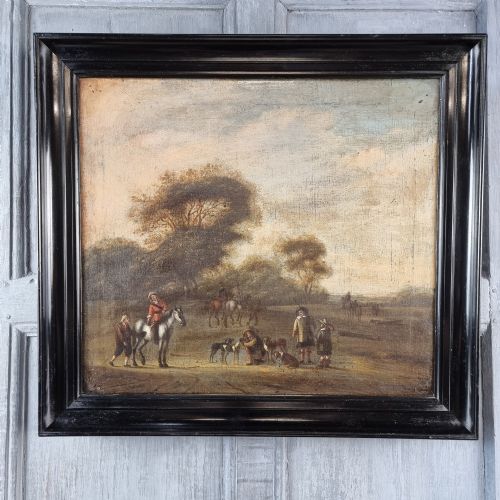
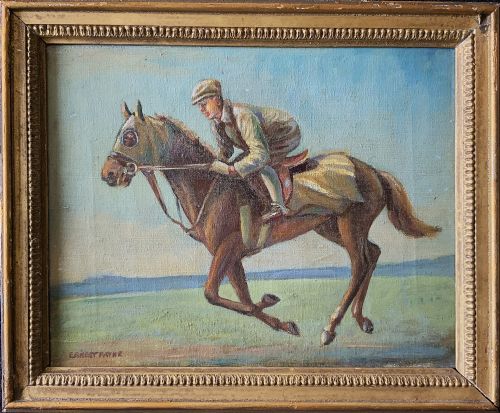
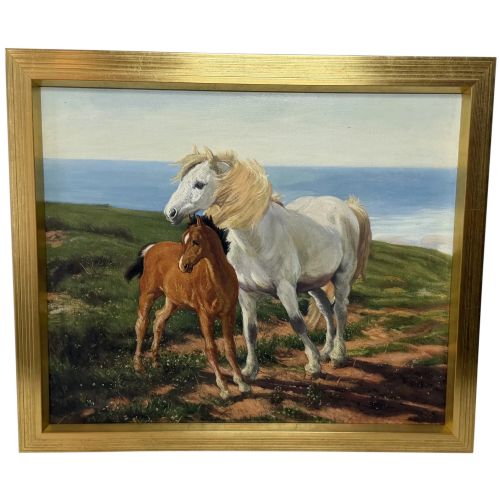
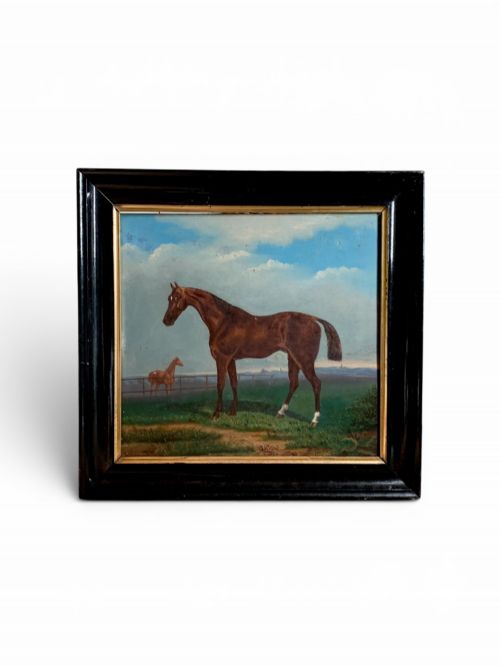
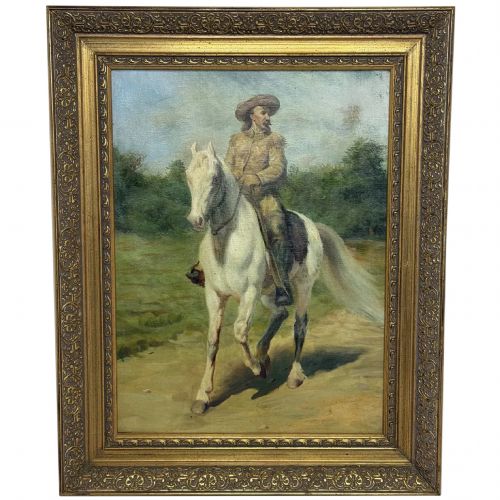
Original horse oil artwork encompasses oil paintings depicting horses, ponies, and working equines alongside their handlers, landscape settings, and sporting scenes. These pieces span multiple centuries, ranging from seventeenth-century landscapes to mid-twentieth-century pastoral and sporting compositions.
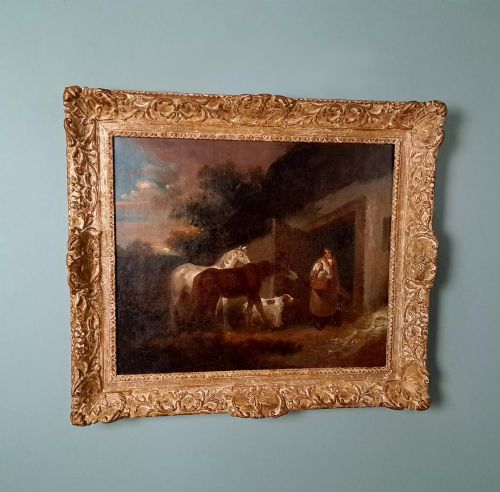
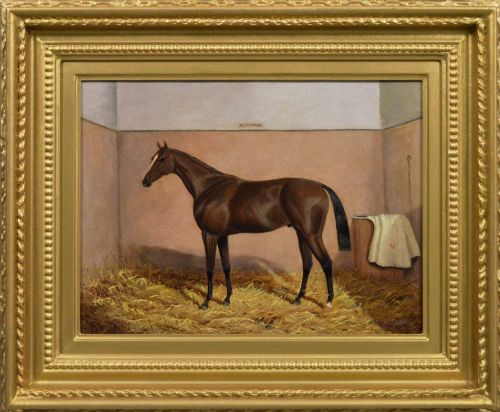
You are most likely to encounter nineteenth-century British school portraits of individual hunters, racehorses, and stableyard scenes, alongside French school panels and mid-century equestrian depictions. The subjects vary from formal portraits of named champions to working shires and rustic cart horses.
The format of these works ranges from intimate oil on board studies to substantial oil on canvas compositions, frequently retained in their period giltwood frames. Each piece records a distinct era of equestrian life, from agricultural labour to elite racing.
Materials and methods
The primary medium across these listings is oil paint, applied to supports of canvas, wood panels, or artist boards. Pigments are worked to build up the texture of coats, leather harness, and surrounding landscapes.
Canvases are stretched over wooden frames, whilst panel paintings utilise prepared timber boards. Many works are housed within period gilt or giltwood frames that complement the painting.
Artworks represent British School, Victorian Sporting Art, and French Expressionist traditions.
Distinguishing quality
Quality rests upon the anatomical accuracy of the horse, the fluidity of brushwork, and the artist's command of light and atmosphere within the landscape. Finer works capture bone structure, muscle tone, and expression with precision, whereas simpler pieces rely on standard formulae.
The integration of the animal into its environment also defines the tier of a piece, separating competent decorative art from accomplished fine art.
William Joseph Shayer Senior·Albert Clark·Ernest Payne·George Morland·John Ferneley Senior·Harry Freckleton·Hazel M. Barnett·Gabriel Dauchot·John Sanderson Wells·John Linnell·Arthur Longley Vernon·Samuel Spode·J.C. Grey·James William Booth·Alfred Grenfell Haigh·Arthur Winter Shaw·Frederick J. Knowles·W.A. Clark·Guillaume Urban Régamey·Frederick William Jackson·Ernest Higgins Rigg·Herbert Royle·Gudrun Sibbons·Donald Wood·Benedict Angell Hyland
The Original Horse Oil Artwork Glossary
- Oil on Canvas
- A traditional painting medium where oil-based pigments are applied to a woven fabric stretched across a wooden frame. This combination allows for varied brushwork and rich colour blending.
- Giltwood Frame
- A wooden picture frame coated with a thin layer of gold leaf or gilt finish. These frames often match the period of the artwork they enclose.
- British School
- A designation for paintings produced by artists working in Britain or within the British artistic tradition. It often groups together works sharing stylistic traits of a particular era.
- Sporting Art
- A genre of painting dedicated to equestrian subjects, hunting, shooting, and racing. These works frequently document named animals and sporting events.
- Oil on Board
- A painting executed on a rigid wooden or composition board rather than flexible canvas. This support provides a firm surface for detailed brushstrokes.
Original Horse Oil Artwork: Frequently Asked Questions
What periods do these paintings cover?
The selections span from the late seventeenth century through the nineteenth and twentieth centuries.
Most pieces date from the nineteenth and mid-twentieth centuries, reflecting changing styles in British and European pastoral art.
How were these horse paintings used?
Historically, portraits of prized hunters, racehorses, and working animals were commissioned by owners to document valuable stock and rural property.
Smaller studies and pastoral scenes were created for domestic interior display in country houses and rural homes.
Are original frames usually included?
Many listings include period frames, such as giltwood surrounds that complement the age and origin of the painting.
Framing styles vary from ornate nineteenth-century gilt mouldings to simpler mid-century wooden profiles.
How do I identify the subject of the painting?
Some works name specific animals, such as famous racehorses or champion hackneys, inscribed directly onto the canvas or associated records.
Others depict generic rural scenes, agricultural labour with shires, or hunting parties typical of their era.