


Canton Porcelain Vase
These canton porcelain vase pieces bring bright enamelled palettes and substantial Qing forms into domestic interiors.
Canton Porcelain Vase
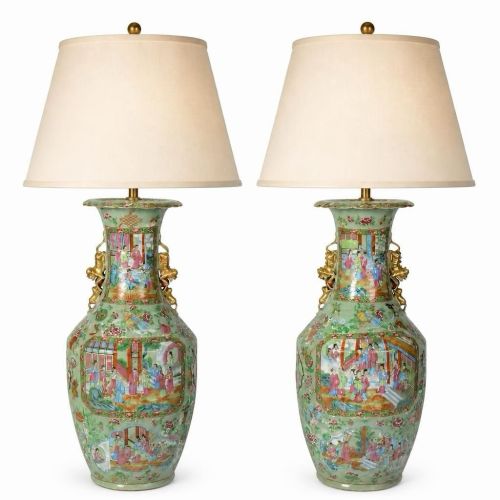
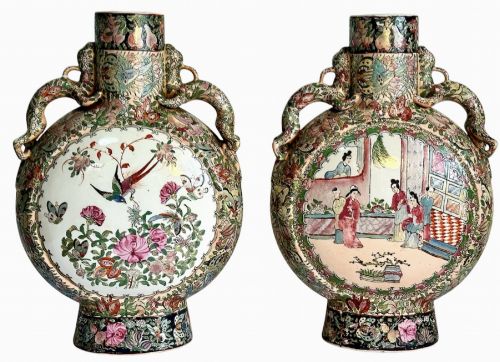
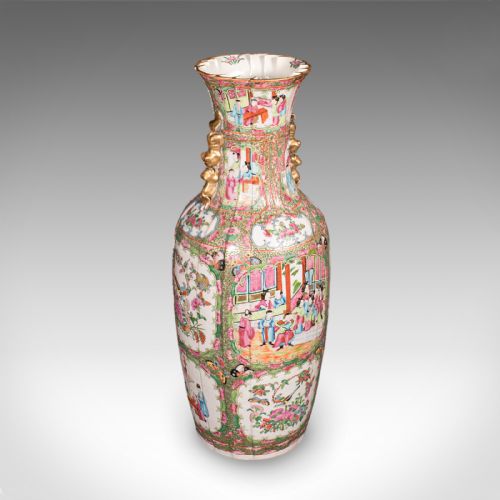
A canton porcelain vase stands as a primary example of Chinese export ceramics, created specifically for Western markets during the nineteenth century. Buyers searching this phrase encounter large baluster vessels, lidded jars, floor pieces, and moon flasks alongside examples adapted into table lamps.
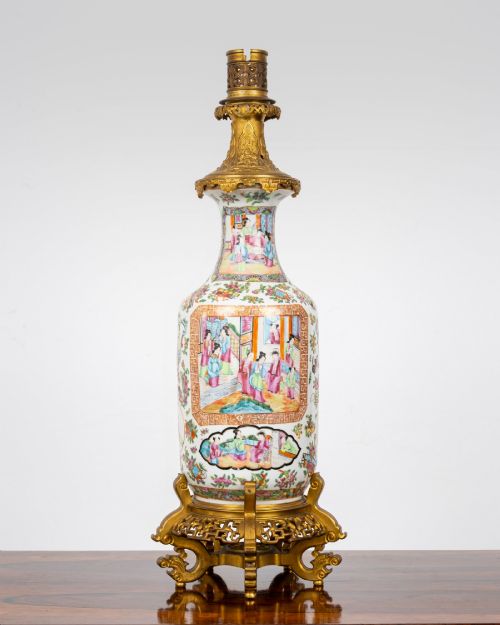
The most common items on this page date from the nineteenth century, including Victorian periods, and incorporate styles such as Chinese export, Qing Dynasty, and Chinoiserie. Many survive as pairs or individual table lamps mounted with brass or gilt bronze.
Forms extend from standard decorative vases to monumental umbrella stands and centrepieces. These objects display the distinctive hand-painted aesthetic of Cantonese workshops, often categorised under Rose Medallion or Rose Mandarin patterns.
How they were made
Potters shaped these ceramics from porcelain bodies before applying hand-painted enamel decoration in polychrome palettes. Artisans integrated gold leaf and gilt highlights to accentuate intricate panels depicting figures, birds, and flowers.
Listings span nineteenth-century production dates, including 1860, 1880, 1890, 1900, 1920, and 1930.
What varies in quality
The standard of hand painting differentiates standard production from exceptional examples, with finer works displaying dense, disciplined brushwork across narrative scenes. The crispness of the enamel colours and the precision of the gilt detailing dictate visual hierarchy.
Scale and format also govern distinction, as monumental floor vases and matched pairs command greater presence than smaller single vessels. Original fittings, such as matching covers or integrated wooden stands, contribute to the integrity of each piece.
The Canton Porcelain Vase Glossary
- Canton
- A historical term for goods exported through the port of Guangzhou, identifying ceramics decorated locally with distinct enamel palettes. This origin encompasses nineteenth-century export production for Western markets.
- Famille Rose
- A ceramic palette defined by opaque pink and rose enamels introduced during the Qing Dynasty. Artisans combined these tones with greens, yellows, and gilt highlights to render figural and botanical scenes.
- Rose Medallion
- A specific Cantonese decorative scheme featuring alternating panels of court figures and birds, butterflies, and flowers arranged around a central medallion. These motifs cover the surface of plates, jars, and vases.
- Moon Flask
- A flattened circular ceramic vessel with a narrow neck and small loop handles, often supported on an oval foot. Potters decorated both flat sides with detailed enamel compositions.
- Ormolu
- Gilt bronze mounts applied to the bases or rims of porcelain vessels, frequently added during nineteenth-century European adaptations. These metal elements provide structural support and decorative framing for lamps and vases.
Canton Porcelain Vase: Frequently Asked Questions
Are these vases converted into lamps?
Many nineteenth-century examples on this page have been adapted into table lamps using brass or gilt bronze mounts. This conversion process often occurred decades after manufacture to suit domestic lighting requirements.
Buyers can find both un-converted vessels and wired lamps, with some listings retaining original oil lantern configurations from the Victorian period.
How do I date a Canton vase?
Dating relies primarily on the stylistic characteristics of the Qing Dynasty, with the majority of pieces originating across the nineteenth century. Specific periods such as the Daoguang and Guangxu reigns appear in the record alongside general Victorian attributions.
Enamel saturation, porcelain weight, and associated mount styles help distinguish mid-nineteenth-century items from later productions.
What is Rose Medallion?
Rose Medallion is a distinct decorative pattern found on Cantonese export porcelain, characterised by segmented panels of figures and flora. These repeating geometric and pictorial sections encircle the body of the vase in vibrant enamel colours.
This style became immensely popular in the West during the nineteenth century and remains a defining feature of these ceramics.
Do these pieces come in pairs?
Matched pairs frequently appear among the listings, reflecting the original export practices of nineteenth-century workshops. These matched sets include decorative vases, lidded jars, and table lamps designed for symmetrical placement.
Single vessels also feature prominently, ranging from standard table sizes to monumental floor-standing pieces.