


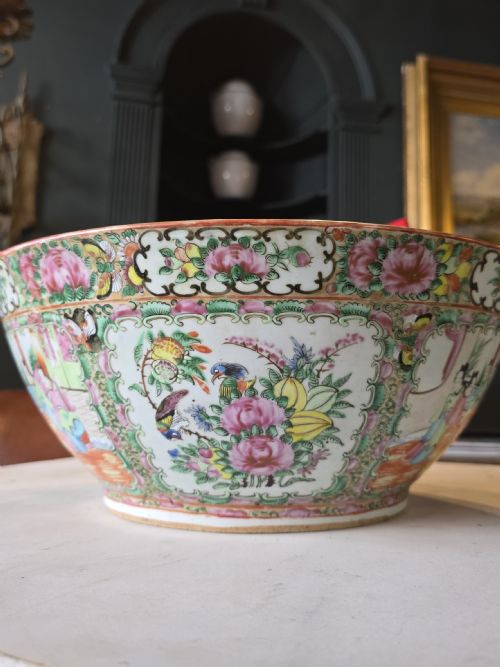


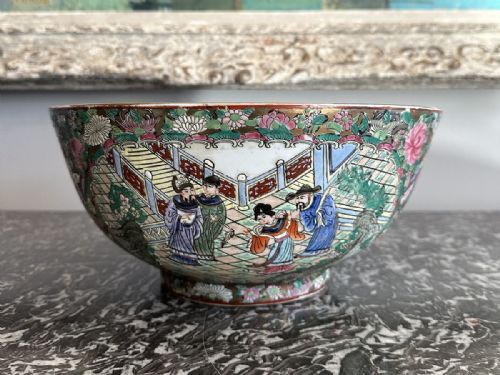
Canton Famille Rose Bowl
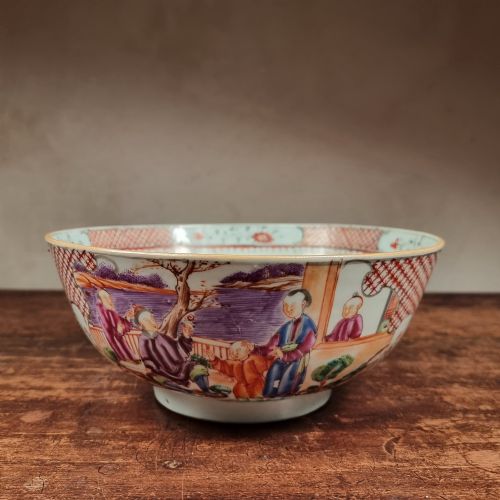
These canton famille rose bowl pieces are vibrant hand-painted porcelain vessels crafted for export, prized for their rich enamels and detailed figural scenes.
Canton Famille Rose Bowl
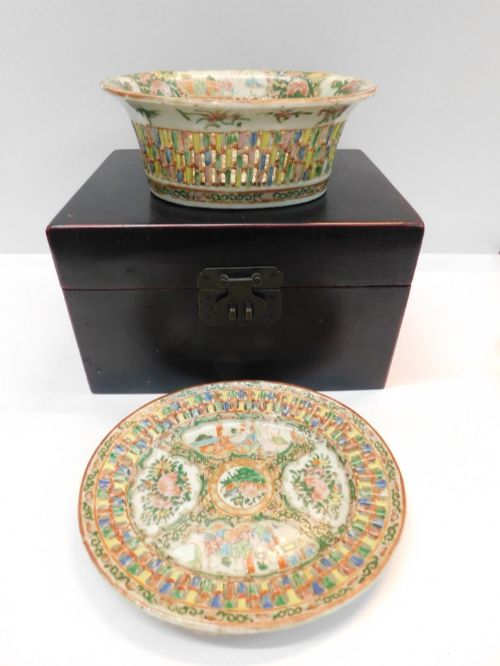
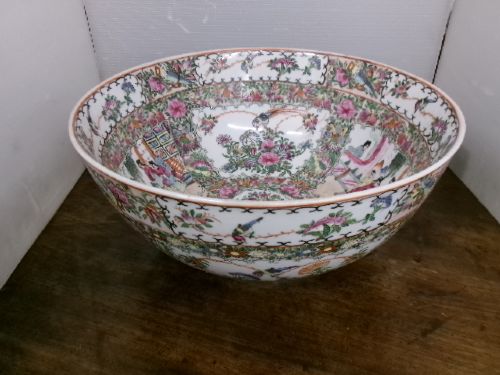
A canton famille rose bowl is a decorative ceramic vessel originating from southern China during the Qing Dynasty and Chinese Export periods. Buyers encounter large punch bowls, pedestal dishes, jardinières, and centrepiece bowls created for international markets.
Most examples found in the evidence date from the nineteenth century, including the Victorian era and the decades spanning eighteen eighty to nineteen ten. These forms range from standard circular basins to lobbed rectangular shapes and pieces complete with hardwood stands.
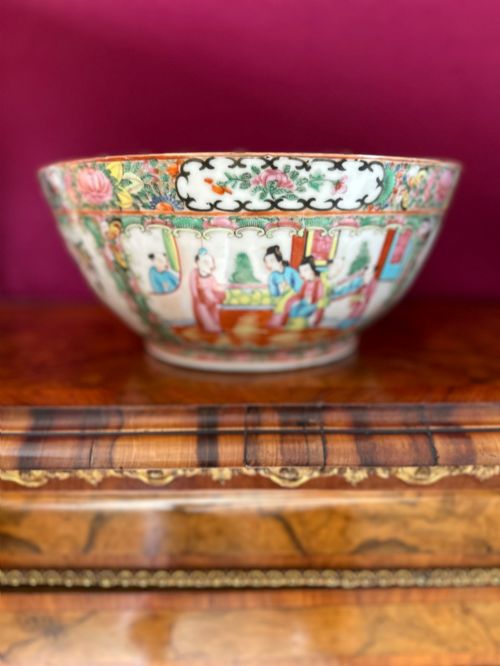
The style encompasses Cantonese famille rose and Rose Medallion patterns, featuring hand-painted designs that often incorporate Mandarin figures. These vessels served both decorative and functional purposes in historic interiors.
How they were made
Makers shaped these pieces from white porcelain, applying overglaze enamel paints by hand to create the characteristic palette of pinks, greens, and golds. Artisans utilised gold leaf and gilding to accentuate rims, borders, and intricate decorative motifs.
Certain vessels received additional mounts in gilt bronze or ormolu during their history, while others were paired with custom hardwood stands. The combination of hand-painted porcelain and metallic detailing defines the physical structure of these objects.
Canton Famille Rose Bowl Retail Price Guide 2026
Typical asking prices for canton famille rose bowl among the pieces listed under this phrase on Sellingantiques today, from the lower quarter to the upper quarter. They describe what is for sale here now, not the wider market.
Some nineteenth-century punch bowls are so wide they could comfortably double as a small ornamental bath for a pampered house cat.
What varies in quality
The scale and weight of the porcelain basin further separate standard production pieces from exceptional punch bowls and jardinières. Preservation of the original gilding and the inclusion of period mounts or hardwood stands contribute to the standing of an individual bowl.
The Canton Famille Rose Bowl Glossary
- Famille rose
- A palette of opaque overglaze enamels introduced in Chinese porcelain decoration, dominated by a distinctive pink or rose colour derived from colloidal gold. This technique allowed artists to achieve subtle tonal gradations in floral and figural motifs.
- Canton
- A geographical hub in southern China where export porcelain was decorated and shipped to Western markets. Pieces attributed to this origin often exhibit dense, colourful panel designs.
- Rose medallion
- A specific decorative pattern featuring alternating panels of figures and birds or flowers, repeated around the interior and exterior of a vessel. It forms a subset of the broader famille rose tradition.
- Punch bowl
- A large, deep vessel historically used for mixing and serving communal drinks at social gatherings. In export porcelain, these bowls often feature wide diameters to accommodate large volumes.
- Jardinière
- An ornamental pot or basin designed to hold a live plant or floral arrangement. These ceramic containers frequently feature heavy porcelain walls to support soil and moisture.
Canton Famille Rose Bowl: Frequently Asked Questions
How old are these bowls?
The majority of pieces date from the nineteenth century, with specific examples recorded from the Qing Dynasty and Victorian periods. Production extends into the early twentieth century around nineteen twenty and nineteen forty.
Craftsmen produced these export items continuously across decades, making century attribution common for these porcelain vessels.
What is Rose Medallion?
Rose Medallion is a distinct decorative pattern found on Cantonese porcelain, characterised by segmented panels of figures, birds, and flowers arranged around a central medallion. This layout covers the surface of the bowl in vibrant enamels.
Artisans repeated these panels symmetrically to create a dense, highly detailed visual effect across the porcelain body.
Were these bowls used for food?
Large punch bowls and basins served functional roles in historical dining and entertaining, holding liquids or large quantities of food for guests. Many examples also functioned purely as decorative centrepieces on tables and sideboards.
Over time, the wear on the interior enamel often reflects this history of domestic service.
How should I display a large bowl?
Large bowls and jardinières require sturdy surfaces such as heavy tables, pedestals, or dedicated floor stands due to their substantial diameter and porcelain weight. Some pieces are paired with carved hardwood stands that elevate and support the base.
Placement should account for natural light to highlight the hand-painted gilt and overglaze enamel details.