

Canterbury Stand with Drawer
A canterbury stand with drawer is a traditional compartmentalised rack for sheet music, newspapers and periodicals, valued for its dual function and elegant timber construction.
Canterbury Stand with Drawer
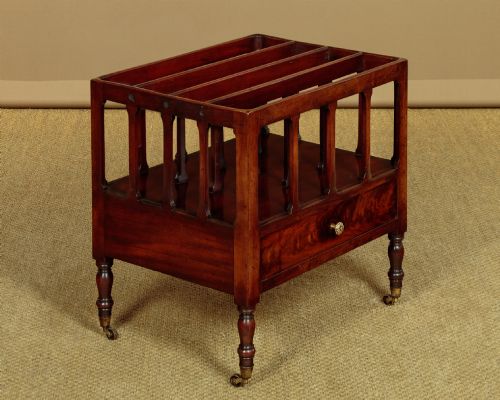
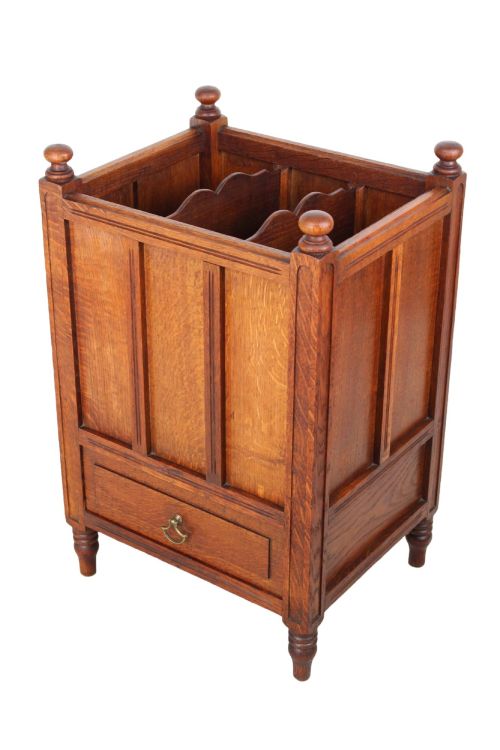
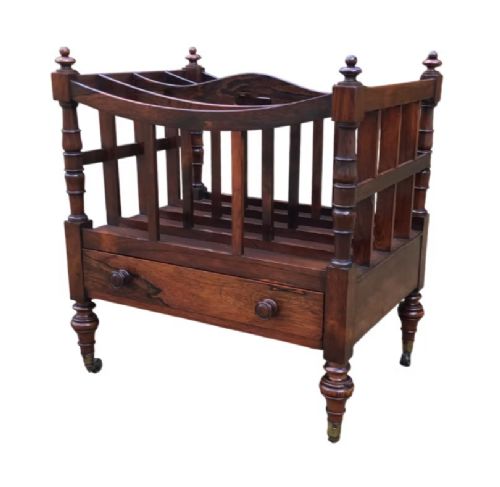
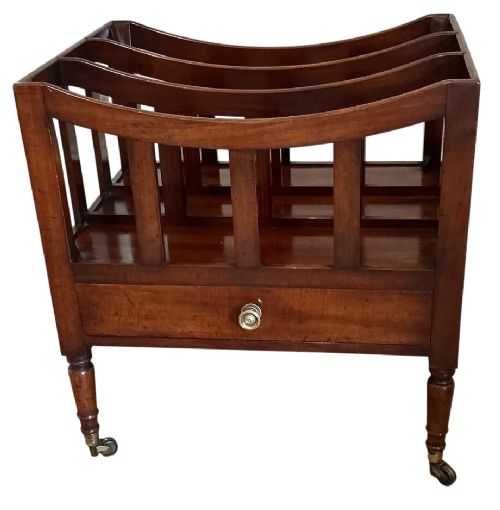
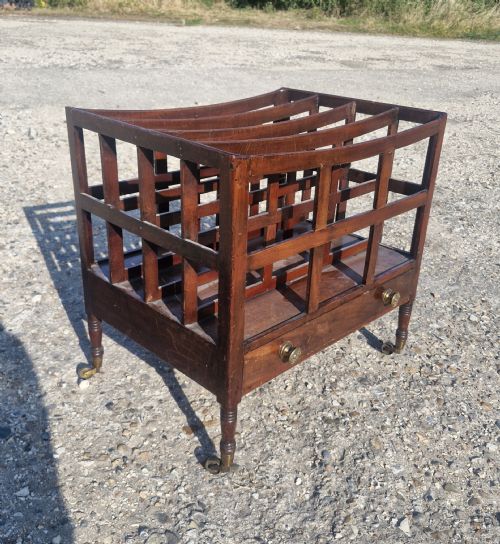
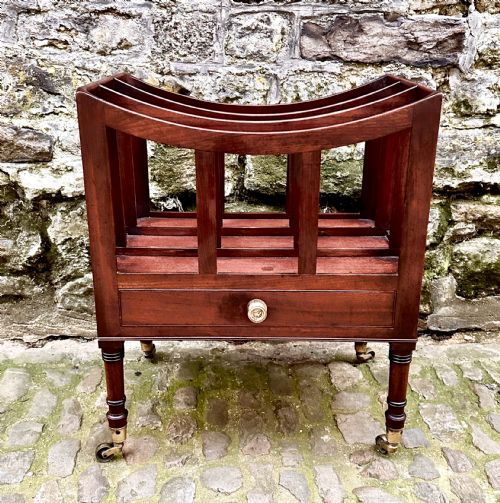
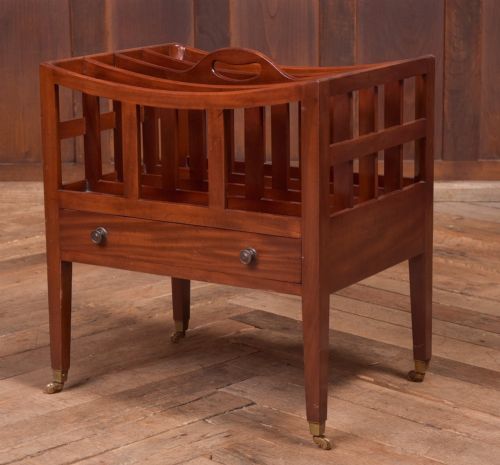
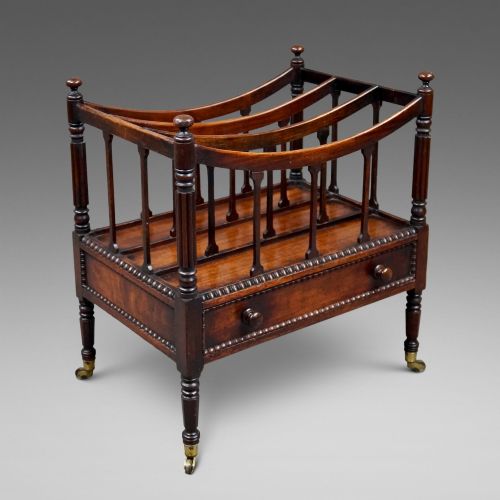
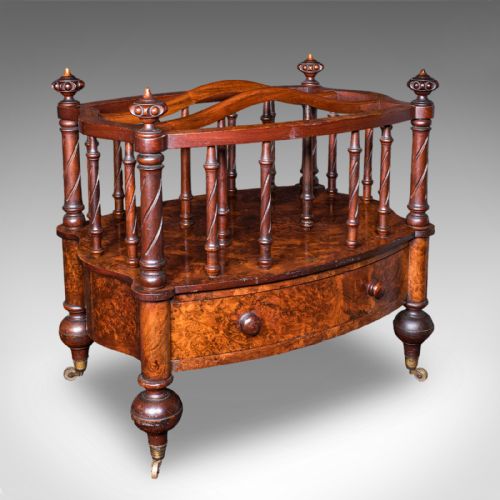
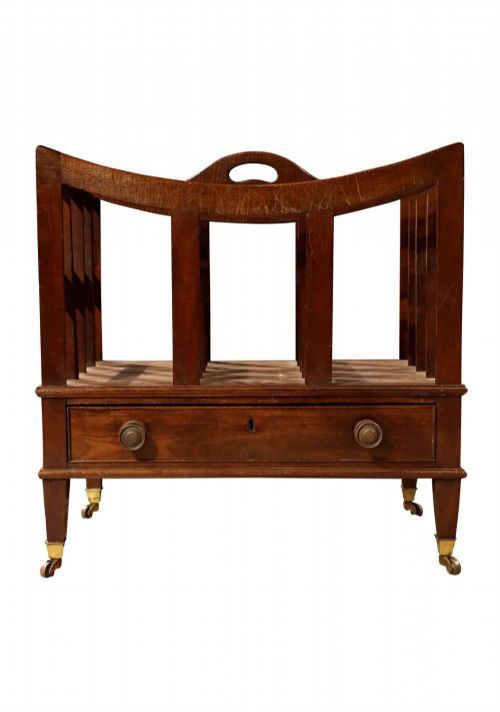
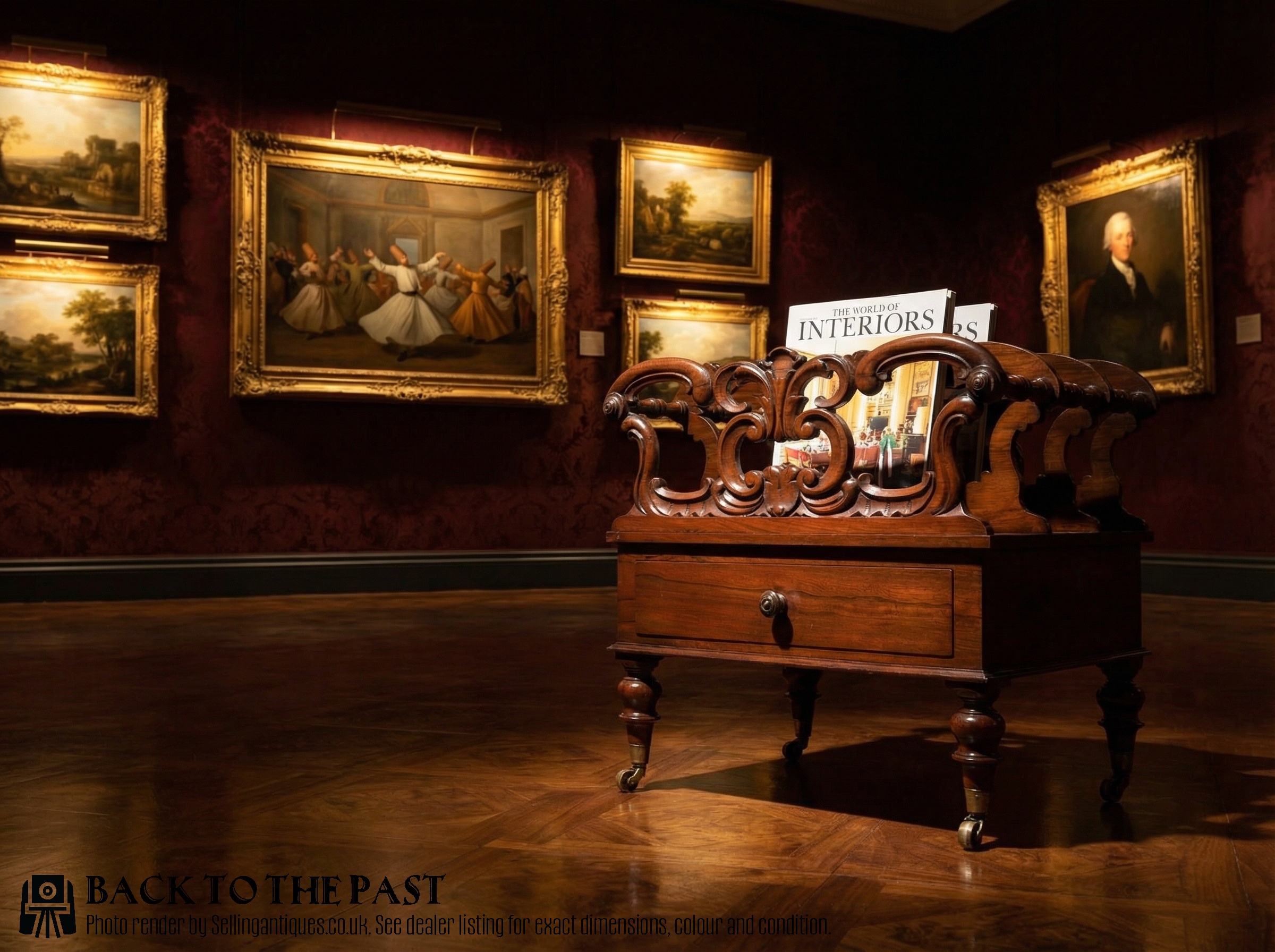
A canterbury stand with drawer is a piece of antique furniture designed to hold sheet music, newspapers, and periodicals in upright divisions above a low storage drawer. The form emerged in the late eighteenth century and continued through the Regency, Victorian, and Edwardian periods.
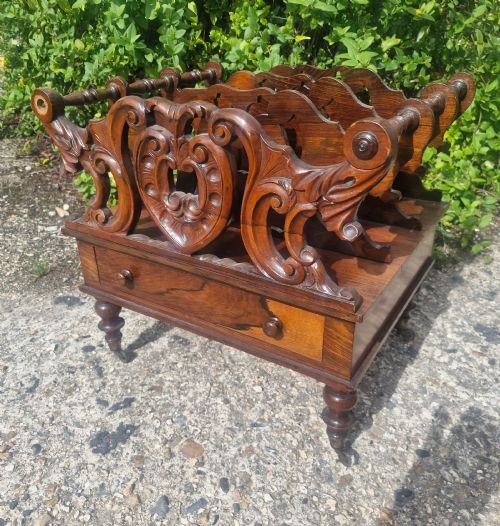
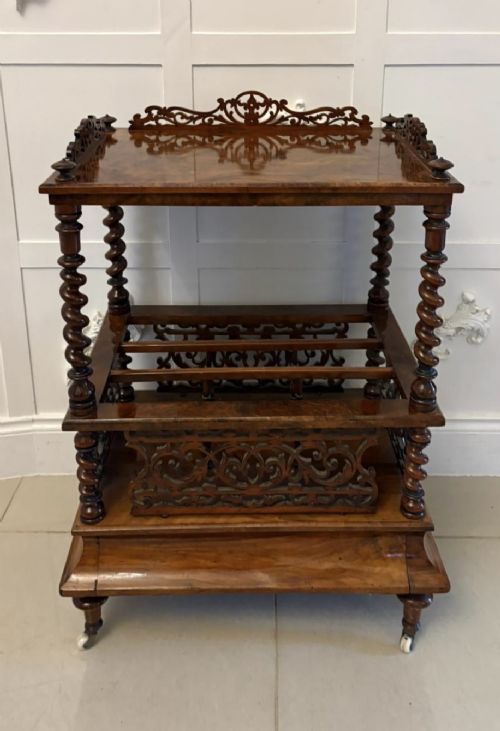
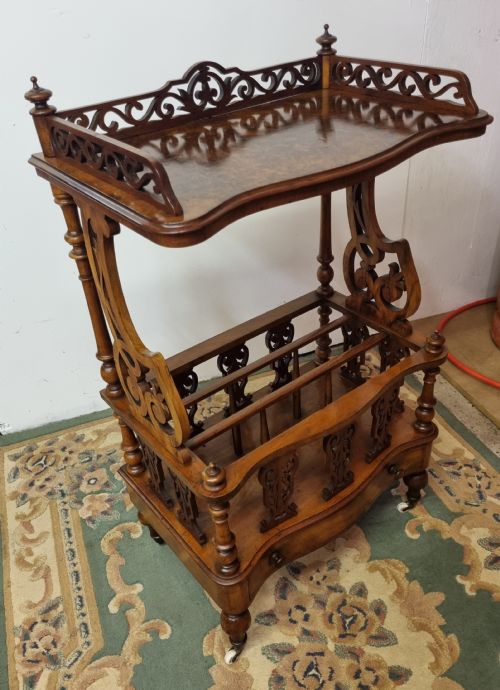
On this page, the most common pieces you will encounter are mahogany and rosewood examples from the nineteenth century, featuring slatted or pierced divisions and turned legs with castors.
These stands combine open rack storage for daily reading with a concealed or visible base drawer originally intended for smaller scores or writing materials.
How they were made
Cabinet makers constructed these stands primarily using figured hardwoods such as mahogany, rosewood, and walnut, often enhanced with satinwood, ebony, or ceramic elements. Timber selection dictated the visual weight of the piece, with dense rosewood and rich mahogany favoured for formal reception rooms.
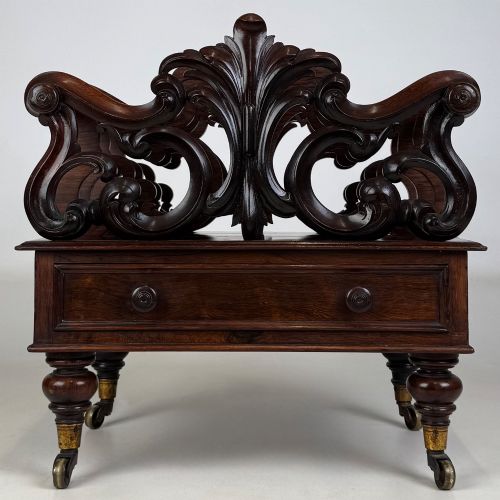
Makers shaped the upright divisions using pierced fretwork, scrollwork, or spindle turnings, joined securely to a low platform base housing a single flush drawer. Brass castors were frequently fitted to the legs to allow the stand to be moved easily across carpets.
Named after the Archbishop of Canterbury, who supposedly commissioned the very first compartmentalised music rack.
What varies in quality
The distinction between standard production and the finest work lies in the choice of timber veneer, the intricacy of the fret-cut or carved divisions, and the refinement of the leg turnings. Superior examples display carefully matched grain patterns on the drawer front and precise joinery in the compartment dividers.
Subtle details such as inlaid banding, carved foliate motifs, and original brass hardware elevate the status of a piece, demonstrating the maker's skill and the intended room of destination.
Edwards and Roberts·Howard and Sons of London
The Canterbury Stand with Drawer Glossary
- Canterbury stand with drawer
- A low furniture stand featuring vertical partitions for holding sheet music or papers, combined with a single drawer in the base.
- Pierced fretwork
- Ornamental openwork cut through thin timber panels, frequently seen shaping the side divisions of nineteenth-century racks.
- Boat shaped
- A distinctive curved outline given to the top edge of certain Regency stand frames, resembling the hull of a vessel.
- What-not
- A multi-tiered open shelving unit, sometimes combined with a canterbury base in Victorian examples to provide additional display space.
Canterbury Stand with Drawer: Frequently Asked Questions
What was a canterbury stand used for?
These stands were originally designed to hold sheet music near a piano, as well as current newspapers and periodicals in domestic sitting rooms.
Today, they serve the exact same practical purpose for organising magazines, art books, and journals beside a modern armchair.
How do I date a canterbury stand?
Dating relies on identifying the prevailing timber and decorative style, such as clean Regency lines versus ornate Victorian burr walnut.
Earlier pieces from the Georgian and Regency eras tend to use solid mahogany or rosewood, while later Victorian and Edwardian versions often incorporate walnut and intricate fretwork.
Are all canterbury stands fitted with drawers?
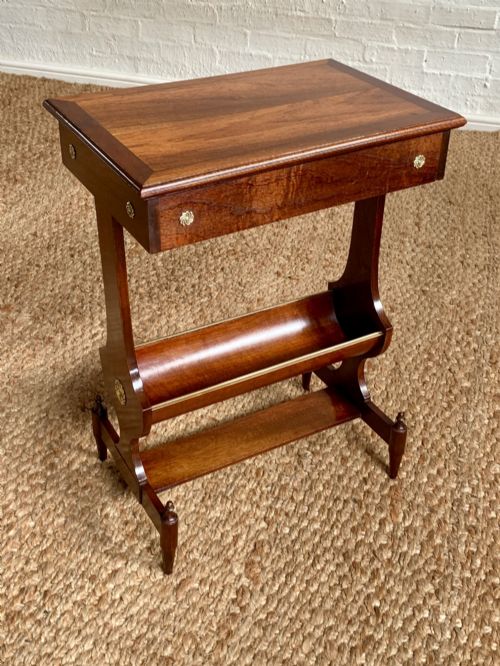
No, many traditional stands consist solely of open vertical partitions raised on legs without any enclosed storage beneath.
Those that include a drawer provide a useful concealed space for small items, sheet music folios, or writing accessories.
Where should I place a canterbury stand in a room?
Because these pieces are freestanding and often finished on all sides, they sit comfortably beside sofas, desks, or pianos.
The low profile ensures they hold reading materials close at hand without obstructing eye lines or overwhelming smaller spaces.