
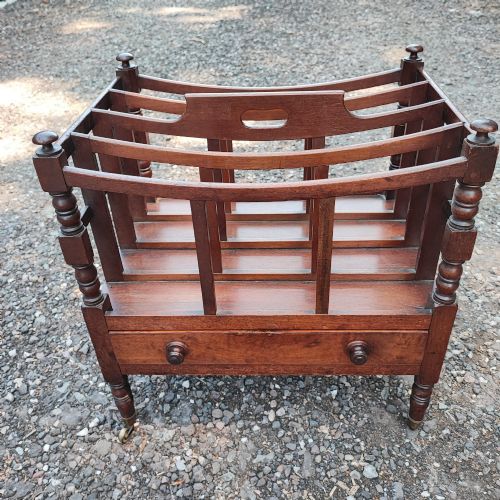
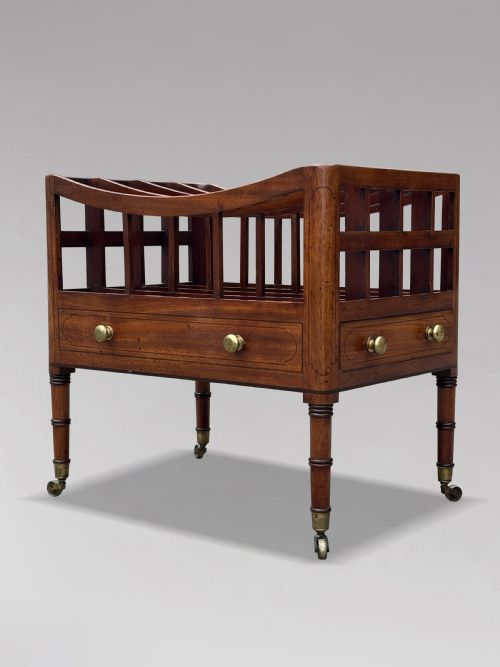
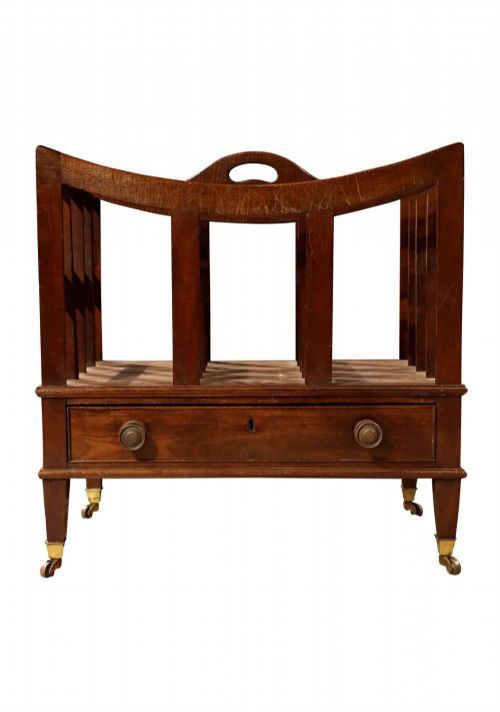


Georgian Music Canterbury Stand
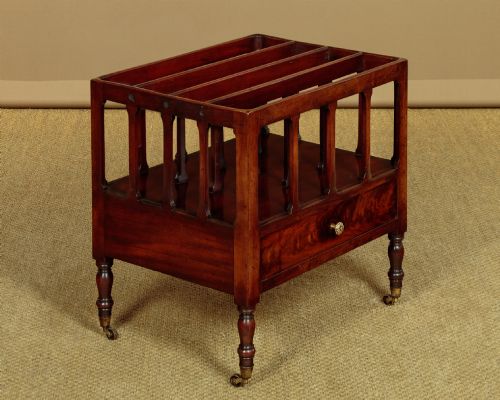
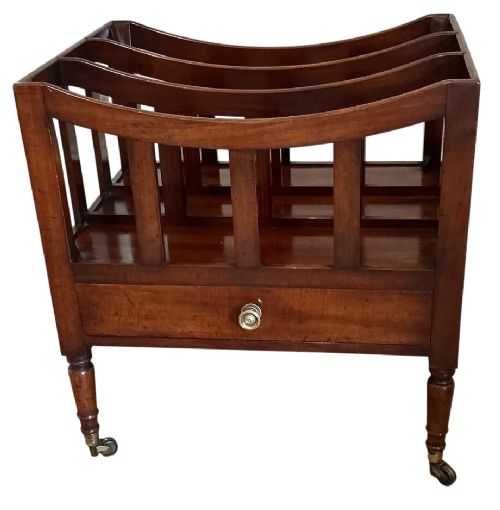
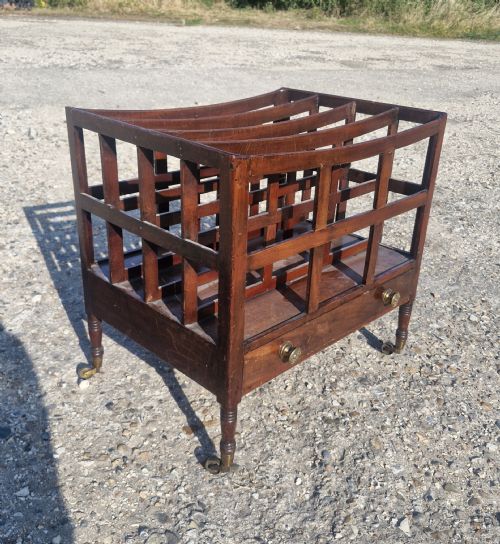
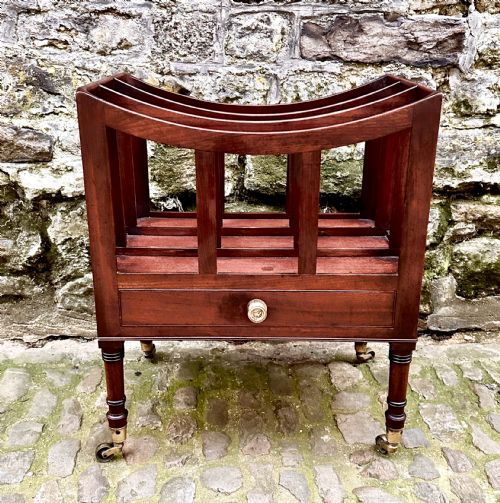
A georgian music canterbury stand organises sheets and folios with compartmentalised divisions above castors.
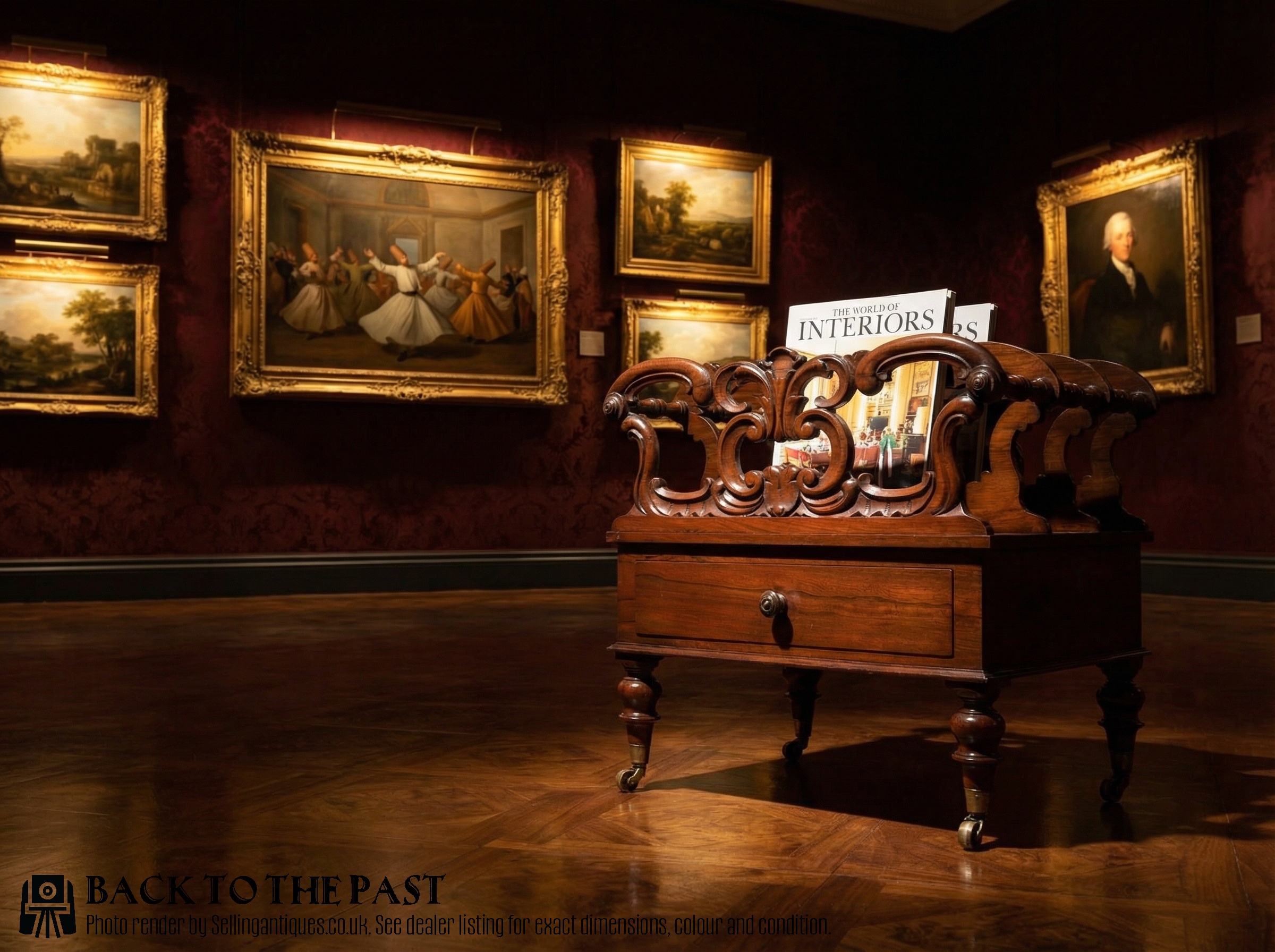
Georgian Music Canterbury Stand
A georgian music canterbury stand is a freestanding piece designed to hold folios, newspapers, and sheet music near a piano or seating area. Most examples encountered here date from the late eighteenth century through the Regency period and into the nineteenth century, uniting storage and mobility.
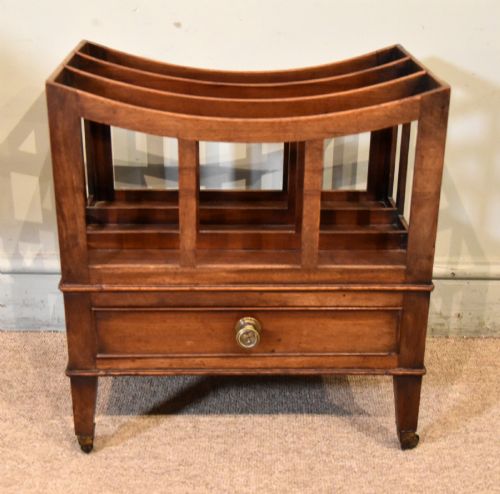
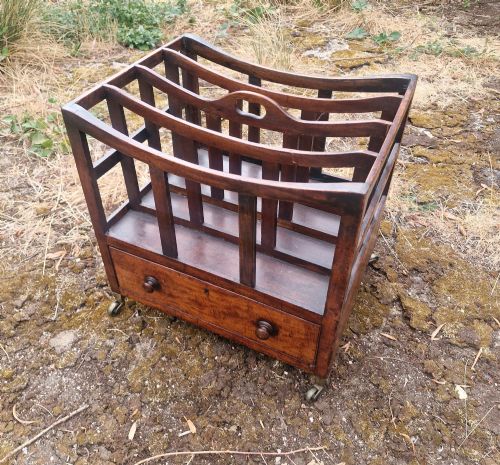
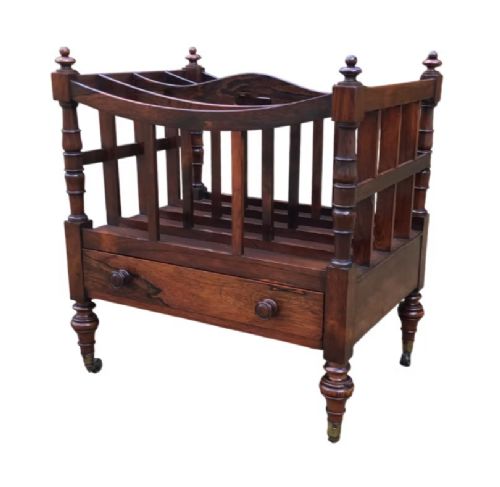
The standard form comprises several vertical slatted divisions forming upright sections for papers, frequently mounted over a low drawer for smaller items. Pieces range from open mahogany racks to boat-shaped rosewood designs supported on turned legs with castors.
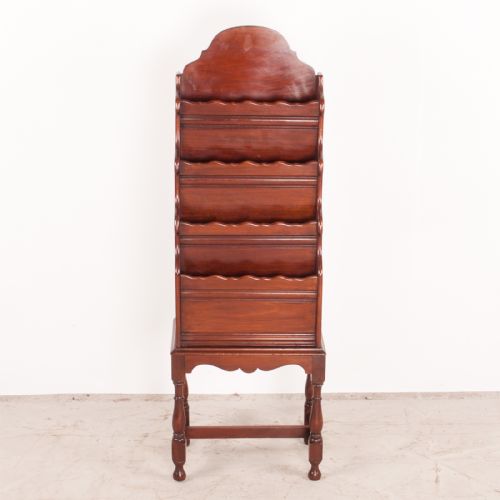
Makers produced these stands for domestic parlours and drawing rooms, adapting them through successive reigns from George III to William IV. Surviving variants include Edwardian revivals and later twentieth-century iterations that retain the characteristic compartmentalised layout.
Materials and Construction
Cabinet makers relied primarily on mahogany and rosewood, occasionally utilising denser Cuban mahogany or contrasting ebony banding and inlay for decorative emphasis. Brass fittings appear on castors and drawer handles, securing mobility and structural longevity.
Slatted divisions were joined to flat bases, sometimes incorporating turned or carved supports such as Prince of Wales feathers. Drawers beneath the main rack generally feature hand-cut dovetails and timber linings characteristic of period cabinet work.
Common structural variations include four-division racks, boat-shaped frames, and integrated lower drawers for small accessories.
Judging Quality
Quality rests upon the selection of timber figures, particularly in rosewood and Cuban mahogany surfaces, alongside the crispness of turned legs and carved details. Finer examples display balanced proportions across their divisions and refined joinery that conceals structural framing.
The integrity of the original castors and the precision of inlaid banding separate superior workshops from simpler country house pieces. Heavier framing and thoughtful detailing signal a more ambitious commission rather than standard utility production.
The Georgian Music Canterbury Stand Glossary
- Canterbury
- A low stand with vertical divisions for holding music sheets, newspapers, and folios. It typically includes a small base drawer and rests on castors.
- Boat-shaped
- A curved hull-like profile characteristic of certain Regency stands, where the sides sweep upward from a central base.
- Division
- One of the upright slatted partitions that separates the interior space into sections for individual folios or newspapers.
- Whatnot
- A multi-tiered open piece of furniture used for displaying or storing small objects, sometimes combined in form with music stands.
- Band
- A narrow strip of contrasting timber veneer inlaid around the edges of a top or drawer front for visual definition.
Georgian Music Canterbury Stand: Frequently Asked Questions
What is a music canterbury used for?
These stands held sheet music, folios, and newspapers close to instruments or seating areas in nineteenth-century drawing rooms.
The upright divisions kept scores sorted and accessible during musical evenings or daily reading.
How do I tell a Regency canterbury apart from a Georgian one?
Georgian stands often display straight lines and simpler mahogany framing associated with the late eighteenth century.
Regency examples frequently introduce rosewood veneers, boat-shaped bodies, and more elaborate turned legs with brass castors.
Are these stands sturdy enough for daily use?
Period pieces were built from dense timbers like mahogany and rosewood to support heavy collections of paper.
Their solid construction and brass castors allow them to serve reliably in contemporary living spaces.
What woods were used for these stands?
Cabinet makers predominantly selected mahogany, Cuban mahogany, and rosewood for their rich grain and durability.
Darker accents such as ebony banding and brass hardware completed the decorative scheme.