

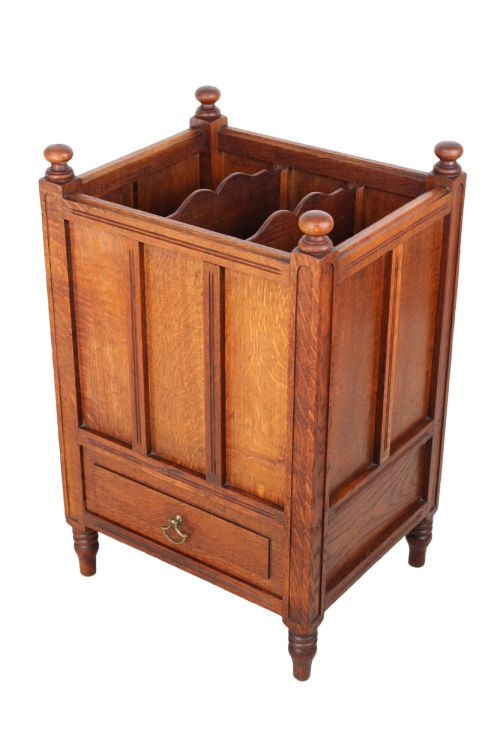
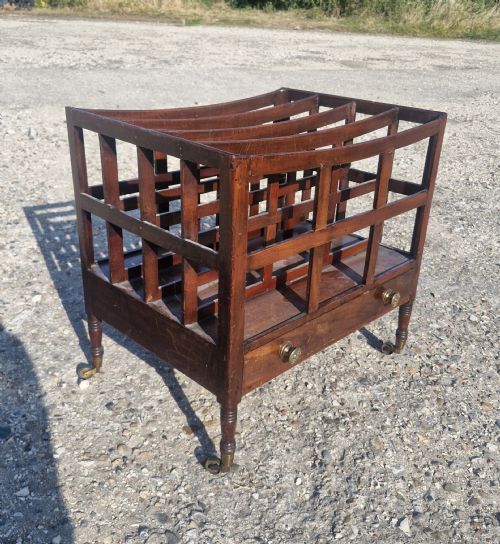
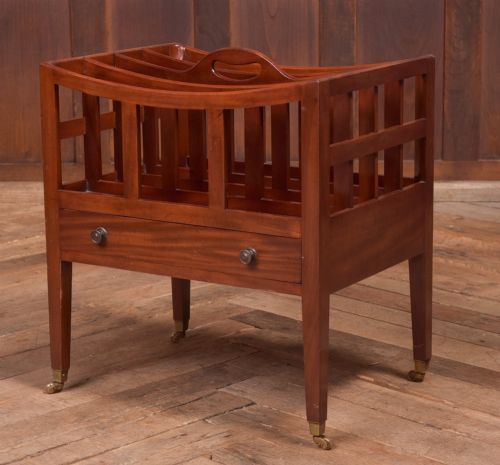


Traditional Music Canterbury Rack
A traditional music canterbury rack keeps scores and folios tidy beside the pianoforte, offering the comparted elegance collectors prize.
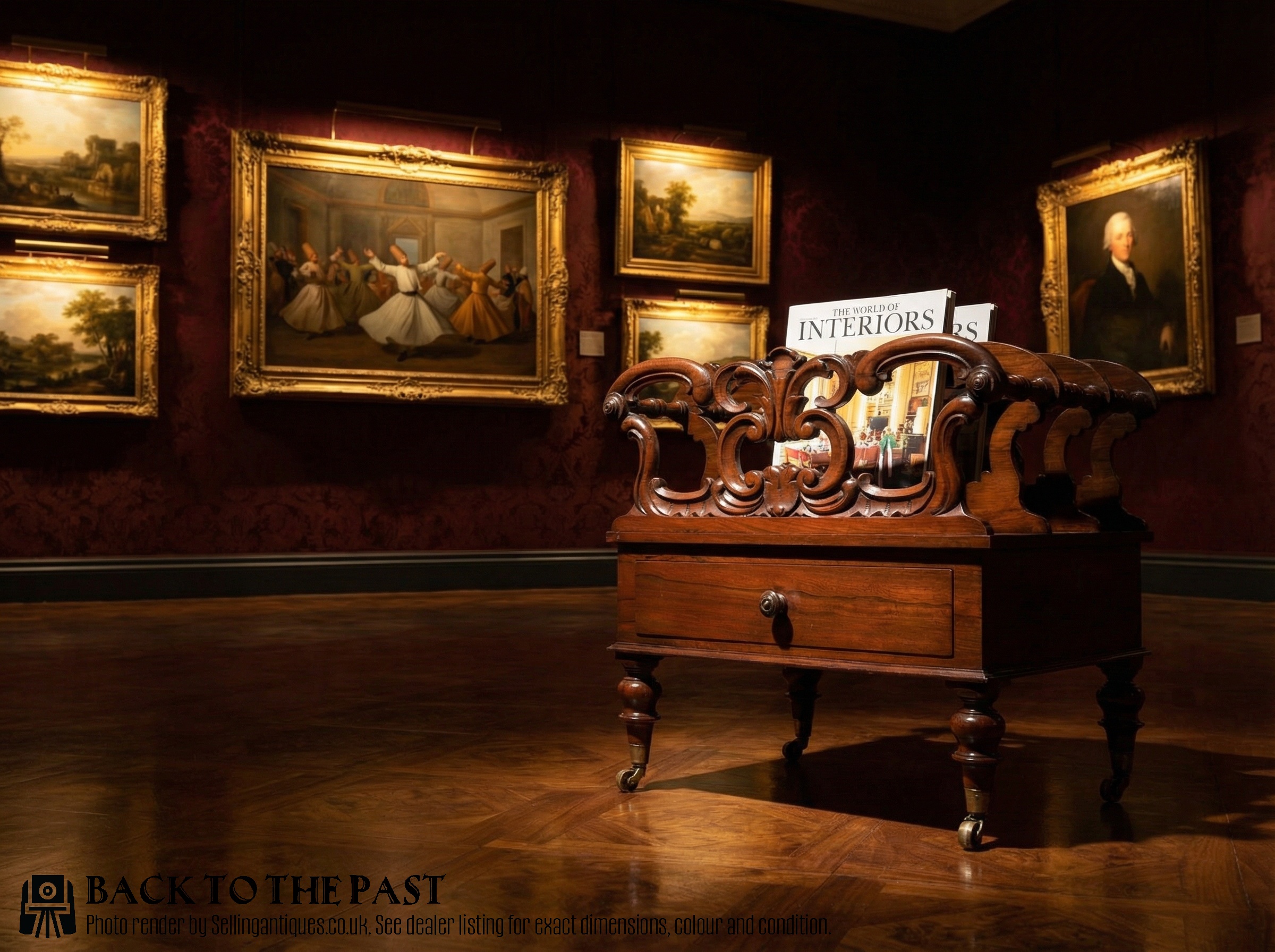
Traditional Music Canterbury Rack
When you search for a traditional music canterbury rack, you encounter timber stands designed to hold sheet music, newspapers, and periodicals within compartmentalised divisions. These pieces combine upright partitions with low shelves and occasional drawers, evolving from late eighteenth-century inventions into refined nineteenth-century household furnishings.
The versions you meet most frequently on this page span the Regency, Victorian, and Edwardian periods, executed predominantly in mahogany and rosewood. Formats range from simple magazine racks to comprehensive canterburys equipped with fitted lower drawers and castors for mobility.
How they were made
Cabinet makers constructed traditional music canterbury racks using dense hardwoods like mahogany and rosewood, frequently accented with brass handles and castors. These timbers provided the structural integrity needed for heavy bound music folios and upright partitions.
Joinery techniques involved precise slotting and framing to secure the vertical slats without warping under the weight of paper. Turned pillars, fretwork divisions, and integrated drawer boxes required skilled carpentry to balance decorative appeal with practical utility.
Traditional Music Canterbury Rack Retail Price Guide 2026
Typical asking prices for traditional music canterbury rack among the pieces listed under this phrase on Sellingantiques today, from the lower quarter to the upper quarter. They describe what is for sale here now, not the wider market.
Materials recorded across the current inventory include brass, mahogany, rosewood, and oak.
What varies in quality
The distinction between standard examples and superior pieces rests on the choice of timber figure, such as richly grained rosewood or figured mahogany. Finer items exhibit refined turning on the structural legs and delicate pierced fretwork on the partitions rather than plain turned spindles.
Integrity of the timber framing and the original condition of brass castors and drawer pulls dictate the standing of a piece. Better workshops invested greater care in the dovetailing of drawers and the seamless integration of divisions.
The Traditional Music Canterbury Rack Glossary
- Canterbury
- A low stand with partitions for holding music sheets, books, or loose papers, often featuring a small drawer below. Named after the Archbishop of Canterbury, who purportedly commissioned the first such piece.
- Regency
- A style period spanning roughly the early nineteenth century characterised by classical motifs, elegant lines, and rich timbers. Pieces from this era often display refined proportion and restrained ornamentation.
- Rosewood
- A heavy, dense tropical timber prized for its dark grain and reddish-brown contrast, frequently utilised in high-status nineteenth-century cabinet work. It takes a high polish and adds considerable visual weight to smaller furnishings.
- Arts and Crafts
- A design movement valuing honest construction, visible craftsmanship, and simple vernacular forms over excessive machine-made ornament. Objects from this tradition emphasise the natural grain of oak and straightforward joinery.
Traditional Music Canterbury Rack: Frequently Asked Questions
What is a music canterbury used for?
These stands were originally designed to hold sheet music, folios, and scores near a piano or music room. In modern settings, they serve equally well for organising magazines, newspapers, and contemporary periodicals.
The partitioned sections keep papers upright and separated, preventing the clutter associated with flat stacks on tables. Lower drawers historically housed small musical accessories or writing materials.
How do I date a mahogany canterbury?
Dating relies on observing the prevailing stylistic traits, timber choices, and construction methods associated with specific historical periods. Regency and George III examples often display crisper classical turning and finer grain selection, whilst Edwardian pieces lean towards simpler oak or mahogany formats.
Examining the secondary woods inside drawers and the wear patterns on the feet provides further clues to age. Hardware such as brass castors can also indicate the manufacturing era.
Are these racks sturdy enough for heavy books?
Traditional music canterbury racks were built primarily to support paper scores and periodicals rather than heavy folio volumes. While the hardwood frames are robust, the vertical slat partitions are designed for sheet music.
Placing excessively heavy modern books in the racks can strain the delicate joinery of the dividers. Using them for magazines and light folios preserves the structural integrity.