
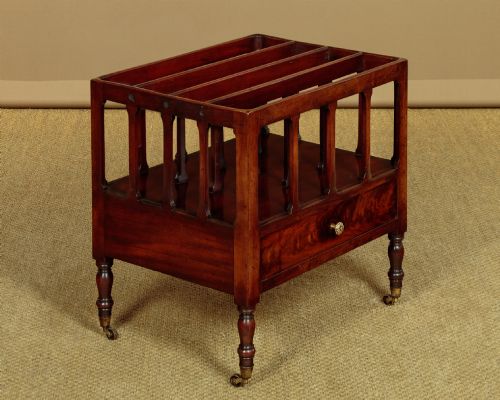
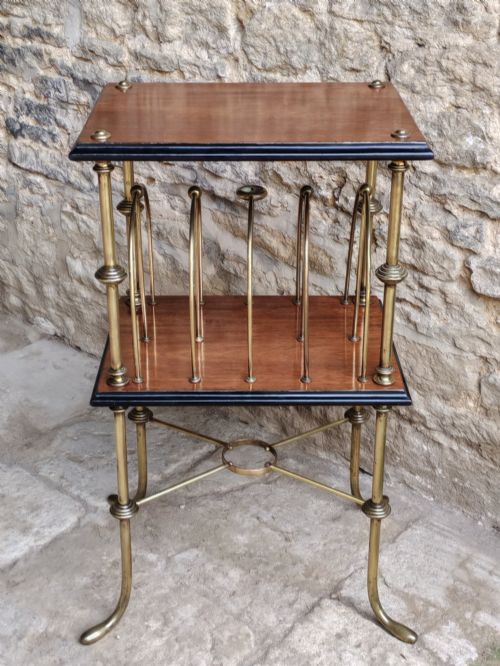
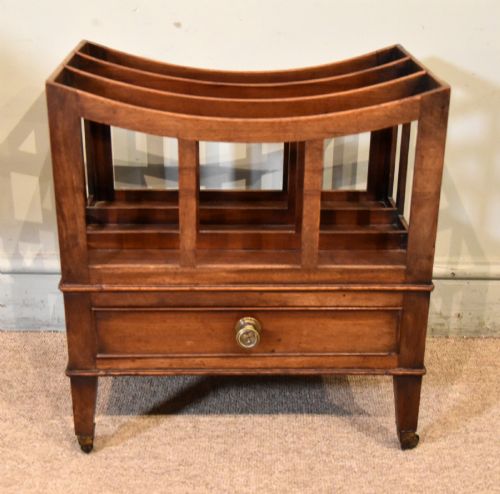
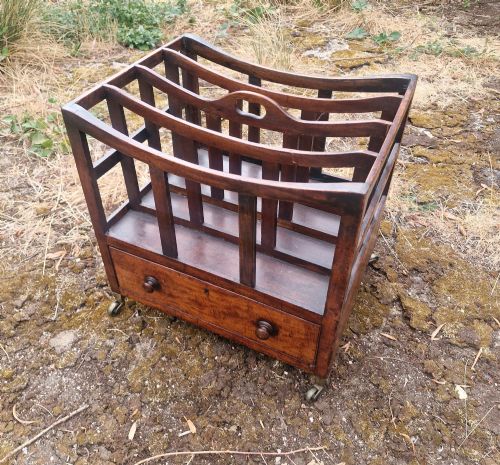
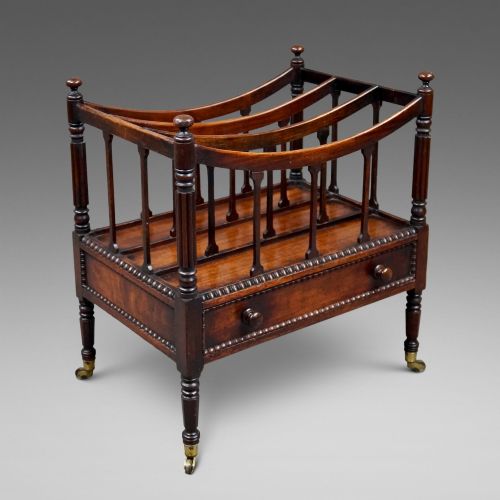
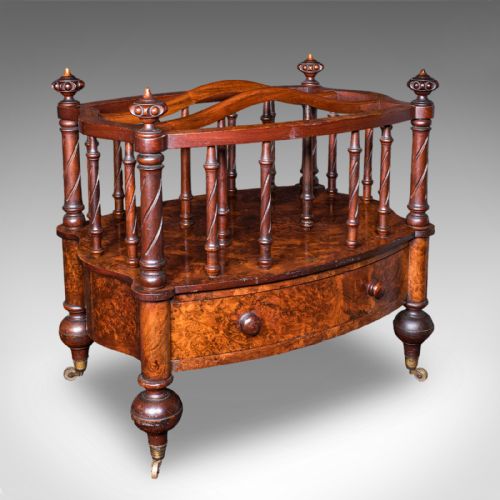


Regency Canterbury Music Stand
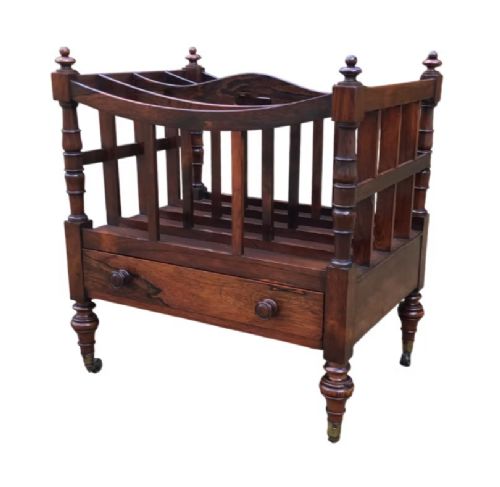
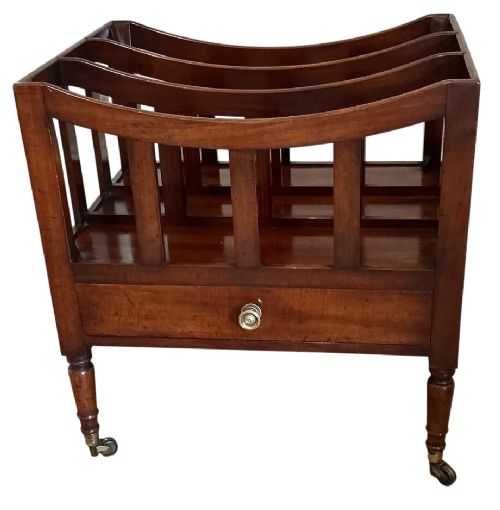
A regency canterbury music stand brings a neat division of timber and brass to sheet music and papers, offering a practical sorting piece for the home.
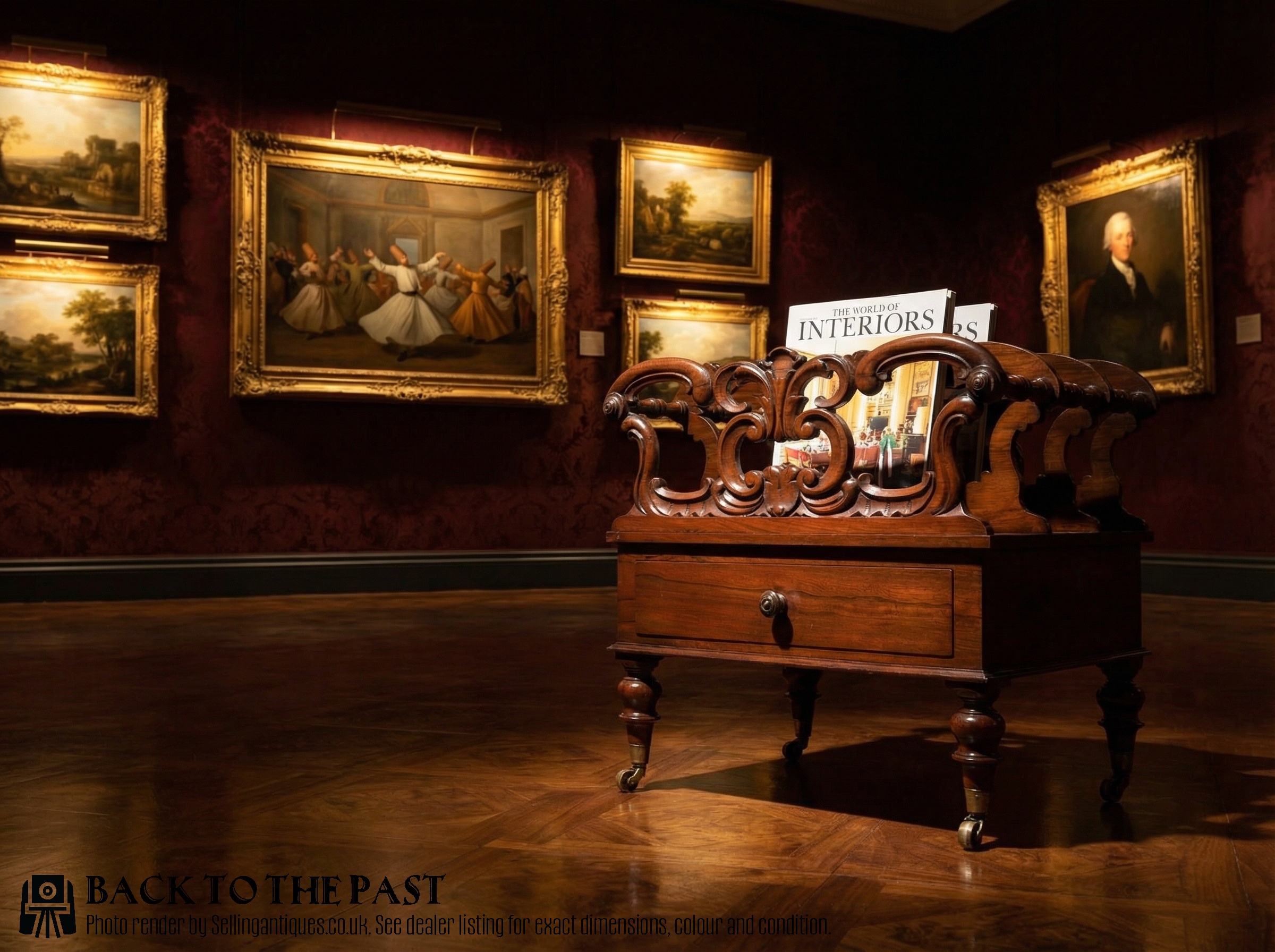
Regency Canterbury Music Stand
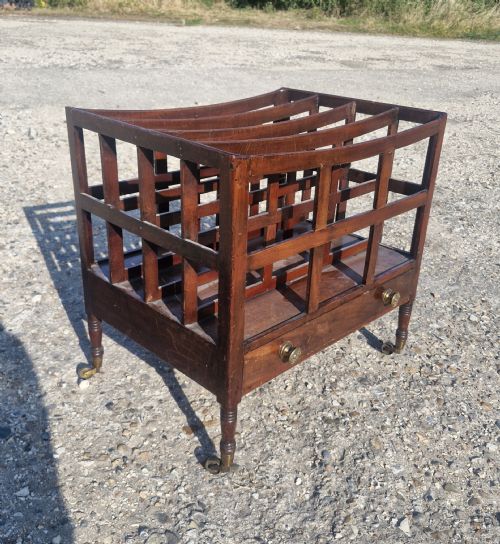
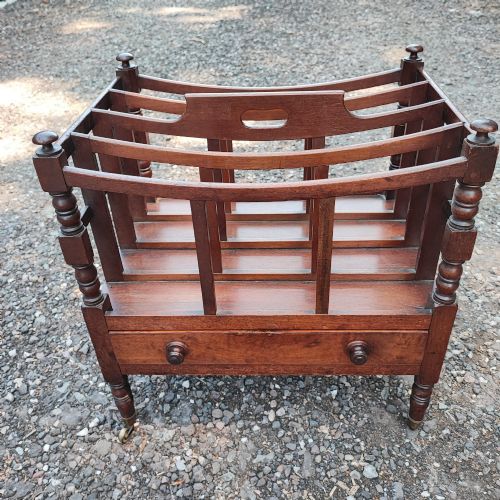
A regency canterbury music stand serves as a compartmented rack for sheet music, newspapers and magazines, originating from the late Georgian and Regency periods. These pieces combine open slatted divisions with lower drawers or table surfaces.
Mahogany and rosewood dominate the listings, frequently shaped with boat-like profiles or multiple tiered sections. Makers of the period drew on designs by figures such as Loudon to create stands that moved easily on castors.
How They Were Made
Craftsmen utilised solid timbers including Cuban mahogany, burr walnut and rosewood, often pairing them with contrasting inlay and ebony banding. Brass details appear in castors, handle mounts and fine stringing.
Slatted dividers were joined to low chassis frames, frequently incorporating turned legs and small drawers constructed with traditional jointing techniques.
Some stands feature clever carved feather details that suggest owners wanted their sheet music sorted under royal approval.
What Varies in Quality
The refinement of the turned supports and the choice of timber figure set examples apart, with figured rosewood and Cuban mahogany representing the upper tier. Subtle carving, such as Prince of Wales feathers, elevates simpler forms.
Proportion and structural crispness define the better pieces, where the division rails remain firm and the brass castors match the period of the frame.
The Regency Canterbury Music Stand Glossary
- Canterbury
- A low stand with upright partitions designed for holding sheet music, books or papers. It often includes a drawer below the main rack.
- Whatnot
- A piece of open shelving with multiple tiers used for display or storing small items. These structures frequently incorporate music stands or canterbury sections.
- Boat Shaped
- A curved or gondola-like outline given to the sides of a rack or table. This profile appears frequently in Regency furniture designs.
- Inlay
- The technique of embedding contrasting woods or materials into a solid surface to form patterns. Ebony banding is a common example seen on these stands.
Regency Canterbury Music Stand: Frequently Asked Questions
What was a regency canterbury music stand used for?
These stands held sheet music near piano rooms and kept current newspapers and periodicals tidy in domestic sitting rooms.
The partitioned sections allowed owners to sort items by type or size for easy daily retrieval.
How do I identify a Regency period piece?
Look for characteristic timber choices like rosewood and mahogany, combined with clean classical lines and turned legs.
Proportions tend to remain light and portable, often supported by small brass castors.
Can these stands hold modern magazines?
The slatted divisions accommodate most standard publications and contemporary sheet music quite comfortably.
Larger modern portfolios may require the wider spaces found in boat-shaped or multi-division variants.
Where should I place a canterbury in a room?
They sit well beside armchairs, sofas or pianos where reading materials are frequently gathered.
Freestanding designs allow them to function effectively away from walls.