
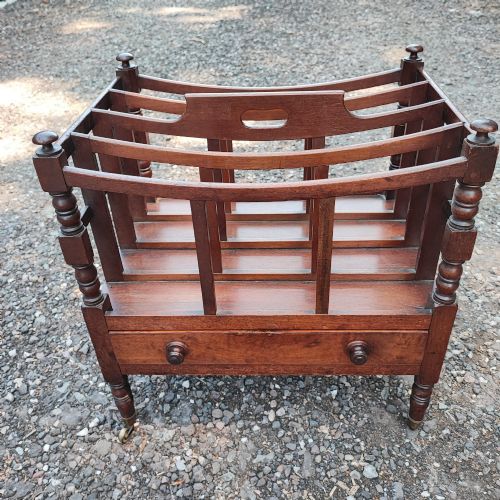
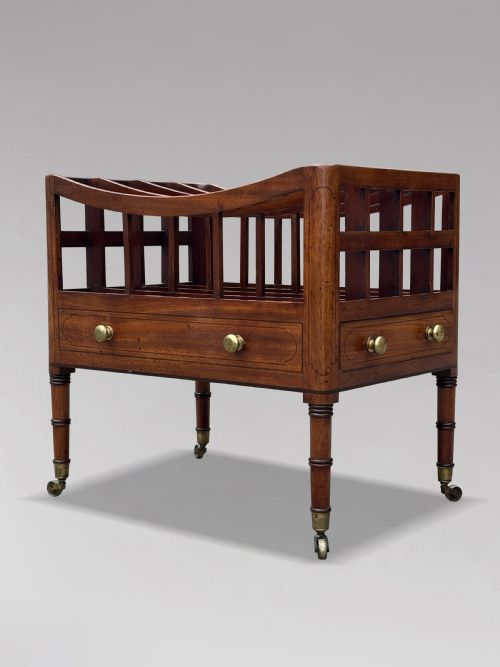
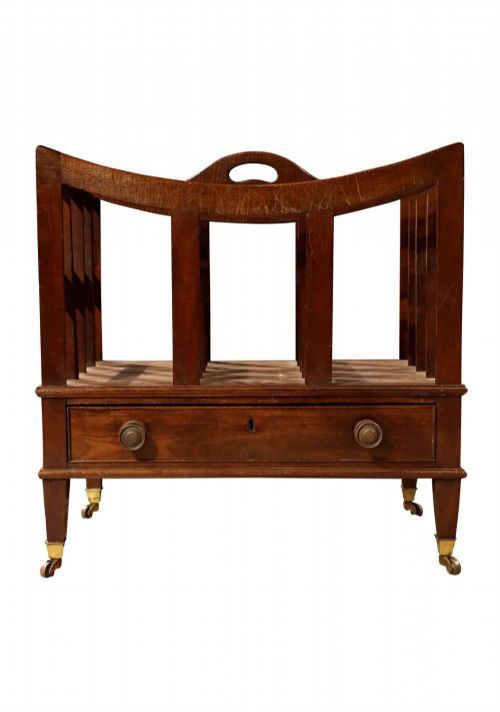


Georgian Mahogany Music Rack
A georgian mahogany music rack organises folios and scores, bringing refined timber grain and compartmentalised storage to a period interior.
Georgian Mahogany Music Rack
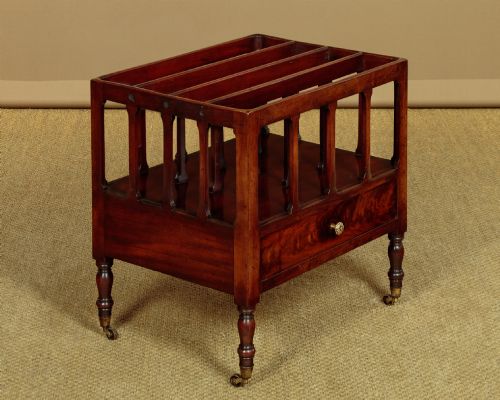
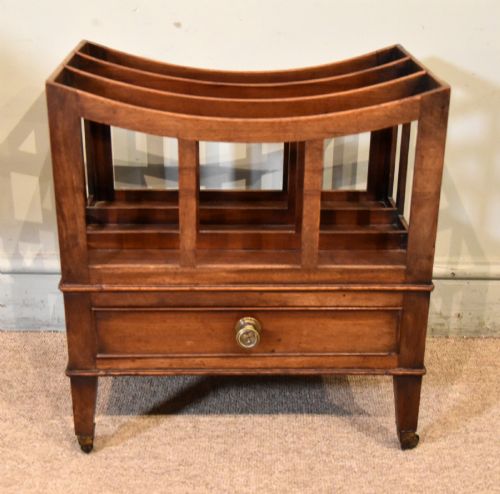
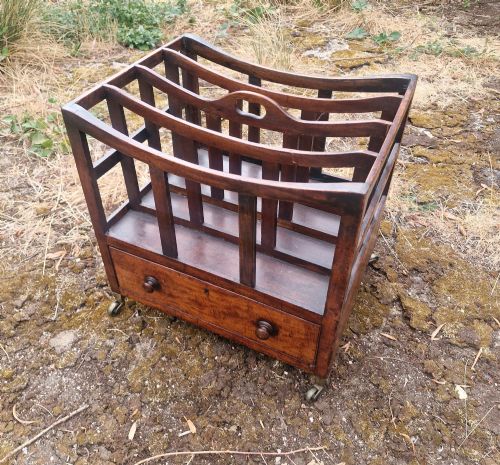
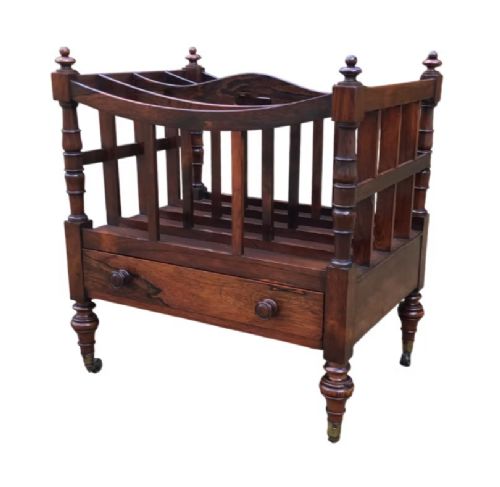
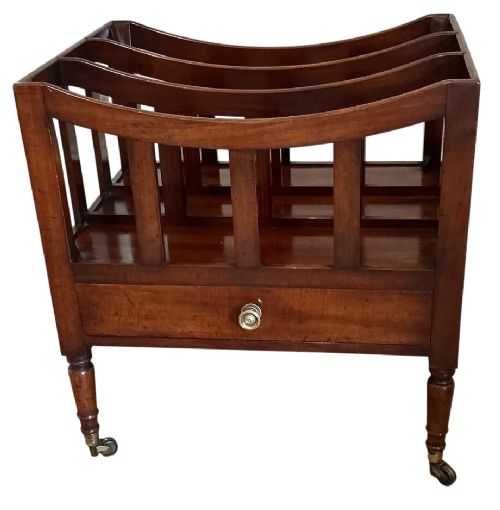
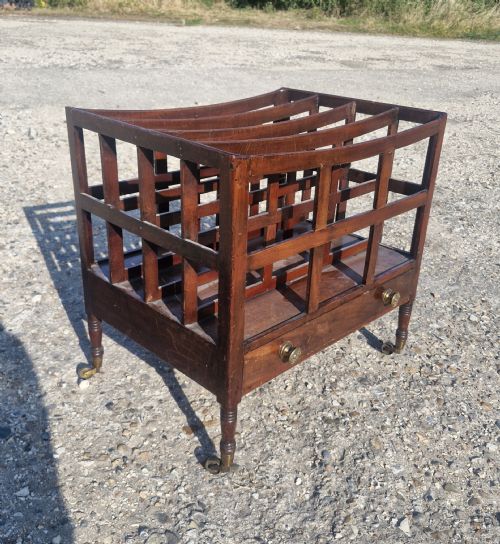
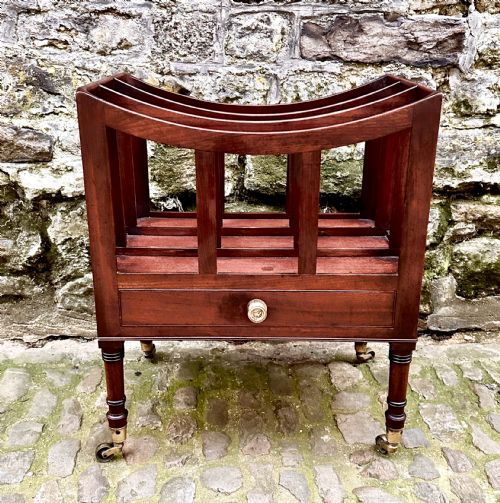
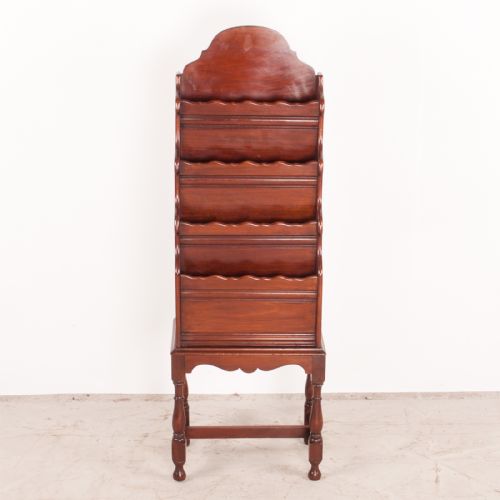
A georgian mahogany music rack commonly appears as a Canterbury, music stand, or folio stand designed to hold scores, magazines, and newspapers. The items on this page span the eighteenth and nineteenth centuries, including George III, Regency, George IV, and William IV periods.
The most frequent form on this page is the Canterbury, featuring open divisions and frequently a lower drawer. Alongside these stands, adjustable duet music stands and boat-shaped frames emerge from Georgian and Regency workshops.
Originating in English country houses, these pieces range from four-division newspaper stands to large Cuban mahogany folios. Makers constructed them primarily for domestic music rooms and libraries to keep sheet music tidy.
Distinctions in craftsmanship
Quality rests in the selection of timber, where dense Cuban mahogany and fine grain figure distinguish superior examples from standard ones. Sharply executed fretwork and crisply turned legs indicate higher workshop standards.
The integration of working drawers with dovetailed joints and original brass castors elevates a piece. Subtle details like boxwood and ebony inlay banding demonstrate greater artisanal labour.
Listings feature items spanning the eighteenth to the twentieth centuries, encompassing Georgian, Regency, William IV, Victorian, Edwardian, and Revival periods.
The Georgian Mahogany Music Rack Glossary
- Canterbury
- A low freestanding stand with partitioned sections for holding sheet music, folios, and newspapers, often featuring a base drawer.
- Cuban mahogany
- A dense, heavily figured timber exported from the Caribbean, prized by cabinet makers for its rich depth and durability.
- Duet music stand
- An adjustable stand designed to hold open musical scores for two players simultaneously.
- Folio stand
- A large rack built to store oversized books, maps, and sheet music portfolios securely.
- Inlay
- A decorative technique where contrasting woods like ebony and boxwood are fitted into recesses within the primary mahogany surface.
Georgian Mahogany Music Rack: Frequently Asked Questions
What is a Canterbury used for?
A Canterbury serves as a compartmentalised rack for organising sheet music, newspapers, and magazines within a room. Lower drawers frequently provide additional storage for smaller accessories.
Historically placed beside instruments or seating areas, these stands kept scores accessible and tidy in domestic parlours.
How do I identify a Regency music rack?
Regency music racks often display classical influences such as boat-shaped frames, elegant turned legs, and brass castors. They date from the early nineteenth century and utilise rich mahogany timbers.
Look for crisp joinery, open fretwork divisions, and occasional contrasting stringing lines rather than heavy Victorian ornamentation.
Are these stands adjustable?
Certain music stands feature adjustable mechanisms allowing the height or angle of the reading ledge to alter. These were specifically designed for musicians reading scores while seated or standing.
Standard Canterburys with fixed partitions do not adjust, functioning purely as static storage holders for folios.
What wood are most pieces made from?
Mahogany forms the primary structure of nearly every piece on this page, including dense Cuban mahogany variants. Cabinet makers valued its strength and capacity to take a deep polish.
Secondary woods and stringing details occasionally include rosewood, ebony, and boxwood for visual contrast.