




Caned Seat Window Bench
A caned seat window bench brings lightness to a narrow room, offering woven texture and a low profile beneath the glass.
Caned Seat Window Bench
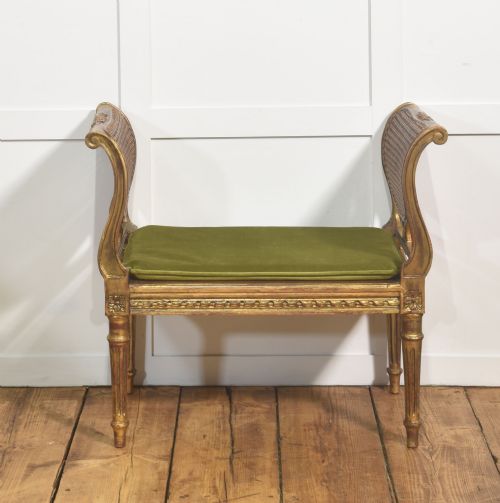
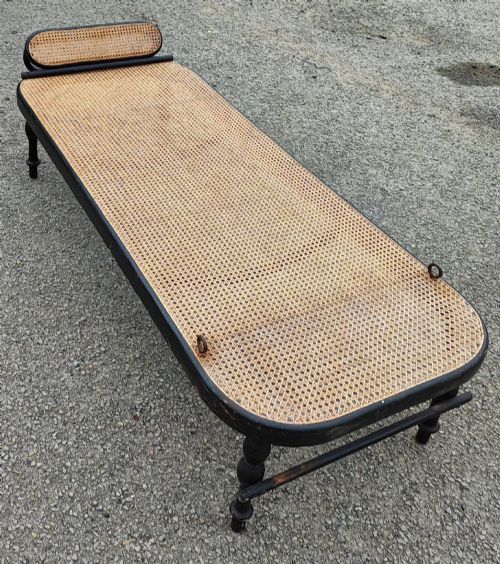
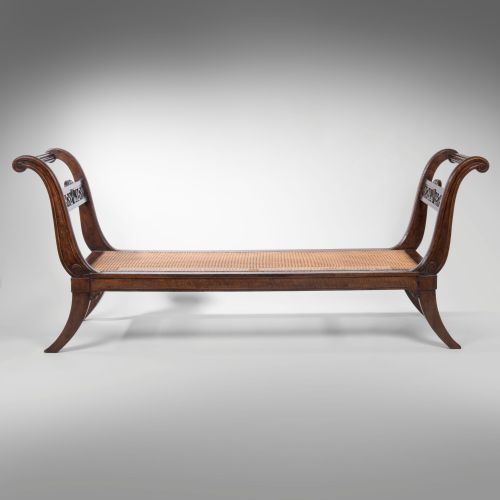
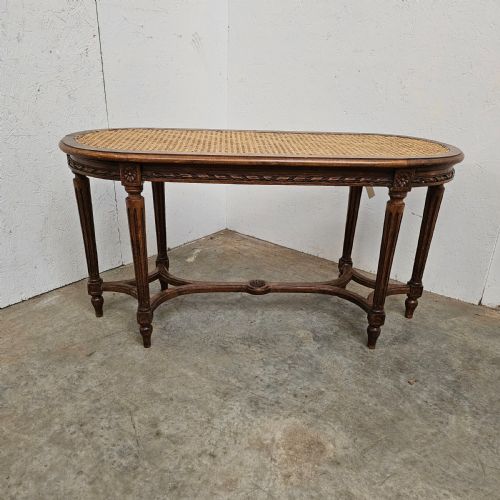
A caned seat window bench sits low against the wall, designed originally to fit beneath tall window frames without blocking the light. The form spans long settees, daybeds, and smaller stools intended for casual sitting in hallways or parlours.
The pieces on this page draw from the nineteenth century up to the early twentieth century, showing revival influences like Louis XVI, Regency, and Carolean styles. Makers shaped these frames in walnut, mahogany, beech, and giltwood to suit formal drawing rooms and quieter chambers alike.
Variations include scrolled backs, X-frames, and simpler oval shapes, each retaining the signature woven seating surface. These forms range from single-person window stools to larger two-seater sofas designed for extended resting.
How they were made
Frames rely on sturdy timbers such as mahogany, beech, and walnut, often shaped with carved detailing or finished with paint, giltwood, or ebonisation. Cabinetmakers joined these structural elements with traditional joinery to support the tension of woven seating.
The defining feature is the canework, woven from peeled rattan cane through holes pierced around the frame rails. This technique creates a breathable, flexible surface that supports weight while maintaining an open, airy appearance.
Anglo-Indian rosewood scroll back benches bring a touch of distant trade routes directly into quiet nineteenth-century hallways.
What varies in quality
Quality rests in the crispness of the timber carving and the precision of the frame assembly, distinguishing robust cabinet work from simpler production. Better examples display harmonious proportions and refined decorative carving that aligns with their chosen historical style.
The condition and tightness of the cane work define the tactile standard of each piece, showing whether the weaving remains uniform across the seat. Finer items integrate secondary woods and thoughtful finishes like gilt or fine paintwork that complement the woven panel.
The Caned Seat Window Bench Glossary
- Canework
- A method of weaving peeled rattan cane strands through frame holes to create a resilient seat. This technique provides a light, flexible surface used extensively in seating furniture.
- Ebonised Wood
- Timber treated with a dark stain or finish to imitate ebony. This process gives a dense, uniform black appearance popular in various nineteenth-century revival periods.
- Giltwood
- Timber coated with a thin layer of gold leaf or gilt preparation. It reflects light brightly and denotes formal, high-status seating.
- X-Frame
- A structural furniture base formed by crossing diagonal supports beneath the seat. This geometry provides both stability and a distinct architectural silhouette.
- Bergere
- An enclosed upholstered or caned armchair or settee with wooden frames. The style emphasises curved comfort and enclosed wooden sides.
Caned Seat Window Bench: Frequently Asked Questions
Where should I place a window bench?
These benches fit naturally beneath low windows, along narrow hallways, or at the foot of a bed where a heavy sofa would block the view. Their open woven seats keep light flowing through the room.
They also serve well in dressing rooms or reception spaces as a convenient spot for temporary sitting without crowding the floor plan.
How do I care for cane seating?
Keep caned panels slightly hydrated by wiping them occasionally with a damp cloth to prevent the rattan from becoming brittle. Avoid placing them directly beside intense heat sources.
If the cane sags slightly over time, light sponging on the underside can sometimes encourage the natural fibres to tighten as they dry.
Are these benches comfortable for sitting?
The woven cane provides a supportive, slightly springy surface that yields gently under weight. Many owners add loose cushions or squabs for extended lounging.
Their primary historic purpose was brief repose or viewing gardens, so they feel lighter and firmer than deep upholstered armchairs.
How do I identify a Regency style bench?
Regency pieces often incorporate classical architectural motifs, bold curves, and structural forms like the X-frame base. They draw inspiration from ancient Roman and Greek designs.
Woods like mahogany feature prominently, paired with clean lines and restrained ornamentation rather than heavy carving.