




Neoclassical Gilt Bench
A neoclassical gilt bench brings classical lines and gilded surface into a room, offering both a seat and a sculptural focal point.
Neoclassical Gilt Bench
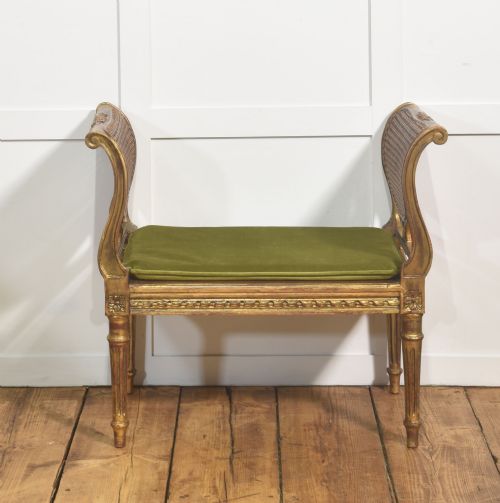
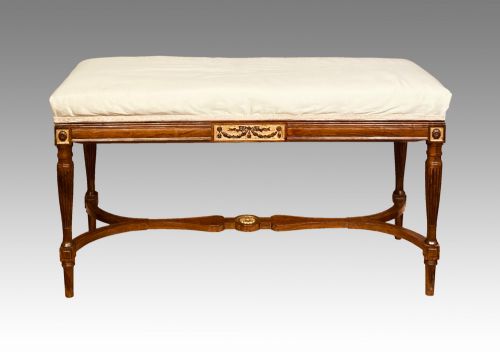
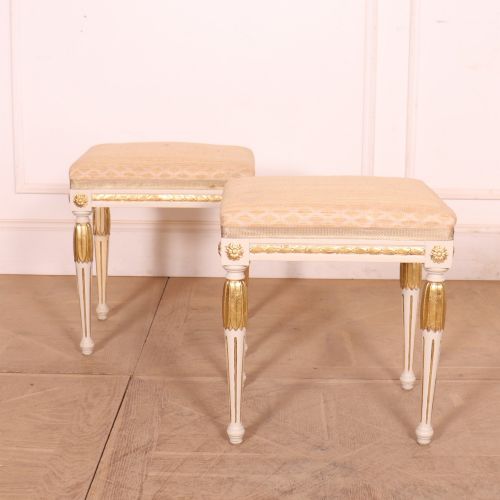
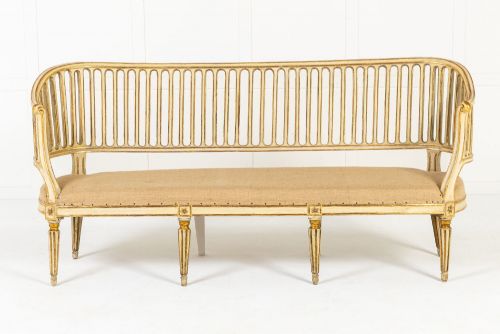
A neoclassical gilt bench is a seating form drawing on classical antiquity, spanning styles from Louis XVI and French Neoclassical to Regency, Empire, and Gustavian. These pieces range from window seats and duet stools to larger settees and sofas.
Most examples found here date across the eighteenth and nineteenth centuries, alongside later revivals from the Edwardian period. Forms vary from simple X-frame curule stools to long painted and gilded settees with cane or upholstered seats.
How they were made
Construction relies primarily on carved wood, including giltwood, painted wood, and rosewood, finished with applied gold leaf or gesso. Structural integrity depends on sturdy joinery to support the frame.
Surfaces are embellished with paint, gilding, and metal elements in brass. Seating surfaces utilise woven cane, silk velvet, and various traditional fabric upholsteries.
Materials documented across the selection include giltwood, painted wood, cane, velvet, gold leaf, brass, and standard wood.
What varies in quality
The refinement of the carved ornamentation determines the distinction of the piece, separating standard workshop production from finer cabinet work. Crisp detailing in the gesso and carving defines the upper tier.
The integrity of the original gilded surface and the preservation of materials like cane or structural wood frame the overall character. Altered surfaces or replacement elements shift a piece away from its original state.
Charles Nosotti
The Neoclassical Gilt Bench Glossary
- Giltwood
- Wood that has been coated with gold leaf or powder over a prepared gesso ground. This finish provides the characteristic metallic brilliance seen on neoclassical frames.
- Curule stool
- An ancient Roman magistrate seat form featuring opposing curved legs forming an X-shape. These stools often incorporate X-frame structures in nineteenth-century interpretations.
- Gustavian
- The Swedish interpretation of neoclassical design, characterised by restrained carving and pale painted finishes. This style appears frequently in Scandinavian seating.
- Cane
- Woven rattan strips used for seat panels in chairs and benches. It offers a lightweight, flexible surface popular in period window seats.
Neoclassical Gilt Bench: Frequently Asked Questions
Where should I place a neoclassical gilt bench?
These benches suit narrow spaces such as hallways, entryways, and window recesses where their linear profiles do not block light. They also function well at the foot of a bed or paired with a living room arrangement.
Because the gilded finish catches natural light, positioning them near windows or mirrors enhances their decorative presence in the room.
How do I care for giltwood surfaces?
Dust giltwood gently using a soft, dry brush or a clean microfibre cloth to protect the delicate gold leaf layer. Avoid liquid cleaners, moisture, and chemical polishes which can lift or dissolve the historic gesso and gilding.
Keep the bench away from direct sunlight and heat sources to prevent the wood from drying out or splitting beneath the metallic finish.
How do I distinguish French styles from Gustavian pieces?
French neoclassical and Louis XVI seating displays ornate carving, crisp fluting, and rich giltwood finishes reflecting courtly tastes. The forms tend toward formal symmetry and classical architectural motifs.
Gustavian pieces from Sweden adopt lighter, softer painted finishes in pale tones, reflecting a more pared-down domestic neoclassical aesthetic.