
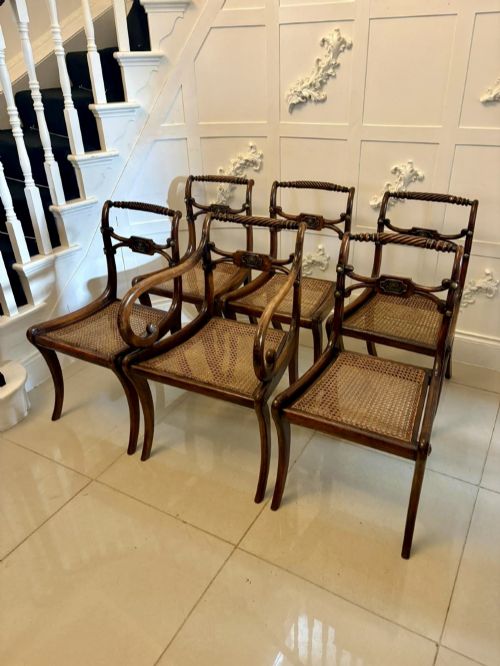
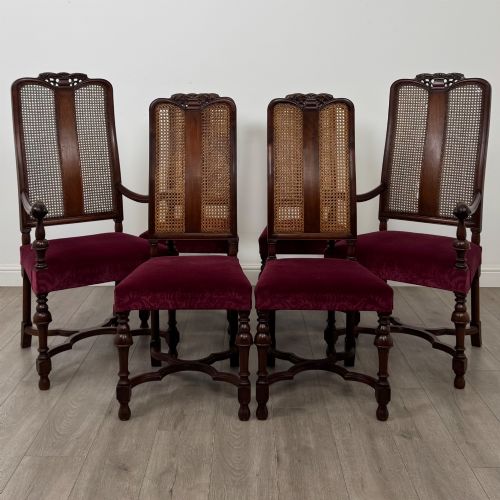
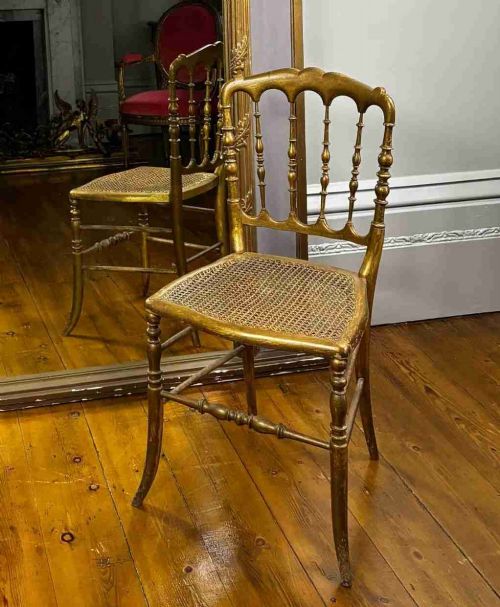
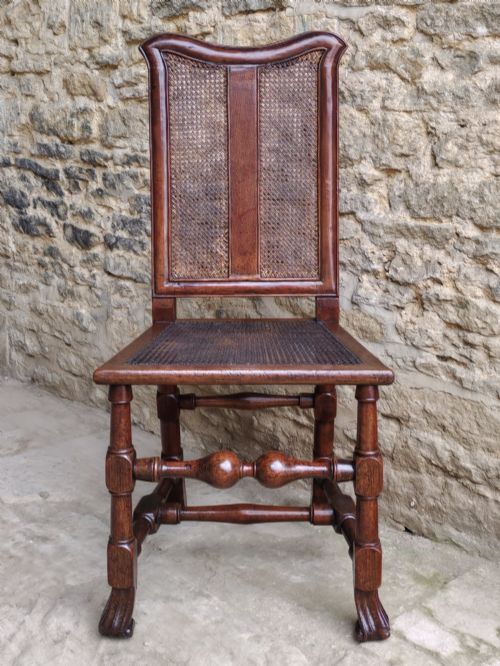
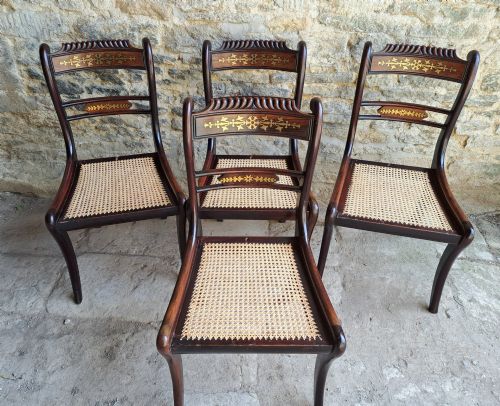
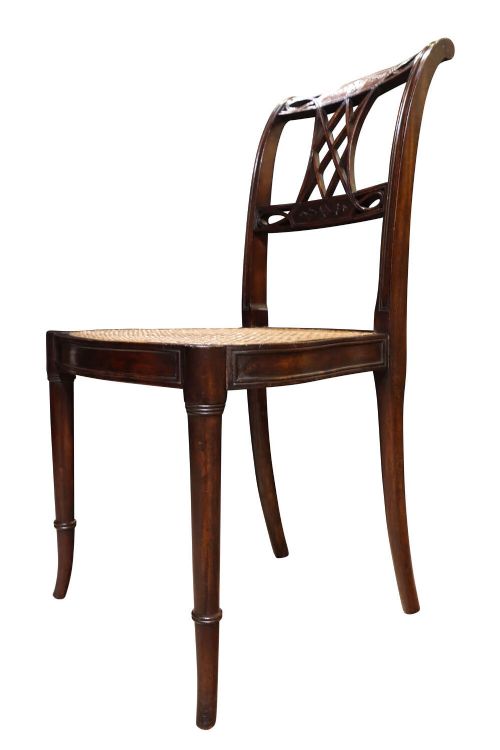
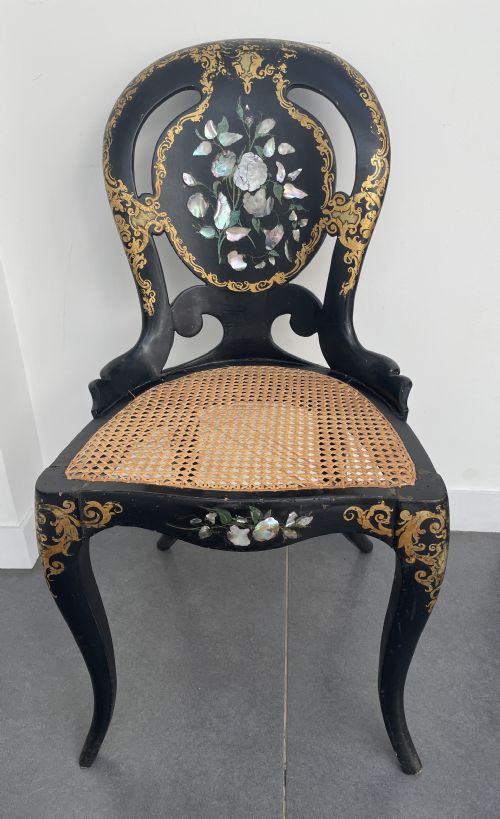
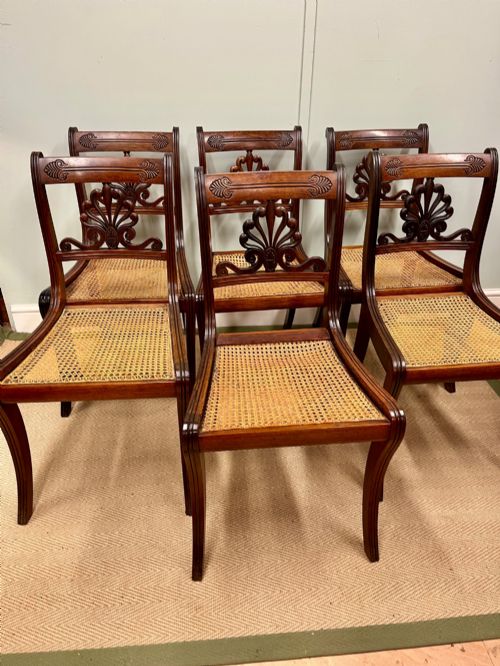
Caned Seat Side Chair
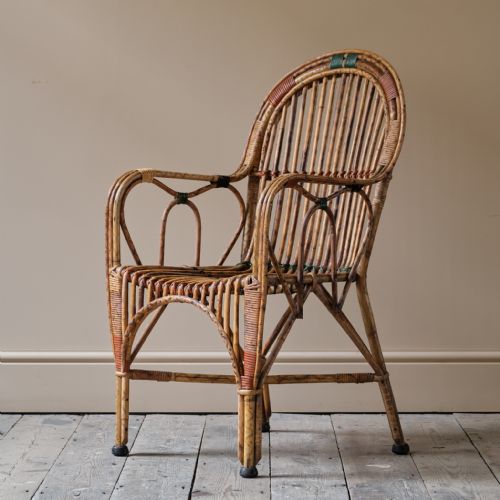
A caned seat side chair brings lightness to a room, offering woven natural mesh framed in mahogany, rosewood, or painted wood across several historic periods.
Caned Seat Side Chair
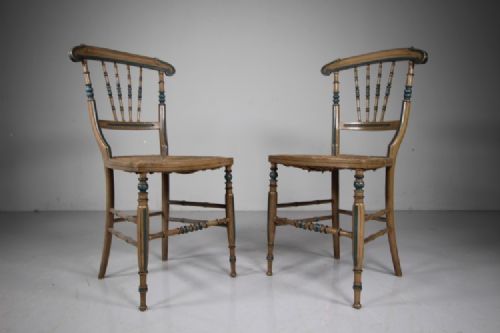
When you search for a caned seat side chair, you encounter a seating form designed to be light to move and cool to sit upon, with a woven seat frame rather than heavy upholstery. The examples found here span from the early 18th century through the Victorian era and into early 20th century revivals.
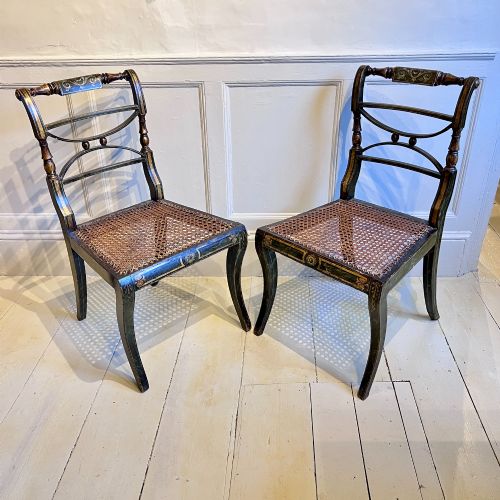
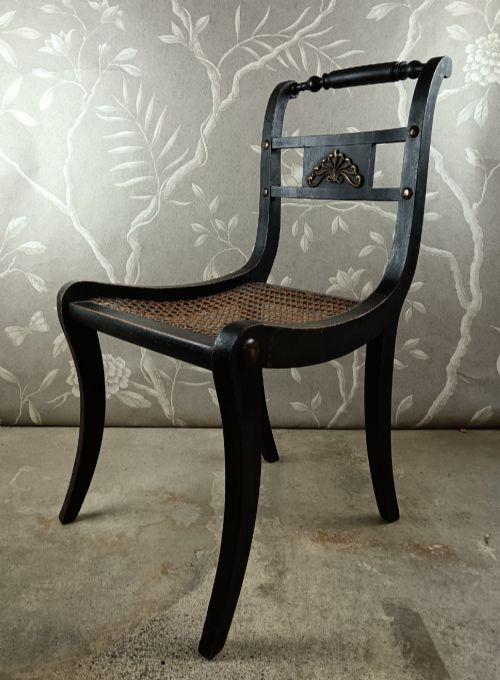
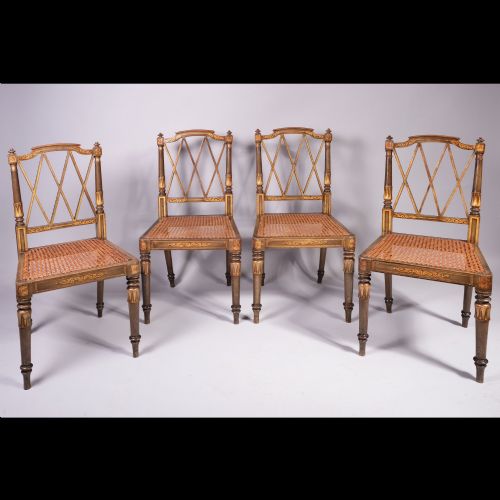
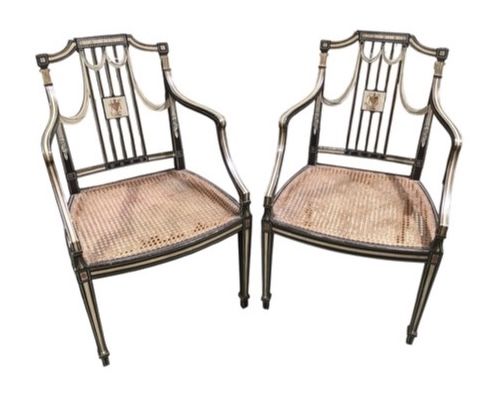
The most common versions on this page date from the Regency period and the 19th century, often constructed in mahogany, rosewood, or ebonised wood. They appear singly, in pairs, or in larger matched sets intended for dining and salon use.
How they were made
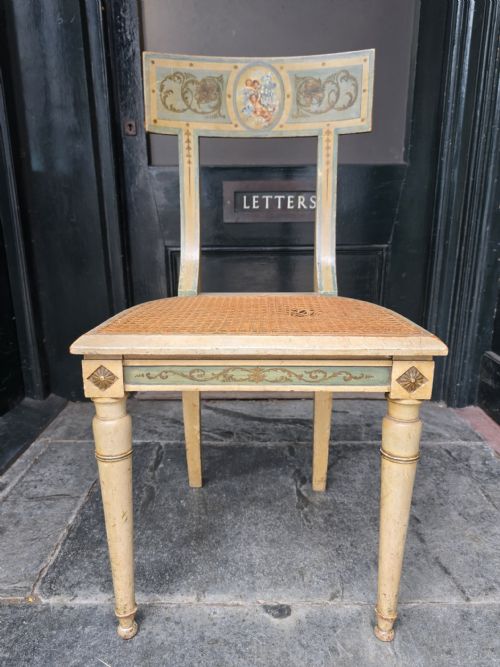
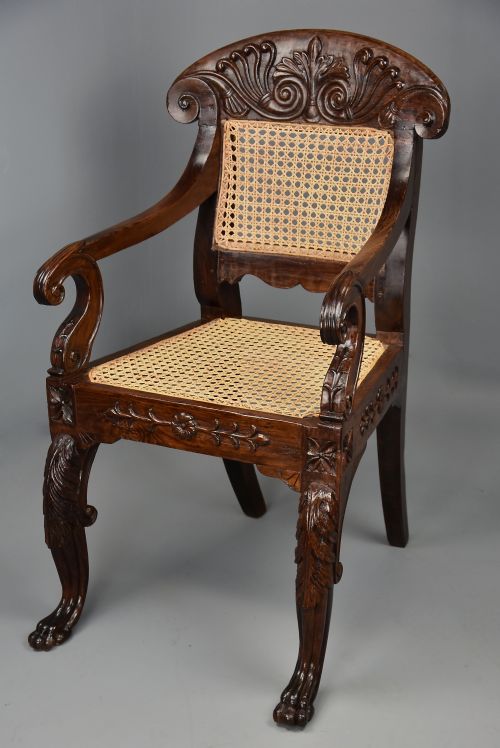
The framework relies on dense hardwoods such as mahogany, walnut, and oak, frequently shaped through turning, curving, or carving to form sabre legs, barley twists, or klismos profiles. Cabinetmakers also utilised softer or exotic timbers like satinwood and padouk, finishing surfaces with paint, gilt, or simulated grain.
Seats are constructed by hand-weaving cane or rattan strands through pre-drilled holes around the inner rebate of the wooden frame, creating a resilient, tensioned mesh. This method requires careful pegging and tightening to support weight while maintaining flexibility.
Even campaign chairs required a touch of elegance, proving that officers travelled with proper seating.
What varies in quality
The distinction between ordinary and exceptional pieces rests in the crispness of the timber carving and the integrity of the structural joinery. Finer specimens display deeply chiselled details, well-matched grain patterns, and original decorative painted or gilded surfaces that have survived intact.
The condition and tightness of the cane mesh also determine standard, as uniform weaving and intact strands reflect skilled historic handiwork. Pieces retaining their original unreplaced seating surfaces command greater interest from collectors.
Waring & Gillow
The Caned Seat Side Chair Glossary
- Cane
- The outer bark of the rattan palm, stripped and woven into a pliable mesh for seating. It provides a lightweight and breathable alternative to solid wood or upholstered pads.
- Sabre leg
- A concave, outwardly curving leg that tapers toward the foot, typical of Regency design. This form borrows from ancient Greek klismos chairs to impart a sense of dynamic movement.
- Bergère
- An enclosed armchair featuring upholstered or caned sides and a fitted seat cushion. These forms offer a broader, deeper seat than standard upright alternatives.
- Ebonised
- Timber treated with stain or pigment to imitate the appearance of solid ebony. Cabinetmakers employed this technique during the Regency and Victorian periods to create striking contrast with gilt decoration.
- Klismos
- An ancient Greek chair design characterised by curved back rails and sabre legs. Revival versions appeared frequently during the early 19th century.
Caned Seat Side Chair: Frequently Asked Questions
Can I use these chairs at a dining table?
Many side chairs and dining sets from the Regency and Victorian eras suit daily dining use. Their compact proportions allow several to fit comfortably around a table.
Check the seat height and structural firmness to ensure they match modern dining requirements before regular placement.
How do I care for a caned seat?
Keep the woven mesh clean by dusting with a soft brush and occasionally wiping with a damp cloth to prevent the material from drying out. Avoid placing them near direct heat sources or in overly dry environments.
Applying a light moisture treatment can help maintain the flexibility of older rattan fibres over time.
Are these seats strong enough to sit on?
Historic woven mesh possesses considerable tensile strength when properly maintained and tensioned. Most well-preserved examples support normal seating weight without difficulty.
Avoid kneeling on the mesh or subjecting it to sharp point loads, which can snap individual strands.
How do I identify a Regency period piece?
Regency designs often feature classical motifs, painted or ebonised surfaces, sabre legs, and brass inlay. The lines tend to draw inspiration from ancient Roman, Greek, and Egyptian forms.
Timber choice also aids identification, with rosewood and mahogany predominating during the early 19th century.