
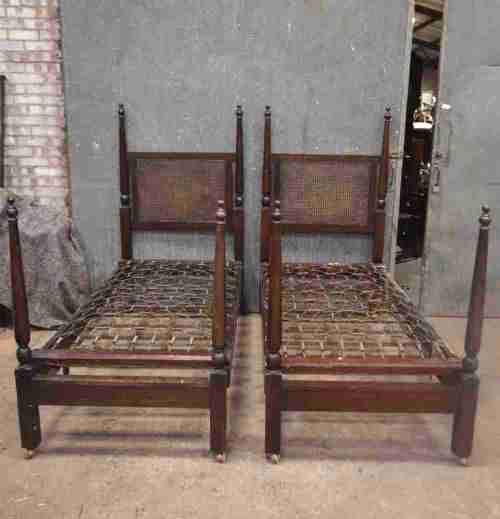
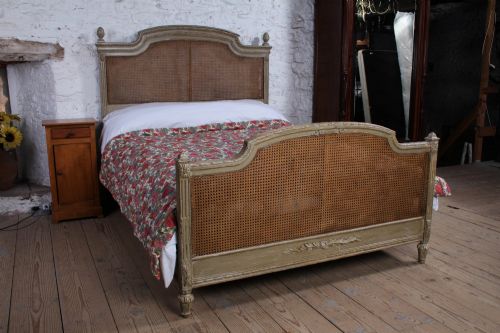


Caned Headboard Bed
A caned headboard bed brings lightness to a bedroom through woven panels set within timber frames.
Caned Headboard Bed
A caned headboard bed combines a timber frame with woven cane panels, creating a breathable and decorative headboard for the sleeping space. Buyers browsing this selection encounter various sizes, ranging from single beds and double beds up to kingsize and super kingsize formats.
The pieces available span several distinct periods and styles, including late Victorian examples, Louis XVI style designs, French chateau influences, colonial revival pieces, and Art Deco platform beds. Construction involves woods such as oak, beech, and satinwood, frequently paired with painted finishes or natural cane.
Origin and aesthetic variety shape the selection, with French neoclassical details appearing alongside English pieces and maker-attributed furniture. These bedframes and bedsteads often arrive as single items or as parts of larger bedroom suites complete with matching bedside furniture.
How they were made
Makers utilised solid timbers such as oak, beech, and satinwood to construct the structural frames of these beds, frequently applying paint or gilding to the wood surfaces. Joinery techniques secure the headboards and footboards to support the weight of the mattress and daily use.
Natural cane is woven by hand into intricate patterns within the wooden frames, providing a flexible yet resilient panel that allows air circulation. Carved wooden ornaments, typical of French neoclassical and Louis XVI style furniture, adorn the crests and posts of selected pieces.
One exceptional super kingsize suite includes matching bedsides and drawers, ensuring your alarm clock and bed have matching outfits.
What varies in quality
The refinement of the timber carving and the precision of the joinery distinguish higher tier pieces from simpler examples, with hand-carved details showing greater depth and clarity. Satinwood or oak frames demonstrate superior material selection compared to standard painted carcases.
The tightness and regularity of the cane weaving dictate the durability and visual appeal of the headboard panel, with even tension across the mesh indicating careful workmanship. The application of period paint finishes or subtle gilding also influences the overall execution of the design.
Maple and Co
The Caned Headboard Bed Glossary
- Cane
- Plant material woven into open mesh panels for furniture upholstery. It offers flexibility and ventilation for headboards.
- Bergere
- An enclosed upholstered armchair or bed component featuring wooden frames and woven cane sides or headboards. This French style dates back to the eighteenth century and reappears in later revival periods.
- Louis XVI Style
- Furniture design characterised by neoclassical straight lines, symmetry, and classical ornamentation. It draws inspiration from the reign of the French monarch.
- Satinwood
- A durable hardwood yielding a yellowish timber with a natural satin-like sheen. Makers prized it for fine cabinetwork.
- Bedstead
- The framework of a bed supporting the springs and mattress. It excludes the bedding itself.
Caned Headboard Bed: Frequently Asked Questions
What periods do these beds come from?
The selection spans from the late Victorian era through the early twentieth century, encompassing dates such as nineteen hundred, nineteen ten, and nineteen twenty.
Stylistic influences range from Louis XVI style and French neoclassical to Art Deco and colonial revival designs.
What sizes are available in these beds?
Listings include single beds, double beds, kingsize beds, and super kingsize formats to accommodate different bedroom dimensions.
Some pieces form part of larger bedroom suites that incorporate matching bedside tables and drawers.
What materials make up the frames?
Makers constructed the bedframes using woods such as oak, beech, and satinwood, alongside brass hardware components.
Surfaces feature natural cane panels, painted finishes, or gilded carvings.
How do I identify a Louis XVI style bed?
Louis XVI style beds display neoclassical characteristics such as straight lines, symmetrical forms, and carved wooden decoration.
They frequently incorporate caned headboard panels within painted or polished timber frames.