



Carved Post Bed Frame
These carved post bed frame examples offer substantial timber architecture and traditional craftsmanship, providing a striking focal point for a bedroom.
Carved Post Bed Frame
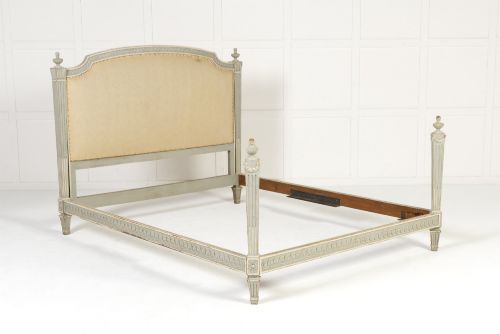
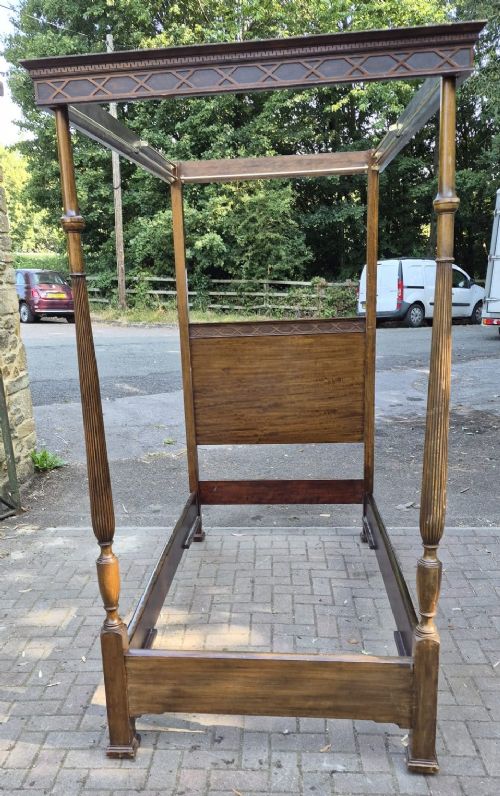
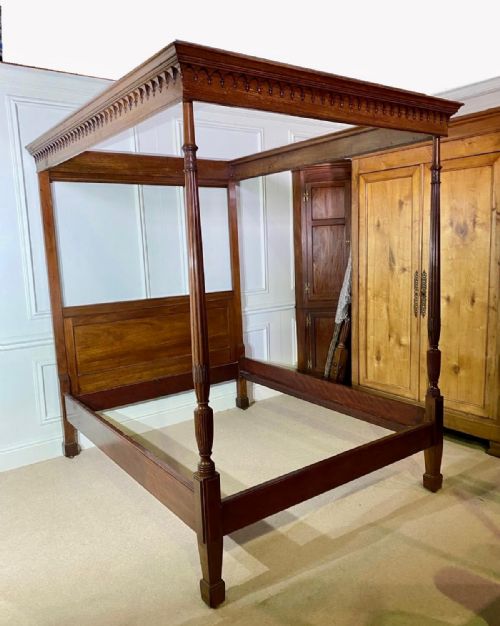
When you search for a carved post bed frame, you are looking at substantial wooden bedsteads defined by architectural vertical posts and decorative carving. The examples here span from the eighteenth century through the nineteenth century and into the Edwardian period, incorporating single, double, and king size formats.
The most common configurations on this page include four poster beds and French painted or upholstered bedsteads. You will encounter styles ranging from Georgian Revival and Regency to Louis XVI Style, Portuguese Baroque Revival, and Anglo-Indian Colonial.
These pieces function as major furniture centrepieces, combining structural timber frames with stylistic details such as painted finishes, gilded accents, and caned panels. The assortment reflects diverse regional interpretations of classical cabinetmaking traditions.
How they were made
Makers constructed these frames using hardwoods such as mahogany and pine, complemented by secondary timbers and fabric upholstery. Joinery relied on traditional framing and structural timber assembly to support the weight of large bedsteads.
Carved wood elements were shaped by hand, applying decorative motifs directly onto posts and headboards. Painted and gilded finishes were then applied to specific continental styles, creating layered visual textures on the timber surfaces.
Several beds arrive with tall posts designed to hold heavy tester draperies that originally kept aristocratic sleepers warm from draughts.
What varies in quality
The standard of a carved post bed frame depends on the depth and crispness of the timber carving. Superior pieces display sharply defined ornamentation and well-proportioned architectural posts rather than shallow or mechanical shaping.
Material selection also dictates overall grade, with dense hardwoods like mahogany providing greater structural integrity. The refinement of secondary details, such as integrated caning and applied paintwork, distinguishes standard workshop production from finer studio output.
Howard & Sons
The Carved Post Bed Frame Glossary
- Four poster bed
- A bed with four vertical posts supporting an upper tester or canopy frame. These structures often feature prominent carved details along the uprights.
- Bedstead
- The framework of a bed, consisting of posts, rails, and headboards without necessarily including the mattress. This term frequently appears in historical furniture descriptions.
- Caned
- Woven rattan or split cane panels used for headboards or footboards. This technique provides decorative texture and lighter visual weight to large wooden frames.
- Gilded
- Coated with a thin layer of gold leaf or metallic paint to create a reflective surface. This finish is common on continental revival furniture styles.
Carved Post Bed Frame: Frequently Asked Questions
How do I measure for a four poster bed?
Measure your ceiling height and room dimensions carefully to ensure the vertical posts and upper frame fit comfortably within the space.
Take note of door widths and stairwell turns as well, as these large wooden frames often require careful manoeuvrability during delivery and installation.
Are these beds standard modern sizes?
Historical bed frames frequently deviate from contemporary mattress dimensions. Many antique pieces require custom or adapted mattresses to fit the internal wooden rails properly.
Check the specific width and length measurements provided in each listing rather than relying on standard size labels like king or double.
How do I care for antique carved timber?
Maintain the wood by dusting regularly with a soft, dry cloth and avoiding placement near direct heat sources or strong sunlight.
Apply traditional wax sparingly when the timber appears dry, following the grain to preserve the original finish and carved details.
What is the difference between Regency and Georgian styles?
Regency design typically draws inspiration from classical Greco-Roman motifs, featuring cleaner lines, painted surfaces, and bold pillar forms. Georgian styles often display heavier proportions and intricate carved ornamentation derived from Chippendale traditions.
Revival pieces made in later decades often blend these historical vocabulary elements into unified bedstead designs.