


Calico Sofa
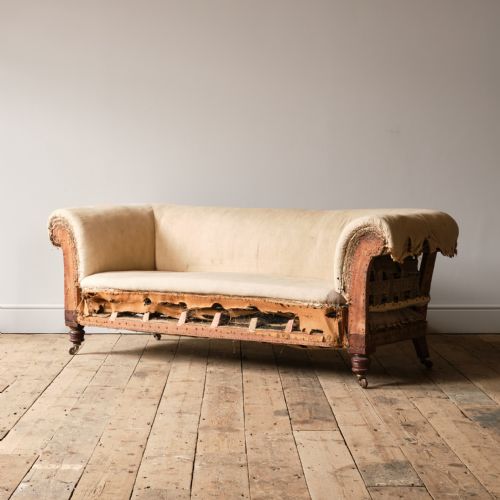
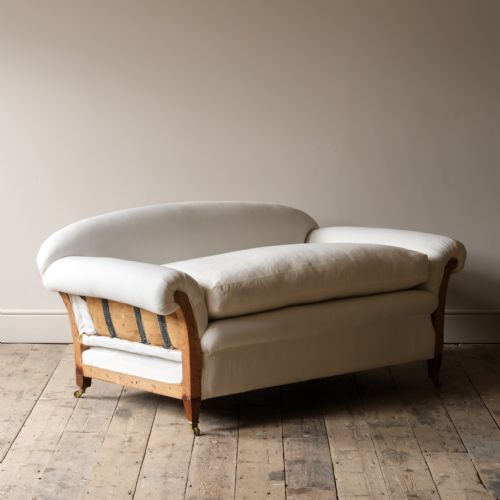
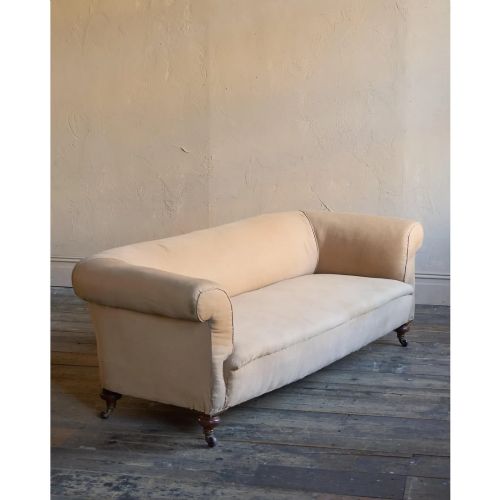
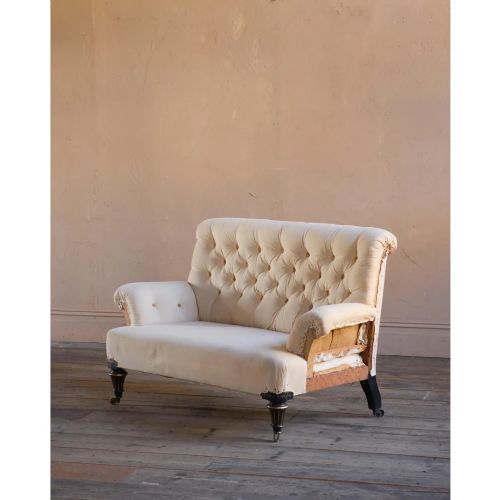
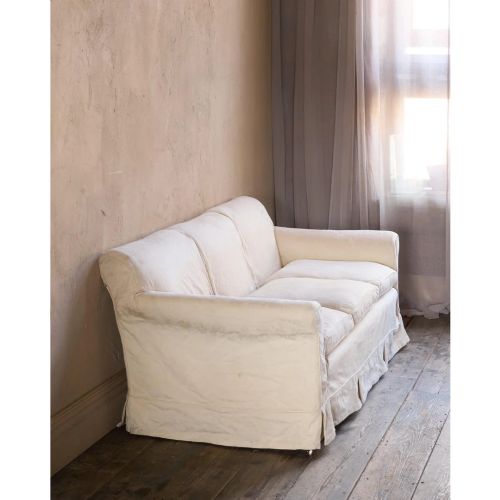
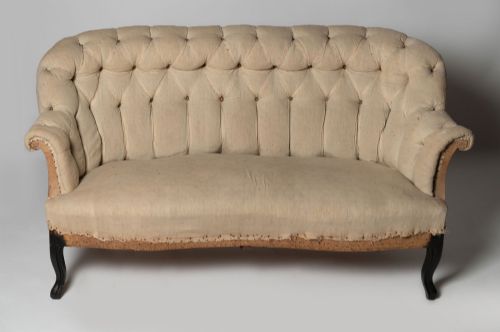
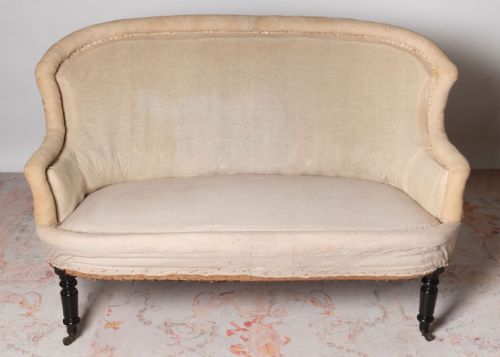
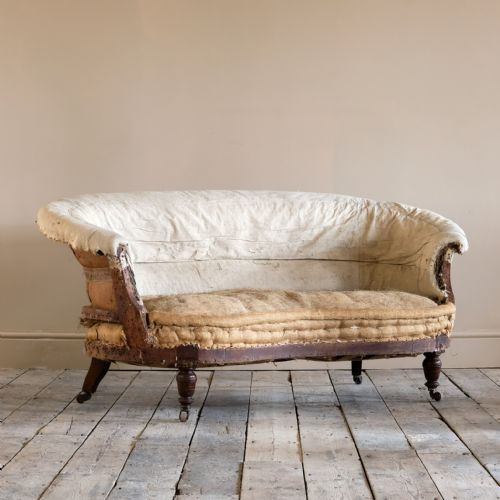
A calico antique sofa gives you a deep, comfortable seat dressed in plain foundation fabric ready for top upholstery.
Calico Sofa
When you search for a calico antique sofa, you are looking at substantial upholstered seating from the nineteenth and early twentieth centuries presented in its unadorned calico lining. These pieces span English Country House styles and French models, including Chesterfield sofas, deep-seated two-seater sofas, daybeds, and chaise longues.
You will most commonly meet Victorian and Edwardian examples built with generous proportions and deep seats. The selection includes specific forms like the Napoleon III piecrust chaise alongside country house settees and daybeds originating from workshops such as Howard and Sons, Jackson and Graham, and Hampton and Sons.
The underlying frames date from the mid nineteenth century up to the 1930s, reflecting changing domestic comforts across several decades. Each piece retains its heavy interior construction, often surfaced simply in calico or hessian linen while awaiting final decorative covering.
How they were made
Layers of natural textiles such as linen, hessian, and calico enclose the interior stuffing and springs to maintain shape and resilience. This traditional upholstery build creates the deep, yielding sit characteristic of country house seating.
The listings span the nineteenth century through to the 1930s, uniting English country house forms with French nineteenth-century daybeds.
What varies in quality
The standard of a piece depends heavily on the integrity of the underlying timber frame and the sophistication of its original maker. Pieces bearing attribution to established cabinet makers or firms display superior joinery and more refined proportions than anonymous workshop output.
Heavier frames with sophisticated springing systems and robust beech or mahogany foundations set the better examples apart from standard commercial production. The precision of the original structural joinery dictates how well the frame supports the weight and depth of the seating.
Jackson and Graham·Hampton and Sons·Holland and Sons·Howard and Sons·Morison and Co Edinburgh
The Calico Sofa Glossary
- Calico
- A plain-woven unbleached textile used traditionally as the internal foundation cover on upholstered seating before top fabric is applied. It holds the stuffing tightly in place.
- Hessian
- A coarse woven fabric made from jute fibres, utilised inside upholstered furniture to support stuffing and springs. It provides a durable base layer beneath the calico.
- Chaise Longue
- An upholstered long chair designed for reclining, featuring an attached backrest and often a single scrolled end. Nineteenth-century French and English versions appear frequently in these forms.
- Chesterfield
- A large upholstered sofa with deep buttoning and arms of the same height as the back. These heavy pieces are staples of the traditional English country house interior.
- Daybed
- A multipurpose piece of furniture serving as both a seat and a bed for resting during the day. Edwardian and nineteenth-century variants often incorporate adjustable reclining mechanisms.
Calico Sofa: Frequently Asked Questions
Why are these sofas covered in calico?
Calico serves as the traditional base or lining fabric that holds the internal stuffing, horsehair, and springs securely in position. It allows a buyer to inspect the raw shape and frame structure clearly.
Leaving the piece in calico also gives you the freedom to choose your own top fabric to match a specific interior scheme.
How do I date a country house sofa?
Dating relies on examining the timber frame, the turn of the legs, and the depth of the seat proportions. Nineteenth-century frames tend to be heavier, while 1930s examples often feature slightly more streamlined Edwardian-influenced curves.
Maker stamps, where present on the wood or castors, provide the most direct evidence of the exact period of manufacture.
Are daybeds and chaise longues comfortable?
These pieces were built with deep, sprung foundations designed specifically for lounging and long periods of rest. The generous depth of nineteenth-century frames offers substantial physical support.
Their comfort depends primarily on the firmness of the internal spring suspension and the quality of the stuffing layers beneath the calico.
How do I choose between French and English styles?
English country house sofas focus on deep seats, heavy proportions, and functional comfort for domestic sitting rooms. French styles, such as Napoleon III chaises, often feature more decorative woodwork and curved piecrust outlines.
Your choice depends on whether you prefer the structured elegance of French seating or the robust sink-in depth of English designs.