
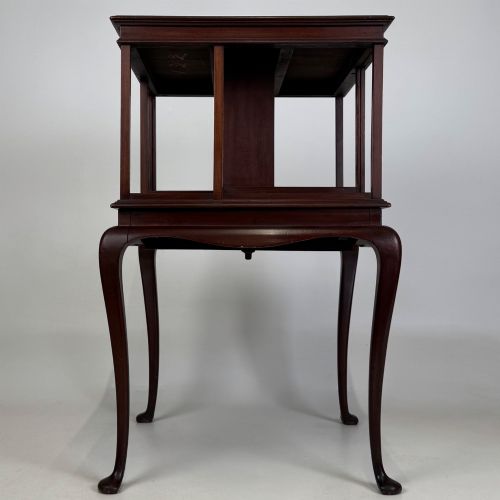
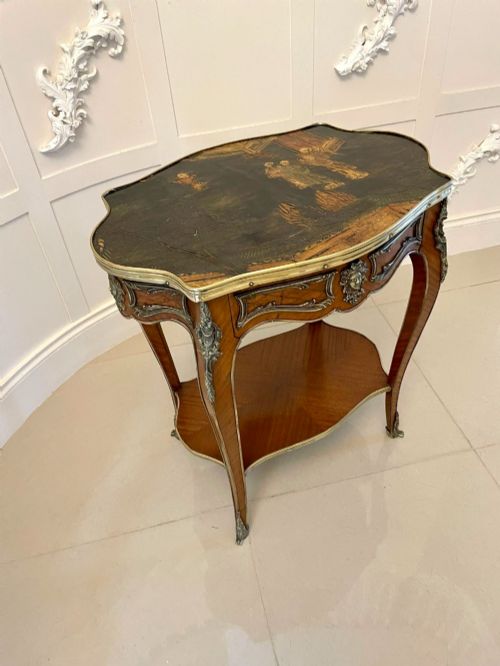
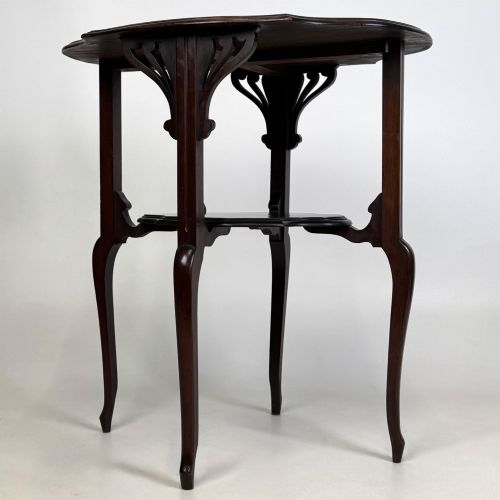
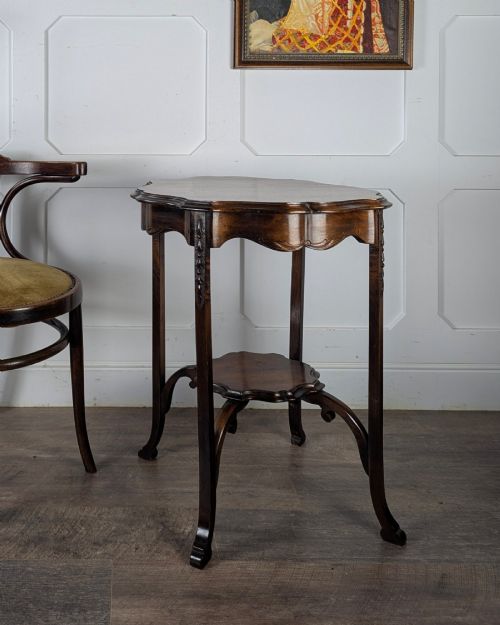

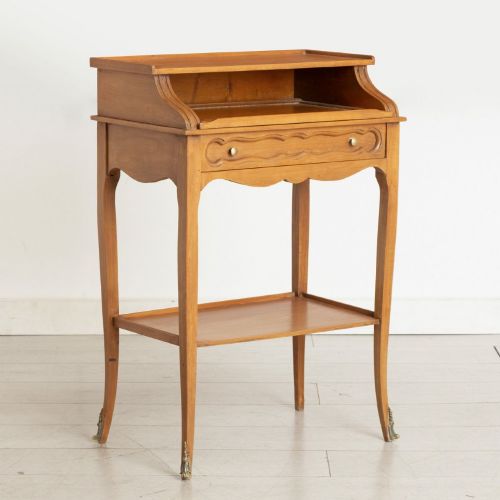
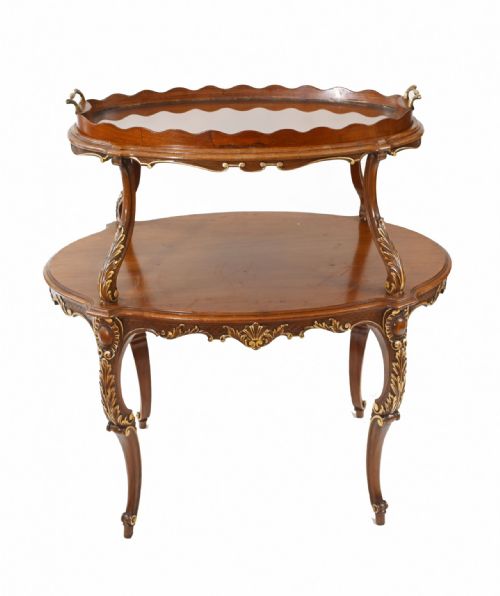

Cabriole Leg Tier Table
These cabriole leg tier table examples combine curved supports with stacked surfaces, offering practical display space for living areas.
Cabriole Leg Tier Table
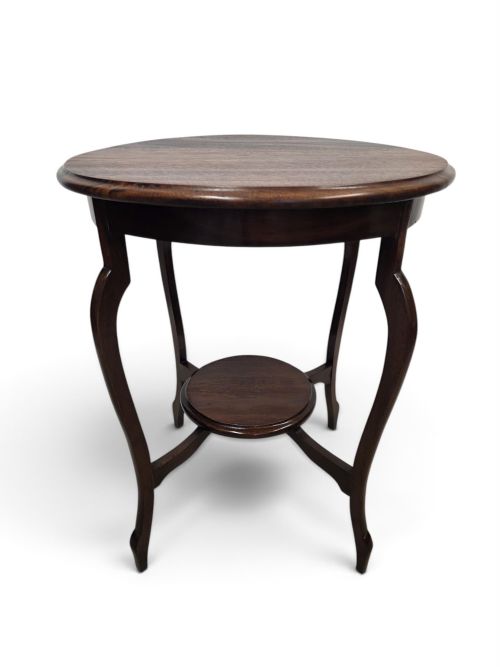
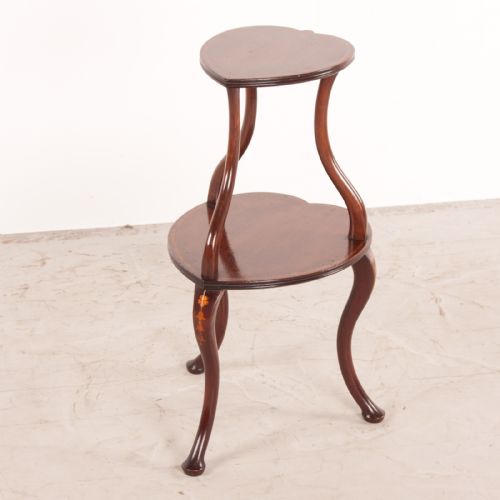
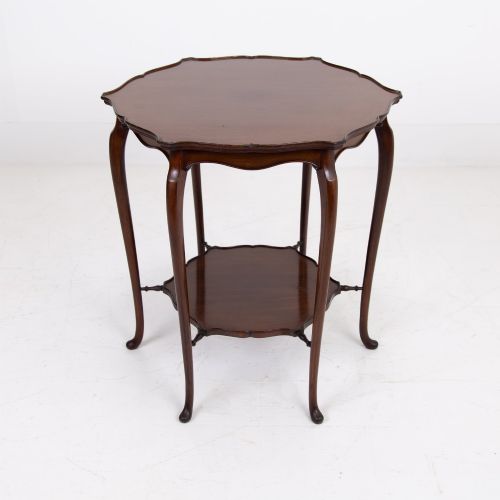
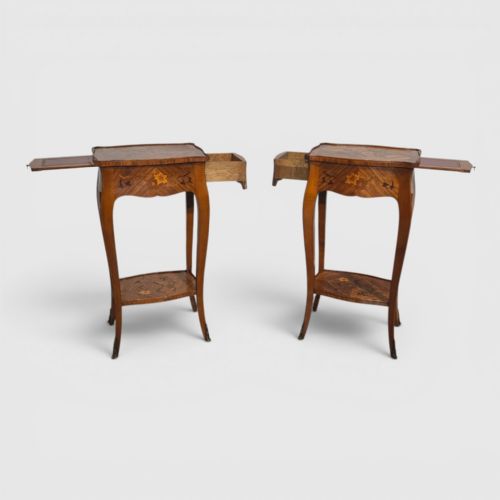
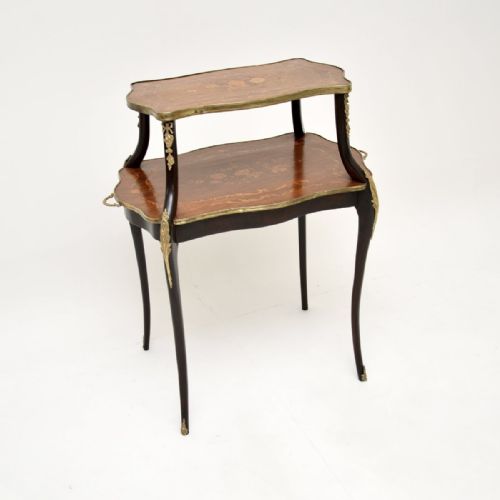
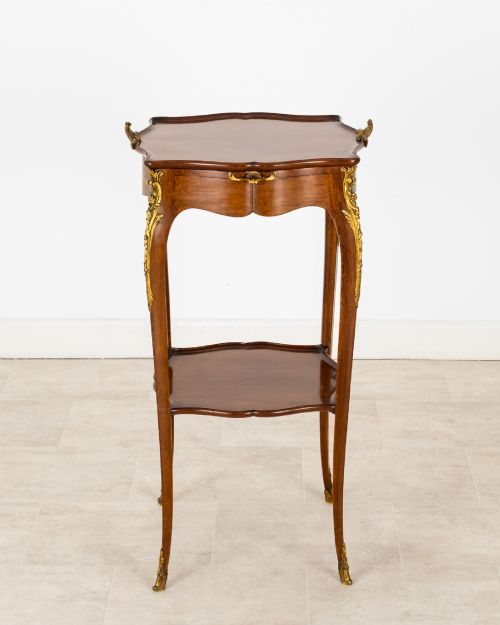
A cabriole leg tier table brings together multiple stacked surfaces and curving legs inspired by eighteenth-century furniture designs. These pieces appear frequently in Edwardian formats and Victorian interpretations, often serving as occasional tables, etageres, or tea tables.
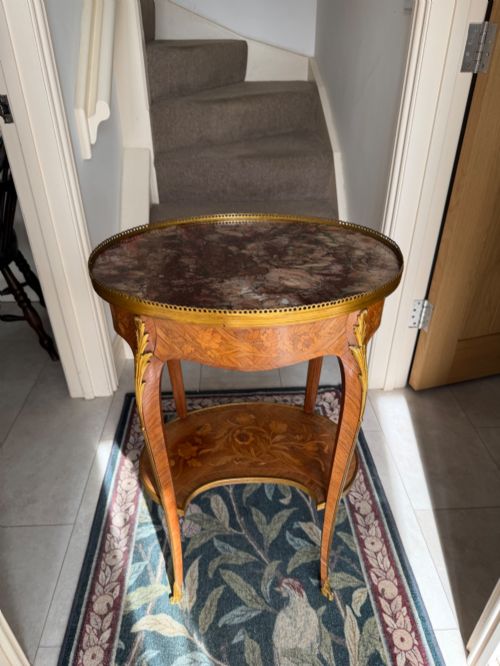
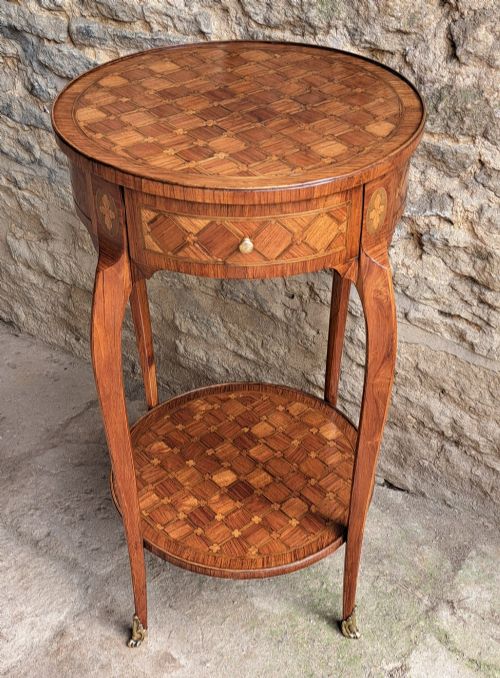
Makers shaped these surfaces from mahogany, walnut, and kingwood, occasionally incorporating marquetry inlay or brass mounts. The forms range from simple two-tier occasional tables to elaborate French revival designs with multiple platforms for display.
Design and Execution
Quality rests in the precision of the timber matching and the crispness of the marquetry inlay across multiple tiers. Finer examples display fluid shaping in the cabriole legs and careful proportion between the supporting uprights and shelves.
The integration of cast bronze or ormolu mounts distinguishes standard production from superior workshop output. Well-executed pieces maintain balance and stability despite narrow profiles and stacked surface weight.
Listings feature Edwardian, Victorian, and 19th-century periods alongside materials such as mahogany, walnut, kingwood, and ormolu.
François Linke·W. Turner Lord & Co·Gillow·Whytock & Reid of Edinburgh
The Cabriole Leg Tier Table Glossary
- Cabriole leg
- A furniture support that curves outward at the knee and tapers inward toward the foot, mimicking animal limbs. This design became central to eighteenth-century furniture and later revival styles.
- Etagere
- A piece of furniture consisting of open shelves for displaying small objects or ornaments. These tiered structures often feature delicate wooden supports and marquetry surfaces.
- Ormolu
- Gilded bronze ornamentation applied to furniture mounts and decorative accents. Makers cast and chased these metal fittings to enhance French revival pieces.
- Marquetry
- Decorative veneer work formed by fitting together small pieces of coloured wood, shell, or ivory to create pictorial designs. Artisans applied these patterns to tabletops and tier surfaces.
- Kingwood
- A dense, heavy timber with rich dark brown and golden grain patterns utilised in high-end cabinetmaking. Craftsmen prized this exotic wood for fine veneer work.
Cabriole Leg Tier Table: Frequently Asked Questions
What is a tier table?
A tier table provides multiple stacked surfaces supported by uprights and legs, designed for holding small items or displaying decorative objects in reception rooms.
These pieces emerged in various formats, from simple wooden tea tables to elaborate inlaid etageres with curved supports.
How do I style a tier table?
Place the table beside seating or in a corner where the stacked surfaces remain accessible from different angles. Use the lower tiers for books or small boxes while keeping the top surface clear for lamps or decorative items.
The compact footprint allows these tables to fit into smaller spaces without dominating the room.
What periods do these tables come from?
The selection includes Victorian and Edwardian examples alongside late nineteenth-century French revival pieces and early twentieth-century interpretations.
Maker methods and decorative motifs reflect the design preferences of these specific decades.
Are these tables sturdy?
Solid hardwood construction and properly joined tiers provide reliable stability for everyday decorative use.
The outward curve of the cabriole legs distributes weight evenly across the floor.