


Three Shelf Dumb Waiter
A three shelf dumb waiter serves as a tiered platform for holding items, offering multiple levels of display and storage.
Three Shelf Dumb Waiter
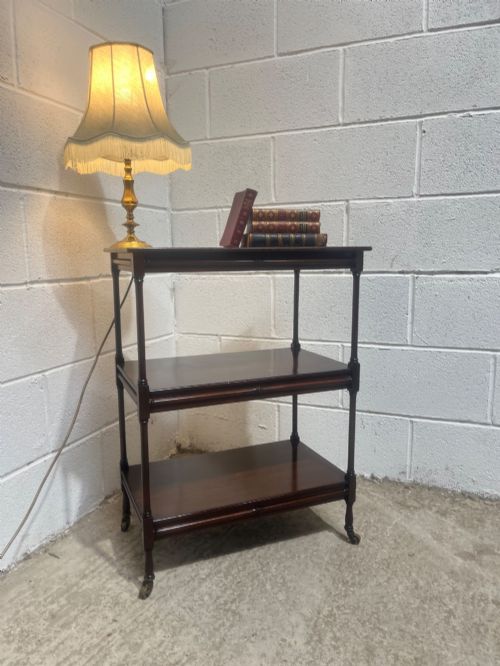
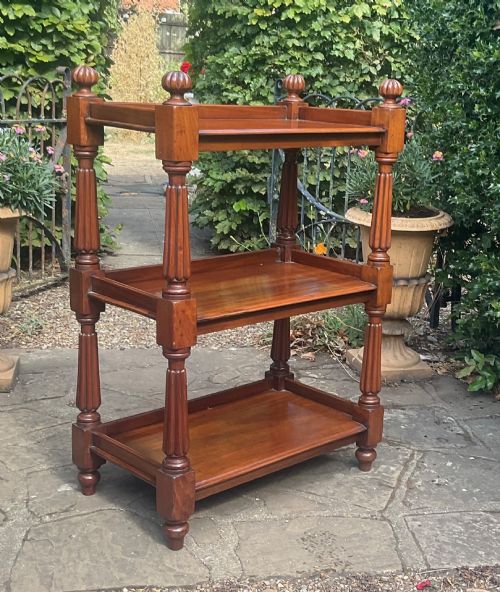
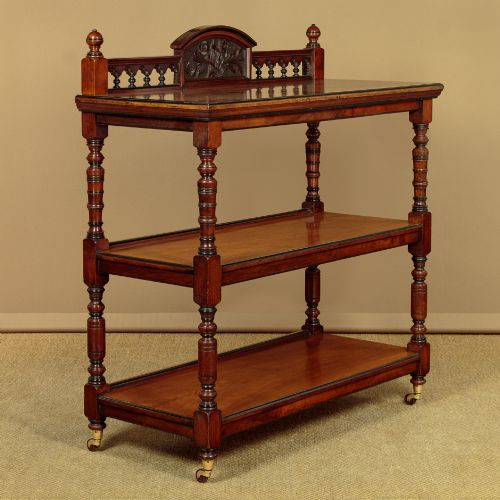
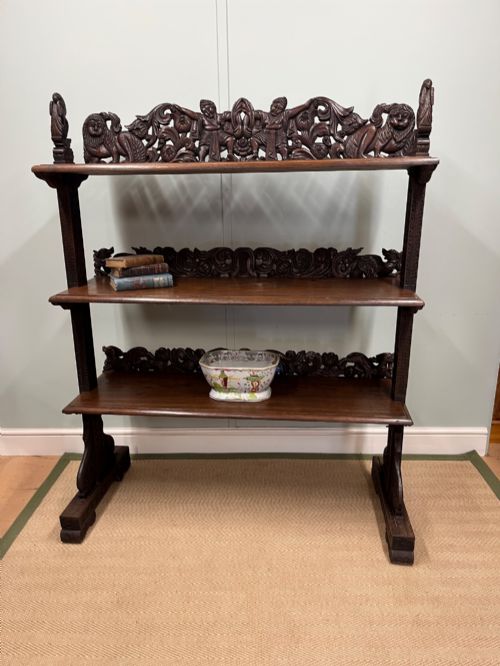
When you search for a three shelf dumb waiter, you encounter multi-tiered wooden furniture primarily designed for serving or display. These pieces provide three distinct horizontal surfaces arranged vertically to maximise floor space.
The versions you meet most frequently on this page span the nineteenth century and incorporate styles such as Victorian and Edwardian. Forms range from classical mahogany trolleys and etageres to walnut buffets and campaign washstands.
How they were made
Cabinet makers constructed these tiers predominantly from dense hardwoods including mahogany, walnut, teak, rosewood, and oak. Selected pieces integrate brass hardware, marble tops, and ceramic elements for added function and decoration.
Joinery techniques focus on supporting multiple weighted shelves upon vertical pillars or turned supports. Many examples incorporate functional additions such as original castors or adjustable tiers to aid movement and utility.
What varies in quality
The grade of timber selection and depth of grain figure heavily dictate the visual merit of an individual piece. Dense, well-figured mahogany or rosewood displays superior material preparation compared to standard secondary timbers.
Refinement in turning, structural joinery, and the inclusion of integrated elements like marble inserts or brass castors separate standard utility items from more ambitious cabinet work.
The Three Shelf Dumb Waiter Glossary
- Dumb waiter
- A multi-tiered piece of furniture used for holding food, dishes, or display items without the need for an attendant. These structures feature stacked platforms supported by central columns or corner posts.
- Etagere
- A piece of furniture consisting of a set of open shelves for displaying small objects or ornaments. The design emphasises vertical stacking to save space while presenting collections.
- Campaign washstand
- Portable furniture designed for travel, typically featuring robust timber construction alongside brass fittings. These items often fold or disassemble for transport.
- Whatnot
- An open set of shelves used for displaying ornaments and books, popular throughout the nineteenth century. It relies on slender upright supports between each tier.
- Buffet
- A sideboard or set of shelves used for holding food, tableware, or display pieces in dining areas. They provide sturdy surfaces for heavy service items.
Three Shelf Dumb Waiter: Frequently Asked Questions
What is a three shelf dumb waiter?
A three shelf dumb waiter is a tiered piece of furniture featuring three horizontal surfaces stacked vertically. It provides extra display and surface area without taking up excessive floor space.
Historically utilised for serving food or holding books and ornaments, these pieces appear in various nineteenth-century timber configurations.
How do I identify a Victorian piece?
Victorian items often employ rich timbers such as mahogany, walnut, or rosewood paired with turned supports and original castors. Stylistic details reflect the design preferences of the nineteenth century.
Construction methods typically involve traditional joinery and heavy timber framing characteristic of the period's workshop standards.
Where were these pieces used?
These pieces functioned primarily in dining rooms as serving aides or in parlours for displaying ornaments and books. Their multi-tiered design allowed households to keep items close at hand.
Their compact footprints made them adaptable to various rooms beyond the formal dining space.
What materials are common?
Mahogany, walnut, teak, rosewood, and oak form the primary timber framework for these multi-tiered units. Secondary materials include brass for castors and fittings, alongside marble and ceramic tops.
These durable materials supported the daily utility demanded of serving and display furniture.