





Georgian Tiered Dumb Waiter
A georgian tiered dumb waiter is a revolving multi-level serving stand designed for the dining room.
Georgian Tiered Dumb Waiter
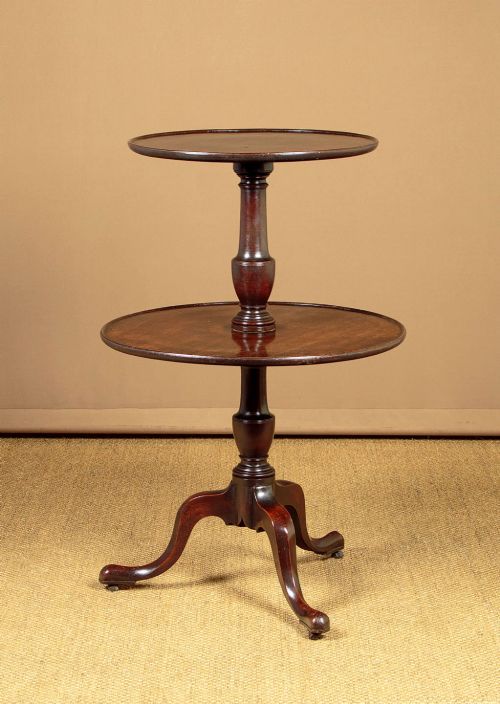
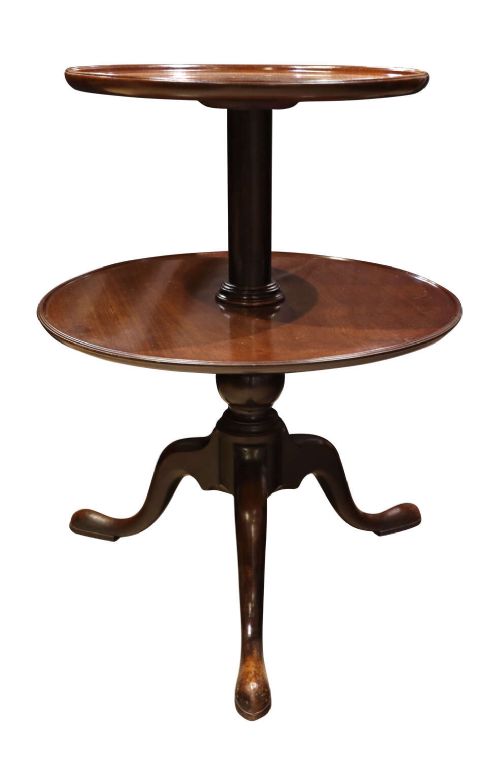
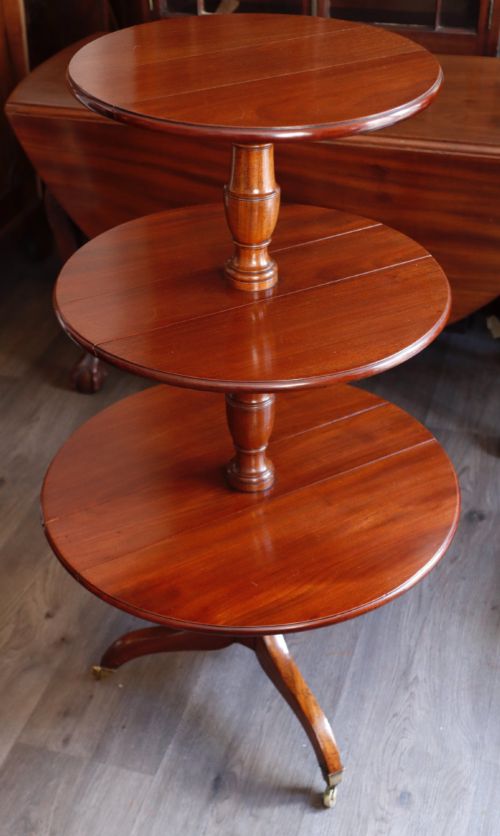
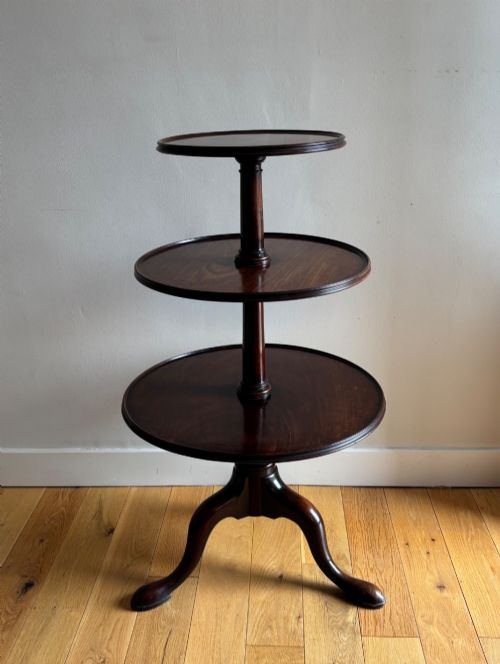
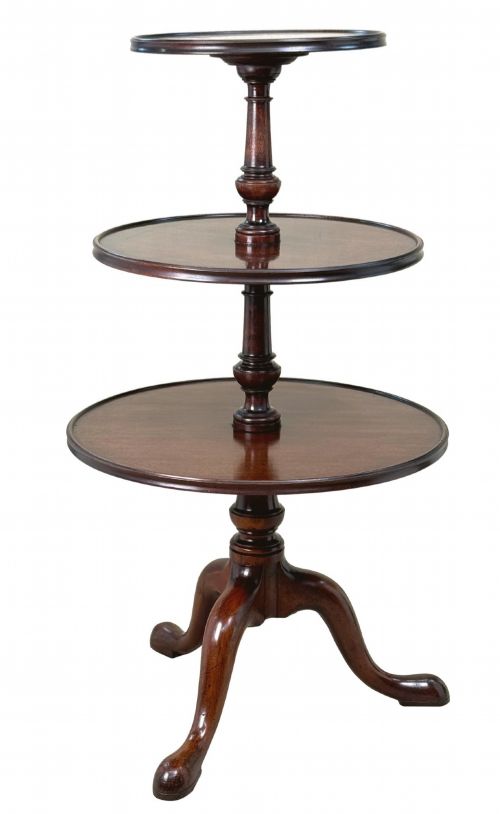
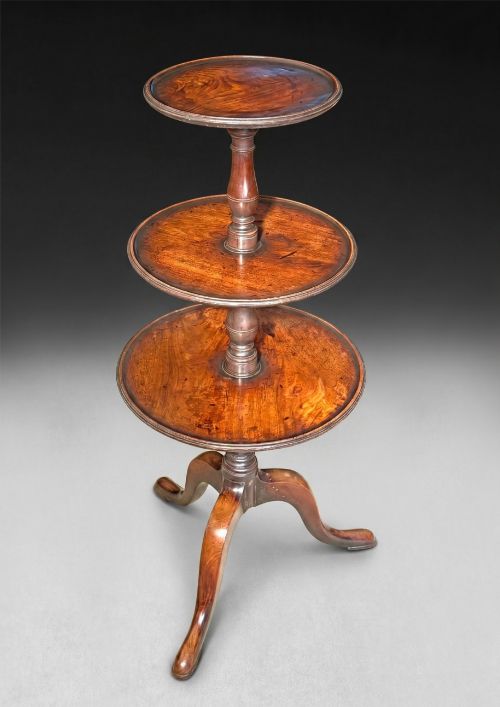
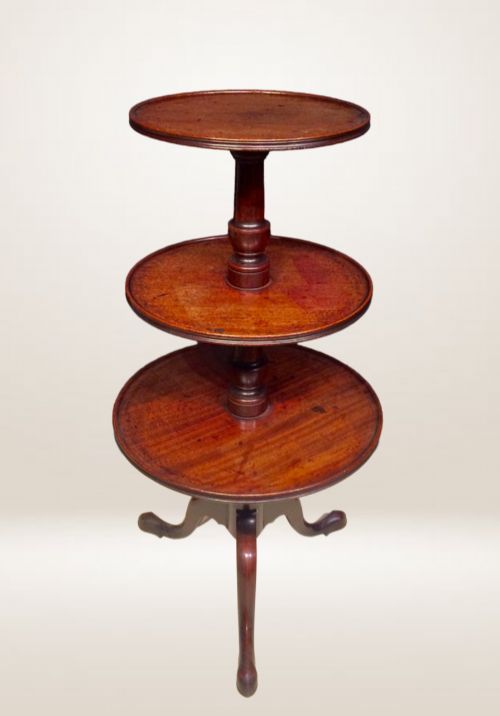
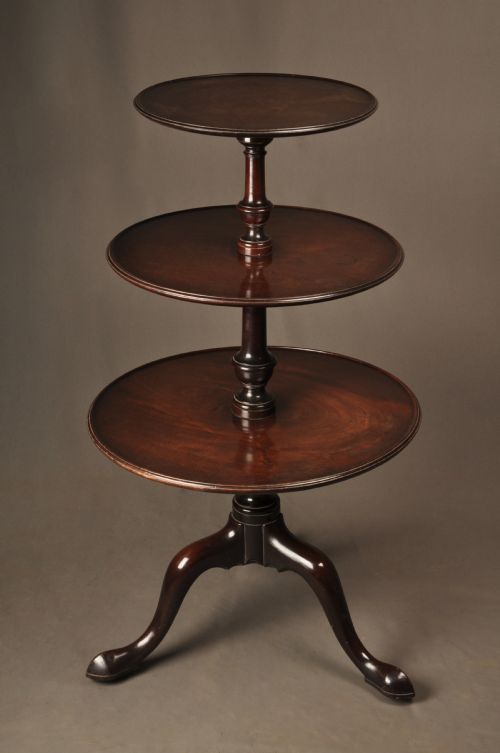
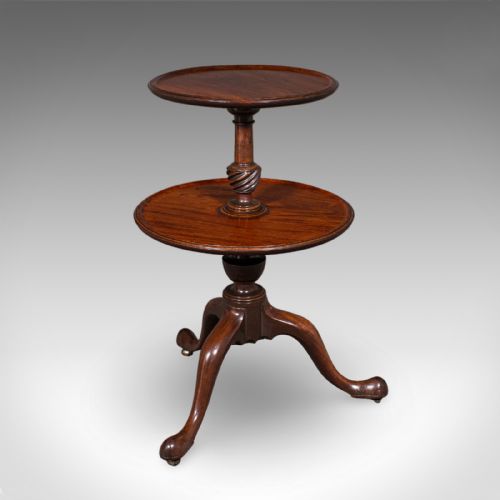
A georgian tiered dumb waiter takes the form of a freestanding pedestal table with multiple graduated circular revolving shelves.
Most examples found here date from the eighteenth century or the regency period, constructed primarily as two-tier or three-tier serving stands.
Makers designed these pieces to hold dishes and glasses near the dining table without the constant attendance of servants.
How they were made
Craftsmen built these serving stands predominantly from solid mahogany, frequently utilising Cuban mahogany for its rich grain.
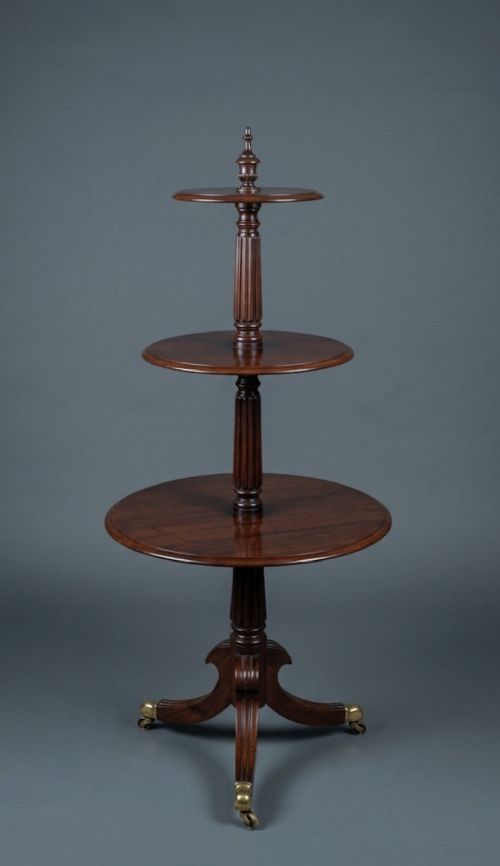
The tiered trays typically rest on turned central pedestals supported by tripod legs, often terminating in brass castors.
Joinery methods included pivoting mechanisms that allowed the individual circular trays to revolve smoothly around the central column.
Common structural variations among these pieces include two-tier and three-tier formats supported by tripod pedestal bases.
What varies in quality
The refinement of the timber figure and the weight of the mahogany dictate the baseline quality of the construction.
Superior pieces exhibit elegant proportions in the turned column and precise joinery in the tripod base rather than heavy, clumsy framing.
The mechanical action of the revolving tiers separates standard utility stands from finer examples with smooth, balanced rotation.
Gillows
The Georgian Tiered Dumb Waiter Glossary
- Tripod base
- A three-legged support structure commonly found beneath the central pillar of these tiered serving stands. This design ensured stability on uneven dining room floors.
- Revolving
- The characteristic movement of the circular trays around the central spindle. This allowed diners to access food and drink easily without passing heavy dishes across the table.
- Cuban mahogany
- A dense, heavy timber harvested in the Caribbean and favoured by eighteenth-century cabinet makers for its deep colour and pronounced grain pattern. It provides exceptional structural strength for weight-bearing tiers.
- Pollard oak
- An ornamental timber derived from trees pruned to encourage dense, gnarled branching figures. It appears occasionally on nineteenth-century surfaces for decorative contrast.
- Brass castor
- A small swivelling wheel attached to the foot of a table leg to permit movement across the floor. They are frequently mounted on the base of these serving stands.
Georgian Tiered Dumb Waiter: Frequently Asked Questions
What was a dumb waiter used for?
These tiered stands held extra plates, cutlery, and wine bottles during formal meals. They allowed diners to serve themselves during courses when household staff withdrew from the room.
The revolving trays meant food could circulate around the table without anyone needing to reach across their neighbours.
How many tiers do these stands have?
Most examples feature either two or three circular graduating trays mounted above one another on a single central column. The largest tray sits at the bottom with smaller shelves stacked above.
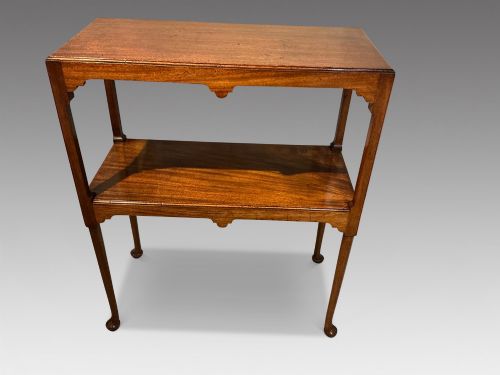
Some unusual variations include drop-leaf sections or rectangular configurations, though circular tripod models remain the standard form.
Where should I place a dumb waiter at home?
These stands fit naturally into a dining room or living space as accent tables or serving surfaces. Their revolving tiers make them practical for displaying small decorative items or holding drinks.
Because they occupy a relatively small floor space on tripod legs, they suit corners or empty wall spaces where a traditional side table might look bare.
How do I date a georgian dumb waiter?
Dating relies on timber selection, turning styles on the central column, and the construction of the tripod base. Eighteenth-century pieces often display fine Cuban mahogany and elegant, slender proportions.
Nineteenth-century and regency examples may introduce alternative woods like pollard oak or heavier brass fittings while retaining the traditional revolving multi-tier format.