



Georgian Three Tier Stand
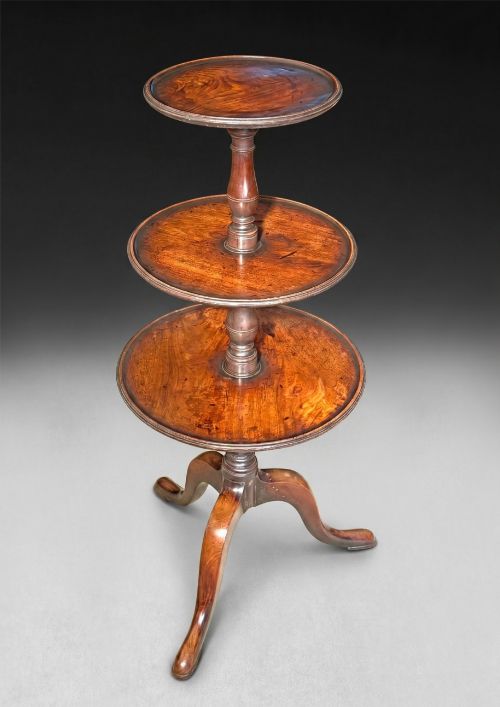
A georgian three tier stand is a tiered piece of freestanding furniture built to serve food or display books.
Georgian Three Tier Stand
A georgian three tier stand encompasses forms such as dumb waiters, whatnots, etageres, and tiered tables. These tiered pieces function as serving stands, bedside tables, or display shelving for books and decorative objects.
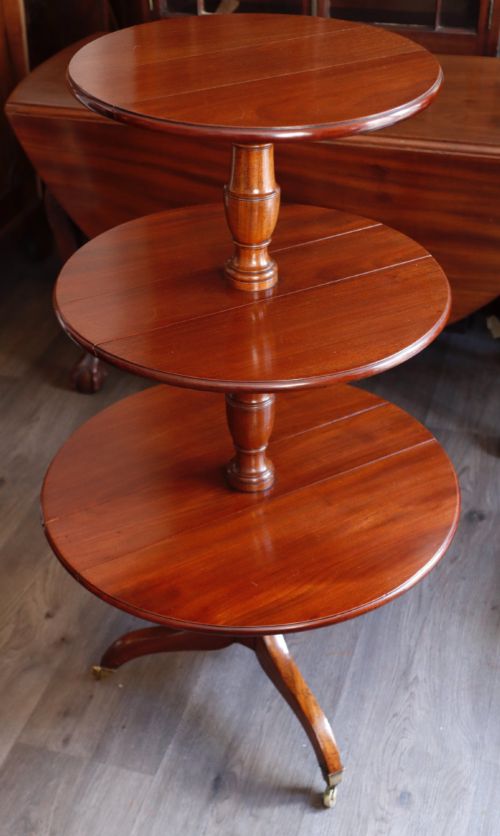
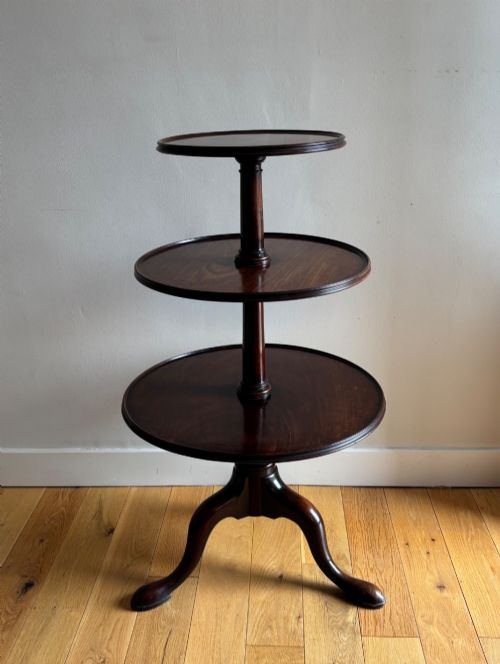
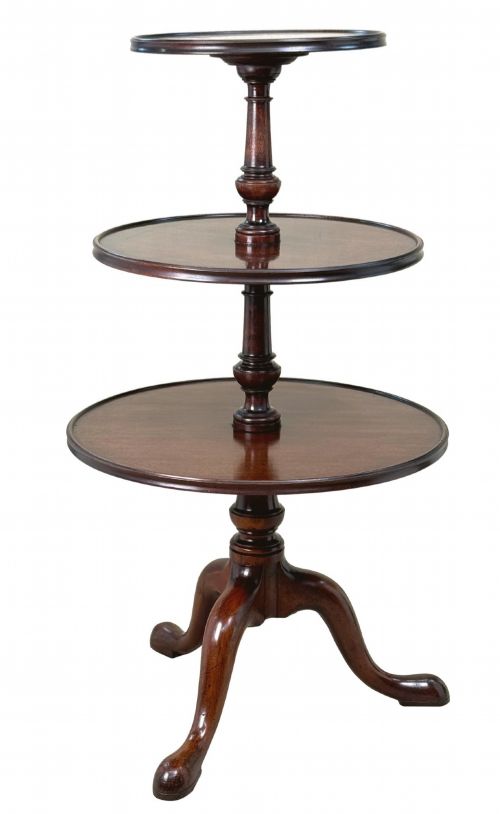
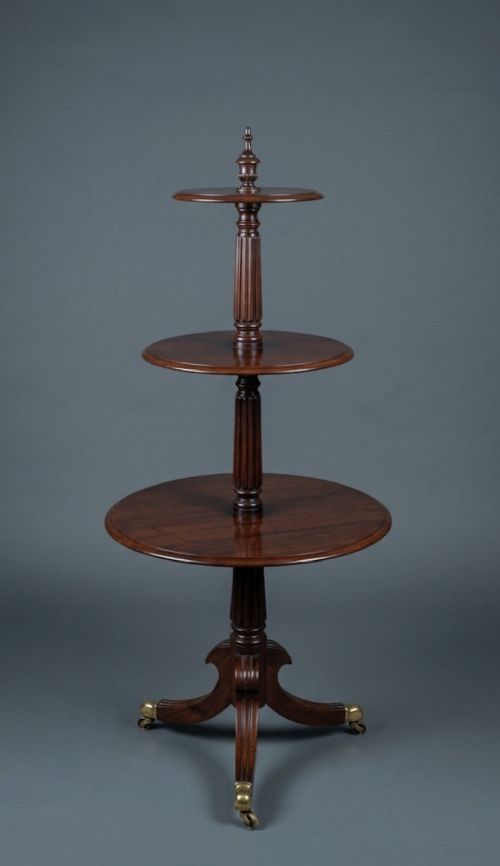
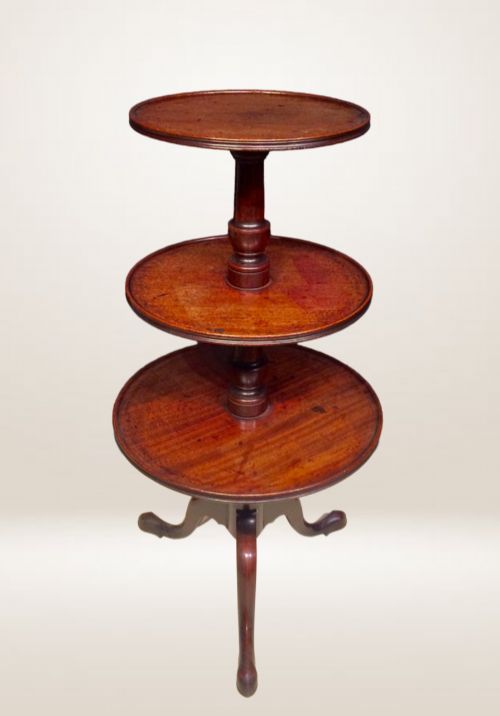
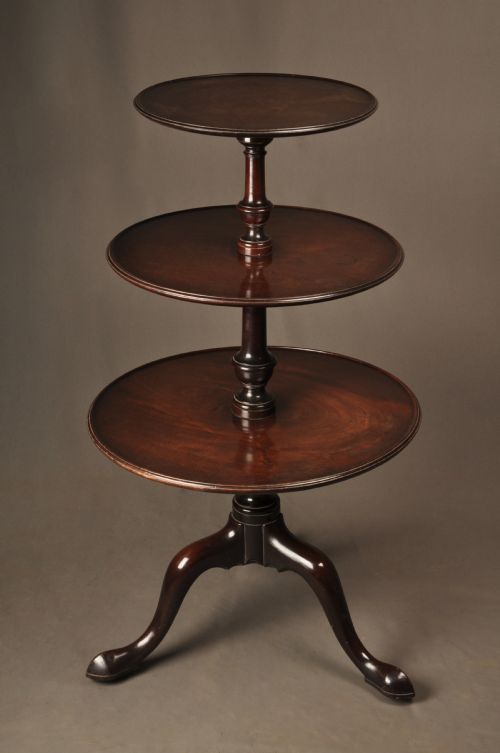
The version most commonly met on this page is the circular mahogany dumb waiter dating from the eighteenth century or the Regency period. These pieces feature graduating circular tiers supported on a central pillar and tripod base.
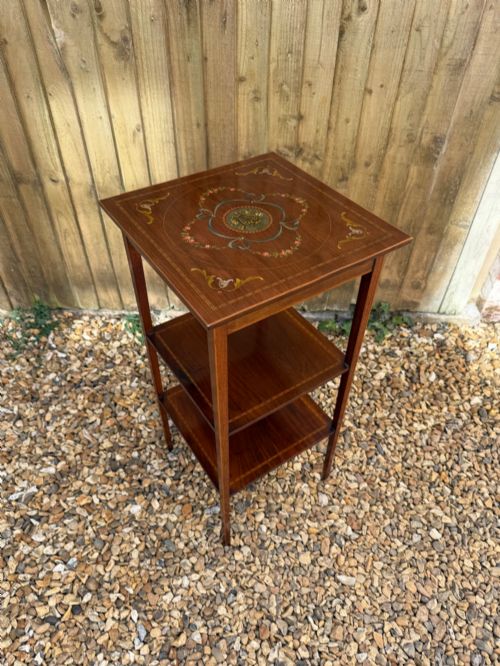
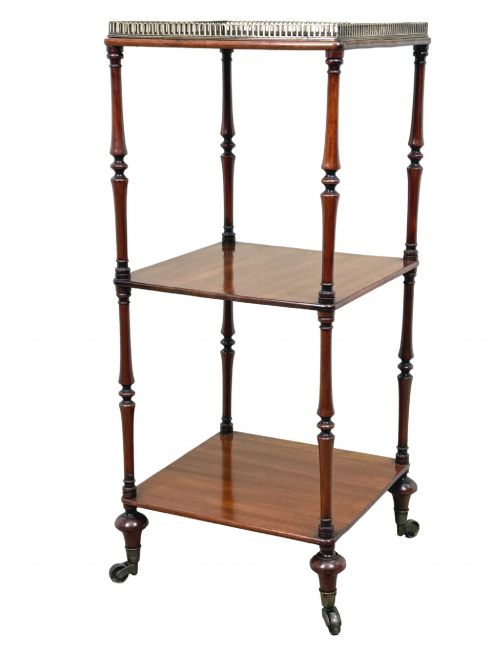
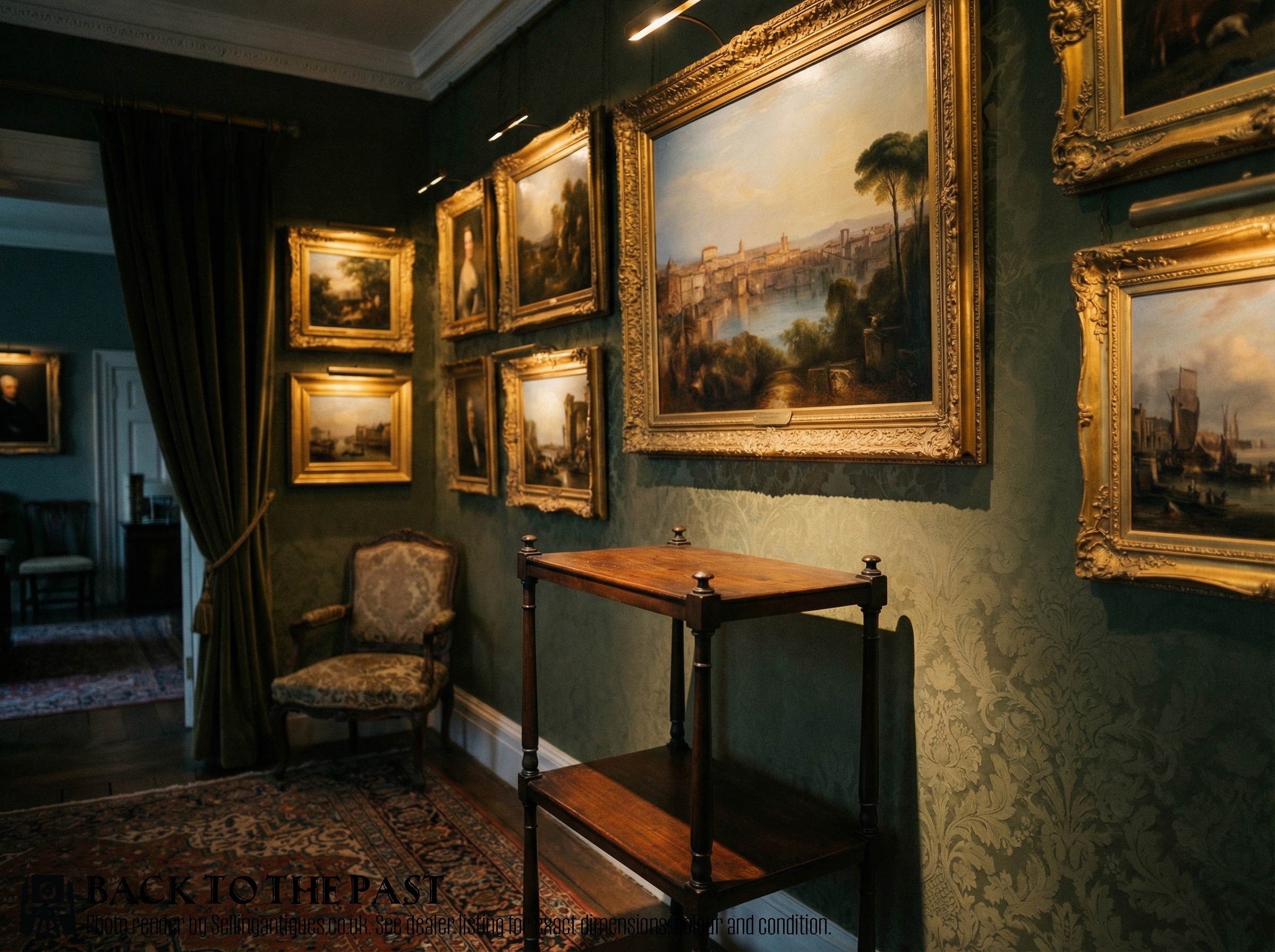
Makers also produced rectangular drop-leaf designs, square whatnots, and occasional tables with multiple tiers. Materials range from solid mahogany and Cuban mahogany to pollard oak, birdseye maple, and painted woods.
How they were made
Cabinetmakers utilised solid mahogany, Cuban mahogany, and oak for structural stability, shaping timber by hand using saws and planes. Turning lathes created the central pillars and columnar supports that hold each tier.
Some examples incorporate boxwood inlay, brass castors on the feet, or painted decoration applied to the timber surfaces. Revolving mechanisms on specific dumb waiter designs allowed the circular tiers to turn independently on the central shaft.
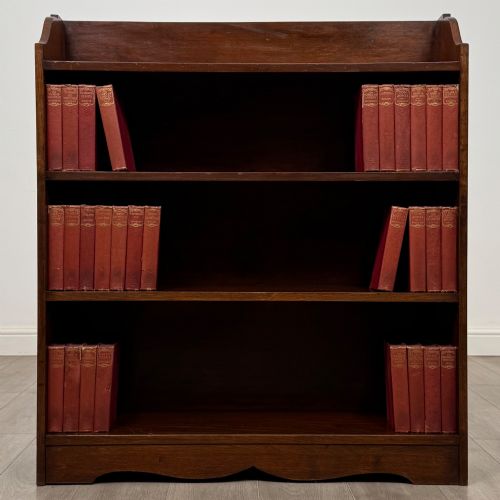
Object types recorded on this page include dumb waiters, whatnots, etageres, occasional tables, and open bookcases.
What varies in quality
The selection of timber grain heavily influences the visual weight and elegance of the stand, with figured Cuban mahogany or pollard oak sitting at the upper end of the scale. Finely turned columns and crisp boxwood stringing show superior craftsmanship.
Proportion and utility dictate the desirability of each piece, as smaller proportions and clever folding mechanisms require greater skill from the maker. Original rotating mechanisms and well-preserved brass fittings preserve the historical integrity of the tier stand.
The Georgian Three Tier Stand Glossary
- Dumb waiter
- A freestanding piece of tiered furniture designed to hold dishes or wine bottles during meals without the need for servants. These items typically feature graduating circular trays mounted on a central pillar.
- Etagere
- A French term for a set of open shelves or tiers used for display. These decorative stands appeared in various woods and painted finishes during the Regency and later periods.
- Tripod pedestal
- A three-legged base that supports a central column. This construction provides stable footing for circular tables and revolving dumb waiters.
- Drop-leaf
- A table top with hinged flaps that can be raised to extend the surface area or lowered when space is restricted. Several listings feature rectangular tiers with this folding mechanism.
Georgian Three Tier Stand: Frequently Asked Questions
What was a dumb waiter used for?
These tiered stands held plates, glasses, and wine bottles within arm's reach during dining rooms meals. They allowed diners to serve themselves without servants present in the room.
Over time, many of these pieces transitioned into general use as side tables, book stands, and display units in sitting rooms.
Can these stands support heavy books?
Solid mahogany and oak construction provides substantial strength for holding volumes and heavy decorative items. The tripod base and central pillar distribute weight evenly across the floor.
However, smaller portable bookshelves and delicate etageres with painted finishes suit lighter objects rather than large libraries.
Are all three tier stands revolving?
Many eighteenth-century and Regency dumb waiters feature a revolving mechanism that allows the circular trays to spin around the central shaft. This made reaching items across the table much easier during dinner.
Other formats such as whatnots, etageres, and stationery tier stands remain entirely fixed in place.