




Three Tier Lamp Table
A three tier lamp table provides stepped surfaces for display and lighting, bringing vertical utility and period character to a corner.
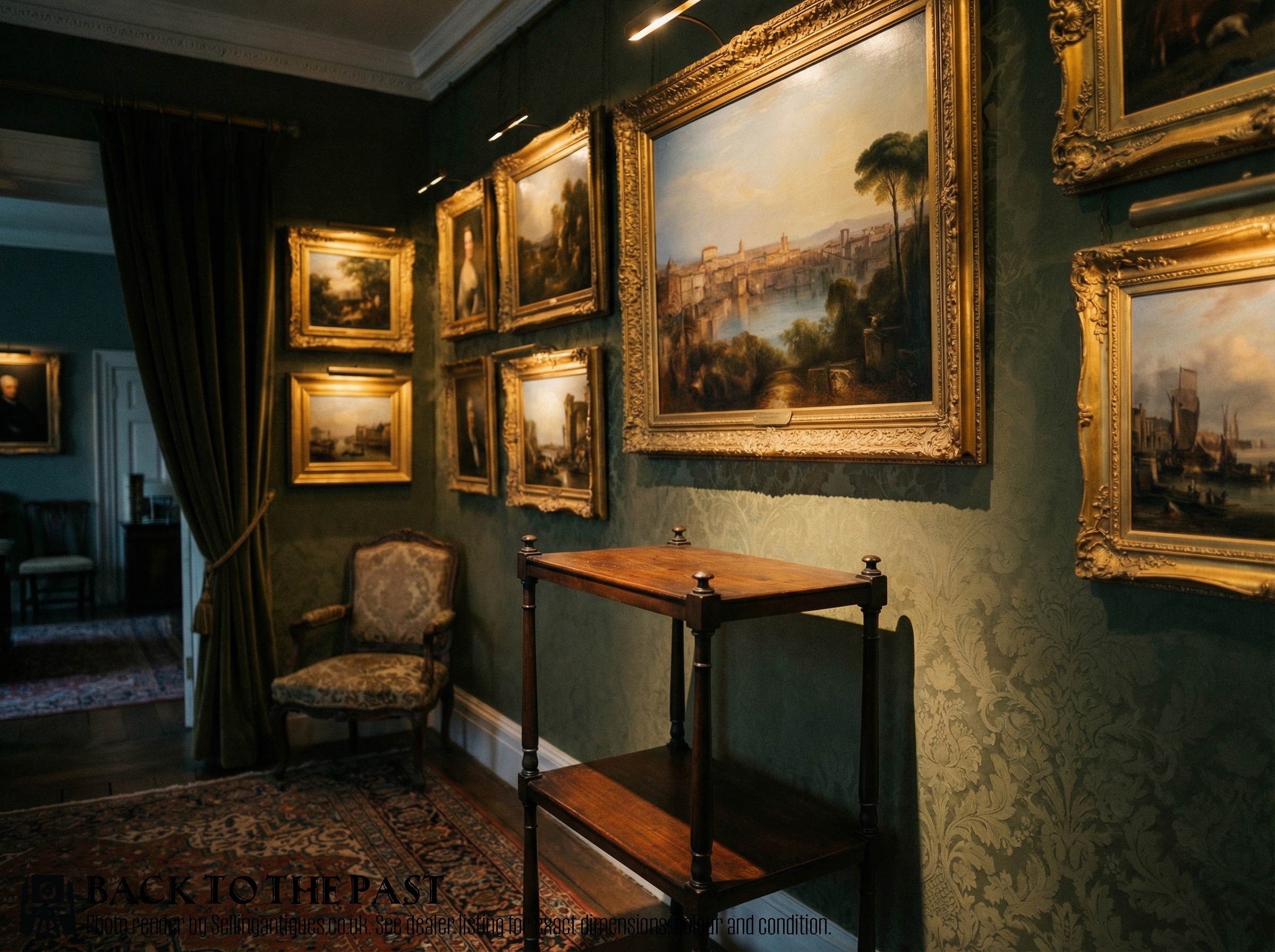
Three Tier Lamp Table
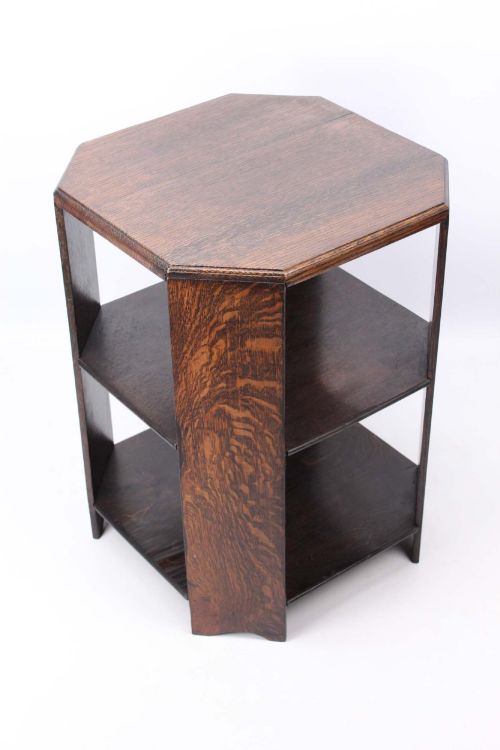
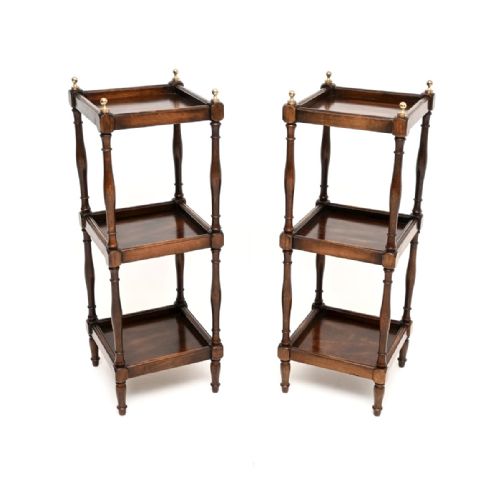
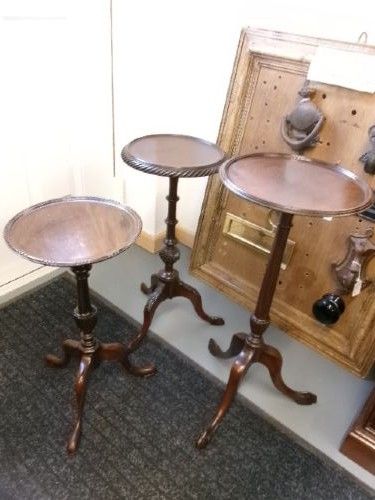
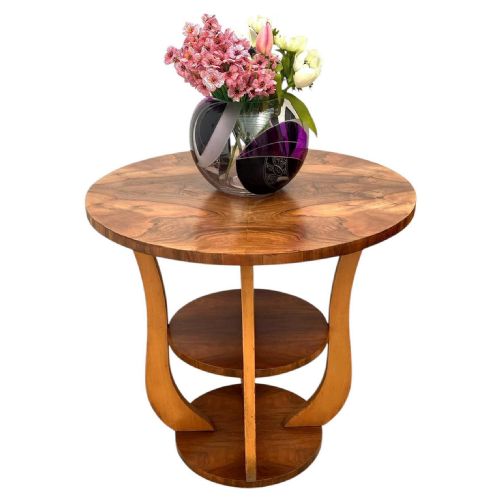
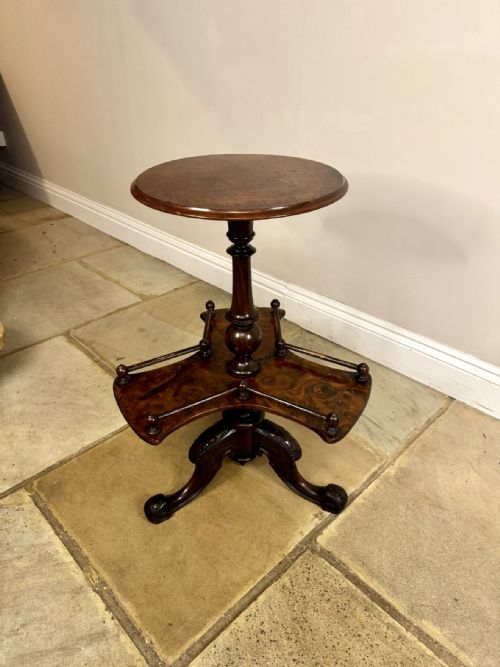
A three tier lamp table organises display space across multiple ascending levels, offering compact proportions suited to corners and beside seating. These multi-tiered surfaces appear across distinct historical periods, from Victorian and Edwardian iterations to Art Deco and Arts and Crafts examples.
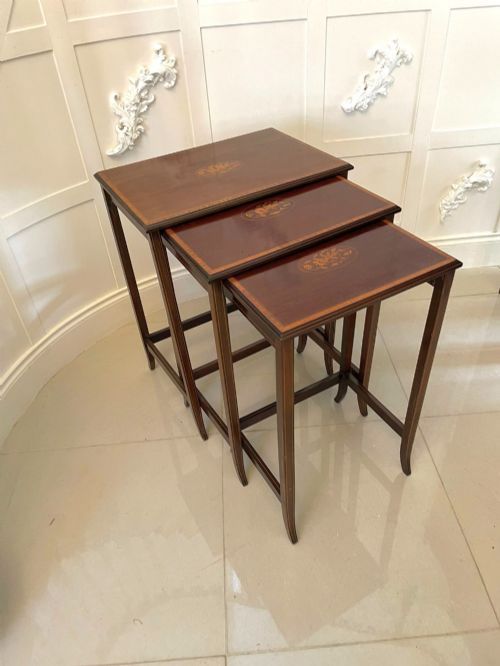
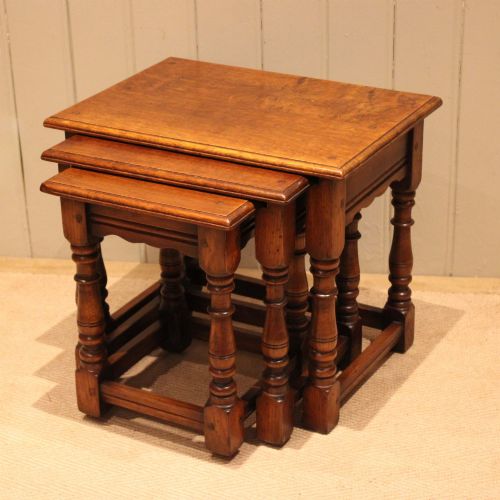
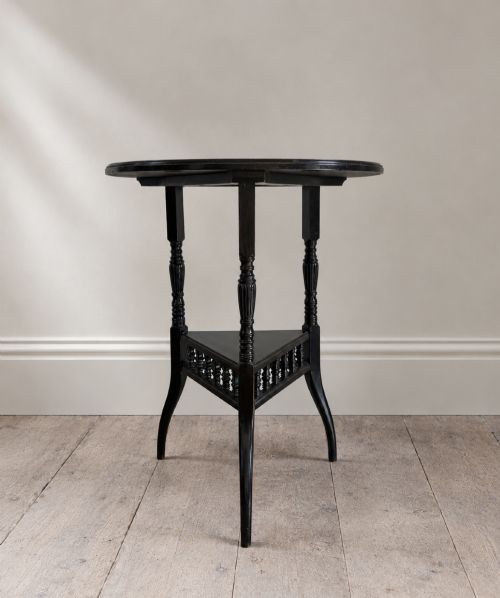
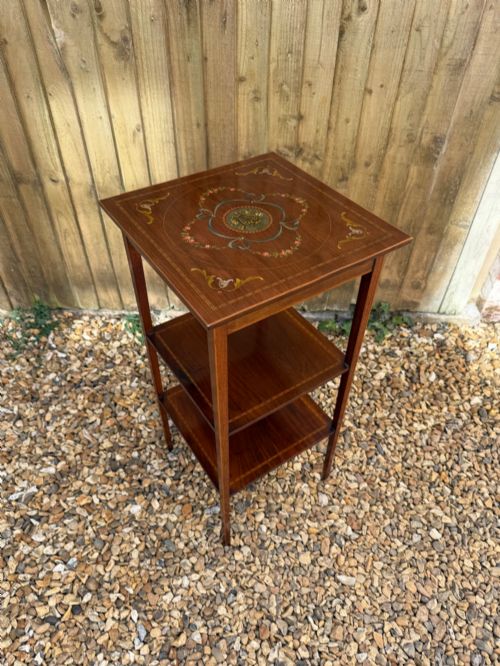
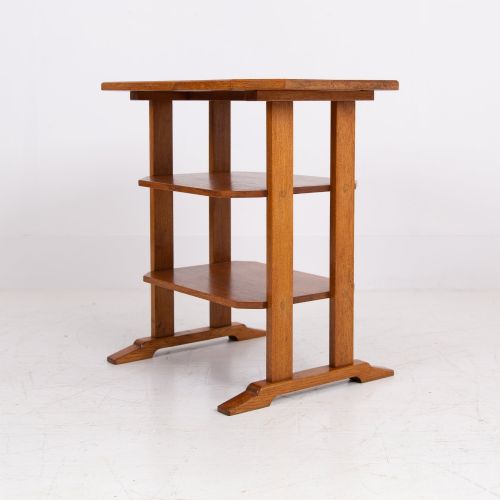
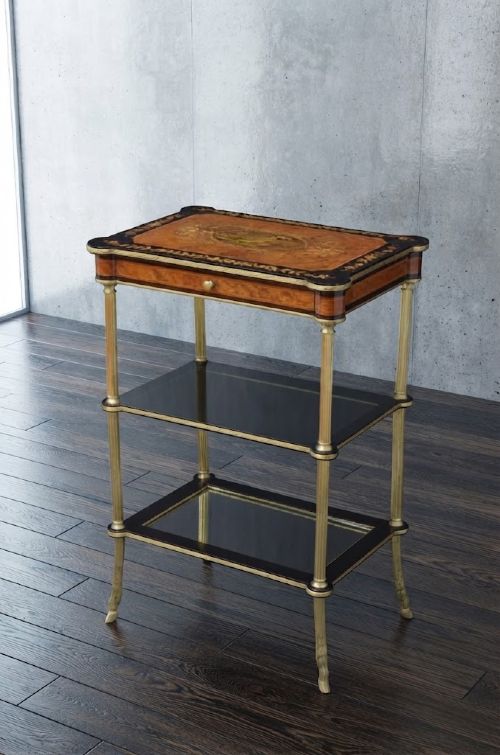
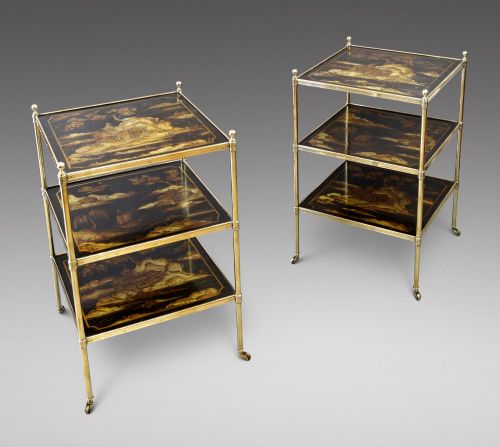
The versions met most frequently on this page combine wood and veneer construction with tiered platforms, often taking the form of etageres, occasional tables, or nests. Common styles range from English country oak and Sheraton Revival mahogany to French ebonised finishes.
Makers and designers utilise these tiered designs to maximise surface area without increasing floor space footprints. The physical evidence shows forms spanning circular tops, square platforms, and inlaid surfaces supported by slender uprights.
How they were made
Cabinet makers construct these pieces using solid timbers like oak, walnut, and mahogany, frequently applying decorative veneers to the primary platforms. Ebonised wood and painted finishes appear alongside natural grain treatments to achieve specific period aesthetics.
Structural integrity relies on upright supports, turned columns, or brass framing that securely join the descending shelves. Inlaid motifs, marble inserts, canework, and carved details finish the surfaces of these multi-tiered forms.
Three Tier Lamp Table Retail Price Guide 2026
Typical asking prices for three tier lamp table among the pieces listed under this phrase on Sellingantiques today, from the lower quarter to the upper quarter. They describe what is for sale here now, not the wider market.
Listings feature oak, mahogany, walnut, and ebonised wood across Victorian, Edwardian, and Art Deco periods.
What varies in quality
The grade of timber selection and the precision of veneer matching dictate the initial visual impact of a piece. Finer examples display carefully chosen grain patterns on the primary tiers, while simpler utilitarian versions utilise plain boards.
Construction methods reveal distinct tiers of craftsmanship through the stability of the vertical supports and the neatness of joint work. Superior pieces maintain rigid alignment across all three levels, ensuring the shelves remain parallel and secure under weight.
Hille·EW Godwin
The Three Tier Lamp Table Glossary
- Etagere
- A piece of furniture consisting of a set of open shelves for displaying small objects. These multi-tiered stands provide vertical display space in domestic interiors.
- Ebonised
- Wood finished to resemble ebony through staining or painting. This dark treatment gained popularity during the nineteenth century for decorative effect.
- Canework
- Woven material made from rattan or cane used for surface panels. This technique adds texture and lightness to table tiers and shelf inserts.
- Occasional table
- A small, light table designed for specific, intermittent use in a room. These versatile pieces move easily beside seating or into corners.
Three Tier Lamp Table: Frequently Asked Questions
How were three tier lamp tables used?
These tables served primarily to hold portable lighting on the top surface while leaving lower tiers free for books or decorative objects. Their compact footprints made them adaptable for placement beside seating or in empty corners.
In period interiors, the ascending shelves maximised display capacity within small floor areas. They functioned as versatile utility pieces across drawing rooms, boudoirs, and libraries.
Where should I place a three tier lamp table?
Position these pieces beside armchairs or sofas where the tiered structure allows easy access to lighting and reading materials. Corners and narrow wall spaces also suit their vertical proportions.
Avoid placing them in areas prone to heavy foot traffic due to their multi-level construction. Their stepped design works effectively when silhouetted against plain walls.
How do I distinguish Art Deco from Edwardian examples?
Art Deco pieces from the nineteen thirties favour geometric lines, figured walnut, and streamlined modernist silhouettes. They often embrace symmetry and polished, unadorned surfaces.
Edwardian versions typically feature lighter mahogany timbers, inlaid stringing, and delicate turned supports. Their decorative vocabulary draws on earlier eighteenth-century revivals.
What is the difference between an etagere and a lamp table?
An etagere is designed fundamentally as an open shelving unit for display, featuring multiple tiers intended for ornaments. A lamp table prioritises a sturdy top surface specifically to support a light source.
Many antique forms blend these definitions, using the term etagere for pieces with mirrored or decorative tiers that also accommodate lighting.