

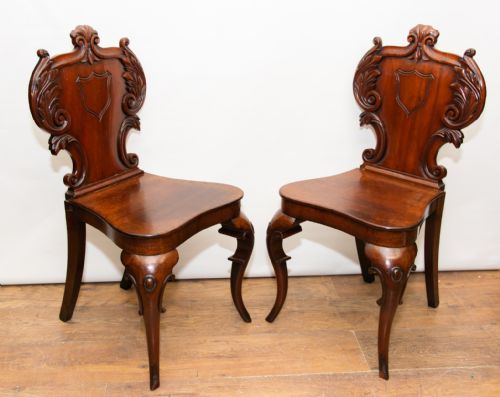


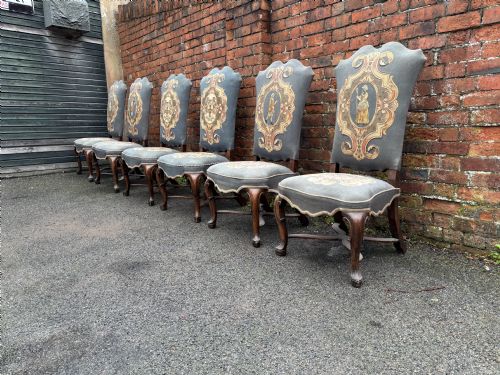


Cabriole Leg Hall Seat
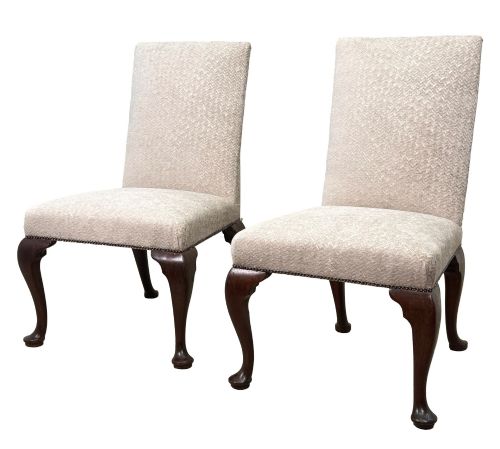
A cabriole leg hall seat provides an elegant resting place in an entryway, drawing the eye with graceful, curving lines.
Cabriole Leg Hall Seat
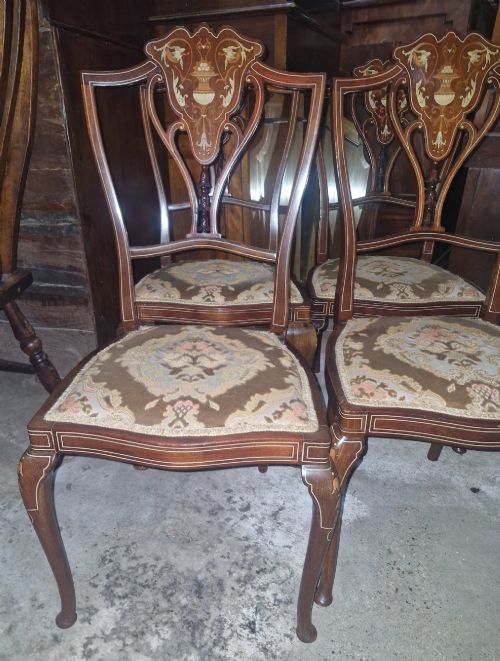
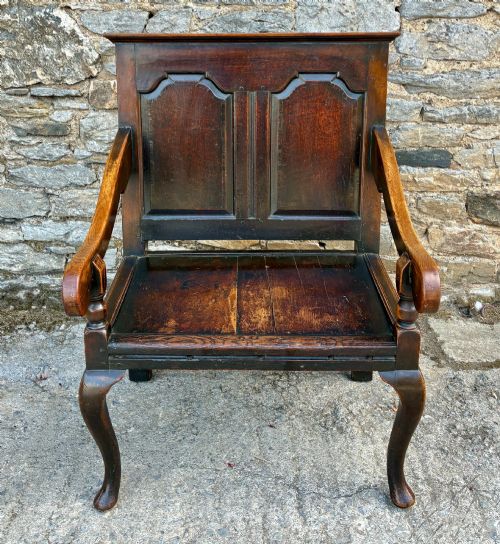
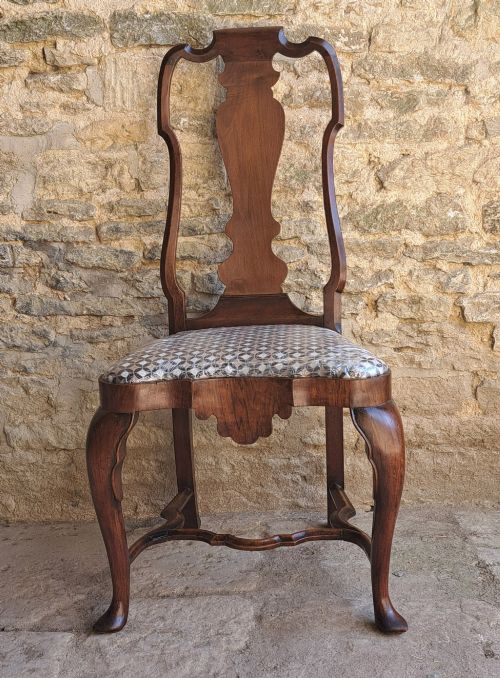
A cabriole leg hall seat draws on centuries of seating design, appearing in forms from compact side chairs and hall chairs to substantial settles and window seats. Buyers seeking a cabriole leg hall seat often encounter walnut and mahogany examples spanning the Georgian and Victorian eras, alongside later revival pieces.
The selections on this page range from early eighteenth-century walnut chairs to nineteenth-century carved mahogany pieces and Edwardian variations. Side chairs and hall chairs form the core of the available seating, supplemented by settles and window seats designed for hallways and reception spaces.
Originating in periods such as the reign of George II and Queen Anne, these seats reflect diverse regional craftsmanship including English, Scottish, Italian, and Chinese interpretations. Each piece utilises the distinctive curving leg to anchor formal and domestic interiors alike.
Materials and construction
Cabinet makers relied primarily on dense hardwoods such as walnut and mahogany, occasionally employing oak or rosewood for structural durability. These timbers were selected for their strength and grain, allowing craftsmen to carve intricate details into chair backs and frame rails.
Upholstered elements incorporate traditional textiles including fabric, damask, and leather, secured to frames designed to support everyday use. Carved wooden panels, pierced splat backs, and moulded edges demonstrate the manual techniques employed across the eighteenth and nineteenth centuries.
Some antique hall seats doubled as discreet waiting benches for legal chambers and Victorian reception rooms.
Evaluating craftsmanship and condition
Quality rests in the precision of the carving on the cabriole legs, where well-defined knees and feet exhibit the artisan's hand. Superior examples display seamless joinery and consistent timber selection across the entire frame, maintaining structural integrity without heavy restoration.
The crispness of carved details on splat backs and seat rails distinguishes finer workshops from standard production. Surface patination and the preservation of original timber colour further separate exceptional historical pieces from later reproductions.
Charles Tozer
The Cabriole Leg Hall Seat Glossary
- Cabriole leg
- A furniture leg that curves out at the knee and tapers inward to an ankle, mimicking an animal's leg. This form became prominent during the early eighteenth century.
- Settle
- A wooden bench with a high back and solid arms, designed to block draughts in hallways and living spaces. Early versions often include panelled construction.
- Window seat
- An elongated chair or stool designed to fit within a window recess. These forms often feature upholstered tops and supportive end arms.
- Claw and ball
- A foot motif carved at the base of a cabriole leg, depicting an animal's claw gripping a ball. This detail frequently appears on Georgian walnut and mahogany seating.
Cabriole Leg Hall Seat: Frequently Asked Questions
What is a cabriole leg hall seat?
A cabriole leg hall seat encompasses wooden chairs, settles, and window seats featuring curved legs that taper toward the foot. These pieces were historically placed in hallways and reception rooms to provide seating for visitors.
They combine structural utility with decorative woodwork, drawing on styles established during the eighteenth century and revived in later decades.
How do I date a cabriole leg hall seat?
Dating involves examining the timber species, construction methods, and stylistic cues such as carved splats and leg profiles. Walnut dominates earlier pieces from the Queen Anne and Georgian periods, while mahogany and oak appear across both eighteenth and nineteenth-century examples.
Secondary woods and tool marks underneath the seat provide further clues to the manufacturing era and workshop origin.
Where should I place a hall seat?
A hall seat suits entrance halls, landings, and reception areas where a compact yet decorative piece of furniture is required. Window seats also function effectively beneath large windows or at the foot of a bed.
Their narrow profiles allow them to sit flush against walls without obstructing pathways in domestic spaces.
Are these seats comfortable for daily use?
Many hall seats are upright by design, intended for short periods of sitting in a hallway or reception room. Upholstered variants and window seats offer softer seating through padded surfaces and leather covers.
When living with these pieces, consider adding loose cushions if you intend to use them for extended reading or relaxation.