

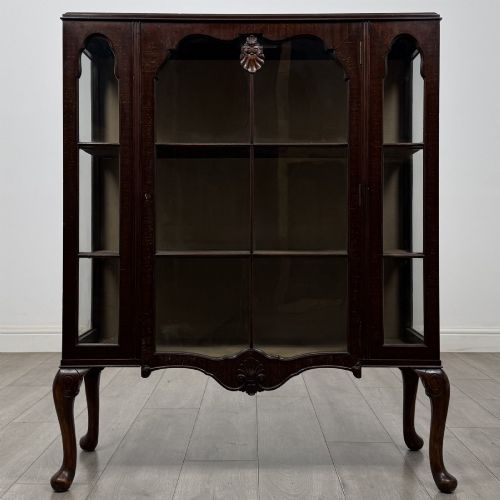
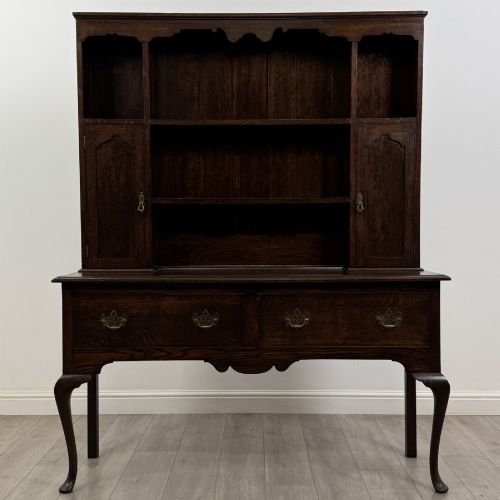
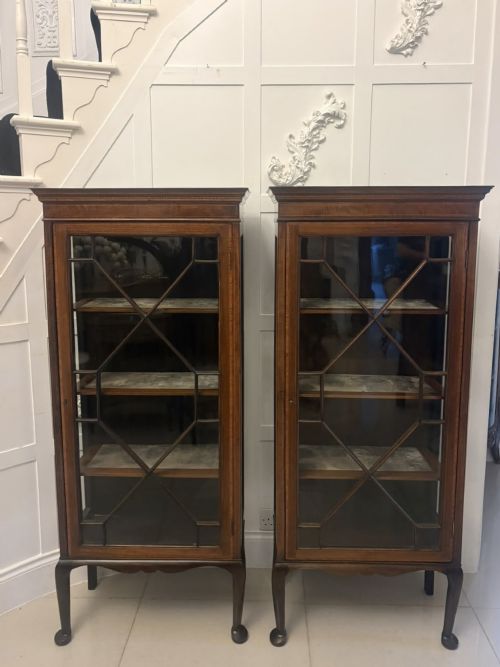
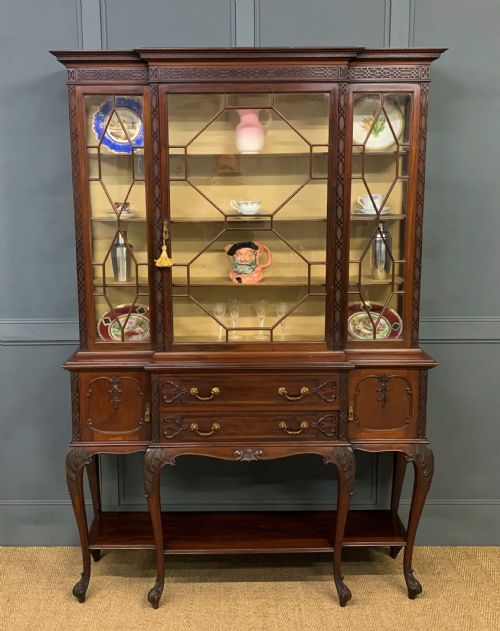
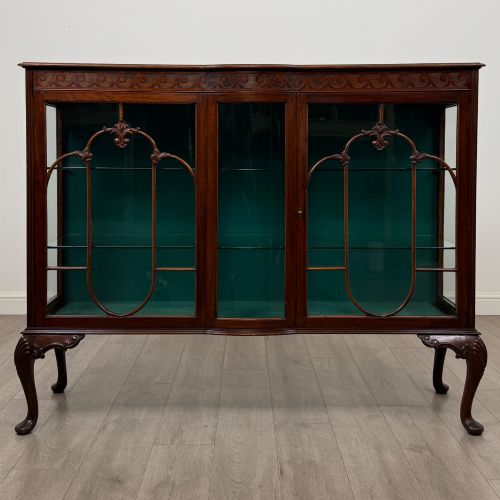
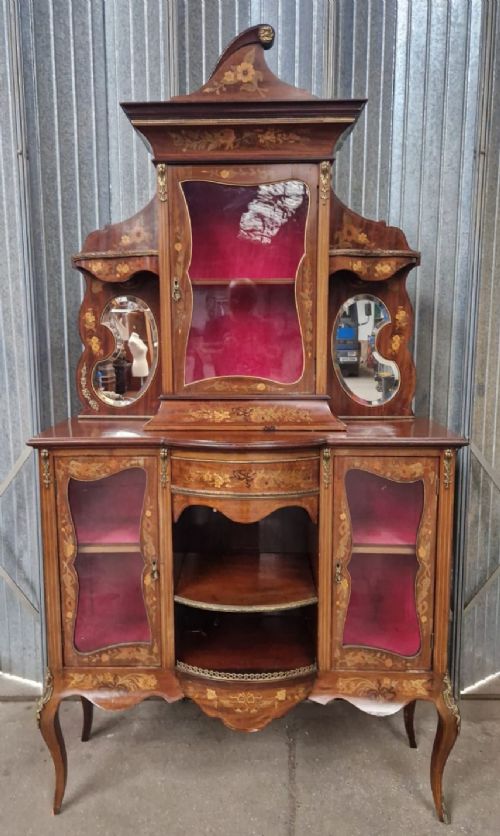
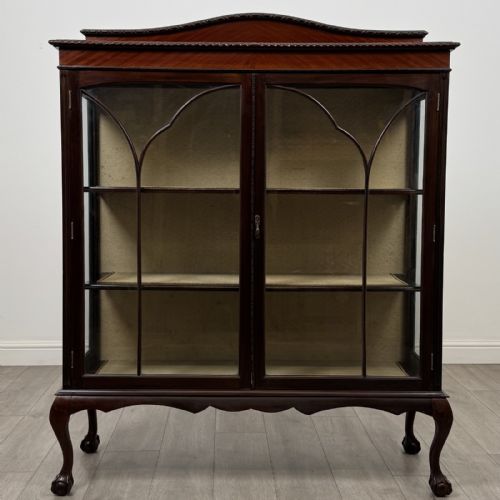
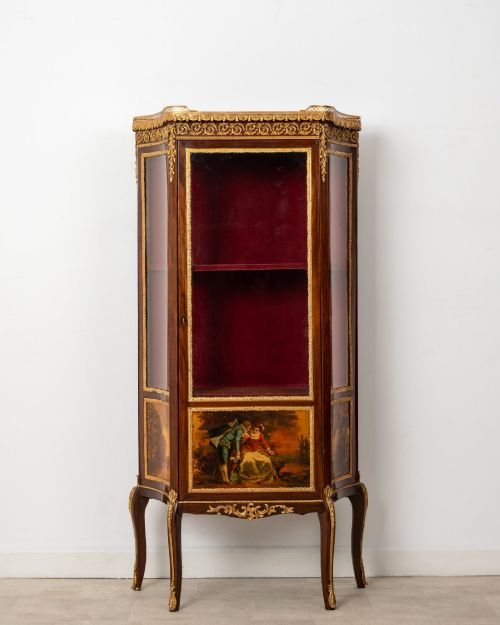
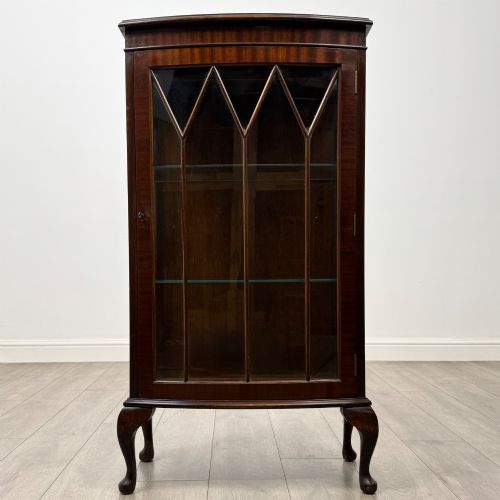
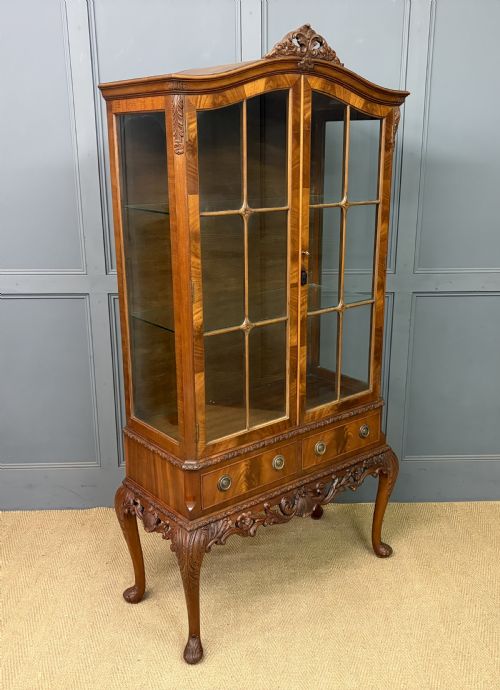
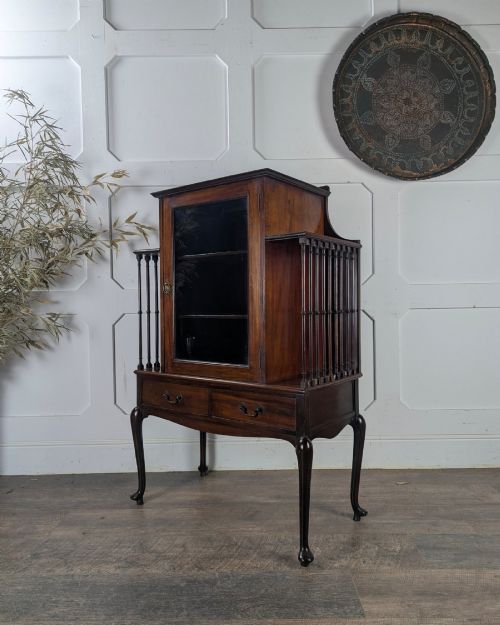
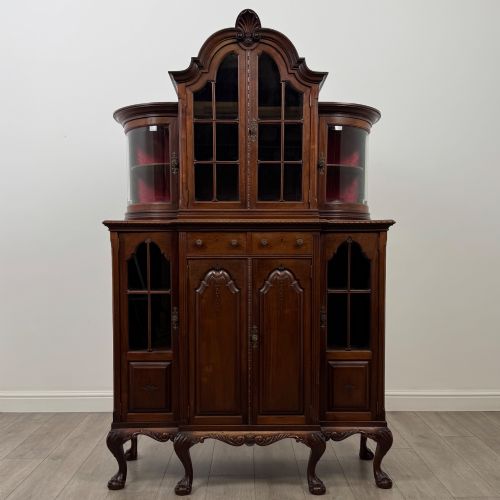
Cabriole Leg Display Cabinet
A cabriole leg display cabinet lifts porcelain, silver and glass off the floor on scrolling wooden supports that have defined refined furniture for centuries.
Cabriole Leg Display Cabinet
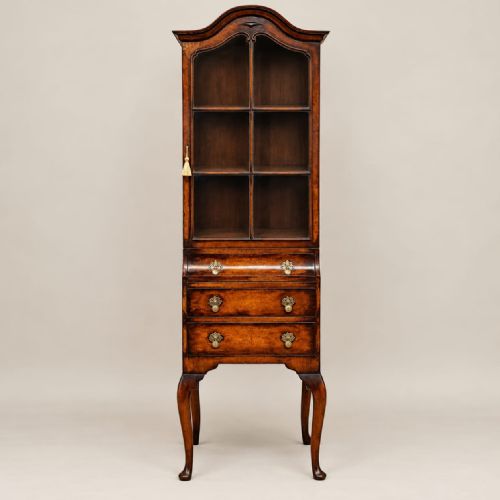
A cabriole leg display cabinet bridges domestic storage and decorative exhibition, presenting ceramics, glassware and small collections behind glazed doors or glass tops. When you search for a cabriole leg display cabinet, you meet pieces originating across the Victorian, Edwardian and early twentieth-century periods, alongside revivals reaching back to earlier styles.
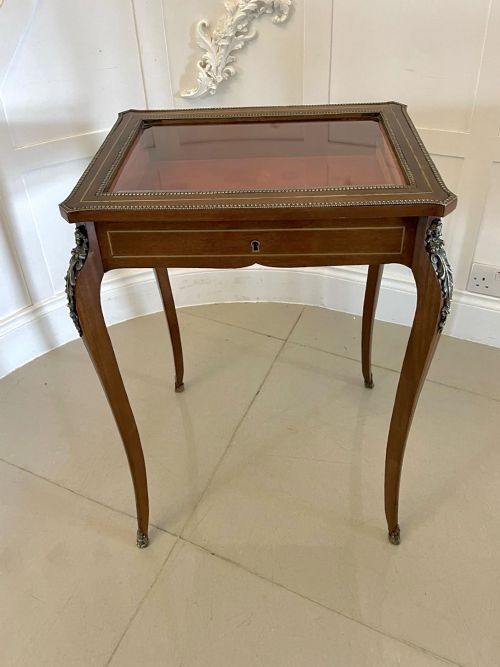
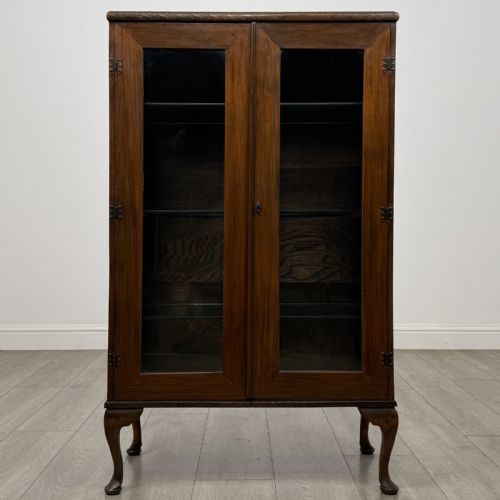
The form spans tall upright bookcases and glazed cabinets, small side cabinets, and low glazed bijouterie tables intended for tabletop viewing. Walnut and mahogany dominate the timber choices, often paired with glass panels and occasionally silk or velvet linings.
Makers and workshops across England, France and the Netherlands adapted these glazed display forms to suit formal drawing rooms and intimate boudoirs alike. The cabriole leg itself provides the structural transition from cabinet body down to pad, claw-and-ball or scroll feet.
How They Were Made
Cabinetmakers constructed these pieces primarily using solid mahogany, walnut, oak or kingwood, frequently applying burr walnut or fine veneers over secondary woods to achieve figured grain patterns. Frames are joined with traditional mortise and tenon techniques, while glazed doors rely on rebated wooden glazing bars to secure the glass.
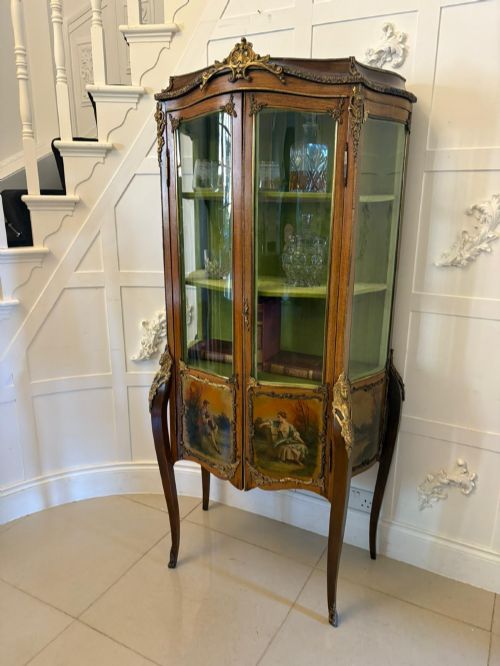
Metal mounts in brass, gilt-bronze, or ormolu adorn French-influenced revival pieces, fixed with pins or screws to frame corners and lock surrounds. Cabriole legs are shaped from solid timber blanks or built up at the knee, requiring skilled carving to achieve the characteristic double curve.
Cabriole Leg Display Cabinet Retail Price Guide 2026
Typical asking prices for cabriole leg display cabinet among the pieces listed under this phrase on Sellingantiques today, from the lower quarter to the upper quarter. They describe what is for sale here now, not the wider market.
Some display tables bear later painted lettering recording unexpected past lives among Swiss vineyards and watchmakers.
What Varies in Quality
The distinction between ordinary production and finer work rests on the selection of timber veneers and the crispness of any applied carving or gilt-metal mounting. Cabinets utilising heavily figured burr walnut or richly grained mahogany demonstrate superior material choice from the outset.
Construction detail marks the divide further, seen in the tight fit of glazed doors, the hand-cut precision of internal shelving supports, and the harmonious proportion of the cabriole legs relative to the upper cabinet mass.
Maple & Co.·Paul Sormani
The Cabriole Leg Display Cabinet Glossary
- Cabriole leg
- A furniture leg that curves out at the knee and tapers inward to an ankle, inspired by the natural leap of an animal. This form became a cornerstone of eighteenth-century design and subsequent revival periods.
- Vitrine
- A glass-fronted cabinet designed specifically for displaying porcelain, curiosities and objects of art. The term derives from the French word for glass.
- Bijouterie table
- A low display table featuring a glazed top and glass sides, created to exhibit jewellery, watches and small ornaments at hand height. They frequently sit upon slender cabriole supports.
- Ormolu
- Gilded bronze ornamentation applied to furniture, particularly popular in French-influenced nineteenth-century cabinets. The finish requires the application of a gold amalgam to a bronze base.
- Vernis Martin
- A simulated Japanese lacquer technique developed in France, utilised on high-status cabinets to create glossy decorative panels. It involved the application of multiple layers of varnish over painted designs.
Cabriole Leg Display Cabinet: Frequently Asked Questions
What is the difference between a vitrine and a display cabinet?
A vitrine typically refers to a glass-fronted French or revival cabinet designed entirely for visual exhibition, often with glass side panels.
A standard display cabinet may incorporate enclosed wooden sections beneath the upper glazed shelving area.
How do I distinguish Edwardian pieces from Victorian ones?
Victorian examples often display heavier proportions, darker finishes, and denser carvings influenced by Gothic or Renaissance revivals.
Edwardian pieces generally lean towards lighter mahogany frames, delicate string inlay, and refined revival styles like Queen Anne or Louis XV.
Can I adjust the shelves inside these cabinets?
Many older glazed cabinets and bookcases feature fixed wooden shelving integral to the internal structural stability of the piece.
Those that do offer adjustment usually rely on traditional wooden ratchets or metal shelf-support strips rather than modern peg systems.
Where should I place a bijouterie table in a room?
Bijouterie tables require placement in well-lit areas where natural light can pass through the glazed top to illuminate the items displayed inside.
Because they sit on delicate cabriole legs, they work best away from heavy household traffic where accidental knocks might occur.