
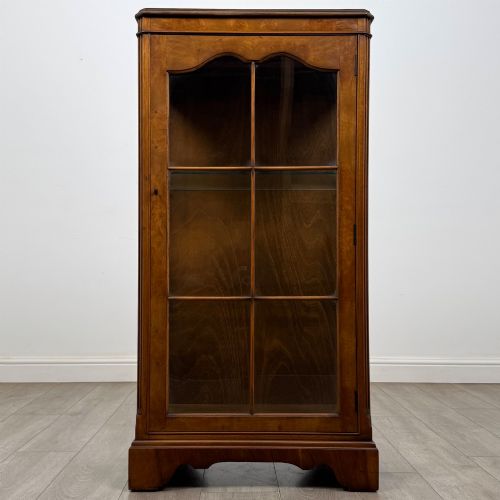


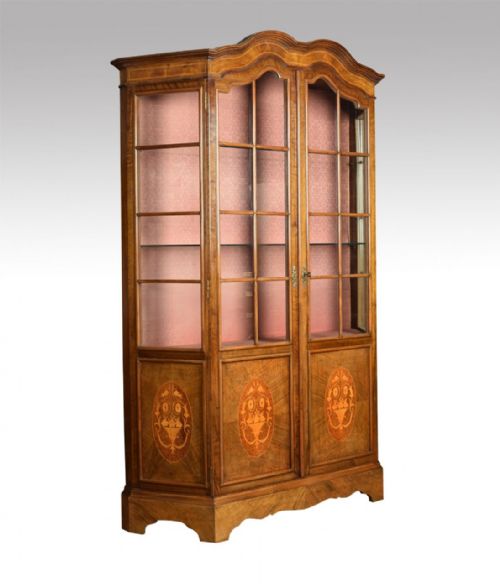

Queen Anne China Cabinet
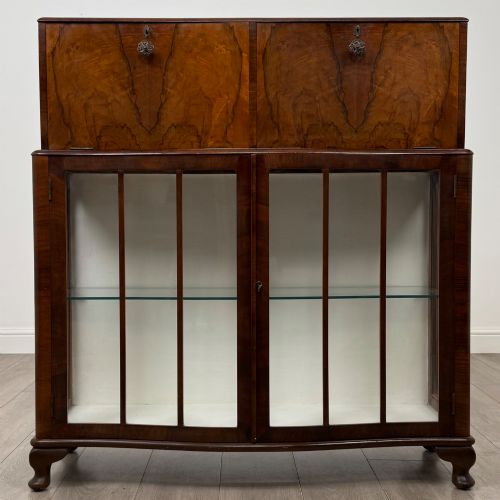
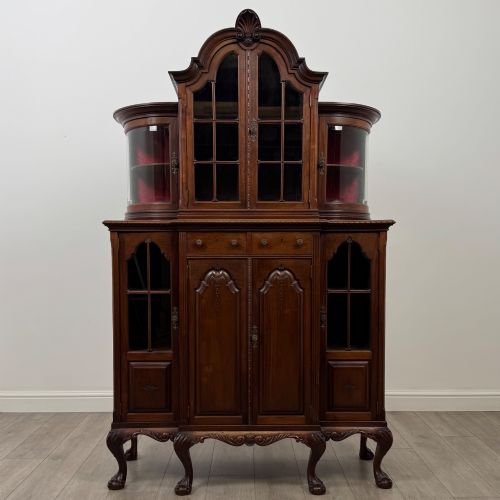
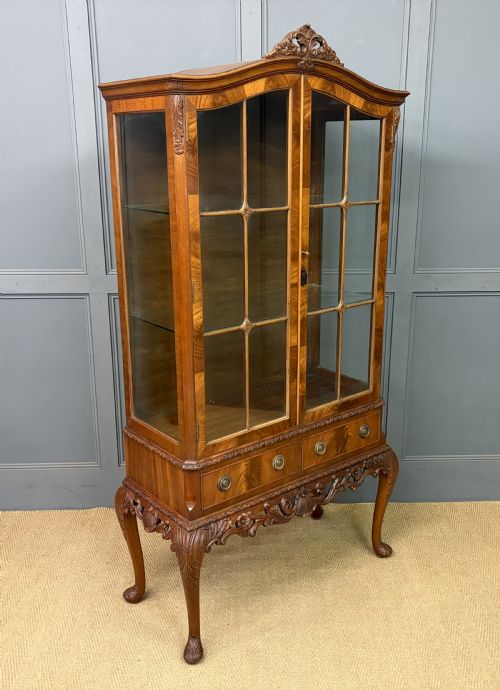
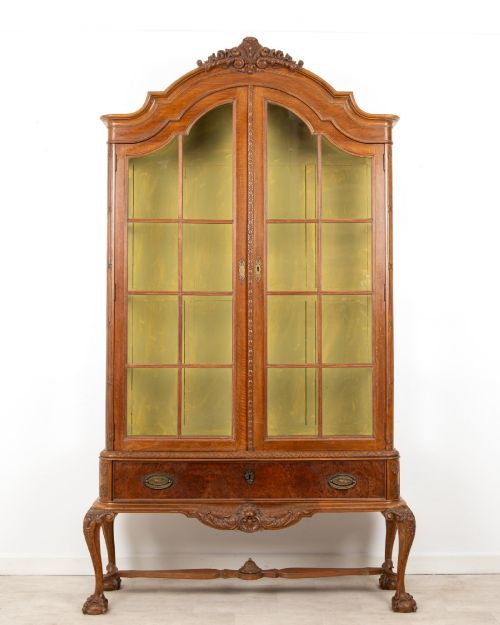
These queen anne china cabinet pieces bring walnut timber and glass panels together to display porcelain and books in rooms that need both storage and line.
Queen Anne China Cabinet
Buyers will most frequently encounter walnut display cabinets and bookcases from the early twentieth century, alongside corner cabinets and bow front side cabinets. The historical span covers Georgian foundations up through Edwardian interpretations and Art Deco touches.
Materials and construction
Makers utilised walnut, burr walnut veneer, and mahogany over solid timber carcases, applying glass to door panels and brass for hardware fittings and hinges. Fabric often lines the interior shelving spaces to cushion china collections and provide a contrasting backdrop behind the glazed doors.
Veneers were carefully selected for figured grain patterns, particularly burr walnut, which required steady handwork to wrap around curved corners and bow fronts. Joinery combined traditional framing methods with specialised inlay work to finish the facades of these cabinets.
Many a corner cabinet hides a secret curved shelf designed to cradle a single rotund teapot.
Assessing quality in walnut cabinets
The choice of timber figure dictates the visual weight of a piece, with heavily figured burr walnut veneer demanding greater skill in matching grain across doors and drawers than plain walnut. Finer examples display meticulous attention to timber selection on prominent surfaces.
Construction integrity shows in the fit of the glazed doors, the precision of brass fittings, and the stability of corner joints. Cabinets on stands or specific leg forms balance proportion with structural soundness.
Maple & Co.·Epstein
The Queen Anne China Cabinet Glossary
- Burr walnut
- A prized timber harvested from walnut tree growths, yielding intricate swirling grain patterns used for decorative veneer. Cabinetmakers applied this timber to primary display surfaces for visual impact.
- Queen Anne style
- A design movement characterised by curved lines, cabriole legs, and restrained ornamentation originating in the eighteenth century and revived later. This aesthetic defines the proportions and leg forms of many display pieces.
- Corner cabinet
- A specialised storage piece designed to fit neatly into a room angle, featuring triangular or multi-sided shelving behind glass or solid doors. These items maximise floor space while exhibiting ceramics.
- Glazed display cabinet
- A case fitted with glass panels on doors or sides to showcase china and books while protecting them from dust. The framing holds the glass securely within wooden mullions.
- Bow front
- A convex curved cabinet facade that softens the rectangular geometry of a room. This shape requires advanced woodworking techniques to bend veneer and timber.
Queen Anne China Cabinet: Frequently Asked Questions
What is a queen anne china cabinet?
A queen anne china cabinet is a glazed display case or bookcase defined by walnut timbers, curved lines, and stylistic cues from the eighteenth century. These pieces combine visible shelving with enclosed storage for ceramics and glassware.
They appear in various formats, including corner cupboards, bow front side cabinets, and two-part units resting on stands.
How do I date a walnut cabinet?
Dating relies on examining construction methods, timber types, and style markers such as revival details from the Edwardian era or the 1930s. Eighteenth-century originals differ in joinery and timber patina compared to twentieth-century reproductions.
Hardware styles, interior fabric linings, and veneer thickness also offer clues to the period of manufacture.
How were these cabinets used?
These cabinets housed family china, decorative porcelain collections, and bound volumes in principal rooms of the house. The glass doors kept dust away while allowing owners to display their prized possessions.
Corner versions utilised neglected angles of a room, freeing up wall space for other furniture.
How do I care for burr walnut?
Burr walnut benefits from stable room temperatures away from direct sunlight and excessive moisture to prevent veneer lifting. Regular dusting with a soft, dry cloth preserves the polished surface.
Occasional application of appropriate wax polish maintains the timber moisture without building up heavy residues.