

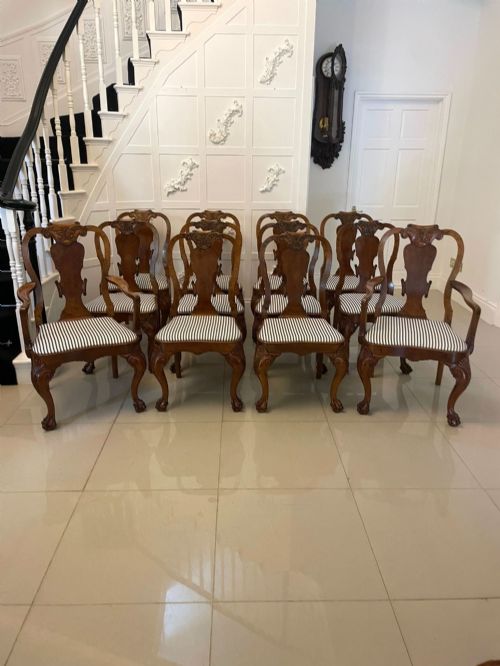
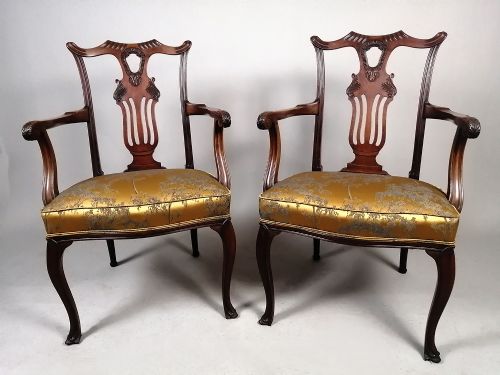
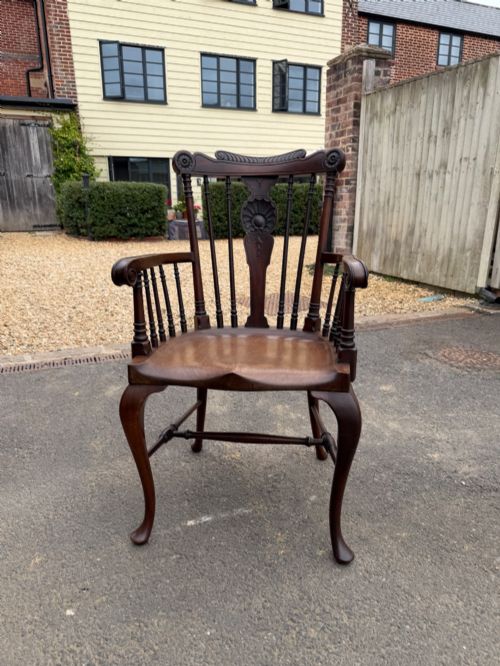
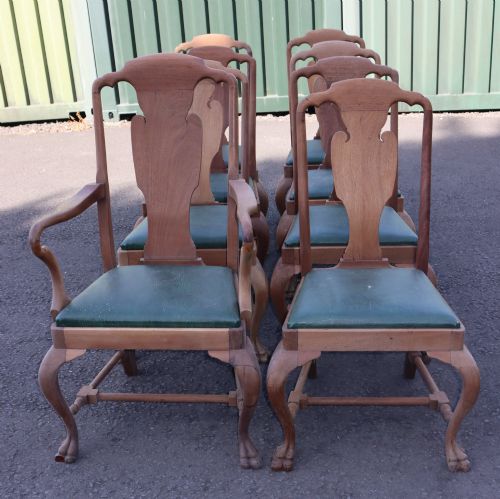
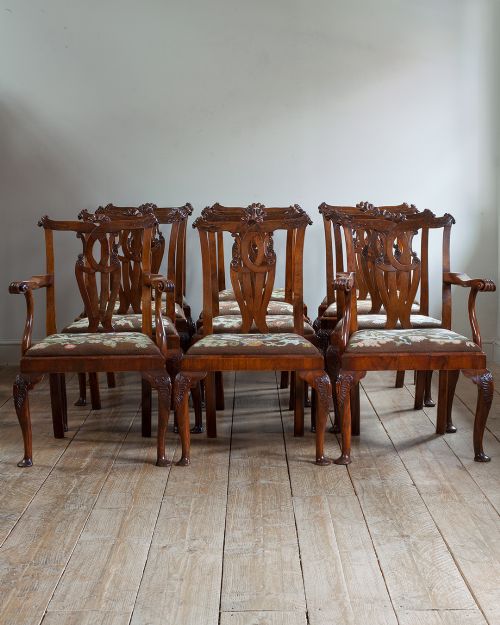
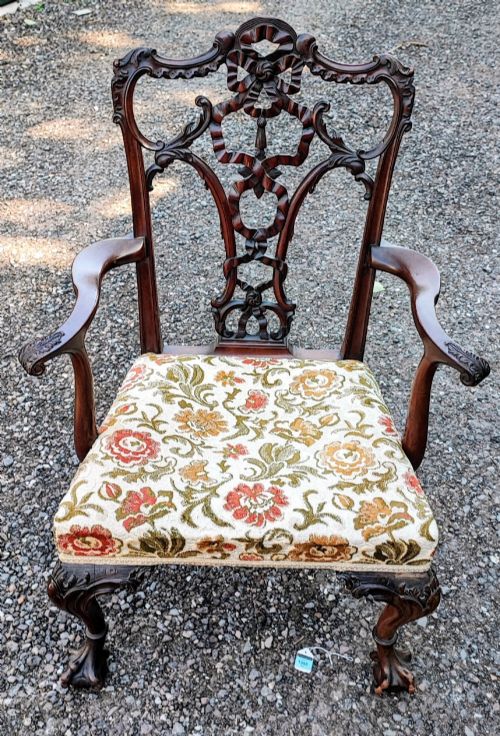
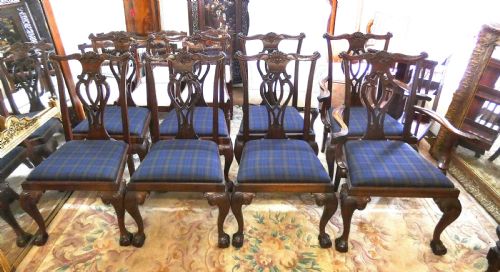
Cabriole Leg Carver Chair
A cabriole leg carver chair brings curved timber and upholstered arms together, offering a traditional seat for the head of a dining table or desk.

Cabriole Leg Carver Chair
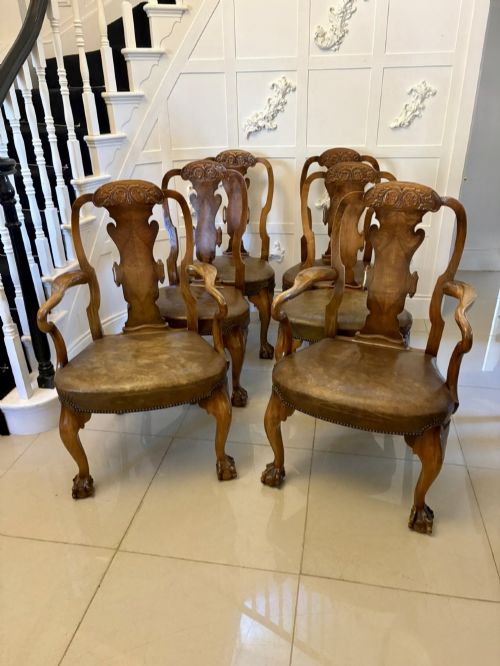
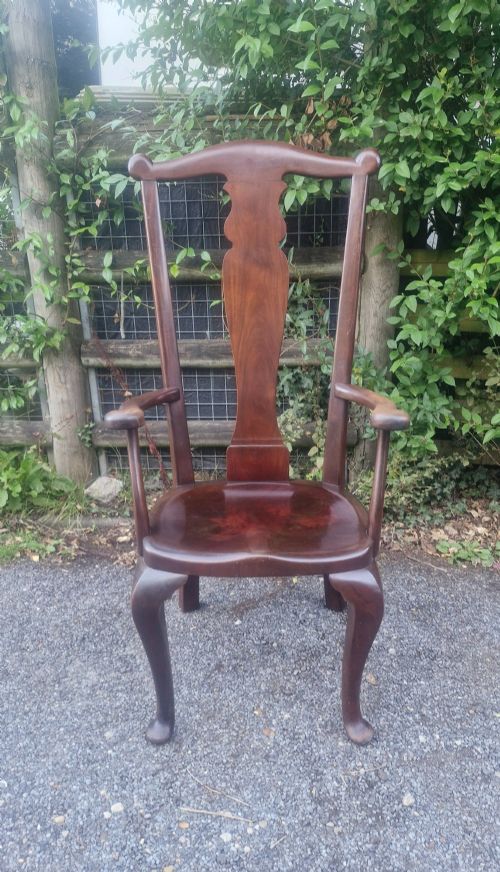
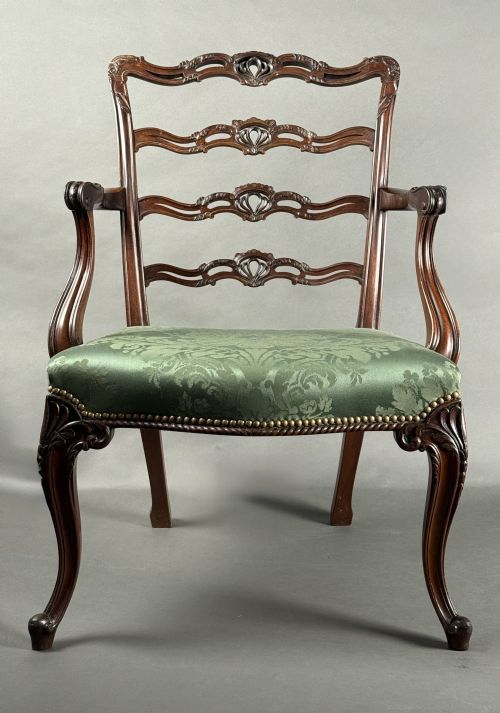
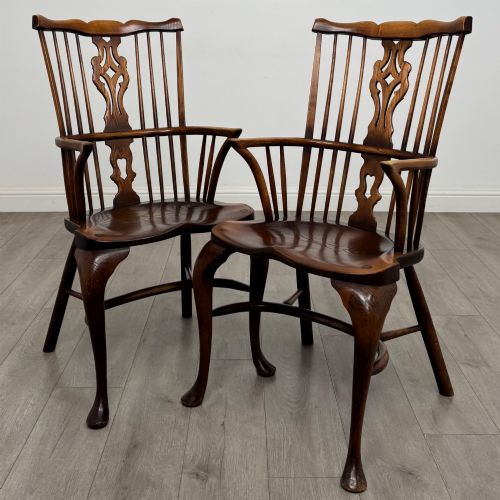
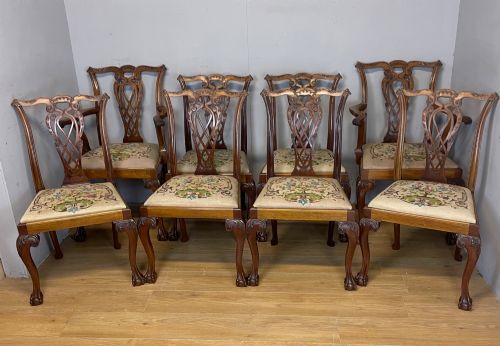
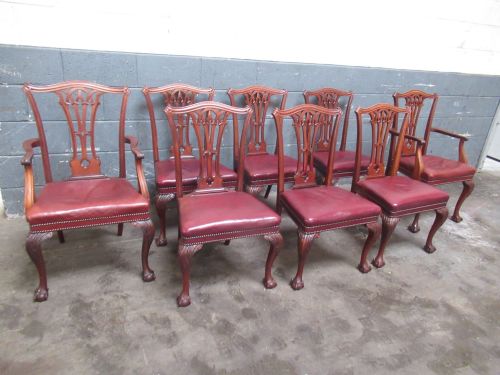
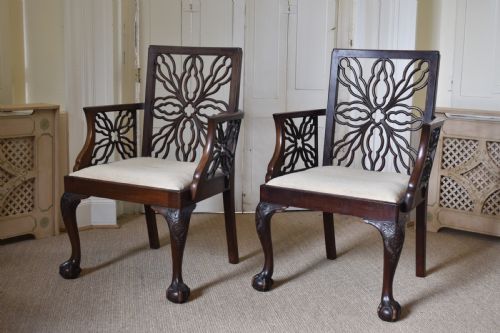
When you search for a cabriole leg carver chair, you encounter seating designed with distinctive curving front supports and integrated armrests. The listings show these pieces appearing frequently across the eighteenth, nineteenth, and early twentieth centuries, spanning periods from George II to Edwardian and Victorian revivals.
You will notice forms ranging from formal dining carvers to office armchairs and country windsor variants. Mahogany and walnut dominate the timber choices, often paired with upholstered seats in leather, velvet, or fabric.
The revival styles, particularly Queen Anne and Chippendale, represent a large share of the available seating. These pieces draw on earlier historic proportions while maintaining nineteenth and twentieth century construction methods.
Materials and construction methods
Cabinetmakers constructed these frames using solid hardwoods like mahogany, walnut, and elm, often shaping the front legs directly from the seat rail or block. Joinery relied on mortise and tenon joints to secure the backrests and frames under daily weight.
Carving was executed by hand on knees, splats, and top rails, producing motifs such as ball and claw feet or shell details. Upholstered elements utilised traditional webbing and stuffing, finished with textile coverings or leather secured by tacks.
Cabriole Leg Carver Chair Retail Price Guide 2026
Typical asking prices for cabriole leg carver chair among the pieces listed under this phrase on Sellingantiques today, from the lower quarter to the upper quarter. They describe what is for sale here now, not the wider market.
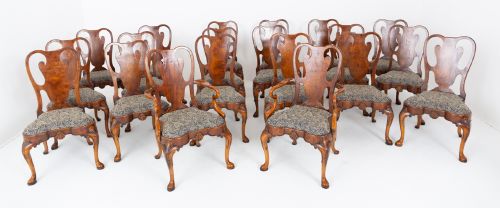
Some nineteenth-century makers evidently enjoyed twenty-piece dining sets, requiring dozens of guests to mind their knees against twenty carved cabriole legs.
Distinctions in craftsmanship
The caliber of a carver chair depends heavily on the depth and crispness of the hand carving on the knees and splats. Superior examples display fluent curves in the cabriole legs without clumsy proportions or heavy repairs to the structural joints.
Timber selection also sets pieces apart, with figured burr walnut or dense old-growth mahogany indicating higher workshop standards. Original surface patination and intact structural joinery distinguish better-preserved specimens from heavily altered pieces.
Warings
The Cabriole Leg Carver Chair Glossary
- Cabriole leg
- A furniture leg that curves outward at the knee and tapers inward toward the ankle, finishing in a pad, foot, or ball and claw. This form derives from ancient furniture traditions and gained prominence in seventeenth and eighteenth century design.
- Carver chair
- An armchair designed to match a set of single dining chairs, traditionally placed at the ends of a dining table. The arms provide a more substantial seat for the head of the household or guests.
- Splat
- The vertical central strip of wood in the back of a chair, often shaped, pierced, or carved. In revival chairs, the splat design helps identify the stylistic period.
- Ball and claw
- A foot motif carved to resemble a bird's talon grasping a ball. It is frequently found on eighteenth-century and revival mahogany seating.
- Elbow chair
- An alternative term for an armchair, particularly those used at a desk or around a dining table. These pieces feature low arms designed to slide beneath table rails.
Cabriole Leg Carver Chair: Frequently Asked Questions
What is a cabriole leg carver chair?
A cabriole leg carver chair is an armchair featuring curving front legs and armrests, typically used at a dining table or desk. These seats appear across multiple historical periods and revival styles.
They combine structural framing with upholstered or wood seats, providing a supportive armchair option that matches standard dining sets.
How do I date a mahogany carver chair?
Dating relies on examining the timber density, hand tool marks, joinery methods, and stylistic cues like carving motifs. Eighteenth-century pieces differ in construction nuance from nineteenth-century Chippendale or Queen Anne revivals.
Comparing the secondary woods and the style of the cabriole leg helps narrow down the manufacturing decade.
Where were these chairs used historically?
These armchairs were primarily utilised in formal dining rooms as head-of-table seating or placed in studies as desk chairs. Their sturdy timber frames accommodated daily domestic use.
Country houses and urban townhouses alike employed them in parlours, libraries, and dining spaces.
Are walnut and mahogany chairs from different eras?
Walnut was heavily utilised during earlier periods like the reigns of Queen Anne and George II, as well as later Victorian and Edwardian revival movements. Mahogany became the dominant cabinet timber later in the eighteenth century and remained popular throughout the nineteenth century.
Both woods overlap significantly across various revival styles found on the market.